


News Summary
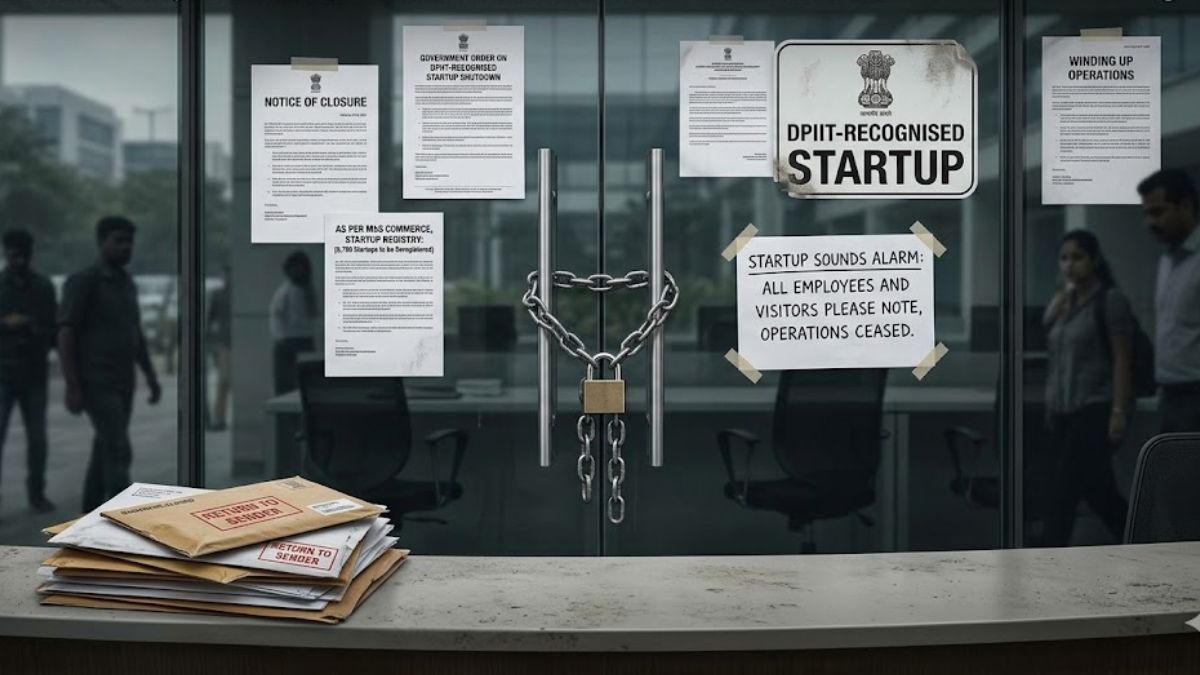
India’s startup ecosystem has witnessed rapid expansion over the past decade, driven by innovation, venture capital, and strong policy support. However, recent government data has revealed a concerning trend. As many as 6789 DPIIT-Recognised startups have shut down in the last few years, according to the Ministry of Commerce and Industry. The figure was shared in Parliament by Jitin Prasada, raising concerns about sustainability within India’s rapidly growing startup ecosystem.
India currently has nearly 1.97 lakh recognised startups registered under the government’s Startup India initiative. While the majority continue to operate and contribute to innovation, thousands have failed to survive intense competition, funding challenges, and operational pressures. The sectors most affected include IT services, healthcare, and education technology, which have faced a combination of market saturation, changing customer behavior, and funding slowdowns.
Despite these closures, the broader startup ecosystem remains strong. Government data suggests that recognised startups have collectively generated more than 21 lakh direct jobs across the country. In addition, the number of new ventures continues to rise as entrepreneurs explore emerging sectors such as AI startups, fintech platforms, clean energy innovation, and blockchain technology. Experts believe startup failures are not unusual in fast-growing innovation ecosystems. In fact, business failures often provide valuable lessons that help future entrepreneurs refine their business strategies, funding models, and growth strategies. However, policymakers and industry leaders now emphasize the need for stronger support systems, mentorship, and easier access to capital for early-stage startups.
The revelation about 6789 DPIIT-Recognised startup closures highlights both the opportunities and the risks in India’s fast-growing startup market. While the ecosystem continues to produce unicorn startups and global tech innovations, it also faces challenges related to funding cycles, market viability, and sustainable business models. The government’s acknowledgment of these closures is expected to spark deeper conversations about how India can build a more resilient startup environment.
1. Introduction: The Rise and Reality of India’s Startup Ecosystem
India’s startup landscape has grown at an extraordinary pace. Over the last decade, the country has become one of the world’s largest startup hubs, hosting thousands of emerging startups, venture-backed startups, and disruptive tech companies. However, recent government data has revealed that 6,789 DPIIT-Recognised startups have shut down operations over the past five years. The disclosure came during a parliamentary response from the Ministry of Commerce and Industry.
This development has sparked debate across the startup ecosystem, venture capital networks, and startup founders. While closures are part of the entrepreneurial journey, the scale of shutdowns raises important questions about sustainability and long-term growth. The data also highlights how startup markets evolve rapidly, especially in sectors driven by technology innovation and venture capital funding.
2. Government Data on Startup Closures
2.1 Statement from the Ministry of Commerce
During a parliamentary session, Jitin Prasada confirmed that 6789 DPIIT-Recognised startups have ceased operations in recent years. These startups were officially registered under the government’s Startup India initiative. The program was launched in 2016 to support Indian startups, innovation-driven enterprises, and emerging technology ventures. Although the number of closures may appear large, the government clarified that it represents a small fraction of the total startup base.
2.2 Total Startup Registrations in India
According to official figures, India currently has nearly 1.97 lakh recognised startups.
These companies operate across diverse sectors such as:
- Information technology
- Fintech and digital payments
- Healthcare and biotech
- Education technology
- Clean energy innovation
- Artificial intelligence platforms
Together, these startups have generated over 21 lakh direct jobs, contributing significantly to economic growth and employment.
3. Sectors Most Affected by Startup Closures
3.1 IT Services and Tech Startups
The technology sector has always been the backbone of the modern startup ecosystem. Many founders begin their journey by building software, apps, digital platforms, or AI-based solutions. However, the same sector that creates the most innovation also experiences some of the toughest failures. In recent years, IT services and technology startups have seen a noticeable number of shutdowns. On the surface, many of these ventures look promising. They launch with strong ideas, talented developers, and early user traction. Yet the real challenge begins when the company attempts to scale.
Scaling a tech startup is far more complex than simply building a product. Startups must secure enterprise clients, maintain infrastructure, hire skilled engineers, and continuously improve their technology. All of this requires steady funding and a clear market demand. Many founders discover that early excitement does not always translate into long-term revenue. A product may attract users initially, but businesses must convert those users into paying customers. Without a sustainable revenue stream, even innovative technology struggles to survive.
Competition also plays a brutal role in this sector. The software market evolves quickly. A new startup might spend months building a product, only to find that several competitors launched similar solutions during the same time period. Larger companies with deeper resources can easily dominate the market. Artificial intelligence startups face a similar challenge. Building AI systems requires large datasets, expensive infrastructure, and highly skilled teams. While the technology may be groundbreaking, monetizing it can take years.
Many founders speak openly about this difficult phase. One common experience among tech entrepreneurs is the moment when the excitement of launching fades and reality sets in. Servers must be paid for, salaries must be covered, and investors expect growth. If revenue does not grow quickly enough, pressure begins to build. Eventually, some startups run out of runway. When that happens, founders must make the painful decision to shut down the company they spent years building. Behind every closure lies a story of sleepless nights, difficult choices, and lessons learned the hard way.
3.2 Healthcare and Healthtech Ventures
Healthcare startups operate in one of the most complex industries in the world. Unlike many digital businesses, healthtech ventures cannot simply launch a product and adjust later. They must meet strict regulatory requirements, protect patient data, and ensure clinical accuracy. Many startups entered the healthcare sector with ambitious goals. They aimed to make healthcare more accessible, reduce medical costs, and bring digital transformation to hospitals and clinics. Some launched telemedicine platforms, while others focused on diagnostic tools or AI-powered medical analysis.
During the pandemic, healthtech startups experienced a surge in demand. Telemedicine apps became essential when physical hospital visits were limited. Investors poured significant venture capital into healthcare technology. However, once the immediate crisis faded, the market began to shift. Hospitals returned to traditional operations, and some digital health solutions saw declining usage. At the same time, the operational challenges of running a healthcare startup became clearer. Compliance costs remained high. Medical partnerships took longer than expected to establish. Insurance integration proved complicated in many cases.
Unlike consumer apps, healthcare platforms cannot grow overnight. They require trust from patients, doctors, hospitals, and regulators. Building that trust takes time. Funding also plays a critical role in healthtech survival. Many healthcare startups require significant capital for research, testing, certification, and infrastructure. If investor funding slows down, maintaining operations becomes extremely difficult. Several founders in this space have described the emotional weight of building a healthcare company. These startups often carry a mission-driven purpose. Founders genuinely believe their product can improve lives or save lives.
When such companies struggle financially, the impact goes beyond business losses. Founders feel the responsibility deeply because their work is tied to real human health outcomes. Despite these challenges, healthcare startups continue to attract entrepreneurs. The industry still offers enormous opportunities for innovation, especially in digital health, diagnostics, and preventive care.
3.3 Education Technology Companies
Few sectors expanded as rapidly during the pandemic as education technology. With schools closed across the world, millions of students turned to online platforms for learning. Edtech startups suddenly became central to education systems. Investors noticed this trend quickly. Funding poured into edtech platforms offering live classes, recorded lessons, tutoring services, and skill development programs. Many startups hired aggressively and expanded their marketing efforts. For a short period, it felt like the golden age of digital education.
However, as classrooms reopened and students returned to physical learning environments, the landscape changed. Demand for some online learning products dropped significantly. Parents who once depended on digital classes began shifting back to traditional schooling. This sudden change in user behavior created pressure for many edtech startups. Companies that had expanded rapidly now faced declining subscriptions.
Another major challenge in the edtech sector is customer acquisition cost. Attracting students requires heavy marketing through digital ads, influencer campaigns, and promotional offers. These strategies can drive user growth, but they often consume large portions of a startup’s budget. If customer retention remains low, startups struggle to recover their marketing investments. Revenue stability becomes another issue. Many platforms rely on subscription models, but families often cancel subscriptions after a short period. Without long-term engagement, predictable revenue becomes difficult. Several edtech founders have shared stories about the emotional rollercoaster of this industry. One month, a platform might onboard thousands of new users. The next month, growth slows unexpectedly.
For teams that built their companies with a mission to transform education, these shifts can feel deeply personal. Education is not just a market opportunity. For many founders, it represents a chance to impact students’ futures. Even when companies close, their founders often carry forward the lessons they learned. Many return to the ecosystem with stronger ideas and better understanding of market realities.
4. Understanding Startup Failure: A Global Perspective
Startup failure is often misunderstood. When people hear that thousands of startups have shut down, they may assume something is fundamentally broken. In reality, failure is part of the innovation process. Across the world, startup ecosystems follow a similar pattern. Many ideas are tested, but only a small percentage succeed at scale. Research from global startup studies suggests that nearly 90 percent of startups fail within their first few years. The reasons vary, but the patterns are consistent.
One of the most common causes is the absence of product-market fit. A startup might build an impressive product, but if customers do not see enough value, the business cannot grow. Financial management is another frequent challenge. Startups operate with limited resources, and poor budgeting can quickly exhaust available funds. Team dynamics also influence outcomes. Building a startup requires intense collaboration between founders, engineers, marketers, and investors. Misalignment within leadership teams can slow decision-making and create internal conflicts.
Market timing is another unpredictable factor. Sometimes an idea is simply ahead of its time. The technology might work perfectly, but the market may not yet be ready to adopt it. However, failure in entrepreneurship rarely means the end of a founder’s journey. Many successful entrepreneurs have previously experienced failed ventures. These experiences often shape stronger leaders. Founders learn how to manage risk, build better teams, and develop more realistic growth strategies. In many cases, the knowledge gained from failure becomes the foundation for future success.
5. The Startup Business Model Explained
5.1 How Startups Typically Operate
At the heart of every startup lies a simple idea: solve a problem that people care about. A founder might notice inefficiencies in banking, healthcare, transportation, or education. That observation becomes the starting point for a business idea. The next step involves building a minimum viable product. This early version allows startups to test whether users actually want the solution. Unlike traditional businesses, startups are designed to grow rapidly. They aim to reach large markets quickly using technology and digital platforms. For example, a mobile app can reach millions of users without requiring physical stores. This scalability makes startups attractive to investors.
However, rapid growth also brings pressure. Startups must improve their products constantly while managing customer support, hiring employees, and raising funds. The environment can feel intense for founders and teams. Long work hours, uncertain revenue, and constant decision-making become part of daily life. Despite these challenges, entrepreneurs continue to pursue startup journeys because they believe their ideas can change industries.
5.2 Revenue Models Used by Startups
Every startup eventually faces the same question: how will the business make money? Some startups charge users directly through subscription plans. This model is common in software services, learning platforms, and digital tools. Other startups operate marketplace platforms. They connect buyers and sellers and earn commission on each transaction. Software-as-a-Service companies often charge monthly or annual fees for access to their platforms. This model provides recurring revenue, which investors prefer.
Advertising also supports many digital startups. Social platforms and content companies earn revenue by displaying targeted advertisements to users. Another model involves transaction fees. Payment platforms and fintech services charge small fees each time users complete financial transactions. While these revenue models can be effective, building sustainable income takes time. Many startups experience a period where user growth is strong but revenue remains limited. During this phase, companies depend heavily on investor funding.
If revenue does not catch up before funding runs out, startups face difficult choices. Teams may need to reduce expenses, pivot their strategy, or in some cases shut down operations. For founders, these moments can be emotionally draining. A startup is more than a business project. It represents years of dedication, risk, and personal sacrifice. Yet even in those difficult moments, many entrepreneurs view the experience as part of a larger journey.
6. Startup Funding and Venture Capital Trends
6.1 Importance of Venture Capital
Venture capital has become one of the most powerful engines behind modern startup ecosystems. Unlike traditional bank loans, venture capital provides funding in exchange for equity ownership. Investors support startups that show potential for massive growth. These investors understand the risks involved. They know that many startups will fail, but a few successful companies can deliver extraordinary returns. For founders, venture capital provides the resources needed to build teams, develop technology, and expand into new markets.
Angel investors often play a key role during the early stages. These individuals invest their own money to help startups build their first product or launch their initial operations. As startups grow, they may raise larger funding rounds from venture capital firms. However, securing investment is rarely easy. Founders must present strong business models, clear market opportunities, and convincing growth projections. Investors evaluate hundreds of startups before choosing a few to support.
6.2 Funding Slowdown and Its Impact
Startup funding cycles often follow global economic conditions. When markets are strong, investors are more willing to fund new ventures. However, during periods of uncertainty, investment activity tends to slow down. In recent years, global economic pressures have made investors more cautious. Venture capital firms are focusing on startups with clear revenue models and proven growth. This shift has made fundraising harder for many early-stage companies.
Startups that once expected easy funding rounds now face longer negotiations and stricter evaluation processes. For companies that depend heavily on investor capital, this change can create serious financial stress. Without fresh funding, startups must reduce expenses quickly. Some companies cut hiring plans. Others restructure teams or pause expansion. In the most difficult cases, startups run out of resources entirely.
For founders and employees, these moments can be heartbreaking. Teams that worked together for years may suddenly face layoffs or shutdown announcements. Yet even in those moments, many entrepreneurs continue to believe in the larger vision of innovation. The startup ecosystem has always been a cycle of creation, experimentation, and renewal. Every closure leaves behind knowledge, experience, and inspiration for the next generation of founders.
7. Founders and Entrepreneurial Journeys
Every startup begins with a person who notices something others overlook. Sometimes it is a frustrating customer experience. Sometimes it is an inefficient process in an industry. And sometimes it is simply a belief that technology can make life easier. Behind every startup is a founder who decides to take a risk that most people avoid. Many startup founders leave stable jobs, invest their savings, and step into uncertainty because they believe their idea can solve a real problem.
In India’s growing startup ecosystem, founders come from diverse backgrounds. Some are engineers who want to build technology products. Others come from business, healthcare, banking, or logistics industries. Their real advantage often comes from personal experience. They understand a problem deeply because they have lived through it. The entrepreneurial journey rarely follows a straight path. In the early days, founders spend weeks or months validating their ideas. They talk to potential customers, study competitors, and test whether people truly need their solution.
Once they gain confidence in the idea, the next step is building the product. This stage often demands long nights and constant problem solving. Many early teams work in small apartments or shared workspaces. Resources are limited, but belief in the idea keeps the team moving. After launching the first product, founders focus on acquiring early users. These early customers are extremely valuable. They provide feedback, highlight flaws, and sometimes become the first advocates for the company.
The next phase involves raising investment. Securing funding is one of the toughest parts of the journey. Founders must pitch their vision repeatedly to investors. Many face dozens of rejections before finding someone willing to believe in their idea. If funding arrives, the company begins to grow. Teams expand, marketing efforts increase, and the startup attempts to enter new markets. However, growth brings its own challenges. Managing employees, handling operations, and maintaining product quality can quickly become overwhelming.
Unfortunately, not every startup reaches profitability. Some companies run out of funds. Others fail to achieve product-market fit. Market conditions may shift unexpectedly. Yet failure does not erase the experience founders gain along the way. Many successful entrepreneurs have built their careers after earlier ventures collapsed. The lessons learned during failure often become the foundation for stronger decisions in future startups. In fact, the startup world quietly respects founders who have faced failure and continued building. Their experience makes them more careful, more strategic, and more resilient. Behind every failed startup is a founder who tried to change something. And in many cases, that effort inspires the next generation of entrepreneurs.
8. Problems Startups Aim to Solve
Startups exist because the world constantly faces unsolved problems. Traditional industries often move slowly due to large structures, regulatory barriers, or outdated systems. Entrepreneurs step into these gaps with fresh ideas and new technologies. Many startups begin with a simple mission: make everyday life easier, faster, or more accessible.
One of the most powerful examples is financial inclusion. Millions of people still lack access to formal banking systems. Fintech startups attempt to bridge this gap through mobile payments, digital wallets, and alternative lending platforms. By simplifying financial services, they allow small businesses and individuals to participate in the broader economy. Education is another sector where startups have made significant impact. Digital learning platforms attempt to bring quality education to students regardless of their location. For a student living in a small town, online learning can open doors that were previously unavailable.
Healthcare startups are also trying to address critical challenges. Many founders focus on reducing healthcare costs, improving access to doctors, and enabling early diagnosis through technology. Telemedicine platforms, digital health records, and AI-driven diagnostics are some of the innovations reshaping healthcare delivery. Supply chain efficiency has become another major focus area. Startups in logistics and transportation aim to reduce delays, improve tracking, and optimize delivery networks. These improvements help businesses move goods faster while lowering operational costs.
Climate and energy startups are working on some of the most urgent global problems. Renewable energy solutions, battery technology, and sustainable manufacturing models are attracting growing attention from investors and governments alike. Even when a startup eventually shuts down, the ideas it introduced often remain. Technologies developed during those experiments influence future companies and inspire new innovations. In this way, startups contribute to progress even when the original business does not survive.
9. Industry Growth Trends in the Startup Ecosystem
Despite the closure of thousands of startups in recent years, India continues to remain one of the world’s most dynamic startup markets. The country has developed a strong foundation of investors, incubators, accelerators, and skilled entrepreneurs. Several industries are currently experiencing rapid growth, creating new opportunities for founders and investors.
9.1 Artificial Intelligence Startups
Artificial intelligence has become one of the most transformative technologies of the modern era. AI startups are developing tools that automate complex tasks, analyze massive datasets, and generate predictive insights. Businesses across industries are adopting AI solutions to improve efficiency and reduce operational costs. From customer support chatbots to predictive maintenance systems in manufacturing, AI is slowly becoming part of everyday business operations.
In India, AI startups are also focusing on language technologies, healthcare diagnostics, fraud detection, and financial analytics. These innovations are attracting strong interest from global investors. However, building AI companies requires deep technical expertise and significant computing infrastructure. Startups in this field must balance innovation with practical business models to sustain growth.
9.2 Fintech Innovation
The fintech sector has been one of the strongest drivers of India’s startup boom. Digital payments, lending platforms, and wealth management tools have transformed the way people interact with financial services. Fintech startups have made it easier for small merchants to accept digital payments. They have also enabled individuals to access loans without traditional banking procedures.
Many of these innovations became possible due to India’s digital infrastructure. Technologies such as unified payment platforms and digital identity systems have allowed fintech companies to scale quickly. However, the fintech sector also faces intense competition and regulatory scrutiny. Startups must ensure compliance with financial regulations while continuing to innovate. Despite these challenges, fintech remains one of the most promising sectors in the Indian startup ecosystem.
9.3 Clean Energy and Climate Tech
Climate change has created a sense of urgency across industries and governments. As a result, startups focusing on sustainability and clean energy are gaining momentum. Entrepreneurs are building solutions around renewable power, energy storage, electric mobility, and carbon reduction technologies. Global investors are increasingly directing capital toward climate-focused startups. These ventures aim to create both financial returns and environmental impact. India’s energy transition goals also support this growth. Government policies promoting solar power, electric vehicles, and green hydrogen have created opportunities for innovative startups. Although the sector requires significant capital investment, it offers long-term potential for transformative impact.
9.4 Global Startup Expansion
Indian startups are no longer limited to domestic markets. Many companies are now expanding into international regions, particularly Southeast Asia and the Middle East. These regions often share similar market characteristics with India, such as rapidly growing digital adoption and young populations. By entering global markets, startups gain access to larger customer bases and diversified revenue streams. However, international expansion also introduces new challenges. Startups must navigate different regulatory environments, cultural differences, and competitive landscapes. Successful global expansion requires careful planning, strong partnerships, and deep market research.
10. Competition in the Startup Ecosystem
Competition is one of the defining realities of the startup world. While innovation creates opportunities, it also attracts numerous companies attempting to solve the same problem. For founders, understanding competition becomes essential for survival.
10.1 Direct Competitors
Direct competitors are companies offering similar products or services to the same customer base. In sectors like fintech, for example, multiple startups may launch digital payment platforms targeting small merchants or online consumers. These companies compete on features, pricing, customer experience, and technology. The presence of direct competitors often forces startups to innovate faster. Companies must continuously improve their products to retain users and maintain market relevance.
However, intense competition can also strain young companies. Marketing costs increase, customer acquisition becomes expensive, and profit margins shrink. For early-stage startups with limited resources, competing against well-funded rivals can become extremely challenging.
10.2 Indirect Competitors
Indirect competition often comes from established companies rather than other startups. Traditional banks, large healthcare providers, and major corporations frequently enter markets where startups operate. These organizations already have large customer bases, strong brand recognition, and extensive financial resources. For example, fintech startups may initially disrupt financial services. But over time, banks adopt similar digital tools and begin offering competing services.
This dynamic creates a complex environment for startups. They must innovate continuously while defending their position against both new entrants and established players. Yet competition also drives progress. It pushes companies to improve technology, deliver better customer experiences, and develop stronger business models.
11. Learning for Startups and Entrepreneurs
The closure of 6,789 DPIIT-recognised startups offers valuable insights for entrepreneurs, investors, and policymakers. First, founders must remain deeply connected to the problems they aim to solve. Startups built around temporary trends often struggle to survive once market excitement fades. Businesses that solve genuine problems tend to create lasting value. Second, sustainable revenue models are essential. Early growth may come from investor funding or marketing campaigns, but long-term survival depends on reliable income streams.
Third, financial discipline plays a critical role in startup success. Careful budgeting and realistic planning help startups survive periods when funding becomes scarce. Mentorship is another powerful factor. Experienced entrepreneurs and industry experts can guide founders through difficult decisions. Their advice often prevents costly mistakes during critical growth phases. Finally, adaptability remains one of the most important qualities for any startup. Markets evolve, technologies change, and customer behavior shifts unexpectedly. Companies that adapt quickly often find new opportunities even during difficult times.
For many entrepreneurs, failure is not the end of the journey. Instead, it becomes a powerful learning experience that shapes stronger businesses in the future. Behind every failed startup lies a story of courage, risk, and ambition. And within those stories are the lessons that will guide the next generation of founders building the future.
About foundlanes.com
foundlanes.com is India’s leading startup idea discovery platform. It helps entrepreneurs find actionable startup opportunities, market insights, and industry-specific guidance to turn ideas into real businesses. With deep research and practical resources, foundlanes supports founders at every stage, from idea validation to launch and growth.