


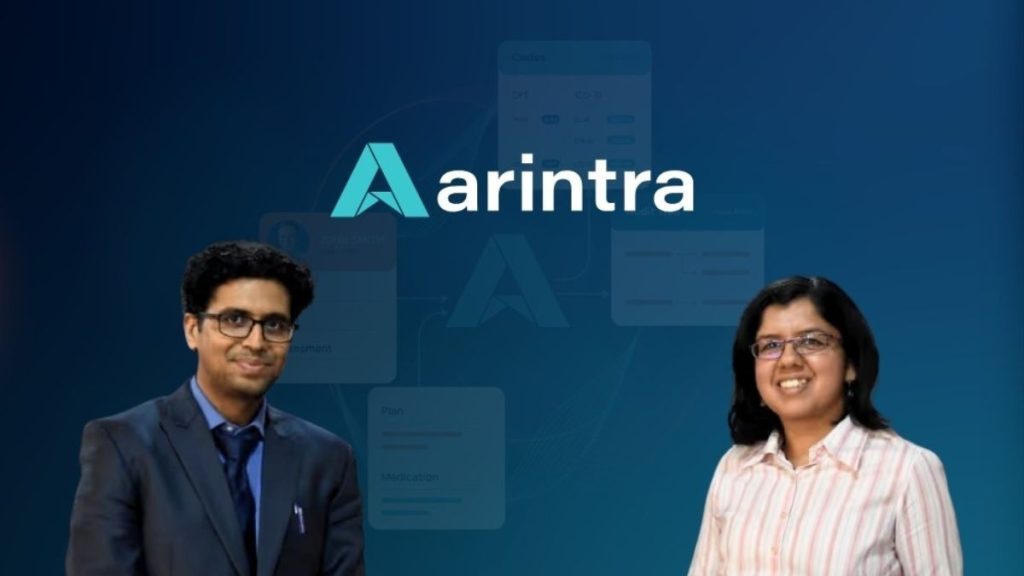
Arintra, a GenAI-native autonomous medical coding platform, has just pulled in $21 million in Series A funding—a clear signal that investors are betting heavily on the potential of AI to shake up healthcare. The round, led by Peak XV Partners, also drew support from Endeavor Health Ventures, Y Combinator, Counterpart Ventures, Spider Capital, Ten13, and several other strategic players. But this isn’t merely a financial headline. For Arintra, it’s permission to dream bigger: ramp up adoption across U.S. health systems, push product innovation, grow its team, and set up a Bay Area headquarters that can serve as a launchpad for its ambitions.
Since its founding in 2020 by Nitesh Shroff and Preeti Bhargava, Arintra has charted an unusual path. It’s not just another startup chasing venture capital. The platform, powered by GenAI, autonomously converts clinical documentation into accurate insurance codes—cutting through the messy, error-prone tangle of traditional medical billing. And it doesn’t stop there. Unlike conventional bolt-on solutions, Arintra weaves directly into EHR systems like Epic and Athena, combining automated coding with clinical documentation improvement (CDI) and denial prevention. The result? Healthcare providers not only safeguard their revenue but also reduce costs, speed up cash flow, and maintain rigorous compliance. It’s efficiency without compromise, and it’s the kind of solution the industry has been quietly begging for.
The timing couldn’t be more critical. Hospitals and physician groups are wrestling with tight budgets, coder shortages, and complex payer requirements. With over $1 billion in processed healthcare charges and proven ROI for clients such as Mercyhealth and Reid Health, Arintra is steadily carving out a leadership position in the $150 billion U.S. healthcare reimbursement sector.
1. Introduction to Arintra and Its Funding Milestone
1.1 Series A Funding Overview
Arintra’s $21 million Series A funding marks a pivotal moment in its growth story. Led by Peak XV Partners, the funding round attracted strategic backing from Endeavor Health Ventures, Y Combinator, Counterpart Ventures, Spider Capital, Ten13, and several other influential investors. The capital infusion is set to supercharge Arintra’s nationwide adoption, fuel cutting-edge product innovation, expand its talented team, and establish a Bay Area headquarters, all aimed at meeting surging demand from healthcare providers eager for AI-driven revenue assurance solutions.1.2 Importance for Healthcare AI
This funding isn’t just a financial milestone—it’s a statement. Arintra’s ability to automate complex coding workflows places it at the forefront of healthcare AI, tackling pressing revenue cycle challenges while boosting operational efficiency and patient outcomes. Investors clearly see tangible market potential in AI-driven revenue assurance solutions.
2. Startup Background and Founders
2.1 Founding Story
The story starts with an irritating, all-too-common real-world problem. Back in 2020, Nitesh Shroff (CEO) and Preeti Bhargava (CTO) found themselves knee-deep in the chaos of traditional medical billing—a world riddled with delays, errors, and endless paperwork. Most people would have shrugged and accepted it as “just how it works.” But they didn’t. They saw the frustration, the missed revenues, the coder shortages, and thought: we can fix this. They merged deep technical expertise with an intimate understanding of healthcare pain points to create a GenAI-native platform that doesn’t just automate coding—it challenges the very assumptions of the system. Their aim was bold: empower providers to reclaim financial control while tackling inefficiencies that had long crippled healthcare operations.
2.2 Leadership Profiles
Nitesh Shroff, Co-founder & CEO: Shroff is not your typical startup CEO. He steers Arintra with a mix of audacity and purpose, shaping enterprise adoption, scaling strategy, and investor confidence. His approach is intensely mission-driven—he’s obsessed with overhauling healthcare revenue cycles, viewing AI not merely as a tool, but as a transformative force. Every decision reflects a careful blend of bold vision and grounded pragmatism, ensuring growth is rapid but sustainable. Shroff’s leadership embodies both foresight and relentless execution.
Preeti Bhargava, Co-founder & CTO: Bhargava brings a rare combination of clinical insight and technical mastery. She drives product development with a hands-on, meticulous approach, making sure the platform integrates seamlessly into clinicians’ daily workflows. By fusing cutting-edge AI with real-world clinical experience, she turns what could have been a cold, technical system into something intuitive, powerful, and genuinely empowering. With her direction, autonomous medical coding becomes more than a concept—it becomes a tangible solution that dramatically enhances revenue assurance for providers while simplifying their day-to-day operations.
3. Arintra’s Working Model
3.1 GenAI-Native Autonomous Coding
Arintra harnesses the raw potential of large language models (LLMs) and clinical knowledge graphs to turn medical coding on its head. What used to be a dull, painstaking, and error-laden chore now happens with precision and speed. And this isn’t just about ticking boxes—every code the system produces can be audited, fully explained, and confidently trusted to meet the toughest compliance standards. The payoff? Hospitals not only cut down on costly mistakes but also reclaim lost revenue and sidestep the bureaucratic gridlocks that have long throttled their financial flow.
3.2 Seamless EHR Integration
This isn’t some add-on gimmick. Arintra dives deep into EHR systems like Epic and Athena, embedding itself into the workflow rather than sitting on the surface. Hospitals don’t have to overhaul their processes. Instead, they gain automation, clinical documentation improvement (CDI), and denial prevention all in one platform—a combination that’s rare in today’s medical software landscape.
3.3 Revenue Assurance Approach
Arintra’s approach to revenue assurance is refreshingly pragmatic. It doesn’t just claim to work—it proves it in action. By fusing automated coding with hands-on denial prevention, the platform actually speeds up payments, cuts down on repeated claim denials, and keeps cash moving where it belongs. But this isn’t merely about being faster or slicker. It’s about giving healthcare organizations a real chance at financial resilience in a reimbursement landscape that’s constantly shifting and relentlessly complicated.
4. Revenue Model and Business Strategy
4.1 Enterprise SaaS Model
Arintra operates on a subscription-based SaaS model, catering to hospitals, physician groups, and sprawling health systems. But this isn’t merely about scalability—it’s a calculated, strategic play. By weaving itself seamlessly into clinicians’ daily workflows, Arintra delivers results that don’t just feel automated; they feel like an experienced teammate quietly taking the strain off staff. Billing gets tighter, accounts receivable moves faster, and ROI isn’t promised—it’s demonstrably realized.
4.2 Client Impact and ROI
• Mercyhealth: Experienced a concrete 5.1% revenue boost, a jaw-dropping 43% reduction in claim denials, and a 32% shrinkage in coding costs. These figures aren’t sterile statistics—they represent smoother operations, reclaimed staff hours, and breathing room in a notoriously tense billing environment.
• Reid Health: Revamped accounts receivable speed and dramatically sharpened coding accuracy. The ROI arrived swiftly and tangibly, without forcing teams to rearrange their workflows or endure disruption.
5. Challenges Solved by Arintra
5.1 Healthcare Reimbursement Inefficiencies
Providers navigate a daily minefield of wafer-thin margins, chronic staff shortages, and bewilderingly intricate payer regulations. Manual coding? It’s slow, fragile, and inevitably riddled with errors. Every missed or misapplied code isn’t just a line item—it’s money lost, frustration mounted, and a gnawing sense that the system is stacked against efficiency. Arintra doesn’t just plug the holes; it reshapes the process to make revenue capture almost effortless, lifting burdens that have long weighed on billing teams.
5.2 Automation and Compliance
Arintra tackles this head-on. Its AI-driven coding doesn’t just automate—it enforces compliance, integrates denial prevention, and cuts down the endless back-and-forth of manual corrections. Providers experience fewer interruptions, more accurate billing, and a steadier, more predictable cash flow. It’s not a gimmick; it’s a system designed to work the way real hospitals operate.
6. Industry Growth Trends
6.1 Rise of AI in Healthcare
AI in healthcare isn’t a trend—it’s a revolution. GenAI tools are increasingly deployed to reduce errors, optimize workflow, and boost revenue capture. Autonomous coding, once a distant concept, is now a tangible solution for hospitals desperate for reliable, scalable, and compliance-driven efficiency.
6.2 Market Potential
The U.S. healthcare reimbursement sector clocks in at $150 billion. That’s a massive arena, and startups like Arintra are carving out real opportunity. By reclaiming lost revenue and streamlining complex coding processes, they’re not just improving balance sheets—they’re reshaping how healthcare providers think about revenue assurance.
7. Competitive Landscape
7.1 Direct Competitors
Arintra goes head-to-head with AI-driven coding platforms such as Olive AI, 3M Health Information Systems, and Change Healthcare.
7.2 Indirect Competitors
Traditional coding services, consultancy firms, and EHR-native tools offer indirect competition. Arintra’s edge lies in deep GenAI integration, real-time revenue assurance, and demonstrable ROI.
8. Products and Technology
8.1 Platform Features
Arintra combines autonomous coding, CDI, and denial prevention into a single platform. Hospitals can document, code, and recover revenue efficiently, all without disrupting existing workflows.
8.2 Technology Stack
The platform integrates LLMs, clinical knowledge graphs, and advanced AI algorithms, ensuring real-time coding, audit readiness, and full explainability—a must for high-stakes healthcare finance.
9. Client Success Stories
9.1 Mercyhealth
Mercyhealth saw substantial revenue gains, lower claim denials, and reduced operational costs, along with a 50% drop in work queue aging, streamlining their internal processes.
9.2 Reid Health
Reid Health experienced faster accounts receivable and improved coding accuracy. CIO Muhammad Siddiqui praised the platform’s smooth Epic integration and highlighted rapid ROI and operational transformation.
10. Strategic Outlook and Future Plans
10.1 Expansion Initiatives
Arintra is set to expand across U.S. health systems and physician groups. Its new Bay Area headquarters will support product development, team growth, and customer success.
10.2 Product Roadmap
Upcoming features include enhanced AI capabilities, wider EHR integrations, and extended revenue assurance tools, positioning Arintra as a market leader in vertical AI solutions.
11. Investor Perspectives
11.1 Peak XV Partners
Mohit Bhatnagar, MD, described Arintra as a model of vertical AI executed well, delivering real ROI and broad enterprise adoption. Peak XV’s investment builds on prior seed-stage engagement.
11.2 Strategic Investor Confidence
Investors see tremendous potential to transform the $150 billion healthcare reimbursement sector, validating Arintra’s rapid growth and disruptive technology.
Foundlanes
Foundlanes covers global startup trends and innovation. Its feature on Arintra’s $21 million funding round highlights the platform’s AI-driven healthcare impact, offering investors, founders, and enthusiasts actionable insights.The Startups News is a dedicated platform that brings the latest stories, trends, and insights from the global and Indian startup ecosystem. From funding announcements and product launches to founder interviews and tech innovations, it covers every angle that matters to entrepreneurs, investors, and startup enthusiasts.