


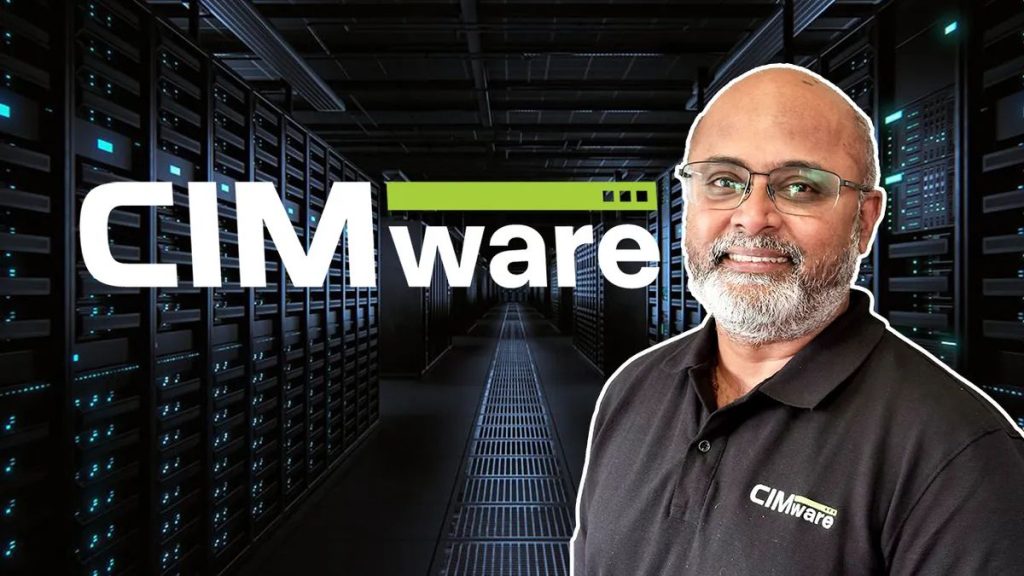
Bengaluru based data centre infra management startup CIMware just secured $2.3 million (roughly INR 20 crore) in its first institutional round, led by Transition VC. This isn’t just another funding story. They’re promising to revolutionize data centre operations with Composable Infrastructure Modules (CIM). These are no ordinary hardware think pooling compute, storage, and networking under a slick software layer. The bold claim? Cut energy usage by 80% and slash capital costs by 66%. That’s not incremental. That’s seismic.
Founded in 2018 by Rajiv Ganth—who’s no newcomer, mind you, with über-deep roots in cloud computing and data centre architecture—CIMware looks primed to ride the AI wave sweeping video streaming, social media, and cloud services. They’re funneling this fresh cash into building hardware, scaling the dev team, and keeping the lights on. First up: 80 to 100 CIM units. Then? Scale as demand dictates.
And here’s the backdrop: the global data centre infrastructure market is on a rocket toward $500 billion by 2032. While Hadoop-scale titans—Cisco, Dell, HPE, Huawei—loom large, CIMware’s got tech chops and the Department of Telecommunications’ backing. That combo? Rare. The tactic is smart: direct sales in India and the U.S., plus global alliances via partners. Buckle up—this might just bear watching.
1. Introduction to CIMware and Its Funding Milestone
CIMware has just crossed a major threshold: $2.3 million in Pre‑Series A cash. Transition VC’s shelling out, and they’re gearing up to churn out next-gen DCIM hardware. The infusion is tagged for three pillars: hardware scale‑up, software team build‑out, and operational runway.
They’re no garden-variety startup. What they’re building is essentially a software-first matrix that lets data centres flex compute, storage, and network muscle dynamically. In a world where AI and streaming platforms demand power and real-time scale—this is no side project. It’s a statement.
2. Understanding CIMware’s Business Model and Technology
2.1 What is CIMware’s Working Model?
Inside each CIM lies a lean ecosystem: compute, storage, network—integrated and orchestrated via a software layer. No fluff. No waste. That’s what they mean by Composable Infrastructure Module.
But the brains? That’s the memory-based interconnect. It glues CPUs together into one seamless engine. Rajiv says this rig can jack up capacity by 4x to 8x—without ballooning your footprint or your power bill. For anyone locked in traditional racks, this could feel like being handed a nitro boost.
2.2 Revenue Generation Strategy
Their go-to market: direct sales in India, then the U.S. And they’ve got eyes on the UK, Japan, and South Korea—partner play, white-label strategies included. Who’s buying? Think AI data centre operators, telecom mega-players, and enterprises running heavy-hitting cloud workloads.
They’re chasing agility, scale—and yes, sustainability. Those three together? That’s their value pitch.
3. Founders and Leadership Background
Rajiv Ganth is no rookie. Ex‑MD of CloudSimple India (before Google scooped it in 2019), with stints at Intel, EMC, Digital Equipment Corp. That’s over 20 years wrestling with infrastructure. You can’t fake that depth.
This isn’t a side hustle—it’s built on hardcore domain expertise. And you sense that in the product: deliberate, not decorative.
4. Problems Addressed by CIMware’s Innovation
4.1 Energy Consumption and Capital Expenditure
Let’s call it like it is: data centres are energy pigs. Their pitch? Shrink your energy usage by up to 80% and your capital spend by two-thirds. That’s not minor efficiency. That’s a wholesale shift—and in today’s eco‑aware climate, that’s a winning headline.
4.2 Scalability and Flexibility Challenges
Static, rigid data centres? So last decade. Their software backbone responds in real-time to workload surges—AI training, HD streaming, you name it. It’s elasticity dialed to eleven.
5. Industry Trends Driving Demand for Data Centre Management
5.1 Global Market Outlook
Here’s the rub: the data centre market is surging to $500 billion by 2032. Why? Cloud adoption, AI workloads, IoT, streaming. It’s a perfect storm charging at scale—and the old gatekeepers are scrambling.
5.2 India’s AI Infrastructure Push
India is doubling down. INR 10,000 crore for India AI Mission. Homegrown LLM champs like SarvamAI and Gnani.ai. When you ring in that kind of scale, infrastructure—real infrastructure—becomes non-negotiable. That’s CIMware’s runway.
6. Competitive Landscape
6.1 Direct Competitors
Let’s face it: competitors like Cisco, Dell, HPE, Huawei—they’re not novices. R&D deep pockets. Global reach. But that doesn’t mean room for newcomers doesn’t exist.
6.2 CIMware’s Differentiators
Their ace? Memory-based network that delivers big capacity leaps without a power bill hike. They’re laser-focused on the fast-growing niches: AI and telecom. That’s nimble, smart, and market-savvy.
7. The Journey and Background Story of CIMware
CIMware wasn’t a flash-in-the-pan. Ganth used years of industry pain points to sculpt the startup in 2018. Then, in 2022–23, the DoT dropped INR 1.5 crore—boosting 20 pilot units. Now? With Transition VC’s capital in hand, they’re shifting from prototype to production and going global.
8. Future Plans and Market Expansion
Next stop: produce 80 to 100 CIM modules. Beyond that: live deployments within nine months. And those overseas ambitions—US, UK, Japan, South Korea—are no joke. With local partnerships, they’re planting flags in serious markets. $175 million revenue goal by FY27? Audacious—but in a $500B sector, not unthinkable.
9. Challenges and Opportunities Ahead
Sure, the incumbents loom. But the AI wave is unstoppable. And India’s backing is backing big. If CIMware nails execution—performance, scale, operational discipline—they’re not just playing catch-up. They could redefine the game.
10. Learning for Startups and Entrepreneurs
Here’s what screams out from CIMware’s playbook:
- Subject matter depth wins—Ganth’s experience shines through.
- Non-dilutive capital matters—Govt grants helped build early credibility.
- Efficiency is now a badge of trust—not just a checkbox.
- Scale readiness is not optional—platforms need to flex.
- Niche targeting rocks—AI-infra and telecom have tailwinds.
- Smart money = strategy, not vanity—VC is a tool, not the trophy.
Conclusion
This $2.3 million isn’t superficial, it’s a declaration. CIMware is backing hardware that’s smarter, leaner, and purpose-built for a world run on AI and cloud. Sure, the road ahead is packed with giants. But CIMware has a sharp knife: performance, sustainability, and domain conviction. That trifecta? It’s a startup’s dream and a real bet on the future of infrastructure management.
About Foundlanes
At foundlanes.com is where these gritty, real-world startup sagas come to life. They dig into the trenches of VC deals, deeptech disruption, and the tectonic shifts shaping tomorrow’s tech world. For anyone tracking innovation—or investing in it, they’re required reading. It’s not sanitized press releases or secondhand hype—it’s raw, unfiltered, sometimes chaotic insight straight from the bleeding edge. One moment you’re deep-diving into a founder’s brutal pivot; the next, you’re untangling the ripple effects of a stealth-mode AI startup that just poached half a team from Google X. TheStartupsNews.com doesn’t just report on the future—it drags it, screaming and sparking, into the now.