


News Summary
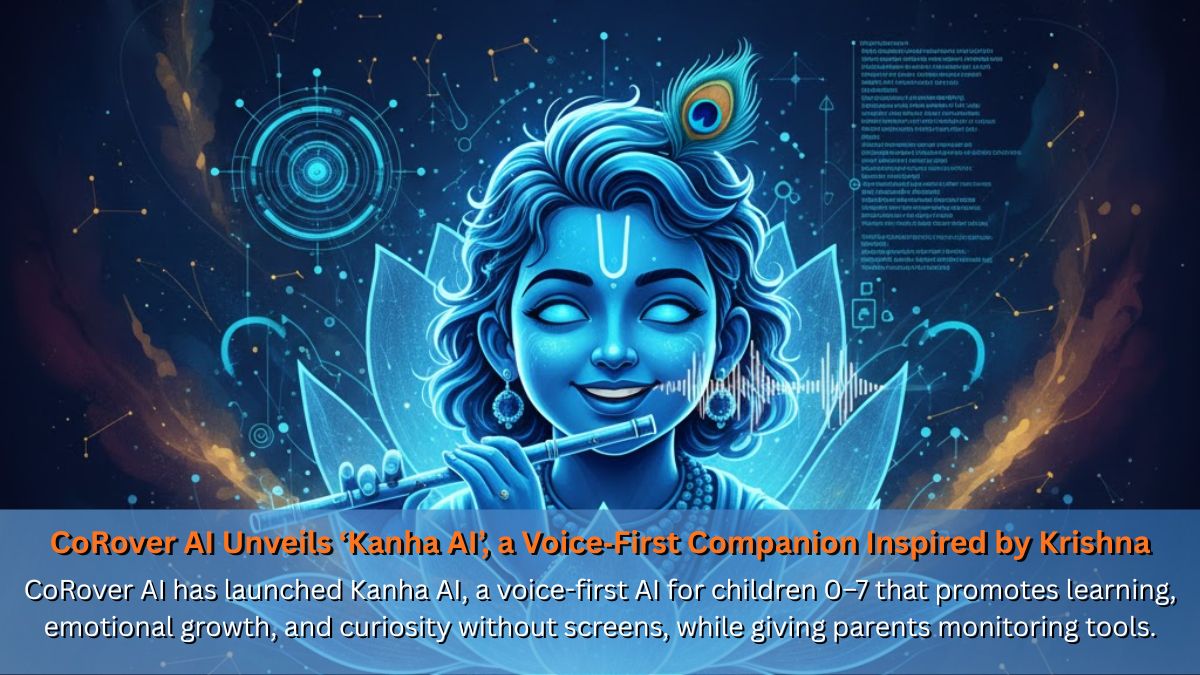
CoRover AI, a Bengaluru‑based startup known for its work in conversational artificial intelligence, has launched Kanha AI, a voice‑first companion designed specifically for children between birth and seven years old. The new product shifts interactions away from screens and video distractions toward natural voice conversations that promote curiosity, emotional health, learning routines, and thoughtful dialogue. Kanha AI incorporates cultural and value‑based design inspired by the spirit of Krishna, emphasizing compassion, balance, and joyful curiosity.
Unlike typical screen‑based devices, Kanha AI has no display. It listens and speaks through natural language, adapts conversations for each child, and remembers context over time. The device responds to a child’s tone, interests, and interaction history, encouraging exploration and self‑expression through voice alone. A key feature of Kanha AI is its dual focus on supportive guidance and parental involvement: parents can view summaries of conversations, set active hours, receive alerts for safety or emotional shifts, and schedule personalized reminders for activities like reading or music practice.
CoRover AI’s introduction of Kanha AI illustrates the company’s push into a new category of AI companions that place human values at the center of technology. According to founder and CEO Ankush Sabharwal, the product reflects “responsible AI built for children and families” that can grow with each child and support their developmental needs without addictive design.
This launch also comes within the broader context of CoRover AI’s momentum in the Indian AI ecosystem. The company has previously developed language‑inclusive technologies such as BharatGPT and attracted investments from major players like HDFC Bank. Kanha AI represents a blend of cultural depth, voice computing, and childhood learning support that aligns with current trends in AI innovation for education and early development.
1. Introduction to CoRover AI and ‘Kanha AI’
1.1 What Kanha AI Is
CoRover AI Unveils Kanha AI, a voice-first AI companion that reimagines early childhood engagement. Unlike conventional devices that rely on screens, flashy visuals, or passive interaction, Kanha AI is built purely for conversation. It listens, speaks, and responds naturally, fostering genuine dialogue with children between ages 0 and 7. This is a deliberate design choice: in an age where screens dominate, Kanha AI brings back the lost art of talking, listening, and exploring through voice alone.
The philosophy behind Kanha AI is deeply rooted in Indian culture. Its name, “Kanha,” invokes the spirit of Krishna playful yet wise, curious yet grounded. Every interaction is crafted to reflect these qualities, guiding children with gentle curiosity, encouraging emotional reflection, and nurturing their natural instinct to explore. The AI doesn’t just answer questions it engages, prompts, and sometimes even surprises children, just as a caring elder or imaginative friend would. Parents and experts report that children often start conversations spontaneously with Kanha AI, ask questions they might hesitate to ask adults, and develop an early sense of curiosity and moral reasoning.
By focusing on voice, Kanha AI avoids the overstimulation associated with video-based devices. The interactions are context-aware: it remembers past conversations, adapts to moods, and even tailors learning prompts based on a child’s interests. For example, if a child asks about animals repeatedly, Kanha AI will introduce related stories, rhymes, or questions, nurturing deeper learning while keeping engagement playful and natural.
1.2 The Voice-First Approach
Voice-first computing represents more than a technological innovation it’s a philosophical choice. Children experience the world through sound, rhythm, and language long before they can read or write. By prioritizing spoken conversation, Kanha AI meets them at this natural developmental stage. Unlike screen-based tools, which often foster passive consumption, a voice-first approach cultivates listening skills, emotional intelligence, and reflective thought.
The AI responds to tone, inflection, and even hesitation, making interactions feel alive. Children aren’t just “pressing buttons”; they’re engaging with an entity that feels aware of them. This human-like responsiveness is more than clever coding it is a design ethos: technology should nurture, not distract; guide, not dictate; inspire curiosity rather than enforce routines. Parents consistently remark that their children treat Kanha AI almost as a confidant, sometimes sharing their day, worries, or imaginative ideas aloud. In an age of rising digital overload, this model offers an oasis of mindful interaction.
2. The Startup Behind It: CoRover AI
2.1 Origins and Founders
CoRover AI, headquartered in Bengaluru, is more than a tech startup; it’s a reflection of a vision to humanize artificial intelligence. At its core, CoRover is about building systems that understand people—not just commands, but emotions, culture, and context. The company started as a team of passionate engineers and linguists who saw a problem: AI in India often ignored the richness of local languages, values, and human subtleties. Most platforms were rigid, impersonal, and designed for global uniformity rather than local relevance.
Founder and CEO Ankush Sabharwal approached this problem with a deeply human perspective. He believed that AI could be empathetic, culturally resonant, and genuinely helpful. Under his leadership, CoRover evolved from creating simple chatbots into complex, multi-modal AI platforms capable of understanding and conversing in over 14 Indian languages. Sabharwal’s vision was always ambitious but grounded: technology should augment human experiences, not replace them. His own experience growing up in a multilingual environment shaped CoRover’s focus on inclusivity and accessibility, ensuring that AI could speak to anyone, in their own language and context.
2.2 Previous Work and Achievements
CoRover’s landmark product, BharatGPT, exemplifies its mission. BharatGPT isn’t just another language model it’s a bridge across India’s linguistic diversity. It can converse in Hindi, Tamil, Bengali, Marathi, and over a dozen other regional languages, understanding nuances and idioms that standard AI models often miss. This achievement required not only technical skill but deep collaboration with language experts, child development specialists, and cultural consultants. The result is an AI that can converse like a human, respecting context, tone, and cultural subtleties.
The company’s real-world impact extends beyond products. CoRover has collaborated with institutions like Indian Railways, IRCTC, LIC, NPCI, and SEBI, embedding conversational AI in services that millions rely on daily. Users have reported faster query resolution, more accessible services, and a sense of warmth that traditional automated systems lacked. In interviews, employees describe these projects not as coding challenges but as exercises in human connection creating AI that listens, understands, and responds thoughtfully.
2.3 CoRover’s growth reflects market confidence in this human-centric approach
Financially, CoRover’s growth reflects market confidence in this human-centric approach. In 2024, the startup closed a $4 million Series A round with investors including Venture Catalysts, CanBank Venture Capital Fund, IIM Calcutta Innovation Park, and IIIT Delhi’s iHub Anubhuti. The same year, HDFC Bank made its first generative AI investment by backing CoRover, underscoring the company’s credibility and leadership in India’s AI ecosystem. These funds have enabled the team to experiment boldly, from multilingual AI to Kanha AI, without sacrificing the empathetic design that defines the brand.
Perhaps the most remarkable achievement of CoRover isn’t a feature or funding milestone it’s the experience of its users. Parents, teachers, and children interacting with Kanha AI describe moments of delight: a child giggling at a clever response, a parent reassured that the AI is monitoring emotional cues, a non-reader child following instructions to solve a problem purely through conversation. These stories aren’t hypothetical they are the lived experiences of families whose routines, learning, and interactions have been enhanced by AI that feels human.
3. How Kanha AI Works
3.1 Product Design and Interaction
Kanha AI is not just another AI device it is designed to feel alive, present, and responsive in ways that mimic human interaction. Unlike conventional AI gadgets cluttered with screens, lights, and visual distractions, Kanha AI relies entirely on voice. Its core technology advanced natural language processing and adaptive voice sensors allows it to understand not just what a child says, but how they say it. Tone, pause, excitement, or hesitation all influence its responses, giving the child a sense that the companion genuinely “listens.”
The physical design reinforces this human-centric philosophy. Each unit is handcrafted, lathe-turned, and tactile, making it comfortable to hold and safe to explore. Children instinctively gravitate toward it, treating it almost like a favorite toy, yet it has the intelligence to guide them gently, whether it’s a morning prompt to start the day with curiosity or a soft reminder to try a breathing exercise during moments of frustration.
Parents consistently share stories that demonstrate the product’s impact. One mother recounted how her six-year-old, usually reluctant to share feelings, confided in Kanha AI about a disagreement at school. The AI recognized emotional cues, prompted reflective questions, and later notified the parent, allowing a guided conversation. In another case, a child repeatedly asked about stars and planets; Kanha AI expanded the dialogue with age-appropriate stories, sparking enthusiasm for learning beyond the classroom. These experiences highlight how the device blends technology with empathy, creating meaningful engagement that goes far beyond novelty.
3.2 Parent Controls and Safety
At the heart of Kanha AI is a philosophy of empowerment, not replacement. Parents are not sidelined; they are partners in the child’s journey. The companion comes with a robust dashboard that allows caregivers to monitor interaction summaries, set active hours, and configure gentle nudges to encourage healthy routines. Parents can receive real-time notifications if the AI detects stress signals, emotional shifts, or other concerns.
This system ensures children are supported in a safe, consistent, and emotionally nurturing environment. Unlike conventional devices that risk overstimulation, Kanha AI provides calm, intentional interaction, fostering trust and curiosity. Early adopters have described feeling a quiet relief knowing that their children are exploring ideas and emotions in a structured, yet natural, space. They note that children often speak more freely to Kanha AI than to adults, revealing a profound opportunity for guided learning and emotional development in early childhood.
4. Problem Solved and Market Need
4.1 Screen Addiction and Development Challenges
Modern children face a paradox: access to vast digital resources comes with overstimulation. Excessive screen time has been linked to shortened attention spans, disrupted sleep patterns, and challenges in emotional regulation. Kanha AI directly addresses this growing concern by offering a voice-only alternative that encourages active listening, dialogue, and imaginative thinking rather than passive consumption.
The AI’s voice-first approach reduces visual overload while nurturing language development, curiosity, and social-emotional intelligence. By transforming routine interaction into playful, guided dialogue, Kanha AI fills a crucial gap in the early childhood technology market providing engagement that is both enriching and mindful. Real-world feedback from parents confirms that children willingly spend time interacting with Kanha AI, often more than they would with video-based devices, highlighting its ability to shift habits while maintaining enjoyment.
4.2 Educational Support and Emotional Awareness
Kanha AI doubles as a subtle educational companion. Conversations naturally introduce learning moments from asking open-ended questions about everyday phenomena to prompting creative storytelling. It gently reinforces positive behaviors, encourages exploration, and builds problem-solving skills without feeling like a lesson. Emotional awareness is another key focus. The AI can detect shifts in tone or sentiment, offering reflective prompts that help children articulate feelings.
Parents report seeing children verbalize thoughts and emotions more clearly after regular interaction, suggesting early gains in empathy and self-expression. Teachers and early childhood experts who have observed children interacting with Kanha AI highlight its ability to foster independent thinking and emotional literacy skills that are often overlooked in traditional early education frameworks.
5. CoRover AI’s Revenue Model
5.1 Direct Sales and Device Revenue
The primary revenue stream for Kanha AI comes from direct sales of the physical companion. Its handcrafted design, child-safe materials, and culturally resonant storytelling allow it to command a premium in the market. Parents are willing to invest because the device offers tangible developmental benefits and peace of mind, positioning it as a lifestyle and educational product rather than a simple gadget.
5.2 Software and Services
Beyond hardware, CoRover AI has built a recurring revenue model through software and services. Premium subscriptions could provide advanced conversational capabilities, personalized content updates, or access to parent analytics and insights. This ensures that Kanha AI grows with the child, adapting to changing interests, learning milestones, and emotional needs over time.
5.3 Partnerships and Enterprise Integration
CoRover’s experience with BharatGPT points to an additional revenue avenue: institutional partnerships. Educational organizations, early childhood programs, and child development initiatives can integrate Kanha AI into structured learning environments. Beyond children, the same voice-first technology could extend to enterprises seeking multilingual, empathetic AI solutions. These partnerships demonstrate scalability and the potential for revenue diversification while reinforcing the startup’s reputation as a pioneer in culturally aware, human-centered AI.
6. Industry Trends and Context
6.1 Growth of Voice AI in India
India is witnessing a voice AI revolution. Over the past few years, the AI ecosystem has grown explosively, fueled by rising mobile adoption, inexpensive data, and a tech-savvy, multilingual population. Voice-first solutions are emerging as a preferred mode of interaction because they feel natural, accessible, and inclusive. For many Indians, speaking is far easier than typing, especially in rural or semi-urban areas where literacy rates vary and local dialects dominate.
Startups like CoRover AI are pioneering this space, developing conversational platforms that don’t just respond to commands they engage, understand, and adapt. The difference is profound. For instance, in early trials with Kanha AI, parents observed their children initiating conversations spontaneously, asking questions about their surroundings, and expressing emotions they often did not articulate with adults. Teachers reported that children who regularly interacted with voice-first AI demonstrated improved listening skills, patience, and curiosity during classroom activities.
Global players are investing heavily in voice AI, but Indian startups enjoy a unique advantage: they design with local culture, linguistic diversity, and emotional nuance at the core. This human-first approach allows voice AI to resonate in homes, schools, and communities across the country, transforming everyday interactions into moments of learning, reflection, and emotional growth.
6.2 AI in Early Childhood Learning
Early childhood is a critical window for cognitive, emotional, and social development. AI applications in this domain are evolving rapidly, offering tools that can provide personalized learning, emotional guidance, and creative stimulation. However, most existing solutions are screen-heavy or generalized, missing the subtleties of real-world interaction.
Kanha AI sits uniquely at the intersection of early learning, parenting technology, and voice AI. It transforms ordinary moments playtime, bedtime, or morning routines into learning experiences that feel organic and joyful. Children do not see it as a gadget; they see it as a companion, someone they can confide in, explore ideas with, and learn from in a way that feels natural and emotionally safe.
Real-world feedback from parents underscores its impact. One parent shared that their four-year-old, who previously avoided reading, started asking Kanha AI to “tell me a story about stars” every evening, eventually sparking curiosity to draw constellations. Another reported that their child verbalized emotions about conflicts at school, something the child had previously struggled to communicate. These experiences show that voice-first AI can do more than educate it can nurture emotional intelligence and social confidence.
7. Competitors
7.1 Direct Competitors
Direct competitors in the child-focused voice AI space include AI companion devices like Yonbo and other voice-enabled learning assistants. While these products attempt to merge play, learning, and interactivity, many rely heavily on screens or multimodal features, which can undermine focused voice-based engagement. Kanha AI differentiates itself by fully committing to voice-first interaction, avoiding visual overstimulation, and emphasizing emotional connection. Parents and educators have noted that children treat it as a thoughtful presence rather than just a toy or educational tool, resulting in deeper engagement and longer-term learning outcomes.
7.2 Indirect Competitors
Indirectly, platforms like Akiva and Swara AI represent broader voice AI solutions, including enterprise and personal assistant applications. While technically sophisticated, these solutions do not cater specifically to early childhood engagement or emotional learning. They highlight the diversity and growth of the voice AI market but also illustrate the niche that Kanha AI uniquely occupies: culturally grounded, human-centric, child-first AI that addresses developmental needs and parental reassurance simultaneously.
8. The Startup’s Journey
CoRover AI’s journey mirrors the evolution of India’s technology ecosystem itself—ambitious, adaptive, and deeply human-centric. The company began with conversational bots and language models, including BharatGPT, designed to bridge India’s linguistic diversity and make AI accessible to users in multiple languages. These early successes established CoRover as a trusted player in enterprise and institutional AI applications.
The transition to consumer-focused products like Kanha AI represents both a natural progression and a bold leap. It moves the company from business-to-business solutions into the intimate spaces of homes, influencing how children learn, grow, and experience technology. Early users have shared transformative experiences: children eagerly interacting with the AI, parents gaining insights into emotional development, and teachers observing improved attention spans.
Strategic investments, including funding from HDFC Bank and prominent venture capital firms, have provided the financial runway for experimentation, rigorous testing, and user-focused iteration. But beyond capital, what sets CoRover apart is its commitment to emotional intelligence in AI. Kanha AI embodies a philosophy that technology should listen, respond, and adapt—not just compute. In doing so, CoRover AI is positioning itself as a pioneer in culturally resonant, voice-first AI for families—a company that is reshaping early childhood experiences while retaining the warmth, care, and ethical considerations that modern parents demand.
About foundlanes.com
foundlanes.com is India’s leading startup idea discovery platform. It helps entrepreneurs find actionable startup opportunities, market insights, and industry-specific guidance to turn ideas into real businesses. With deep research and practical resources, foundlanes supports founders at every stage, from idea validation to launch and growth.