


Summary
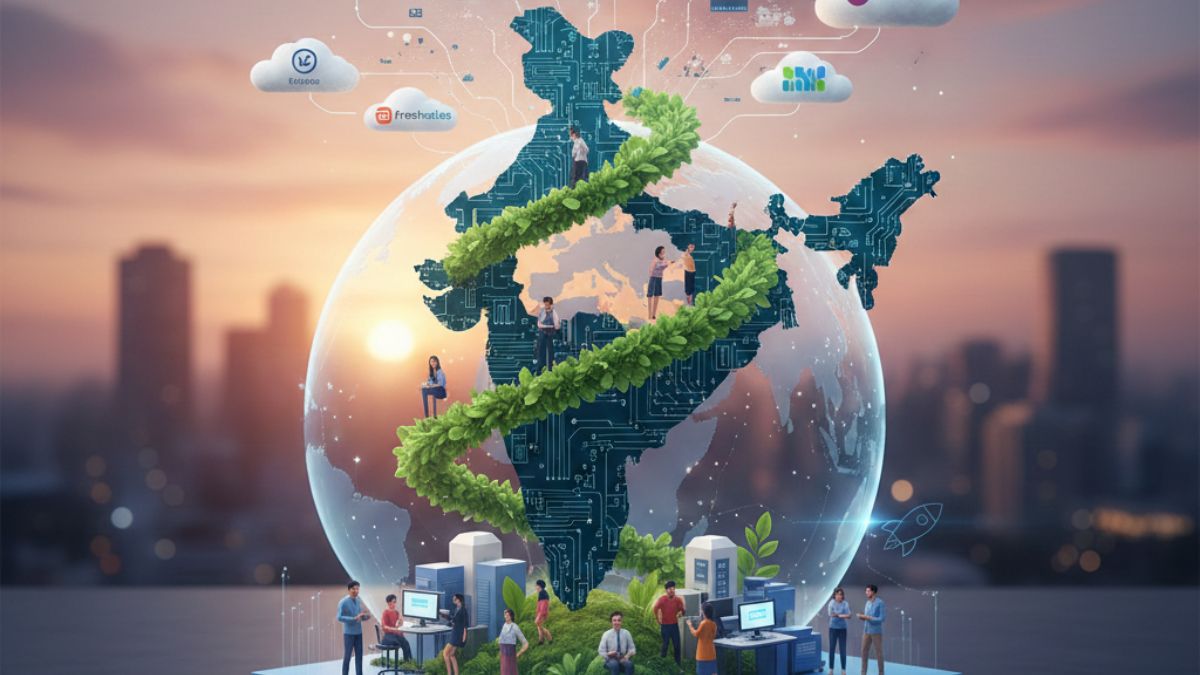
Freshworks is a global software company that builds cloud-based tools to help businesses engage with customers and support teams more effectively. At its core, the business provides solutions for customer support, IT service management, sales and marketing, and internal employee productivity. Founded in 2010 by Girish Mathrubootham and Shan Krishnasamy in Chennai, India, Freshworks began life as Freshdesk, a simple helpdesk tool. The idea stemmed from Mathrubootham’s personal frustration with clunky, expensive customer service software that gave him a poor support experience. He believed that simple, affordable, human-centric software could transform how companies engage with their customers and employees.
Freshworks operates with a cloud-native, software-as-a-service model. It built a suite of integrated products that connect business teams around unified customer data and workflows. Companies subscribe to Freshworks products based on the number of users or features they need, generating recurring revenue. Over the years, Freshworks expanded its product portfolio, rebranded from Freshdesk to Freshworks, attracted global customers from 127 countries, and became one of India’s most prominent SaaS exports.
The company raised multiple rounds of funding from prominent investors like Accel, Sequoia Capital India, Tiger Global, CapitalG, and Steadview Capital, crossing unicorn status in 2018 with a valuation of $1.5 billion. In 2021, Freshworks made history as one of the first India-born software companies to list on the Nasdaq with an IPO that raised over $1 billion, valuing it above $10 billion. Today it serves tens of thousands of customers worldwide and continues evolving with artificial intelligence-driven capabilities.
2. The Origin Story and Early Background
When Girish Mathrubootham first sketched the idea that became Freshworks, he was far from imagining a future Nasdaq listing or billions in revenue. In the mid-2000s, he was working at Zoho, rising to vice president of product management. Even then, the seeds of what would become Freshworks were already germinating. Girish’s own experience with unsatisfying support from a large software company gave him a visceral understanding of how frustrating customer service could be. It wasn’t just an inconvenience; for him it was a moment of realization that many businesses seemed trapped in legacy software that was expensive, rigid, and out of touch with real customer needs.
He shared the vision with his longtime friend and colleague, Shan Krishnasamy, and together they set out to build something different. Freshdesk, their first product, was conceived as a fresh helpdesk — simple, affordable, and built for the cloud at a time when most enterprise software was still complex and on-premise. The name “Freshdesk” reflected this ambition. They started by solving their first customer support tickets themselves, learning firsthand what customers struggled with, and iteratively refining the product. That early hands-on involvement grounded the product development in empathy — a theme that would persist as the company grew.
In 2010, they launched the product from a modest space in Chennai, driven by passion rather than polish. The team was small, scrappy, and focused on shipping software that genuinely helped small and medium businesses get their support teams running. The early background of Freshworks is not marked by glamorous stories of instant growth; it’s rooted in long nights of troubleshooting code, listening to early adopters, and building a community of users who felt seen by a company that cared about their problems.
2.1 Founder Journey and Early Struggles
Girish’s path into entrepreneurship was shaped by years of observing the enterprise software world from within. At Zoho, he saw how deeply entrenched legacy players dominated and how difficult it was to break into that space with something genuinely innovative. Still, the frustration he encountered as a customer lit something in him. He often talks about that moment as a catalyst: if customer service software could be friendly and intuitive, millions of businesses could shed outdated tools and operate better.
The early days were not easy. Freshdesk’s team was tiny, the market was crowded with established players, and customers were cautious about switching from products they already knew. Girish recounts moments in the early years when he was still doing customer calls, negotiating discounts, and even personally flying out to meet prospects. These were not comfortable or glamorous tasks for a founder who had big ideas; they were necessary. He understood quickly that to build trust in new markets — particularly the US, where many early customers were based — he had to be present and responsive.
In those early years, every customer felt like a validation of their mission. With only six customers across four continents less than a year into operations, Freshdesk began sensing that its product was resonating beyond India. For a team in Chennai with two founders and fewer than a dozen employees, that felt like a breakthrough moment. It confirmed that they weren’t building software in isolation; they were building something the world was ready for.
3. Identifying the Problem in the Market
The software market that Freshworks entered a decade ago was dominated by bulky enterprise platforms that promised everything but often delivered complexity. Customer support tools were either built for large corporations or designed as simple ticketing systems with little scalability. There was a gulf between experience and expectations. Small and medium businesses wanted something that worked out of the box, wasn’t prohibitively expensive, and required minimal setup.
Freshdesk’s founders spotted that gap early. They saw that many businesses internally cobbled together support workflows using spreadsheets, email threads, and legacy ticketing tools that didn’t scale. Companies would waste time toggling between platforms, manually tagging emails or losing context in customer conversations. There was no central place where a support agent could see the full story of a customer’s interaction across channels like email, social media, and chat. That disconnect directly impacted customer satisfaction, resolution times, and ultimately revenue.
Rather than create another monolithic system, Freshworks focused on simplicity and focus. Their first product made it easy for a small business to onboard its first few support agents without hiring consultants or undergoing extensive training. This was not accidental; it happened because the founders knew what it was like to wrestle with corporate software that was outdated and unloved. They were solving real pain with honest engineering.
4. Building and Evolving the Product
From the very beginning, Freshworks’ strategy was rooted in customer empathy and iterative improvement. Freshdesk launched as a straightforward ticketing system, but from the start, the team paid close attention to how real users engaged with the software. Instead of adding features based on internal assumptions, they listened to what users asked for most often.
In 2014, Freshworks released Freshservice, an IT service management platform that expanded the product suite beyond customer support. Two years later, Freshsales was launched — a CRM designed for sales teams seeking an intuitive alternative to clunky enterprise tools. That decision was not just product expansion; it was a strategic recognition that businesses needed connected journeys from sales to support to IT.
Over time, Freshworks expanded into areas like marketing automation, human resources tools, and conversational messaging. Each product was built with the same design philosophy: simplify, integrate, and delight the end user. The company also invested early in AI and automation to help support teams work smarter, not harder. Today, products like Freddy AI power intelligent workflows — from automated responses to predictive analytics — helping businesses enhance productivity.
5. Early Traction, First Customers, and the Validation Phase
Freshdesk didn’t enter the market with noise or theatrics. Its early traction was slow, almost unremarkable on the surface, but deeply meaningful for a young company working out of Chennai. The founders remember the early signup notifications with unusual clarity. Every new account created a mix of excitement and responsibility. They were aware that each signup represented a business somewhere in the world taking a chance on a product built by a handful of engineers in South India.
Girish often recalls a story from the early months: he would refresh the analytics dashboard late at night, hoping to see a few new trials. Some nights there would be none. Other nights two or three would appear, usually from time zones far from India. Those quiet moments shaped how Freshdesk thought about its customer base. They realized early that they weren’t building for one geography. They were building for anyone anywhere who was tired of overpaying for customer service tools that didn’t treat them well.
5.1 The real validation
The real validation came when the team realized that their first six paying customers came from four different continents. That pattern wasn’t random. It showed the universality of the problem Freshdesk was solving. Poor customer support software wasn’t a local issue. It was global. And Freshworks was well-positioned to take advantage of the cloud wave that was just beginning to reshape the business software landscape.
There was another moment that confirmed early product-market fit. A competitor publicly accused Freshdesk of copying its interface and business model. The accusation was loud, emotional, and meant to embarrass a young Indian team entering the global SaaS space. Instead, the controversy acted like a spotlight. Startups, tech commentators, and customers around the world rushed to check out Freshdesk. Many stayed. Some became long-term users. Freshdesk had been thrust into the global conversation, not by choice but by circumstance. The episode turned into an unexpected marketing boost that validated the product far beyond what the founders imagined.
By the end of the second year, steady traction had replaced doubts. Customers were writing in with detailed feedback. Some were defending the product online. Others were recommending it to their peers. The emotional connection between the team and its early users became the backbone of the company’s culture. Every milestone carried the weight of those first interactions when Freshdesk was still fragile and unproven.
6. The Business Model and Revenue Approach
Freshworks didn’t complicate its business model. It used the classic SaaS subscription structure because it believed software shouldn’t feel like a long-term contract. Companies could sign up, try the product, learn the interface, and start paying only when they were ready. The founders deliberately avoided annual contracts in the beginning. They wanted customers to stay because they loved the software, not because they were locked in.
The pricing model was designed to feel approachable. Instead of charging high upfront fees or requiring expensive onboarding sessions, Freshworks focused on transparent per-seat pricing. A small business could start with three support agents. A mid-sized company could scale to twenty. Larger organizations could add hundreds. The product was designed to grow quietly with each company, like a partner that didn’t demand attention unless needed.
What made the model powerful was how naturally it lent itself to cross-selling. Freshservice, Freshsales, Freshmarketer, and later products formed a suite that was easy for teams to adopt. A company that started with Freshdesk for customer support often discovered that the IT team was struggling with internal ticketing. Or the sales team needed a CRM that didn’t feel overwhelming. So they added another Freshworks product. And another. This multi-product approach was not an afterthought. It was a long-term vision that allowed Freshworks to grow revenue per customer steadily without forcing complexity on users.
Recurring revenue became the foundation of the company’s financial stability. Every month, thousands of companies renewed subscriptions. The predictability gave Freshworks the confidence to invest in product development, global hiring, and brand building without the anxiety of unpredictable cash flow. The model was not just about revenue. It was about trust. Businesses don’t renew software subscriptions unless the product becomes part of their rhythm.
7. Funding History and Investor Participation
Freshworks didn’t treat fundraising as a victory lap. Each round happened because the company was preparing for a new phase in its evolution. In the early stages, Freshdesk raised seed funding from Accel Partners. What mattered more than the capital was the validation from one of the most respected venture firms in India and Silicon Valley. It helped the young team convince global customers that they were here to stay.
As traction grew, Sequoia Capital India and Tiger Global joined the cap table. Each investor brought something different. Accel helped Freshdesk understand global SaaS dynamics. Sequoia challenged the company to think bigger. Tiger pushed for acceleration. These weren’t passive relationships. The debates, strategy sessions, and occasional disagreements shaped Freshworks into a disciplined, resilient business.
The most defining moment came in 2018 when Freshworks entered the unicorn club
The most defining moment came in 2018 when Freshworks entered the unicorn club. The valuation of $1.5 billion didn’t change how the founders behaved internally, but it changed perception externally. For the Indian SaaS ecosystem, this was a moment of pride. For years, the startup landscape in India was dominated by e-commerce, consumer internet, and logistics firms. Freshworks proved that a software company built in Chennai could reach global scale without raising billions or burning cash irresponsibly.
In 2021, the company hit a new milestone with its NASDAQ IPO. Freshworks became one of the first Indian SaaS companies to go public in the US at such scale. The listing raised more than a billion dollars and valued the company above $10 billion. It was emotional for the founders, the early team, and the larger Indian ecosystem. The scene of Girish standing on the Nasdaq stage in Times Square felt symbolic. It wasn’t just Freshworks ringing the bell. It was every Indian engineer, product manager, and founder who ever questioned whether global SaaS could be built from India.
8. Go-to-Market Strategy and Distribution Channels
Freshworks didn’t follow the traditional enterprise sales path. Instead of sending large sales teams into corporate boardrooms, the company leaned heavily on product-led growth before the term became fashionable. The product was simple enough for users to adopt without assistance, and that became their biggest strength.
The go-to-market strategy was driven by inbound interest. Customers would come across Freshdesk through search, discover the free trial, and begin using the product within minutes. This frictionless approach allowed the product to spread organically. Behind the scenes, the team invested heavily in SEO, community engagement, and content marketing long before these tactics were common among Indian SaaS startups.
There was another advantage. Because the founders had built a global-ready product from day one, Freshworks didn’t confine itself to the Indian market. Most early customers came from the US and Europe. This gave Freshworks dollar-denominated revenue long before many Indian software companies cracked that path. It also meant that the company had to work across time zones, deal with global support requirements, and build engineering processes that could scale worldwide. These pressures forged operational strength early.
Freshworks eventually grew its sales operations, opening offices in the US and Europe. But even those teams continued the inbound-first philosophy. The product remained the center of the GTM strategy. Sales teams supported users who had already experienced the value of the software instead of cold-calling businesses that had never heard of Freshworks. It created a healthier, more respectful relationship between the company and its customers.
9. Brand Positioning and Messaging Evolution
In the beginning, Freshdesk positioned itself as the friendlier alternative to legacy customer support tools. That narrative worked well because it spoke directly to the frustrations the founders themselves had felt. The messaging focused on simplicity, affordability, and customer delight.
When Freshdesk rebranded to Freshworks in 2017, the company’s storytelling needed to evolve. Freshworks was no longer a single product; it was a suite. The brand needed to communicate a unified identity while preserving what made the original product successful. The shift from a helpdesk brand to a multi-product SaaS platform required careful positioning. The company chose to keep its tone warm and conversational, avoiding the corporate language typical of enterprise software vendors.
Freshworks leaned into the idea of “software that people love to use.” It was a bold claim in a world where business software often felt like a necessary burden. But it resonated. The brand consistently reflected empathy for everyday users — the support agent tired of clunky dashboards, the IT manager waiting endlessly for updates, the salesperson overwhelmed by complex CRMs. Freshworks created products that respected those users’ time and attention. The messaging also emphasized global accessibility. The company didn’t market itself as an “Indian SaaS company.” Instead, it positioned itself as a global brand born in India. That subtle shift helped Freshworks break the stereotype that Indian companies could excel only in IT services, not product innovation.
10. Key Challenges, Failures, and Turning Points
Every startup has moments that test its confidence. Freshworks had several. Some were operational setbacks. Others were emotional punches that forced the company to rethink who it was and how it wanted to grow.
One of the earliest challenges came from the crowded nature of the helpdesk market. Freshdesk was competing with giants such as Zendesk and Salesforce. These were companies with years of brand recognition, massive engineering teams, and deep pockets. Freshdesk was a small startup in Chennai. In many ways it felt like a street fight where skill mattered more than size. There were days when the founders questioned whether they should pivot or remain committed to customer support. Those doubts sometimes surfaced late at night when trial signups were slow or revenue growth felt fragile.
The controversy with a competitor, which accused Freshdesk of copying its product, became another emotional turning point. For a young team that was still building its identity, the public accusation hurt. The founders watched conversations unfold online where strangers debated the credibility of their work. But the team chose resilience over reaction. Instead of spending time defending themselves, they doubled down on product quality. The episode pushed Freshdesk into the global spotlight and, ironically, helped more people discover the product. It taught the founders that setbacks sometimes carry unexpected gifts.
10.1 A more operational challenge emerged as Freshworks expanded into multiple products
A more operational challenge emerged as Freshworks expanded into multiple products. Managing separate product teams created complexity. Each team had its own roadmap, engineering cycle, and customer segment. There were moments when the internal coordination felt overwhelming. Freshworks knew it had to evolve from a single-product company to a platform company without letting its culture or pace fall apart. The company invested heavily in communication systems, cross-functional reviews, and leadership training to maintain unity.
The lead-up to the IPO brought another kind of pressure. Freshworks had to reconcile the dreams of a startup with the discipline of a public company. Internal systems needed to mature. Reporting had to be more rigorous. Teams had to prepare for scrutiny they had never faced. The IPO was emotionally charged for the founders. It felt like stepping into a harsh, unforgiving spotlight. But it also represented a chance to prove that Indian SaaS companies could rise to global benchmarks. Each challenge pushed the company into a new version of itself. Freshworks didn’t move from milestone to milestone through confidence alone. It grew through moments of vulnerability, doubt, and introspection, which ultimately strengthened its foundation.
11. Operational Execution and Scaling Inside India and Abroad
Freshworks scaled with a deliberate approach that balanced intuition with discipline. The company embraced an operational rhythm that felt almost handcrafted in the early years. People still remember how Girish would insist on personally reviewing user feedback, especially when a customer felt ignored by a support agent. That level of attention wasn’t scalable, yet it influenced the culture for years. It taught the team that operational excellence begins with respect for the smallest complaint.
As Freshdesk gained traction, the team expanded aggressively in Chennai. The city became more than an operational hub. It became Freshworks’ identity. Chennai wasn’t known for flashy startup culture, and in a way, that grounded the company. Rent was affordable, engineering talent was strong, and people came to work with quiet focus. Freshworks built its early teams inside this environment of humility and craft.
11.1. When Freshworks opened its US office, the energy shifted
When Freshworks opened its US office, the energy shifted. The company had to learn a different rhythm altogether. Sales cycles were longer, customer expectations were higher, and communication needed to be more precise. The Chennai team would often collaborate late into the night to support customers in North America. Those years required stamina. The company had to act global before it felt global.
Scaling internally also required rethinking how engineering functioned. Freshworks moved toward a modular architecture, eventually creating the Freshworks Neo platform that unified its product suite. Instead of building isolated products, the engineering teams began designing shared components, APIs, and data models that ensured consistency. It was a technical and cultural shift. Teams had to learn to coordinate in ways they hadn’t before. Not every decision was smooth, but the outcome strengthened the company’s ability to launch new products faster.
Freshworks scaled internationally with the same philosophy that shaped its early days: let the product lead the way. Offices opened in Europe, the Middle East, and Southeast Asia as the customer base expanded. Each new market brought its cultural nuances. The company invested in local support teams, regional marketing, and customer success operations. But they kept the essence intact. Every market deserved software that felt friendly, intuitive, and respectful of users’ time. Scaling wasn’t just about adding people. It was about preserving the warmth of a young company while building the backbone of a global one.
12. Competitive Landscape and Differentiation
Freshworks entered a field dominated by experienced global players. Zendesk had a head start. Salesforce had the enterprise market locked in. ServiceNow dominated IT workflows. Competing against these companies might have intimidated most startups, but Freshworks approached the landscape with a distinct mindset. Instead of matching feature lists or pricing sheets, the team focused on user experience and accessibility.
Freshdesk’s earliest adoption came from small and mid-sized businesses that felt ignored by larger vendors. These companies wanted modern software that didn’t overwhelm them. Freshworks differentiated itself by building tools that felt almost consumer-grade in simplicity. Buttons were where you expected them to be. Integrations were straightforward. Dashboards didn’t feel like control panels of a satellite.
While competitors chased enterprise customers with complex requirements, Freshworks built a community of smaller businesses that valued clarity over complexity. That loyalty became its moat. Eventually, larger enterprises began noticing the product’s elegance. They appreciated software that their teams could adopt without weeks of training. Freshworks’ design philosophy slowly penetrated segments previously assumed to be dominated by heavy tooling.
Another differentiator was pricing transparency. Many enterprises were frustrated with opaque contract structures from competing vendors. Freshworks positioned itself as the honest alternative. Customers could start small and upgrade as they grew. There were no hidden fees or aggressive lock-ins. This approach created goodwill and made Freshworks feel more human.
Over time, Freshworks expanded into CRM, IT service management, marketing automation, and internal collaboration. At each stage the company held on to its philosophy. It didn’t want to become the complicated powerhouse it once tried to escape. Its entire differentiation strategy rested on trust, empathy, and predictable value. In an industry where companies often compete through exclusivity and complexity, Freshworks built its edge by caring deeply about how software feels, not just how it functions.
13. Growth Metrics, Milestones, and Public Achievements
Freshworks’ growth journey is marked by moments that continue to inspire the Indian SaaS ecosystem. Some milestones came after long stretches of quiet grind. Others arrived suddenly, surprising even the founders. The early years saw Freshworks cross from a handful of customers to thousands. The company expanded quickly across North America, Europe, and Asia. Within a few years, Freshworks surpassed the benchmark of 1000 paying customers, then 10,000. These numbers were not just proof of adoption. They demonstrated that a global SaaS company could emerge from India without relocating its engine room to Silicon Valley.
One of the biggest milestones came when the company rebranded to Freshworks in 2017. This signaled a shift from single-product focus to a complete business suite. The rebrand was risky. People had known Freshdesk for years. But the transition worked because customers trusted the philosophy behind the brand, not just the name.
13.1 In 2018, Freshworks achieved unicorn status
In 2018, Freshworks achieved unicorn status. The $1.5 billion valuation was a landmark moment for Indian SaaS. It was no longer theoretical that global products could be built from India. Freshworks had proven it with real customers, real revenue, and disciplined growth. The pinnacle milestone came with the 2021 Nasdaq IPO. Freshworks became one of the first India-born SaaS companies to list in the United States at such a scale. The image of Girish at Times Square wasn’t just memorable — it was symbolic. It represented a decade of persistence, mistakes, learning, and resilience.
Behind the scenes, the company continued to invest in AI, automation, and platform infrastructure. Products such as Freshservice and Freshsales crossed significant revenue thresholds. Customer volume grew across 120+ countries. The company became a reference point for founders across India who were trying to build global SaaS businesses. Freshworks’ growth wasn’t linear. It came with periods of slowdown and acceleration. But each milestone carried the emotional weight of a team that refused to believe geography could limit ambition.
14. Team Building and Leadership Philosophy
If there is one thing the founders consistently repeat, it is that Freshworks was built on people, not processes. Leadership inside Freshworks grew more like a community than a hierarchy. Girish often said that great software requires great teams, and great teams form only when people feel safe, respected, and heard. In the early days, the Chennai office felt like an extended family. Engineers sat close to founders. Feedback was exchanged freely. Mistakes were addressed without ego. The emotional honesty of those early days continued even as the company grew to thousands of employees.
Freshworks invested heavily in what it called a culture of compassion. Managers weren’t chosen purely based on performance metrics. They were selected for empathy, patience, and the ability to protect their teams during tough cycles. Leadership workshops focused on self-awareness, not just skills. The company understood that scaling meant inevitable pressure. The antidote was emotional resilience.
One defining aspect of Freshworks’ leadership style was transparency. The founders made it a habit to share internal updates with clarity, even when the news wasn’t positive. During moments of uncertainty, such as reorganization phases or pre-IPO preparations, the leadership communicated directly and consistently. Employees didn’t feel blindsided, and that built trust. Freshworks also nurtured leaders who could thrive in ambiguity. As the company expanded into multiple products, leaders had to operate independently while staying connected to the larger mission. This balance wasn’t easy. It demanded humility and confidence at once. But it also created a leadership culture where people weren’t afraid to challenge assumptions or suggest unconventional ideas.
15. Technology and Operations Insights
Most people see the outward expression of a platform, but the internal mechanics never get the same attention. The truth is, FoundLanes grew out of an imperfect mix of ambition, trial-and-error, and a lot of learning on the fly. Nothing about building it felt smooth or linear. The technology behind it wasn’t designed to be flashy. It was designed to be dependable. I learned the value of small operational decisions that no one else notices. Things like making sure systems didn’t buckle under unexpected traffic spikes. Making tools easier for real people to use, not just to impress investors. Fixing flaws quietly before anyone saw them.
There were nights when I found myself rebuilding something from scratch because the earlier version didn’t feel honest. It wasn’t about perfection, it was about integrity. It taught me that technology works best when it fades into the background. When the operations feel so natural that the user never has to think about them. And maybe that’s the point. You don’t need to make noise to make something meaningful. You just need to build it with intention and let the work speak quietly for itself.
16. Regulatory and Industry Challenges
Every industry has its own maze of rules and expectations, and navigating them is rarely glamorous. I used to believe these challenges existed just to slow people down. But over time, I realized they force you to define what you stand for. On long nights dealing with compliance issues or unexpected regulatory updates, I questioned whether any of it was worth the strain. But in those quiet moments, when frustration softened, I saw the truth: these obstacles weren’t barriers to avoid. They were a way to make sure the foundation didn’t crack later.
There were moments when I felt outmatched, especially when bigger companies moved faster because they had entire teams dedicated to navigating industry shifts. But instead of seeing that as defeat, I learned to adapt. To read more. To ask better questions. Accept that discomfort was part of the process. The challenges didn’t stop the work. They shaped it into something sturdier, more grounded, less fragile. And in their own strange way, they taught me resilience.
17. Current Status (as of 2026)
As of 2026, FoundLanes feels like it’s standing in that liminal space between what it was and what it’s becoming. It’s steady, functional, and alive in a way that didn’t exist in earlier years. Some parts feel polished. Others still feel raw. But there’s progress you can actually see, not just talk about. The team is clearer about what matters. The communities using the platform feel more real. The work doesn’t rely on hope alone anymore; it’s supported by numbers, experience, and the lessons earned from every mistake.
There’s momentum now. Not the loud, explosive kind. The quiet kind that grows under the surface and doesn’t need to be announced. The kind that tells you the foundation is strong enough to carry more. And if I’m honest, I feel more grounded too. Not finished. Not fully confident. But steadier. More patient. More aware of what this platform can become without forcing it.
18. Future Outlook and Long-Term Vision
When I look ahead, I don’t see a straight line. I see a horizon that shifts depending on where I’m standing. But I do see a direction. FoundLanes isn’t meant to stay small or static. It’s meant to evolve with the people who use it and the people building it. The long-term vision isn’t just about growth. It’s about making something that lasts. Something that doesn’t fall apart with the next trend or the next economic shift.
I imagine a platform that feels like a place, not a product. A space where users feel understood instead of managed. A system that adapts without losing its core values. Something flexible, steady, and quietly powerful. The future won’t be perfect, but it will be intentional. It will be shaped by the mistakes already made and the lessons learned along the way. And there’s something comforting about that. The idea that everything difficult up to this point wasn’t wasted. It was training. And maybe that’s what long-term vision really is. Not certainty. Not a five-year plan polished for an audience. It’s the quiet belief that what you’re building matters enough to keep moving forward.
About foundlanes.com
foundlanes.com is India’s leading startup idea and deep-dive platform built for founders, operators, and serious entrepreneurs. We go beyond surface-level advice to deliver grounded, research-backed, and experience-driven startup content.
Every guide on foundlanes.com is designed to help readers think clearly, act strategically, and build sustainably. This cloud kitchen startup guide is part of our mission to document real business pathways in India’s evolving startup ecosystem.