


Summary
Launching an online beauty supply store right now makes sense because demand for beauty products continues to grow sharply, especially through digital shopping channels. An online beauty supply store is a retail e-commerce business that sells cosmetic and personal care products including makeup, skincare, hair care, tools, and accessories directly to consumers over the internet. The idea matters because consumers increasingly prefer to open a beauty supply store online, enjoying the convenience, wider selection, and competitive pricing that e-commerce provides. Global beauty markets are expanding rapidly, and even India’s premium beauty segment is projected to grow significantly in the coming decade, fueled by rising disposable incomes, urbanization, and increasing digital adoption.
Who should consider this? Entrepreneurial founders with an interest in beauty, digital marketing and retail can tap into this opportunity with relatively modest startup costs compared with brick-and-mortar. The business is location-agnostic you can serve customers anywhere with a good digital presence. Where will this business operate? The most cost-effective setup is fully online, using an e-commerce platform like Shopify, WooCommerce or similar tools. You can serve customers in India and internationally with the right logistics partners and strategic market positioning. When is the right time? Now is a strategic moment to enter the beauty e-commerce space. Online shopping habits hardened during the pandemic and have stayed strong, and digital platforms now capture a growing share of beauty purchases. Social media, influencer culture and live commerce trends support discovery and conversion for new brands.
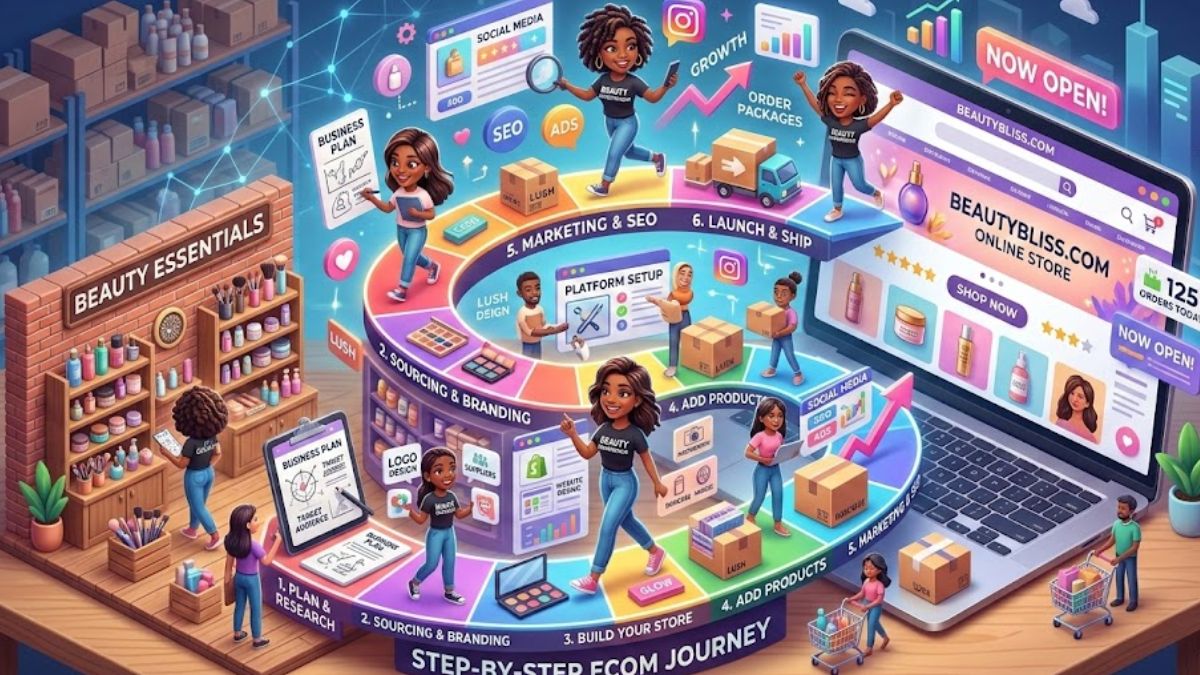
How does it work? The basics involve building a website, sourcing products from trusted wholesale beauty suppliers, setting prices that generate margin, and marketing effectively to attract shoppers. Startup costs can range widely depending on inventory and platform choices, but budget-conscious founders can start small and scale. How much can it cost? Initial setup including website development, inventory, legal fees, and marketing may run from a few thousand dollars up to tens of thousands depending on scope. Dropshipping and other asset-light models can significantly reduce upfront expenses. Below is a detailed, step-by-step guide that covers every aspect of launching and growing your online beauty supply business.
1. Startup Idea Overview
An online beauty supply store sells beauty and personal care products from makeup and skincare to hair care and accessories through a dedicated e-commerce website or marketplace integration. This business lets consumers browse and purchase items with digital checkout, and it relies on strong digital marketing, secure transactions and reliable logistics. This business solves a clear problem: many beauty consumers struggle to find convenient access to a wide range of products at competitive prices, especially outside big urban centers. Online platforms have the potential to reach underserved markets and bring beauty products to shoppers who prefer digital shopping journeys. An online beauty products shop also caters to diverse customer segments from budget conscious buyers to premium product seekers and offers flexibility through different models such as traditional inventory, dropshipping or private label selling.
2. Problem Statement & Solution
Beauty retail has traditionally been dominated by physical stores and localized outlets. That’s limiting for customers who don’t live near curated stores or specialty shops, especially in smaller towns and cities. Online shopping habit shifts mean people now expect seamless digital experiences, however many beauty categories remain fragmented with inconsistent availability and limited digital personalization options.
An online beauty supply store fixes this by aggregating a wide product range in one digital storefront accessible 24/7. Customers can discover, compare and purchase products without visiting a physical shop. High-quality product imagery, search-friendly categories, customer reviews and personalization tools make shopping easier. Integration with social media, targeted promotions and content marketing helps educate customers on products, builds trust, and drives repeat business.
3. Target Audience & Customer Persona
The ideal customer for an online beauty supply store is digitally active, beauty-conscious and price-aware. This includes young adults and millennials who shop frequently online, beauty enthusiasts who follow trends, and even professionals like makeup artists and salon owners who need consistent product access. One key customer persona might be: Priya, a 28-year-old urban professional who loves skincare and makeup, follows beauty trends on Instagram and TikTok, and prefers shopping online because she can read reviews and compare prices. She values quality, trusted brands and fast delivery.
Another is Arjun, a freelance hairstylist living in a Tier-2 city who needs reliable bulk supplies for clients, but limited local retail options force him to seek online suppliers with reasonable prices and bulk ordering options. These users choose an online beauty supply store because it saves time, offers variety and often provides price advantages compared with local retail. Content like tutorials and customer reviews also helps them make more informed purchase decisions.
4. Market Opportunity & Timing
The beauty supply market is large and growing. Globally, beauty and personal care spending continues to rise with expanding middle classes and beauty becoming part of everyday routines. Consumers are increasingly comfortable purchasing beauty supplies online, and brands invest heavily in digital channels to capture this demand.
In India, multinational beauty firms are investing to capture rapid growth, especially in premium segments. India’s beauty market including luxury categories is projected to expand multiple times over the next decade as incomes rise and digital adoption increases. E-commerce platforms capture growth because they offer lower operating costs than physical stores, and seamless digital infrastructure has matured enough to support robust online shopping. The timing is therefore favorable for entrepreneurs to launch a beauty supply store online and scale with digital marketing and logistics partnerships.
5. USP & Value Proposition
Your online beauty supply store must stand out by offering something customers care about. This could be curated product selections geared to niche segments like organic or cruelty-free brands, specialty hair care solutions for textured hair, or localized product assortments tailored to Indian skin tones and conditions. Your value proposition should clearly state: customers get high-quality beauty products, competitive pricing, fast delivery and a curated shopping experience that fits their personal aesthetics and needs.
6. Business Model & Pricing Strategy
Online beauty supply businesses can follow several models: One is traditional inventory retail, where you buy beauty products wholesale, hold stock, and fulfill orders yourself. This offers better margin control but higher upfront investment for inventory and storage. A second is dropshipping, where you list products online but your supplier handles inventory and shipping. This reduces upfront costs but typically offers lower control and thinner margins. A third approach is private label, where you source generic products and rebrand them under your unique label. This can create stronger brand identity but requires higher initial development and certification.
Pricing strategy should balance competitiveness and profitability. Initial markup on beauty products often ranges between 30% and 80%, depending on product category and positioning. Premium, niche or organic lines may sustain higher prices, while everyday items need competitive pricing.
7. Execution Plan & Launch Strategy
Your launch plan begins with market research, including competitor analysis, target audience insights, and supplier evaluation. Build a detailed business plan that outlines financial projections, product categories and marketing strategy. Next, choose your e-commerce platform and purchase your domain. Shopify remains popular for beginners, while WooCommerce gives more control for tech-savvy founders.
Then, source products. Identify high-quality beauty suppliers or consider dropshipping partners if you want to minimize inventory risk. Quality assurance is critical: ensure products meet safety standards and customer expectations. After sourcing products, set up your store website, with clear categories, strong product images, and search optimization. Integrate payment gateways and shipping options, and set up inventory management tools. Before launch, prepare a marketing campaign that includes email outreach, targeted ads, social media content and influencer engagement. Include tutorials, product highlights and value content that resonates with your customer personas.
8. Budget, Resources & Infrastructure
Startup costs differ widely based on model. An online store with traditional inventory will require funds for initial stock commonly between $2,000 and $20,000 depending on product range and SKUs selected. Platform costs include domain registration, e-commerce platform subscriptions and website design ranging from a few hundred to a few thousand dollars.
Legal and compliance costs business registrations, licenses and tax setup may add another few hundred to a few thousand dollars depending on location and requirements. Marketing costs for launch campaigns and initial paid ads should be budgeted carefully experts often recommend allocating $1,000 to $5,000 monthly for ads scaled over time. Inventory management software, customer service tools and analytics platforms complete your operational infrastructure.
9. Brand Strategy
Building a beauty supply store goes beyond selling products—it’s about creating a brand that resonates with your audience. Start by choosing a name that captures the personality of your store, whether it’s sophisticated, playful, or eco-conscious. Your logo, color palette, typography, and imagery should feel consistent across your website, social media, packaging, and promotional material. Cohesion builds trust; customers subconsciously associate a polished brand with reliability and quality.
Equally important is defining your brand voice. Decide whether your tone will be educational and authoritative, guiding shoppers with expert advice, or vibrant and trend-driven, inspiring curiosity and experimentation. Apply this voice consistently in product descriptions, blog content, emails, and social media posts. Over time, a clear and relatable brand personality fosters loyalty, encourages word-of-mouth referrals, and differentiates your store from generic competitors.
10. Vendor & Partner Strategy
Sourcing reliable vendors is critical for sustaining your store’s reputation. Assess suppliers not only on product quality and competitive pricing but also on consistency in delivery timelines, packaging, and customer service responsiveness. Wholesale platforms like Alibaba or DHgate can provide volume and variety, but always order samples first to verify quality.
Smaller, niche suppliers or local artisans may offer unique, exclusive products that give your store a distinct edge. For startups or stores without inventory space, dropshipping can reduce logistical burdens, but trust and clear communication are paramount delayed fulfillment or poor packaging can erode customer trust quickly. Strong partnerships often evolve into collaborative opportunities, such as co-branded products or priority access to trending items, enhancing both your store’s reputation and your margins.
11. Go-to-Market & Customer Acquisition Channels
A thoughtful launch strategy can make or break your store’s early growth. Start with search engine optimization (SEO) to ensure your products and content appear when potential customers are searching. Optimize product pages, blogs, meta descriptions, and category pages for high-intent beauty keywords, like “vegan lipsticks” or “salon-grade haircare.”
Social media is your stage to connect directly with shoppers. Instagram, TikTok, and Pinterest are ideal for showcasing tutorials, before-and-after transformations, product highlights, and user-generated content. Engaging storytelling, consistent posting, and visual appeal help turn followers into buyers. Paid campaigns on Facebook, Google Ads, and influencer promotions can accelerate traffic, but should complement organic efforts, not replace them.
Collaborations with beauty influencers, micro-influencers, or affiliate marketers expand reach and credibility. Real testimonials and honest reviews create trust faster than any ad copy. Combining strategic branding, reliable sourcing, and multi-channel marketing creates a foundation for long-term growth and positions your store as a go-to destination for beauty enthusiasts.
12. Growth and Retention Strategy
Acquiring customers is only half the battle. The real growth happens when those customers come back again and again because the experience felt personal, effortless, and genuinely helpful. Retention begins the moment someone lands on your site. Email marketing remains one of the most reliable ways to stay connected, so build thoughtful sequences instead of generic blasts.
Start with a warm welcome email that introduces your brand story and values. Follow it with curated product recommendations based on what the customer browsed. Abandoned cart reminders often recover lost revenue, but they work best when they feel human rather than pushy. A simple, empathetic note like “Still thinking about this? Here’s what others loved about it” performs far better than a hard sell.
Loyalty programs deepen the relationship. Reward points, early access to new launches, and exclusive bundles make customers feel valued rather than marketed to. Interactive elements like skin or hair quizzes help shoppers find exactly what suits them, reducing returns and increasing trust. Over time, these personalized touches turn a casual buyer into a long-term supporter who advocates for your brand.
13. Team Structure and Responsibilities
In the beginning, your team doesn’t need to be large, but it does need to be sharp. Most beauty supply stores start with a small but committed group. The founder usually wears multiple hats—strategy, brand building, product curation, and marketing direction. A part-time operations expert or outsourced fulfillment partner ensures that orders go out smoothly, packaging looks professional, and customer expectations are met every single time.
A digital marketer, even if freelance at first, can manage performance campaigns, social content, and analytics. As orders increase, customer support becomes essential. Beauty customers often have questions about shades, suitability, and routines; a friendly, informed support team member can make or break a sale. As you scale, bringing in content creators or educators helps reinforce your authority and keeps your brand top of mind. Building the right team slowly and intentionally ensures that your customer experience feels polished, not chaotic.
14. Risks, Challenges, and Mitigation
Every beauty business faces a set of predictable challenges and how you respond determines whether you survive or stall. Inventory management is one of the biggest operational hurdles. Stock too much, and your cash flow suffers. Stock too little, and customers leave disappointed. Forecasting demand using past order data, seasonal trends, and product velocity helps maintain a healthy balance.
Vendor reliability is another ongoing risk. A supplier missing a shipment can cripple your operations during critical sales periods. The safest approach is to diversify build relationships with multiple suppliers so you’re not dependent on a single pipeline. If you choose dropshipping to lower inventory risk, stay mindful of the trade-off: slimmer margins, longer delivery times, and less control over packaging quality. Make up for these weaknesses through transparent communication and proactive support.
Competition from major platforms like Amazon or Nykaa can be intimidating, but it doesn’t need to define your future. Your strength lies in your ability to specialize. Focus on owning a niche clean beauty, textured haircare, Korean skincare, or a specific skin concern. Pair that with high-quality educational content and a memorable customer experience, and you create a value proposition bigger platforms can’t replicate.
The beauty market rewards those who blend empathy with execution. If you stay close to your customers’ needs and build operational discipline behind the scenes, every challenge becomes manageable and every decision moves you closer to becoming a brand people trust.
15. Legal, Compliance & Fundamentals
Starting a beauty supply store is not just about sourcing products and marketing them it’s also about building a business that’s trustworthy and compliant. Register your company legally, obtain a GST or applicable e-commerce license, and ensure you’re operating under local business regulations. For beauty and cosmetic products, compliance is non-negotiable. Consumers are increasingly conscious of ingredient safety, ethical sourcing, and proper labeling.
Take the time to study the regulations for cosmetic products in India: ensure all labels clearly state ingredients, expiration dates, and usage instructions. Missteps here can result in fines, product recalls, or reputational damage. Work with suppliers who provide documentation for product safety and certifications. Even small mistakes like omitting a mandatory ingredient label can erode customer trust. By proactively prioritizing compliance, you signal professionalism, protect your brand, and create a foundation for long-term growth.
16. Long-Term Vision & Goals
Think beyond immediate sales. In the next 3–5 years, aim to transform your store from a niche online seller into a recognized, trusted beauty supply brand. Growth comes from layering multiple touchpoints: expand product lines to cover complementary categories, explore omnichannel sales such as marketplaces, social commerce, and offline pop-ups, and create personalized experiences that make customers return.
Measure what matters. Track metrics like conversion rates to see if your website resonates, customer lifetime value to understand retention, average order value to optimize offerings, and return on ad spend to validate marketing efficiency. But don’t stop at numbers listen to your customers. Feedback, reviews, and social engagement reveal patterns and opportunities that metrics alone can’t capture.
A long-term vision is about building trust as much as revenue. Brands that succeed are those who prioritize safety, consistency, and customer delight while scaling thoughtfully. Every strategic decision, from compliance to expansion, should reinforce the promise you make to your audience: quality, reliability, and care.
Future Outlook
The future of beauty e-commerce looks promising. Consumer behavior increasingly favors online shopping with seamless product discovery, personalized experiences and social-mediated purchasing. New technologies like augmented reality try-ons, AI recommendations and livestream commerce will further transform how beauty products are sold and experienced online.
For entrepreneurs, the growth potential lies in innovation, customer centricity and digital marketing excellence. With the right foundation, an online beauty supply store can thrive in both established and emerging markets.
About foundlanes.com
foundlanes.com is India’s leading startup idea discovery platform. It helps entrepreneurs find actionable startup opportunities, market insights, and industry-specific guidance to turn ideas into real businesses. With deep research and practical resources, foundlanes supports founders at every stage, from idea validation to launch and growth.