


Introduction
Starting a cloud kitchen is no longer a fringe experiment in India’s food economy. It has become a serious startup opportunity shaped by changing consumer habits, food delivery apps, rising real estate costs, and a generation of founders who want to build food brands without the burden of dining spaces. This long-form guide on How to Start a Cloud Kitchen is written specifically for FoundLanes.com readers—founders, operators, and first-time entrepreneurs looking for depth, clarity, and ground-level realism.
How to Start a Cloud Kitchen in India
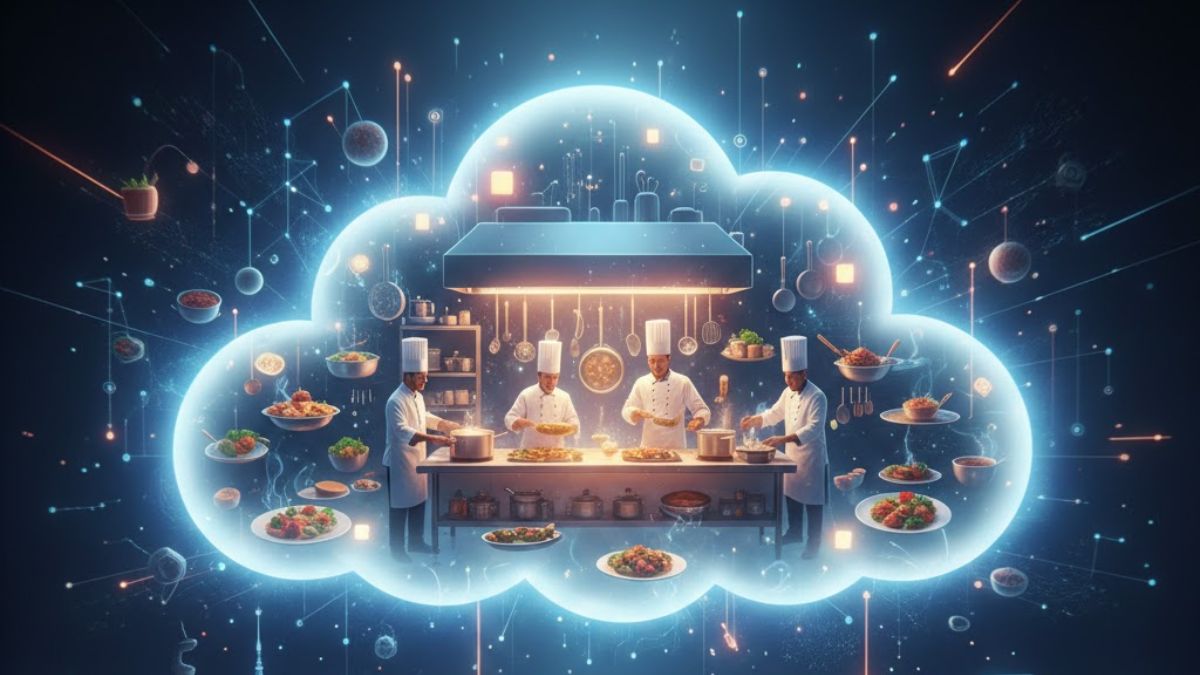
A cloud kitchen, also known as a ghost kitchen or virtual kitchen, is a delivery-first food business that operates without a dine-in space. Customers discover the brand through food delivery apps or direct online channels, place orders digitally, and receive meals at their doorstep. The model strips away the cost of prime real estate, front-of-house staff, and physical footfall dependency.
The reason cloud kitchens are booming is simple. Indian consumers want convenience, variety, and predictable quality. Food delivery apps have trained customers to browse menus like playlists, switching cuisines and brands effortlessly. For entrepreneurs, this shift has unlocked a way to start a food business with lower capital, faster experimentation, and clearer unit economics. Cloud kitchens are being built by first-time founders, laid-off professionals, chefs, restaurant owners pivoting from dine-in, and even home cooks turning commercial. The model works best in dense urban and semi-urban locations where delivery demand is high and logistics are reliable.
Timing matters. Rising rents, increasing labour costs, and platform-led discovery have made traditional restaurants riskier. At the same time, India’s online food delivery market continues to expand, creating room for niche cuisines, regional brands, and scalable food concepts. Understanding how to start a cloud kitchen business involves more than renting a kitchen and signing up on Zomato or Swiggy. It requires clarity on cuisine positioning, operational discipline, food safety compliance, unit economics, branding, and repeat customer behaviour. In terms of cost, starting a cloud kitchen in India typically requires ₹5–15 lakh depending on city, kitchen size, equipment quality, and brand ambition. The lower entry barrier is real, but long-term success depends on execution, not affordability alone.
2. Startup Idea Overview
The cloud kitchen idea is built on a simple but powerful truth: food businesses don’t need a dining space to win. What they need is consistency, visibility, and a flawless operating system. The kitchen is the product, not the ambiance.
A cloud kitchen is not just a kitchen. It’s a carefully engineered food production engine built to deliver great food, every single time. The space is designed solely for preparation and delivery—no tables, no décor, no waiting staff. Orders arrive digitally through delivery platforms or a brand’s own app. The focus shifts from managing guests to managing processes. The founders who understand this shift don’t see cloud kitchens as a shortcut or a cheaper restaurant. They see them as a new kind of business model—one that combines food, technology, and logistics.
2.1 Why Cloud Kitchens Work (and Why They’re Not Easy)
I’ve seen many founders treat cloud kitchens like an easy way to enter the food industry. They think: “I don’t need a restaurant; I just need a kitchen.” But the reality is deeper and more demanding.
Cloud kitchens succeed when they are built like a system. A system that delivers:
- Consistency in taste and quality
- Speed without compromising food
- Perfect packaging
- Strong digital presence
- Operational discipline
When these pieces are in place, the results are real. A well-run cloud kitchen can generate revenue comparable to a traditional restaurant while requiring far less investment. Many founders start with one kitchen and scale to multiple locations within months, simply because they can replicate the system.
2.2 The Real Experience Behind the Numbers
I’ve worked with founders who began with nothing but a small rented kitchen, a tight team, and a big dream. In the first month, they struggled with inconsistent food quality, delayed deliveries, and negative reviews. It was emotionally draining. They felt the pressure of every order—because every bad review felt like a personal failure. But then something changed.
They started treating the kitchen like a product factory. They standardized recipes, trained staff with strict SOPs, and tracked every order like a KPI. stopped guessing and started measuring. The result?
- Delivery ratings improved from 3.8 to 4.6 within 60 days.
- Repeat orders increased by 45%.
- Average order value increased through smart bundling.
- Operational costs dropped because waste was reduced and processes were optimized.
That’s not just a success story—it’s proof that cloud kitchens are a scalable business if you build them with discipline.
2.3 A Cloud Kitchen Is a Technology-Enabled Food Business
When founders ask, “How do I open a cloud kitchen?” the first answer is not about the kitchen. It’s about the system. Cloud kitchens are not “cheap restaurants.” They are a technology-enabled food production and branding business. Your kitchen is the heart, but your growth depends on:
- Smart menu engineering
- Data-driven pricing
- Strong branding
- Efficient delivery management
- Consistent customer experience
A cloud kitchen succeeds when founders stop seeing it as a restaurant without seating and start seeing it as a brand that exists digitally.
3. Problem Statement & Solution
The traditional restaurant industry in India is quietly failing in ways that are easy to miss until it hits you where it hurts most—your finances. I’ve seen it firsthand. Many founders start with high hopes, a strong menu, and a belief that a good location will solve everything. But the reality is harsher. High rentals and long-term leases lock entrepreneurs into a system where one wrong decision can destroy months or even years of hard work. A restaurant can survive on passion for a while, but it cannot survive on passion alone when fixed costs keep rising every month.
Footfall is another invisible enemy. You might pick what seems like a perfect location, only to realize later that your customer base isn’t walking by as expected. Suddenly, your beautiful dine-in space becomes a liability rather than an asset. Staffing front-of-house teams is the next trap. The costs of training, retention, and managing customer service can quickly become overwhelming. And the most painful part? Break-even timelines stretch indefinitely. One bad month, one seasonal dip, or one sudden competitor can make the entire business collapse. I’ve seen founders spend years trying to “make it work” only to finally admit that the model itself is broken.
On the consumer side, the story is equally painful. People want good food, but their lives are too busy. They don’t have time to travel long distances or wait for a table. Even when they do go out, the experience is often inconsistent. Quality varies from day to day, and menu variety is limited to what is available in their neighbourhood. This creates frustration and disappointment. Consumers end up settling for mediocre meals or repeating the same few options because they simply don’t have the time or energy to explore.
3.1 The cloud kitchen is the answer to these problems
The cloud kitchen is the answer to these problems—and it is not just a trend. It is a structural change in the way food is produced and delivered. By removing the dine-in requirement, cloud kitchens dramatically reduce fixed costs. There is no need for expensive décor, large dining areas, or front-of-house staff. This makes the business model far more flexible and less risky. And the results are real. When I talk to founders who switched to cloud kitchens, they consistently report faster break-even times, higher margins, and better operational control.
The real power of cloud kitchens lies in operating closer to demand clusters. When your kitchen is near where your customers live, delivery becomes faster, more reliable, and more profitable. Menus are designed specifically for delivery, not adapted later. This is crucial. A great dine-in dish can fail in delivery if it loses texture, temperature, or presentation during transit. Cloud kitchens force you to think differently—about packaging, cooking methods, portion sizes, and speed. And this shift creates consistency. When food is built for delivery from day one, it stays delicious every time.
3.2 For entrepreneurs exploring cloud kitchens in India
For entrepreneurs exploring cloud kitchens in India, the solution is clear: build food brands that are born for delivery, not adapted to it. This means understanding your customer’s needs deeply, designing menus that travel well, and choosing locations based on demand patterns rather than aesthetics. When done correctly, cloud kitchens don’t just reduce costs—they create a business that can scale, evolve, and survive the unpredictable nature of the restaurant industry.
If you want to succeed in this space, you need to approach it with a mindset of real experience and emotional intelligence. The truth is, the traditional restaurant model drains you—not just financially, but mentally. Cloud kitchens give you back control. They allow you to focus on what truly matters: making great food, serving customers consistently, and building a brand that can stand the test of time.
4. Target Audience & Customer Persona
The truth is, cloud kitchens do not sell food—they sell a promise. And that promise is simple: food that arrives on time, tastes the same every single time, and fits into your life without adding stress. The primary customers for cloud kitchens in India are urban consumers between the ages of 18 and 45 who have already made online food ordering a habit. These are working professionals juggling long workdays, students living away from home, nuclear families trying to manage time and responsibilities, and young digital-native households who treat convenience as a necessity rather than a luxury.
I’ve seen this customer profile in real life—people who don’t just order once, but build their weekly routine around it. They value convenience more than anything. They want food that arrives hot, in perfect condition, and without the hassle of waiting or commuting. crave predictable taste. The disappointment of ordering a dish that tastes different every time is real and emotional. It makes them feel like they wasted money, time, and hope. Hygiene matters too. In a country where food safety can sometimes feel uncertain, consumers gravitate towards brands that feel clean, transparent, and trustworthy.
4.1 Transparent pricing is another major factor
Transparent pricing is another major factor. Customers don’t want hidden charges or confusing extra fees. They want clarity. They want to know exactly what they are paying for. And this matters because cloud kitchen customers are not loyal to a physical location. They are loyal to brands that deliver consistency and value. I’ve talked to consumers who switch between brands easily, but they stick with the ones that always meet their expectations. This is the reality for cloud kitchen founders: your brand must earn loyalty through reliability, not through a fancy storefront.
From a founder’s perspective, understanding the target audience is not just a marketing exercise—it is the core of your business model. The goal is to build for repeat behaviour. The ideal customer is not someone who orders once out of curiosity. The ideal customer is someone who orders twice a week because the food fits seamlessly into their life. When your food becomes part of their routine, you’re no longer just a brand—you become a habit.
4.2 Cloud kitchens are not one-size-fits-all
Cloud kitchens are not one-size-fits-all. Different brands succeed by catering to different personas. Some focus on office lunch buyers who need quick, filling meals during work hours. Others serve late-night snackers who want comfort food after long nights. Some cater to health-conscious consumers who want clean, nutritious options. And some target families who order weekend meals as a way to treat themselves. The most successful operators don’t try to serve everyone. They choose one core persona and build everything around them—menu, pricing, packaging, delivery timing, and even communication style.
In real life, the difference between a successful cloud kitchen and a struggling one is not just food quality. It’s clarity. It’s the ability to understand who your customer truly is and then build a brand that speaks directly to their needs. When you do that, your cloud kitchen stops being a business experiment and becomes a real, living part of people’s lives.
5. Market Opportunity & Timing
India’s online food delivery market has not just grown—it has transformed the way people live. Over the past decade, the rise of smartphones, easy digital payments, and platform-led logistics has created a new ecosystem where food can be ordered with a few taps and delivered within minutes. This shift has not been gradual. It has been explosive, and it has changed consumer expectations forever. When I look at the numbers and the behavior behind them, it feels like watching a whole new industry being born in real time.
What makes this market especially exciting is that the opportunity is not limited to metros. Many founders mistakenly believe that cloud kitchens only work in big cities. The truth is the opposite. Tier-2 and Tier-3 cities are now showing strong growth in order volumes, and they have far fewer branded options compared to metros. This means less competition and more space for a brand to become the first choice in a city. For first-time founders trying to figure out how to start a cloud kitchen in India, this is a huge advantage. You can enter with a strong product and a clear brand story, and quickly become a local favorite.
5.1 Why Tier-2 and Tier-3 Cities Matter
In these cities, consumers are hungry for variety but often have limited access to consistent food brands. They order online because it saves time, reduces travel, and offers options they can’t find locally. This is not just a market trend—it’s a real emotional shift. People in these cities want to feel connected to the same modern lifestyle as metro customers. They want the convenience and reliability that big-city residents take for granted. When a cloud kitchen provides that, it doesn’t just serve food—it earns trust and loyalty.
5.2 The Psychological Shift After the Pandemic
Timing plays a huge role in the cloud kitchen opportunity. The pandemic did something profound: it normalized food delivery across age groups and income levels. Before COVID, ordering in was often seen as a “treat” or a fallback option. Today, ordering food has become a default habit. People no longer feel guilty or unusual about it. They expect it. They plan their meals around it. This change in consumer psychology has created a lasting demand that will not disappear.
When you talk to consumers now, you’ll hear something consistent: they want convenience, they want reliability, and they want consistency. They want a brand they can trust. And cloud kitchens are uniquely positioned to deliver this at scale.
For FoundLanes.com readers, this is a rare moment where everything is aligned. Consumer demand is high, technology infrastructure is strong, and entrepreneurial appetite is growing. The market is ready for new brands that are built for delivery, not adapted to it. If you are thinking about starting a cloud kitchen, this is not just a good time—it is the best time to act with clarity, purpose, and confidence.
6. USP & Value Proposition
A cloud kitchen’s unique selling proposition is rarely about being “the cheapest.” In fact, the moment you try to win only on price, you are already losing. The real power of a cloud kitchen lies in clarity. Clarity in what you stand for, clarity in what you deliver, and clarity in why a customer should choose you over every other option on a delivery app. And when I say clarity, I mean something that touches the customer’s emotions—something that makes them feel, “This brand gets me. This brand understands my life.”
6.1 Why Clarity Matters More Than Price
I’ve watched founders make the mistake of trying to be everything to everyone. They build a menu with too many cuisines, too many options, and too many promises. The result is confusion. Customers don’t know what the brand stands for, and they don’t trust that the food will be consistent. In a delivery app where hundreds of options are visible, confusion is the fastest way to get ignored. The truth is, customers don’t order from you because you have more choices. They order because they feel confident that your food will meet their expectations every time.
Some brands win by specializing in one cuisine and executing it exceptionally well. Others win by speed, or portion consistency, or health positioning. A few win by storytelling and regional authenticity. The common factor is that they have a clear identity, and they deliver on it with discipline.
6.2 Real-World Examples of Strong USPs
Think about a brand that becomes famous for one dish. People don’t order from them because they have a huge menu—they order because that one dish is unbeatable. That’s clarity. That’s a strong USP. Or consider a brand that becomes known for delivering consistently fast. People start ordering from them not because they are the cheapest, but because they know their food will arrive on time, every time. That reliability creates trust, and trust creates repeat orders.
Some cloud kitchens win because they cater to health-conscious consumers with clean, nutritious meals that don’t feel like a compromise. Others win because they tell a story through regional authenticity—food that reminds people of home, or of a place they miss. These brands tap into deep emotions. They don’t just feed customers—they connect with them.
6.3 A USP Must Be Operationally Defensible
The value proposition must answer a simple but powerful question: why should a customer choose this brand over hundreds of options? This is where many founders struggle when learning how to open a cloud kitchen. They can write a good marketing line, but they cannot build the operational system behind it.
A strong USP is operationally defensible. It is not just a marketing line but something built into sourcing, recipes, packaging, or pricing logic. If your USP is “fresh and healthy,” then your sourcing must be strict, your recipes must be consistent, and your packaging must keep the food intact. If your USP is “fast delivery,” then your kitchen layout, order processing, and delivery partnerships must be optimized to reduce time. your USP is “regional authenticity,” then your ingredients, cooking technique, and storytelling must be true to the cuisine.
In real life, the brands that succeed are the ones that make their USP a part of their daily operations. They don’t just say it—they live it. And that is what creates real loyalty. When customers feel that your brand consistently delivers on its promise, they don’t just order once. They order again. And again. And eventually, they become a part of your brand’s story.
7. Business Model & Pricing Strategy
The cloud kitchen business model is simple on the surface, but brutally demanding in reality. Most cloud kitchens operate on a transaction-based model, where revenue comes from food orders placed through delivery platforms or direct channels. But what looks like a straightforward model is actually a constant balancing act between volume, cost, and customer expectations.
When you start a cloud kitchen, you quickly realize that the numbers matter more than the food itself. The food can be amazing, but if your margins are not healthy, you will feel the pressure every single day. Margins depend on several factors—food cost, platform commissions, packaging, and labour efficiency. In the early days, many founders are shocked to see how quickly costs add up. A seemingly small expense, like a premium packaging box or a slight increase in ingredient prices, can eat into profits and create a gap that becomes impossible to close.
7.1 The Reality Behind Gross Margins
Gross margins may appear healthy when you look at the menu pricing, but net profitability is a different story. Net profit comes only when you have enough volume and operational discipline to manage all the hidden costs. A cloud kitchen needs steady order flow to make the economics work. That is why many successful cloud kitchens focus intensely on repeat orders rather than one-time spikes. Because volume is not just about how many people order—it is about how many people order again.
I’ve seen founders who thought they had a winning concept because they got a burst of orders in the first month. But when the excitement faded, the order volume dropped and the business started bleeding. This is the harsh truth: customer acquisition without repeat behaviour is not a business—it’s a temporary experiment.
7.2 Pricing Strategy: The Thin Line Between Growth and Collapse
Pricing strategy is one of the most emotional and difficult parts of running a cloud kitchen. It must balance perceived value with sustainable unit economics. Customers will always compare your prices with other options, but they also compare your value. They want food that feels worth the money. If your prices are too high, customers will abandon you. If your prices are too low, you will destroy your margins and your business will not survive long enough to become a brand.
Deep discounts may drive initial orders, but they can destroy long-term margins. I’ve seen founders get addicted to discounting because it brings orders quickly. But discounts create a dangerous dependency. Customers start to expect them. When discounts disappear, so do the orders. The business becomes fragile, built on temporary incentives rather than real value.
7.3 Testing Pricing Based on Repeat Behaviour
For anyone building a cloud kitchen business plan, pricing should be tested early and adjusted based on repeat order behaviour, not just acquisition spikes. The most reliable way to understand pricing is to observe how customers respond after the first order. Do they come back without a discount? Do they order again in the same week? If not, then the price or value is not aligned.
Successful cloud kitchens treat pricing as a living strategy. They test, measure, and refine. They know that the right price is the one that customers are willing to pay repeatedly, not just once.
In the end, the cloud kitchen model is not just about selling food—it is about building a system that can consistently deliver value at scale. And pricing is the heart of that system. If your pricing is wrong, everything else becomes harder. If your pricing is right, your brand can grow, survive, and become a part of people’s lives.
8. Execution Plan & Launch Strategy
Understanding how to start a cloud kitchen in practice is not about having a great idea. It’s about having a disciplined execution plan. The difference between a cloud kitchen that survives and one that fails is rarely the food quality alone. It is the ability to build a system that can be repeated, refined, and scaled. The execution plan must be phased, structured, and built on real-world learning—not assumptions.
8.1 Phase 1: Building the Foundation
The first phase is where most founders make their biggest mistake. They get excited and want to offer a wide menu, thinking variety will attract more customers. The truth is the opposite. In the early days, your goal should be to master a small set of dishes. Cuisine selection, recipe standardisation, and kitchen setup are the foundation of your cloud kitchen. If your recipes are not standardized, your food will taste different every day, and customers will lose trust. If your kitchen setup is not efficient, you will lose time and money in operations. I’ve seen founders waste months trying to fix issues that could have been prevented with a focused menu and disciplined execution.
This phase requires emotional restraint. It’s hard to resist the urge to offer more, but the brands that win are the ones that stay focused. They choose a core cuisine and perfect it. They invest time in training, SOPs, and quality checks. understand that consistency is more important than variety.
8.2 Phase 2: The Launch
The launch phase should be strategic and controlled. This is not the time for grand marketing campaigns. The launch should focus on a limited menu, controlled hours, and operational learning. You want to be in a position where you can handle every order perfectly. Early feedback from delivery apps and customer reviews is more valuable than any marketing spend. When you are starting, every review is a reflection of your brand. It can build trust or break it.
A soft launch is the best way to begin. It allows founders to identify bottlenecks before scaling order volumes. When you rush into full-scale operations, operational mistakes compound quickly. A small problem in the beginning can become a major crisis later. A soft launch gives you the chance to fix issues in real time—packaging, cooking time, delivery timing, food consistency, and customer communication.
8.3 Why Operational Discipline Matters
In the cloud kitchen world, operational mistakes compound quickly. One bad order can create a negative review, which reduces trust, which reduces repeat orders. This is the harsh reality of delivery platforms. Customers rely on ratings and reviews to make decisions. If your early ratings drop, it becomes harder to recover. That is why the execution plan must prioritize operational excellence over growth.
A strong launch strategy is not about going big immediately. It is about going right. When you start with a controlled approach, you build a strong foundation. You build trust. You build repeat customers. And when you are ready to scale, you do so with confidence.
If you want your cloud kitchen to succeed, remember this: the launch is not the finish line. It is the first step in a long journey. The goal is not to create hype—it is to build a brand that people can rely on, day after day.
9. Budget, Resources & Infrastructure
Starting a cloud kitchen is not a romantic journey. It is a real business with real expenses, real risks, and real pressure. The startup cost varies widely based on location, scale, and ambition. Some founders enter the cloud kitchen space thinking the costs will be low because there is no dine-in setup. But the truth is that a cloud kitchen still requires a strong financial foundation. The major expenses include kitchen rent, equipment, raw materials, licences, and initial marketing. These are not small numbers, and they can quickly become overwhelming if you don’t plan properly.
When I talk to founders who have failed, one common theme emerges: they underestimated how quickly costs add up. They focused on the food and the menu but ignored the reality of daily operational expenses. A cloud kitchen is a high-speed environment where money flows constantly—ingredients, packaging, delivery commissions, maintenance, and utilities. If you don’t have strict cost control, your business will start leaking money without you even noticing.
9.2 Shared Kitchen vs Independent Kitchen
One of the biggest decisions a founder faces is choosing between a shared kitchen space and an independent kitchen. Shared kitchen spaces can significantly reduce upfront costs, and they can be a good option for first-time founders who want to test their concept. However, they come with limitations. Shared spaces reduce control over operations, and they often limit the ability to scale or customize your kitchen layout.
Independent kitchens require a higher investment but offer flexibility and long-term control. When you have your own space, you can design the kitchen workflow, implement your own systems, and build a brand without constraints. The decision comes down to your goals and your risk tolerance. If you are testing a concept, shared kitchens can be a smart starting point. If you are serious about building a scalable brand, an independent kitchen is often the better choice.
9.3 Resources Beyond Infrastructure
Resources are not just physical. Reliable vendors, trained cooks, and order management systems are equally critical. Your kitchen might be perfectly designed, but if your vendors are inconsistent, your ingredients will vary in quality. If your cooks are not trained, your food will taste different every day. If your order management system is weak, you will lose orders, face delays, and disappoint customers. These problems don’t just affect the business—they affect the emotions of everyone involved. Founders feel the pressure, customers feel the disappointment, and the brand loses trust.
For FoundLanes.com readers, the lesson is clear: cost control is a daily discipline, not a one-time budget exercise. A cloud kitchen requires continuous monitoring of expenses, careful negotiation with vendors, and strict operational discipline. Every rupee matters. Every process matters. And every decision matters.
If you want to build a cloud kitchen that survives and scales, you must treat budget, resources, and infrastructure as the backbone of your business. Because in the cloud kitchen world, the backbone is what keeps everything standing when the pressure increases.
10. Brand Strategy
Branding is often misunderstood in the cloud kitchen space. Many founders think it is just a name, a logo, and a colour palette. But the truth is deeper and more emotional. Branding is the feeling a customer gets when they see your name on a delivery app. It is the trust they feel before they even open the packaging. It is the memory of the last time they ordered from you, and the anticipation of the next time. In a world where customers can choose from hundreds of options, your brand is what makes them stop scrolling and place an order.
A strong brand is built on clarity. The brand voice must match the target customer’s mindset. A late-night biryani brand speaks differently from a weekday salad brand. The biryani brand can be bold, indulgent, and comforting. The salad brand needs to be clean, refreshing, and disciplined. When the brand voice aligns with the customer’s emotional state, it becomes more than a business—it becomes a companion in their daily life.
10.1 Why Branding Matters More in Cloud Kitchens
When founders learn how to start a cloud kitchen business, they often underestimate how much branding influences repeat orders. On delivery apps, the brand is the storefront. Customers don’t walk into a physical restaurant and see the ambiance. They see a name, a logo, and a set of images. They read reviews and ratings. decide based on the feeling they get from your presentation. If your brand is unclear or inconsistent, customers will not trust you. They will move on to the next option.
In real life, I’ve seen cloud kitchens with amazing food fail because their brand felt generic. The food was great, but customers didn’t remember the name. They didn’t feel connected. They didn’t feel like the brand understood them. The business became a temporary choice, not a lasting habit.
10.2 Building a Brand That Becomes a Habit
A successful cloud kitchen brand is built through consistency, not hype. It is built through a clear identity that shows up in every part of the customer journey—from the menu, to the packaging, to the communication, to the delivery experience. Your brand should tell a story that customers can relate to. It should make them feel understood.
For example, a brand targeting young professionals might use a confident, energetic voice. It might focus on convenience, speed, and flavor. A brand targeting families might use a warm, comforting voice and emphasize portion sizes and value. The key is to create a brand that fits the customer’s life so naturally that ordering from it becomes a habit.
If you want to succeed in the cloud kitchen space, you must treat branding as a strategic tool, not a cosmetic detail. Your brand is not just what you look like—it is what you promise and what you deliver. And in a crowded market, that promise is the only thing that can make customers come back again and again.
11. Vendor & Partner Strategy
In a cloud kitchen, your vendors are not just suppliers—they are the lifeline of your brand. The truth is simple and often painful: food quality and consistency depend on the people and businesses behind your ingredients. A cloud kitchen can have an excellent chef and a perfect menu, but if the raw materials vary in quality or arrive late, the entire system breaks. This is why reliable vendors are the backbone of every successful cloud kitchen.
Price alone should never be the deciding factor. I’ve seen founders choose the cheapest supplier, only to face constant issues with inconsistent ingredients, delayed deliveries, and poor packaging. These problems don’t just affect the food—they affect the emotions of your customers. When a dish tastes different each time, customers feel disappointed, and trust breaks. In the world of delivery apps, trust is everything. Once trust is lost, it is very difficult to earn back.
11.1 Building Long-Term Vendor Relationships
Long-term relationships with suppliers reduce volatility and ensure predictable input quality. When you work with vendors over time, they understand your standards, your timelines, and your expectations. They start to treat your business as a partnership, not just a transaction. This level of understanding is invaluable. It creates stability in your operations and reduces the risk of sudden quality dips.
A strong vendor strategy is also about planning for the future. When you scale, your demand increases. If your vendor cannot handle that scale, your business will struggle. That’s why it’s crucial to choose partners who can grow with you. Reliable vendors are not just a convenience—they are a strategic advantage.
11.2 Platform Partnerships and Discoverability
Platform partnerships also matter. Delivery apps are not just channels for orders—they are the marketplace where customers discover your brand. Integration with these platforms affects your visibility, your ratings, and your customer acquisition. The better your relationship with these platforms, the more opportunities you have to improve discoverability and increase order volume.
Founders often underestimate how much this matters. They focus on food and forget that the delivery app is the storefront. If your listing is not optimized, if your brand is not visible, or if your ratings suffer, the best food in the world will not reach customers.
11.3 Vendors as Partners, Not Cost Centres
Founders should view vendors as partners, not cost centres. This mindset is what separates sustainable kitchens from short-lived experiments. When you treat vendors as partners, you build trust, reliability, and stability. You create a system where quality is maintained consistently, and your brand becomes dependable.
In real life, the most successful cloud kitchens are the ones that build strong ecosystems. They have vendors who understand their needs, delivery platforms that support their growth, and teams that operate with discipline. When all these elements align, the kitchen becomes more than a business—it becomes a trusted part of the community.
If you want your cloud kitchen to survive and thrive, start by building strong partnerships. Because in this industry, your success is not just about what you cook—it is about who you work with and how you build your ecosystem.
12. Go-to-Market & Customer Acquisition Channels
Most cloud kitchens begin their journey through food delivery platforms. These platforms are the first point of contact between your brand and the customer. Visibility is driven by ratings, delivery time, and participation in promotions. In the early days, this is the fastest way to get orders. But the reality is that visibility on these platforms is competitive and expensive. If your ratings drop, you lose visibility. If you rely only on discounts to gain traction, you will attract customers who are not loyal to your brand. They will disappear the moment the discount ends.
A real go-to-market strategy goes beyond the delivery apps. Over time, direct channels become crucial. WhatsApp ordering, Instagram discovery, and loyalty programs help you build a customer base that belongs to you, not to the platform. Direct channels also allow you to communicate with customers personally, build relationships, and offer customized experiences. This is where a brand starts to feel human instead of just another option on a screen.
A clear go-to-market plan ensures that marketing spend translates into repeat behaviour, not just one-time curiosity. The goal is not to get people to order once—it is to make them order again. This is where most founders struggle. They focus on acquisition, but forget that retention is what creates a business.
13. Growth & Retention Strategy
Scaling a cloud kitchen is not just about opening more locations. It is about replicating systems that work. When you grow, you don’t want to recreate problems in every new kitchen. You want to replicate the processes that create consistency, quality, and speed. Common growth paths include multi-brand kitchens, regional expansion, and franchising. Each path has its own challenges. Multi-brand kitchens require a strong operational backbone to manage different menus. Regional expansion requires deep understanding of local tastes. Franchising requires trust, training, and strict SOPs.
Retention comes from consistency, not constant novelty. Customers don’t stay loyal because you introduce new dishes every week. They stay loyal because they know what to expect. They trust that your food will be the same good quality, every time. That trust is built through discipline, not gimmicks.
For founders thinking long-term about how to start a cloud kitchen in India, growth should be planned from day one, even if execution happens later. You need to build systems that can be scaled, not just a kitchen that can survive.
14. Team Structure & Responsibilities
Early-stage cloud kitchens operate with lean teams. Founders often handle operations, sourcing, and platform management themselves. It’s a period of hustle, where every decision falls on one person. But as volumes grow, roles become specialized. Kitchen managers, procurement leads, and marketing support improve efficiency. They reduce the burden on the founder and ensure that each part of the business runs smoothly.
Outsourcing non-core tasks allows founders to focus on strategy and quality control. For example, delivery can be handled by platforms, accounting can be outsourced, and marketing can be managed by professionals. The goal is to focus on what matters most: the food, the customer, and the brand.
15. Risks, Challenges & Mitigation
Operational lapses, food safety issues, and platform dependency are real risks. In a cloud kitchen, even a small mistake can become a major crisis. A wrong ingredient, a delayed delivery, or a food safety complaint can damage your brand reputation quickly. Margin pressure from commissions and discounts can erode profitability. This is why founders must be vigilant every day.
Mitigation lies in diversification, strong SOPs, and gradual brand building beyond platforms. Diversification means not relying on one platform or one cuisine. SOPs ensure consistency and reduce errors. Gradual brand building helps you create a customer base that belongs to you, not to the delivery apps. Understanding these risks is essential when learning how to start a cloud kitchen business responsibly. The goal is not just to launch—it is to build a business that can survive challenges and grow.
16. Legal, Compliance & Fundamentals
Cloud kitchens in India must comply with local municipal regulations and food safety laws. FSSAI registration for cloud kitchen operations is mandatory. This is not a paperwork exercise—it is a commitment to customer safety. When you follow compliance, you protect your customers and your brand.
Other requirements may include GST registration, trade licences, and fire safety clearances depending on location. These regulations may seem overwhelming, but they are necessary. Compliance is not optional. It protects both the founder and the customer.
17. Long-Term Vision & Goals (Future Outlook)
The future of cloud kitchens lies in strong brands, not just efficient kitchens. As competition increases, only those with clear positioning and loyal customers will survive. Efficiency matters, but it is not enough. Brands that create emotional connections with customers will win.
In the next 3–5 years, successful operators will expand into multiple cuisines, geographies, or even consumer packaged goods. The cloud kitchen will evolve from a delivery-only model to a full food ecosystem. Those who are serious about how to start a cloud kitchen must think beyond the first kitchen. The goal should not be to launch fast, but to build something that lasts.
If you want to build a cloud kitchen that stands the test of time, you must build it with purpose, discipline, and patience. Because the real success is not in the launch—it is in the years that follow.
About foundlanes.com
foundlanes.com is India’s leading startup idea and deep-dive platform built for founders, operators, and serious entrepreneurs. We go beyond surface-level advice to deliver grounded, research-backed, and experience-driven startup content.
Every guide on foundlanes.com is designed to help readers think clearly, act strategically, and build sustainably. This cloud kitchen startup guide is part of our mission to document real business pathways in India’s evolving startup ecosystem.