


Summary
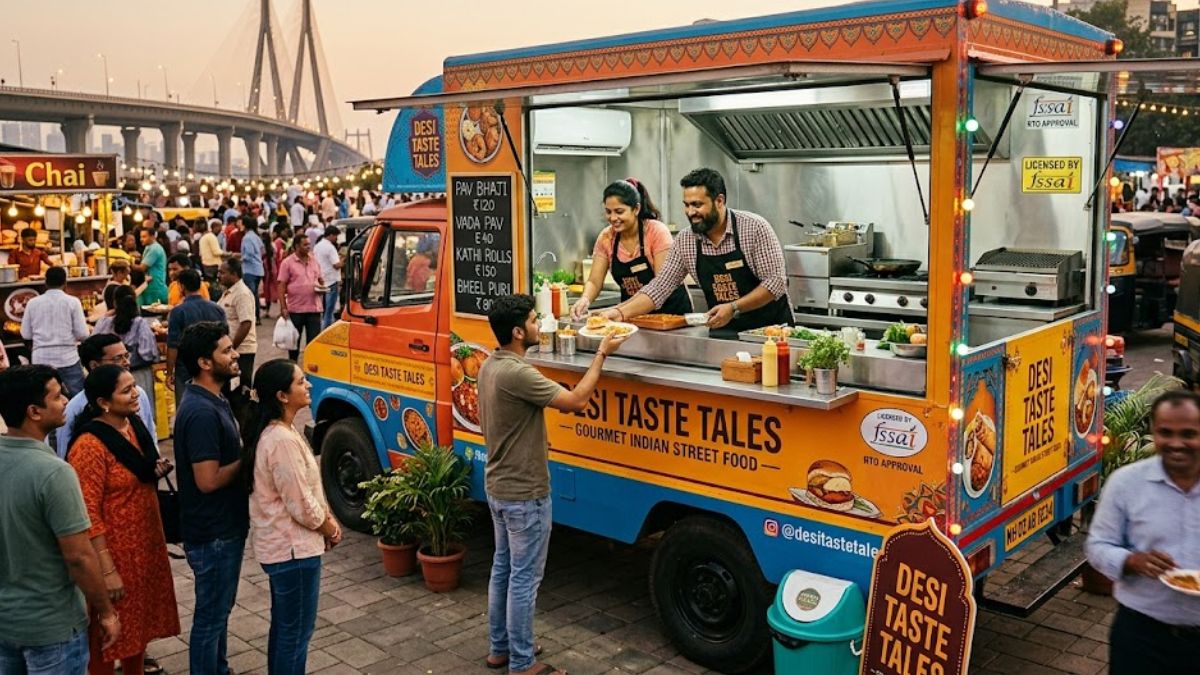
Starting a food truck business in India is no longer just a niche idea seen in metros. It has evolved into a viable, scalable startup opportunity driven by changing consumer habits, rising urban mobility, and the growing appetite for affordable, high-quality street food experiences. At its core, a food truck business involves operating a mobile kitchen that serves freshly prepared meals across high-footfall locations such as office hubs, college areas, and event venues. The appeal lies in its flexibility, lower setup cost compared to restaurants, and the ability to test multiple locations without long-term real estate commitments.
The demand is fueled by young professionals, students, and urban families who seek quick, hygienic, and Instagram-worthy food options at reasonable prices. Entrepreneurs, especially those with limited capital, are increasingly exploring how to start a food truck in India as an entry point into the food and beverage industry. The timing is right because India’s street food culture is already deeply ingrained, while regulatory frameworks around food safety and licensing have become more structured.
This business can be started in cities like Bengaluru, Mumbai, Delhi, or even tier-2 markets such as Indore and Chandigarh. Typically, the investment ranges from ₹3 lakh to ₹10 lakh depending on the truck, kitchen setup, and branding. With the right location and menu, a food truck can generate daily revenues of ₹5,000 to ₹25,000. The key lies in execution, consistency, and strong branding. This FoundLanes guide breaks down everything you need to know about how to open a food truck in India, from market opportunity to legal compliance, helping you build a sustainable and profitable venture.
1. Startup Idea Overview
Starting a food truck business in India is not just about selling food from a vehicle. It is about rethinking how people experience eating out. The idea brings together three powerful elements that matter most to modern consumers: affordability, flexibility, and creativity. Instead of locking yourself into expensive restaurant spaces, a food truck lets you move with demand and meet customers where they already are.
What makes this model even more relevant in India is how quickly food habits are changing. Urban consumers are no longer satisfied with just traditional options. They want variety, fusion dishes, Instagram-worthy presentation, and quick service, but without paying premium restaurant prices. A food truck fits right into this shift because it delivers innovation in food while still staying accessible. For many first-time entrepreneurs, it also becomes a practical entry point into the food industry since the investment is lower and the learning happens in real time with actual customers.
2. Problem Statement & Solution
2.1 What is Broken in the Market
The traditional restaurant model in India is expensive and rigid. High rent, interior costs, staff salaries, and long-term leases create pressure even before the first plate is served. Many small business owners enter the market with hope but struggle to survive because footfall is unpredictable and fixed costs remain constant regardless of sales. In many cases, even good food businesses fail not because of product quality, but because of financial stress and location dependency.
On the other side, street food is widely loved but comes with its own limitations. While it is affordable and accessible, it often lacks hygiene standards, branding, and consistency. Customers enjoy it in the moment but hesitate to trust it as a regular, reliable option. This creates a clear emotional gap in the market: people want affordable food, but they also want safety, cleanliness, and a sense of trust.
2.2 How This Business Solves It
A food truck business in India sits directly between these two extremes. It removes the heavy financial burden of a restaurant while also offering a more structured and branded experience than street food. It brings food preparation into a controlled, visible, and mobile setup where customers can actually see the process, which builds confidence naturally.
For customers, it feels like street food with standards. For entrepreneurs, it feels like a restaurant without the long-term risk. This balance is what makes the model powerful. It allows testing, learning, and evolving the menu based on real feedback instead of assumptions, which significantly reduces early-stage business failure risk.
3. Target Audience & Customer Persona
The audience for a food truck business in India is broad, but it is strongly driven by urban behavior. Young working professionals, especially in IT parks, corporate hubs, and co-working spaces, form one of the most consistent customer groups. They look for quick meals that are affordable, hygienic, and available during tight lunch breaks. For them, convenience matters as much as taste.
College students are another strong segment. They are open to experimenting with food, attracted to trendy menus, and highly influenced by visual appeal and social media presence. A food truck that looks vibrant and serves unique dishes often becomes a regular hangout spot for them. Families and event crowds also contribute significantly, especially during festivals, weddings, exhibitions, and weekend markets where food trucks add a modern street-food vibe. What connects all these segments is not just hunger, but experience. People are not only buying food, they are buying a moment, a vibe, and something worth sharing or remembering.
4. Market Opportunity & Timing
India’s food industry is going through a major transformation. Organized food delivery, cloud kitchens, and digital ordering platforms have already changed how people think about meals. But despite this digital shift, offline eating experiences still hold emotional and cultural value. People still enjoy stepping out, exploring food, and discovering new flavors in physical spaces.
This is where food trucks naturally fit in. They offer a hybrid experience that is both physical and flexible. They bring novelty to locations that already have high footfall, such as markets, campuses, and business districts. At the same time, they are not tied down to one expensive location, which gives them strategic freedom. The timing is also favorable because starting a food truck business in India requires relatively low capital compared to a restaurant, making it accessible for new entrepreneurs. Combined with increasing urban mobility and a growing appetite for experimental food, the opportunity window is strong and still expanding.
5. USP & Value Proposition
The strongest advantage of a food truck business is mobility. Unlike traditional restaurants that depend entirely on location performance, a food truck can adapt. If one spot is not working, it can move. If a festival or event is happening elsewhere, it can shift there. This flexibility allows entrepreneurs to chase demand instead of waiting for it.
Another major strength is menu freedom. A food truck is not locked into rigid structures. It can evolve quickly based on customer feedback, seasonal ingredients, or trending cuisines. This makes it easier to stay relevant in a fast-changing food culture where customer preferences shift frequently.
Brand identity also plays a huge role. A visually strong, well-designed truck can instantly attract attention. In crowded food areas, appearance becomes as important as taste. Over time, this builds recognition, and recognition builds repeat customers. In many cases, people don’t just return for the food, they return for the experience and familiarity.
6. Business Model & Pricing Strategy
The food truck business model in India is direct and highly customer-driven. Revenue comes primarily from on-the-spot food sales, where every order directly contributes to daily cash flow. Some food trucks also expand into catering for private events, corporate gatherings, weddings, and pop-up collaborations, which can significantly boost income during peak seasons.
Pricing needs to be carefully balanced. It must stay affordable enough to attract repeat customers while still maintaining healthy margins. Most successful food trucks operate in the ₹100 to ₹300 range per dish, depending on cuisine and positioning. The real profitability depends less on pricing alone and more on execution efficiency, including ingredient sourcing, portion control, and minimizing wastage.
In real-world operations, profitability is not fixed. A well-located and well-managed food truck can achieve margins between 20% to 40%, but only when consistency, hygiene, and demand alignment are maintained. Ultimately, the answer to how much a food truck earns in India depends heavily on location strategy, menu appeal, and the ability to build a loyal customer base over time.
7. Execution Plan & Launch Strategy
Launching a food truck business in India works best when it is treated like a controlled experiment first, not a big leap. The starting point is clarity on concept. Choosing a specific cuisine or food identity matters because it defines everything else, from ingredients to branding to target customers. Many successful food trucks begin with a focused idea like burgers, rolls, regional snacks, or beverages instead of trying to do too much at once.
Once the concept is clear, the next step is building a small MVP menu. Keeping it limited, usually 5 to 10 items, is not a restriction but a survival strategy. It helps control waste, maintain quality, and speed up service during peak hours. After that, the real groundwork begins with converting a vehicle into a functional kitchen. In the early stage, practicality matters more than perfection. Many founders learn that real improvement comes only after serving actual customers, not during planning. Testing in high-footfall areas, collecting honest feedback, and refining the menu based on real reactions becomes the foundation of long-term stability.
8. Budget, Resources & Infrastructure
Starting a food truck business in India can be surprisingly flexible in terms of investment, especially when compared to traditional restaurants. A lean setup can begin at around ₹5 lakh if decisions are made carefully and resources are optimized. A second-hand vehicle often forms the biggest portion of this cost, followed by basic kitchen equipment like burners, storage units, and preparation tools.
However, the total food truck investment in India can vary widely depending on scale and customization. Including licenses, branding, and initial raw material stock, the setup can realistically range from ₹3 lakh to ₹10 lakh. Beyond money, the real backbone of the business is infrastructure design. A food truck has limited space, so every inch must be used efficiently. Cooking flow, storage placement, and power and water arrangements all directly affect speed, hygiene, and daily output. Poor layout decisions often hurt performance more than lack of demand.
9. Brand Strategy
Branding in a food truck business is not just decoration, it is survival. In a crowded street or busy market, customers decide within seconds whether they notice you or ignore you. That is why the name, design, and overall identity need to be simple, memorable, and emotionally appealing. A strong food truck brand often feels instantly recognizable even from a distance.
Visual identity plays a powerful role in customer attraction. Bright colors, bold typography, and clean design help create instant visibility and recall. But branding is not only visual. The tone of communication also matters. A friendly, relatable voice builds connection over time. Today, social media acts as an extension of the truck itself. Platforms like Instagram don’t just promote the business, they often become the first impression for new customers before they even visit in person.
10. Vendor & Partner Strategy
The success of a food truck business in India depends heavily on the quality and reliability of vendors. Ingredients form the foundation of taste, consistency, and customer satisfaction. Even small variations in raw material quality can change the entire customer experience, which is why sourcing decisions carry long-term impact.
Most food truck owners rely on local wholesale markets because they offer better pricing, flexibility, and daily availability. At the same time, certain packaged or specialty items require partnerships with established distributors to maintain consistency. Beyond suppliers, partnerships also extend to events, corporate parks, and private organizers. These collaborations often provide access to large customer groups in a single location, which helps stabilize revenue beyond daily street footfall.
11. Go-to-Market & Customer Acquisition Channels
In a food truck business in India, marketing is deeply connected to visibility. Unlike digital products, customers don’t discover you through ads first, they discover you by being physically present in the right place. That is why choosing high-footfall locations like IT parks, college areas, marketplaces, and event zones becomes a core part of the growth strategy.
At the same time, digital visibility has become equally important. Platforms like Instagram and Google Maps often act as discovery engines. Many customers now search for “best food trucks near me” before deciding where to eat, which means online presence directly influences offline sales. However, the strongest driver of growth still remains experience. A good meal creates memory, and that memory turns into word-of-mouth. In this business, one satisfied customer often brings more customers than any advertisement ever could.
12. Growth & Retention Strategy
Growth in a food truck business in India rarely happens overnight. It usually starts quietly, after months of showing up at the same spots, serving the same kind of honest food, and slowly becoming part of people’s routine. Once the base is stable and daily sales feel predictable, expansion becomes a natural next step. Many owners eventually add a second truck or experiment with a slightly different menu identity to capture new customer segments.
But the real backbone of growth is not expansion, it is repetition. Customers come back when they know exactly what they will get. Same taste, same portion, same experience. That consistency builds trust, and trust is what turns a casual buyer into a regular. Over time, small touches like loyalty cards, seasonal specials, or limited-time dishes keep things fresh without breaking that consistency. The strongest food truck brands don’t just sell food, they build a sense of familiarity that people miss when it’s not there.
13. Team Structure & Responsibilities
In the beginning, a food truck business in India is almost always a one-person responsibility ecosystem. The founder is usually everywhere at once, handling sourcing early in the morning, managing cooking during rush hours, talking to customers in between orders, and still thinking about social media at night. It is exhausting, but it also gives complete control over quality and customer experience, which is critical in the early stage.
As demand grows, the business naturally forces structure into itself. One person can no longer manage everything without quality slipping. That is when roles start separating. A dedicated cook ensures consistency in taste, another person handles orders and billing to avoid chaos during peak hours, and customer interaction becomes more intentional instead of rushed. In many growing setups, branding, design, and digital marketing are often outsourced to freelancers, allowing the core team to stay focused on operations. The turning point usually comes when the founder realizes that growth is no longer about doing more alone, but about trusting others with parts of the vision.
14. Risks, Challenges & Mitigation
Running a food truck in India sounds flexible on paper, but in reality it comes with daily uncertainty. One of the biggest challenges is location dependency. A spot that works brilliantly one month can suddenly underperform the next without warning. Customer flow is influenced by office shifts, local events, competition, and even small changes in traffic patterns.
Then there are environmental factors that no one can fully control. Heavy rain can wipe out an entire evening’s sales. Extreme heat can reduce footfall drastically during peak lunch hours. These are not occasional issues, they are part of the business rhythm. On top of that, regulatory permissions and local restrictions can sometimes disrupt operations without much notice, making compliance not just important but essential for survival.
The businesses that last are the ones that learn to adapt quickly. They rotate locations, diversify customer bases, and never depend on a single hotspot. Over time, consistency in food quality becomes their biggest shield. Even when external conditions fluctuate, loyal customers continue to show up because they trust the experience.
15. Legal, Compliance & Fundamentals
Behind every successful food truck in India is a layer of compliance that often goes unnoticed but is absolutely critical. The most important requirement is the FSSAI license for food truck operations, which ensures that food safety standards are met. This is not just a formality; it directly impacts credibility and customer trust.
Along with this, municipal permissions, vehicle registration approvals, and fire safety clearances form the basic legal framework. Many first-time entrepreneurs underestimate how structured these requirements are until they actually begin the process. What seems like a small mobile setup is still treated as a full-fledged food business in the eyes of regulation.
Another important reality is that food truck permits in India are not completely uniform. Rules can change from one city or state to another, which means due diligence is not optional. Entrepreneurs who take time to understand local guidelines before launching usually avoid unnecessary disruptions later. In this business, compliance is not just about legality, it is about building a foundation that allows you to operate without fear of sudden shutdowns.
16. Long-Term Vision & Goals
A food truck is rarely just a food truck in the long run. For many entrepreneurs, it becomes the first chapter of something much larger. Once the brand starts gaining recognition and customers begin associating the name with trust and taste, expansion becomes a very real possibility. Some businesses scale by adding multiple trucks across different locations. Others transition into cloud kitchens to tap into delivery demand. And many eventually evolve into permanent restaurants once they understand their strongest-performing menu and customer base. The interesting part is that the food truck often acts like a testing ground. It shows what people actually love, not what founders assume they will love.
The long-term goal is not just selling food, but building a brand that people recognize instantly. A name that feels familiar in different parts of the city, or even different cities, carries far more value than a single successful outlet. That kind of recognition takes time, consistency, and a willingness to evolve without losing the original identity.
17. Future Outlook
The future of the food truck business in India looks more dynamic than ever. Cities are growing, lifestyles are becoming faster, and people are constantly looking for food that is both quick and reliable. In this environment, food trucks sit in a very natural position. They offer accessibility without the heavy structure of traditional restaurants. Technology is also quietly reshaping the space. Digital payments are now standard, and customers increasingly rely on Google Maps, Instagram, and delivery platforms to discover food options. In many cases, a food truck’s online presence becomes just as important as its physical presence. Even a simple location update or a viral post can significantly change daily sales.
For anyone thinking about starting a food truck in India, the opportunity goes far beyond just food. It is about building something that moves with the city, adapts to its rhythm, and grows alongside its people. The ones who succeed are not just good cooks or good operators, they are consistent storytellers who turn everyday meals into experiences people remember and return to.
About foundlanes.com
foundlanes.com is India’s leading startup idea discovery platform. It helps entrepreneurs find actionable startup opportunities, market insights, and industry-specific guidance to turn ideas into real businesses. With deep research and practical resources, foundlanes supports founders at every stage, from idea validation to launch and growth.