


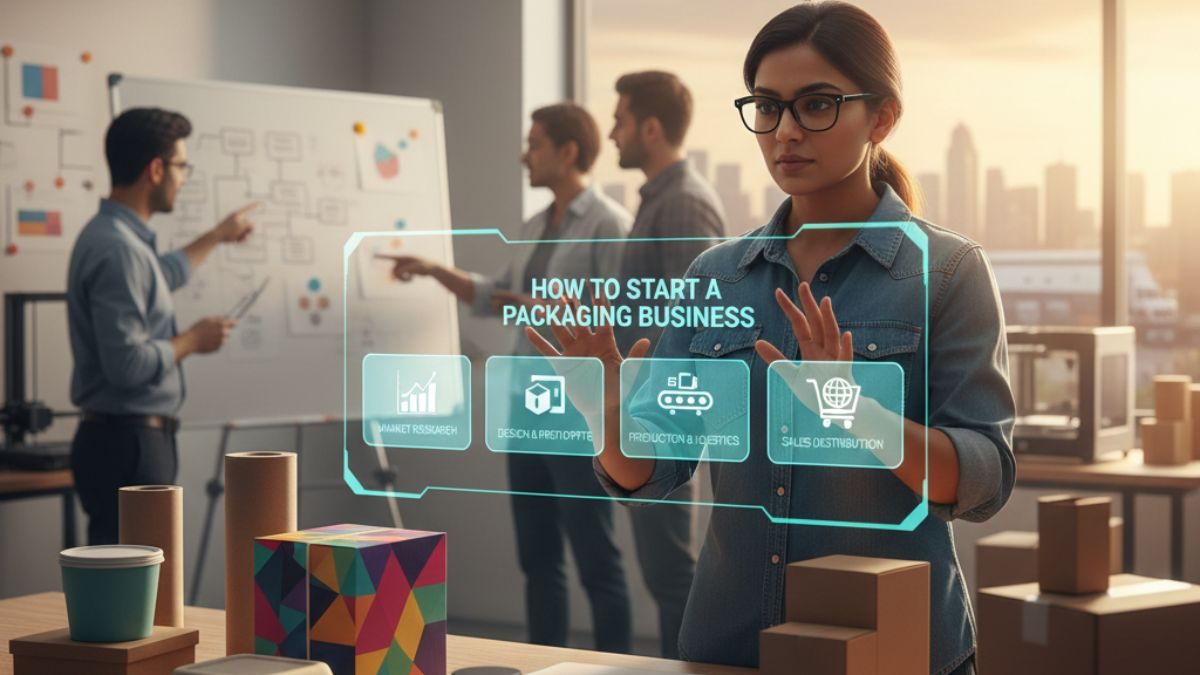
A Ground-Level Guide to Starting a Packaging Business in India
To start a packaging business in India is to enter one of the country’s most invisible yet indispensable industries. Packaging does not sit on store shelves asking for attention. It exists quietly around every product we touch—food, medicine, cosmetics, electronics, e-commerce parcels, and industrial goods. Yet without packaging, none of these businesses can scale, ship, or survive.
The question of why packaging matters has been answered by India’s changing economy itself. As consumption increases, as brands compete on shelf presence, and as logistics moves faster than ever, packaging has shifted from being a cost center to a strategic advantage. Businesses today don’t just want boxes or pouches. They want protection, branding, compliance, sustainability, and reliability—all delivered at scale.
This business is ideal for first-time manufacturers, small industrial entrepreneurs, and B2B-focused founders who prefer predictable demand over consumer-facing volatility. Packaging businesses operate across industrial zones, semi-urban clusters, and logistics hubs, often far from the spotlight but close to cash flow. Timing is crucial. India’s manufacturing push, booming e-commerce, pharmaceutical growth, and FMCG expansion have created consistent demand for organized packaging suppliers. At the same time, many existing units remain fragmented, outdated, or quality-inconsistent, leaving room for new, process-driven players.
How much does it cost? The packaging business investment required can start as low as ₹5–10 lakh for small-scale units and scale into crores for automated plants. Margins vary by segment, but stable clients often mean predictable monthly income rather than unpredictable spikes. This article explains how to start a packaging business in India, step by step, with clarity on costs, licenses, execution, risks, and long-term growth—written for FoundLanes.com readers who want businesses that last.
2. Startup Idea Overview
The packaging business is not one business. It is an ecosystem. At its core, packaging involves designing, producing, and supplying materials that protect products, extend shelf life, and communicate brand value. This can range from corrugated boxes and flexible pouches to bottles, labels, and industrial wraps.
To start a packaging business is to position yourself as an essential supplier rather than a discretionary vendor. Packaging is required at every stage of the supply chain, from manufacturing to retail to last-mile delivery. This makes demand relatively stable, even during economic slowdowns.
In India, packaging businesses thrive because consumption is rising faster than infrastructure standardization. Many manufacturers still rely on small, local suppliers who struggle with quality consistency and scale. New-age packaging units that focus on reliability, compliance, and process discipline fill this gap. This startup idea is less glamorous than D2C brands but often more resilient. It rewards patience, operational excellence, and long-term relationships.
3. Problem Statement & Solution
3.1 What Is Broken in the Current Market
India’s packaging market runs on volume, but it struggles on consistency. Beneath the surface of glossy brand shelves lies a deeply fragmented supply base. Thousands of small packaging units operate with ageing machinery, manual processes, and thin margins that leave little room for quality control or compliance. What looks affordable on paper often turns expensive in execution.
For manufacturers, this fragmentation shows up in daily friction. Deliveries arrive late. Material strength varies from batch to batch. Print alignment slips. Colors drift. In regulated categories like food, pharmaceuticals, and personal care, these inconsistencies turn into serious risks. A weak seal or non-compliant ink can stall shipments, trigger audits, or lead to costly recalls. Packaging, which should quietly enable growth, becomes a point of stress and uncertainty.
Larger, organised packaging companies are not solving this either. Their economics favour bulk contracts and long production runs. Small and mid-sized manufacturers often fall below their priority threshold. This leaves a wide middle gap in the market where demand is real, recurring, and urgent, but dependable suppliers are hard to find. It is in this gap that trust erodes and switching becomes constant.
3.2 How a Packaging Business Fixes This Gap
A well-run packaging business does not win by reinventing the industry. It wins by executing the basics relentlessly. Standardised operating procedures, documented quality checks, predictable lead times, and transparent pricing address problems buyers deal with every single day. By investing in modern machinery, trained operators, and compliance systems aligned with food safety and industry norms, a new-age packaging unit can outperform legacy players without chasing massive scale. The advantage comes from discipline, not size. Every repeat order reinforces confidence. Every on-time delivery compounds trust.
In practice, reliability becomes the real product. Once buyers experience consistency, switching suppliers stops being a negotiation and becomes a decision. This is why packaging businesses that get fundamentals right often grow through referrals rather than sales pitches.
4. Target Audience & Customer Persona
Packaging businesses serve businesses, not individuals, and that distinction shapes everything. The ideal customer is not hunting for the cheapest rate. They are looking for fewer surprises. They want suppliers who reduce friction inside their own operations. The core customer base includes small and mid-sized manufacturers in food processing, FMCG, pharmaceuticals, cosmetics, electronics, and logistics. These businesses operate on schedules. They place repeat orders. Their production lines depend on packaging arriving exactly when promised and performing exactly as specified.
Their behaviour is consistent and revealing. They reward reliability with loyalty. They penalise delays swiftly. Price matters, but predictability matters more. They prefer long-term relationships over constant renegotiation because stability lowers their own risk. Understanding this B2B mindset changes how a packaging business is built. Sales cycles become relationship-driven rather than transactional. Pricing reflects service quality, not just material cost. Operations are designed to remove headaches, not create them. In packaging, trust is not a brand message. It is earned quietly, order after order.
5. Market Opportunity & Timing
India’s packaging industry does not announce its size loudly, but its presence is everywhere. From the food on grocery shelves to the medicines in hospitals and parcels moving through last-mile delivery networks, packaging has become the silent infrastructure of modern consumption. Valued at hundreds of billions of rupees, the industry continues to grow steadily, powered by FMCG expansion, pharmaceutical manufacturing, organised retail, and the relentless rise of e-commerce logistics.
What makes the current moment especially compelling is not just growth, but change. Consumption in India is formalising. Brands that once tolerated inconsistency now demand standardisation. Traceability, batch control, and compliance are no longer optional. Sustainability has entered boardroom conversations, not just marketing decks. Packaging has moved from the background to the table where strategic decisions are made.
Policy tailwinds add another layer of momentum. Government initiatives that encourage domestic manufacturing, exports, and supply chain localisation are increasing demand for compliant, audit-ready packaging units. At the same time, many small, legacy operators are struggling to upgrade machinery, processes, and systems. This creates a rare opening where demand is rising faster than reliable supply.
The opportunity, however, is not in racing to the bottom on price. It lies in building processes that buyers can depend on when volumes scale and scrutiny increases. In this market, timing rewards those who choose discipline over shortcuts.
6. USP & Value Proposition
The strongest packaging businesses rarely lead with price. They lead with certainty. Buyers stay not because something is cheap, but because it works every time without follow-ups, delays, or excuses. A compelling USP can take many forms. Faster turnaround during peak seasons. Superior print quality that protects brand identity. Food-grade and pharma-grade compliance that clears audits without anxiety. Eco-friendly materials that align with evolving regulations and consumer expectations. Or the ability to customise packaging at low volumes without compromising consistency.
What ties all successful value propositions together is reliability. When clients know that every batch will look, feel, and perform exactly like the last one, negotiations soften. Price becomes a factor, not the decision. Over time, trust compounds quietly. In packaging, reputation is built in silence and lost in a single missed delivery.
7. Business Model & Pricing Strategy
Packaging businesses are built on repetition. Revenue flows through contract-based arrangements or predictable repeat orders rather than one-time transactions. Pricing is shaped by a mix of raw material costs, production complexity, order volume, compliance requirements, and delivery timelines.
Margins differ sharply by segment. High-volume categories like corrugated boxes and basic flexible packaging operate on thinner margins but benefit from scale and steady demand. Specialised packaging, such as pharmaceutical, food-grade, or premium branded solutions, offers higher margins but comes with longer sales cycles and stricter quality expectations. In practice, profit margins typically range between 8 and 20 percent. Businesses that invest early in automation, waste reduction, and long-term client contracts tend to move toward the higher end of this spectrum. Those that rely on manual processes and spot pricing remain vulnerable to raw material volatility.
The real answer to the question of whether a packaging business is profitable lies in operational discipline. Demand is not the constraint. Consistency is. Those who master processes, control costs, and earn repeat trust discover that profitability follows, quietly but steadily.nd.
8. Execution Plan & Launch Strategy
8.1 Choosing the Packaging Segment
Every packaging business begins with a choice that looks simple on paper but shapes the next five years of a founder’s life. Corrugated boxes, flexible packaging, labels, bottles, industrial-grade solutions. Each segment carries its own rhythm, margins, customer psychology, and operational stress.
Corrugated boxes reward volume and discipline. Flexible packaging demands precision, material science understanding, and tighter quality control. Labels are detail-heavy and relationship-driven. Bottles and rigid packaging lean toward capital intensity and compliance. There is no universally “best” segment. There is only the segment that matches your capital, patience, and appetite for complexity.
First-time founders often fail not because the market is wrong, but because they try to do too much too early. A focused segment allows teams to learn deeply. They understand wastage patterns, machine behavior, client expectations, and pricing pressure. This clarity compounds into efficiency.
In manufacturing, simplicity is not a limitation. It is a strategic advantage. Complexity kills early-stage units quietly, through cash leaks and operational fatigue.
8.2 Setting Up the Unit
A packaging unit is not just a space with machines. It is a system where power, people, material flow, and timing must work in sync.
Location determines survival more than branding ever will. Units close to industrial clusters or logistics corridors reduce transport costs, improve turnaround times, and attract skilled labor. Reliable electricity, ease of truck movement, and local supplier access directly impact margins.
Machinery decisions demand restraint. Many founders overbuy, driven by optimism or supplier persuasion, and choke their cash flow before the first stable client arrives. Others underbuy and lose orders because capacity cannot keep up. The right approach is balance. Machines should match confirmed demand plus a small buffer, not future fantasies.
Real-world experience teaches this fast. A slightly slower machine that runs consistently beats an advanced one that breaks down and drains working capital. Output quality and uptime matter more than specifications on paper.
8.3 First Clients and Pilot Orders
The first few clients are not about revenue. They are about truth.
Pilot orders expose every assumption. Lead times, wastage levels, labor efficiency, pricing comfort, and quality tolerance all surface quickly. Founders who listen during this phase build resilient operations. Those who rush to scale amplify hidden flaws.
Early success is not measured by announcements or brochures. It shows up in repeat orders, fewer rejections, and clients who stop negotiating aggressively because trust has been earned.
A packaging business becomes real the day a client reorders without reminders. That moment is quieter than a launch, but far more powerful.
9. Budget, Resources & Infrastructure
The packaging business cost in India varies sharply by segment and ambition. Small manual or semi-manual units can begin around ₹5–15 lakh. Semi-automated setups often require ₹30–50 lakh, sometimes more. What matters is not the starting number, but how long the capital can breathe. Major expenses include machinery, workspace leasing, raw materials, power infrastructure, and working capital. Packaging machinery and equipment may involve cutting machines, printing units, sealing systems, and material handling tools. These may also be referred to as packaging production machines, industrial packing equipment, manufacturing tools, or automated packaging systems.
Infrastructure design is where experience separates survivors from strugglers. Poor layout increases movement, material damage, and labor exhaustion. Efficient workflow reduces errors and protects margins silently, day after day. Cash buffers are the unsung heroes of manufacturing. In the first year, survival depends less on how impressive the unit looks and more on whether salaries, raw materials, and repairs can be paid without panic. A plain facility with strong liquidity outlives a polished one running on hope.
10. Brand Strategy
Branding in packaging rarely announces itself, but it is always being evaluated. Every carton delivered, every invoice raised, every delay handled becomes part of the brand whether a founder plans for it or not. In B2B packaging, buyers are not looking to be impressed. They are looking to feel safe. A brand name must signal dependability and the ability to grow alongside their operations. It should sound like it belongs on a factory gate and a long-term contract. Logos work best when they are clean, industrial, and instantly recognizable on cartons, pallets, emails, and paperwork. When branding tries too hard to be clever, buyers read it as uncertainty. In this industry, confidence comes from restraint.
Brand voice carries more weight than visual identity. Clients pay attention to how issues are handled, not how presentations look. Precision in communication, consistency in output, and accountability when something goes wrong are what define perception. The suppliers that last are the ones who pick up the phone, accept responsibility, and fix problems without drama.
Trust in packaging is built through repetition. Promises that sound ordinary and deliveries that never fail create more loyalty than bold claims ever will. Over time, this quiet reliability turns into pricing power, faster approvals, and long-term contracts. A strong brand does more than attract clients. It reduces friction. Sales cycles shorten. Negotiations become simpler. Conversations shift from price to partnership. In packaging, credibility grows slowly, but once earned, it becomes the most valuable asset on the balance sheet.
11. Vendor & Partner Strategy
A packaging business is only as strong as its supply chain. Raw materials form the backbone of operations. Paper, plastic films, inks, adhesives, and resins are not just inputs. They are variables that influence quality, consistency, and profitability. These may also be referred to as packaging substrates, base materials, consumables, or industrial inputs, but the reality is the same. If material quality fluctuates, client trust erodes.
Experienced founders learn quickly that chasing the lowest price is a short-term win and a long-term risk. Reliable vendors who deliver consistent quality, stable pricing, and honest timelines protect the business during volatile cycles. Strong supplier relationships often unlock credit terms, priority dispatch, and early warnings when markets shift. Partnerships extend beyond raw materials. Logistics providers determine whether commitments are met or broken. Maintenance vendors keep machines running when every hour of downtime bleeds money. In manufacturing, delays compound faster than costs.
The healthiest packaging businesses treat vendors as extensions of their own operations. They communicate regularly, pay on time, and invest in long-term alignment. Stability on the supply side creates confidence on the customer side.
12. Go-to-Market & Customer Acquisition Channels
Customer acquisition in packaging is rarely aggressive. It is earned. Early clients almost always come through referrals, industry contacts, and local networks. A recommendation from one plant manager carries more weight than a hundred cold emails. Founders who spend time on factory floors, industrial meets, and local business circles build trust faster than those who rely only on outreach campaigns.
Cold outreach can work, but only when backed by samples, site visits, and visible operational capability. Buyers want to see processes, not promises. They test reliability before they test price. Digital presence plays a quieter role. A simple website, an updated Google business profile, and an active LinkedIn page help with discovery and credibility. They reassure buyers that the business is legitimate and stable. Conversion, however, still happens offline, through conversations and performance.
Real growth begins when satisfied clients advocate internally. One successful department rollout often leads to adoption across locations. In packaging, reputation travels through corridors, not clicks. The businesses that grow steadily are the ones that let their work speak first and their marketing follow later.
13. Growth & Retention Strategy
In packaging, growth is rarely a dramatic leap. It is a gradual tightening of systems. The first real gains come from capacity utilization, not from chasing expansion headlines. Adding an extra shift, smoothing production schedules, and reducing idle machine time often unlock more profit than buying new equipment. Founders who spend time on the shop floor learn where yield is lost, where material is wasted, and where small process changes create outsized results.
Improving yield is an act of discipline. It comes from understanding machine behavior, training operators patiently, and setting quality benchmarks that are realistic and repeatable. Reducing wastage does not just protect margins. It builds confidence across the team, because everyone can see the impact of doing things right.
Retention is built through consistency. Clients stay when quality does not fluctuate and communication does not disappear under pressure. When delays or defects occur, transparent updates preserve trust. Silence breaks it. Buyers remember suppliers who are honest more than those who promise perfection. Long-term contracts change the emotional weight of the business. Predictable orders stabilize revenue, reduce stress on working capital, and justify investments in semi-automation or process upgrades. With visibility into demand, decisions shift from reactive to intentional. Packaging businesses rarely announce their growth. They scale quietly, through repetition, reliability, and respect earned over time.
14. Team Structure & Responsibilities
In the early days of a packaging unit, the team is small by necessity and by design. Operators who understand machines form the backbone. Supervisors keep production flowing and quality intact. At the center stands the founder-manager, balancing schedules, client calls, payments, and people. This closeness creates speed. Issues surface early, decisions happen fast, and accountability is visible.
Outsourcing sales support, accounting, and statutory compliance makes sense at this stage. It keeps costs flexible and allows the core team to focus on execution. But as order volumes rise, informal systems begin to strain. Tracking inventory mentally stops working. Quality checks become inconsistent. Financial visibility blurs. That is when internal controls become essential. Defined roles, documented processes, and clear reporting lines bring structure to growth. When everyone knows exactly what they are responsible for, confusion reduces and performance improves. Operational chaos rarely comes from lack of effort. It comes from unclear ownership. Clarity is what keeps teams effective as pressure increases.
15. Risks, Challenges & Mitigation
Packaging businesses operate in a world of constant variables. Raw material prices can rise overnight and compress margins without warning. Power disruptions interrupt schedules and strain client relationships. Labor shortages slow output and increase error rates. These challenges are not exceptions. They are part of the operating environment. Experienced founders do not try to eliminate risk. They design around it. Diversifying suppliers prevents over-dependence. Maintaining inventory buffers protects delivery commitments. Documented processes ensure continuity when people change or machines fail.
Financial discipline is the final layer of protection. Conservative credit policies, realistic pricing, and cash reserves absorb shocks that would otherwise cripple operations. Businesses that survive downturns are rarely the most aggressive. They are the most prepared. Longevity in packaging is earned through foresight and restraint. Preparedness, more than ambition, determines who endures.
16. Legal, Compliance & Fundamentals
In the packaging business, compliance is not paperwork—it is credibility. Many first-time founders treat registration and licenses as boxes to tick, but experienced operators know that compliance quietly determines how far a business can scale. The earliest decisions around entity formation—whether proprietorship, partnership, LLP, or private limited—shape everything from funding access to client confidence. Large FMCG and export-oriented clients rarely engage with informal setups, regardless of price advantages.
A serious packaging unit begins with formal business incorporation, MSME registration, and local shop or factory establishment approvals. These aren’t bureaucratic hurdles; they are signals to banks, suppliers, and buyers that the business intends to exist beyond the short term. Founders who delay these steps often find themselves locked out of institutional orders just when growth opportunities appear.
GST registration is another inflection point. For most packaging businesses, GSTIN compliance is unavoidable due to input tax credits, inter-state sales, and B2B client requirements. Early GST adoption improves cash flow visibility, simplifies vendor negotiations, and prevents painful retroactive liabilities. Businesses that postpone indirect tax registration often pay a higher price later—through penalties, disrupted supply chains, and lost trust.
Certain packaging segments demand deeper regulatory discipline. Units handling food, pharmaceuticals, or chemicals may require pollution control board approvals, food-grade certifications, or specialized manufacturing licenses. These requirements vary by state and product category, but ignoring them caps growth instantly. Experienced founders learn that compliance is not about avoiding penalties—it is about unlocking larger contracts, better clients, and long-term legitimacy. In packaging, fundamentals decide who survives when price wars fade.
17. Long-Term Vision & Goals
Successful packaging businesses are built in phases, not leaps. The first two years are about stability—consistent production, predictable cash flows, and disciplined cost control. These years test patience more than ambition. Machines break, margins fluctuate, and clients negotiate hard. Survival itself becomes a quiet achievement.
The next three years shift the focus to optimization. Founders who endure the early grind begin reinvesting in automated machinery, reducing manual dependency and defect rates. Long-term client contracts replace one-off orders, bringing revenue visibility and operational calm. Diversified client portfolios protect against sudden demand shocks and pricing pressure from any single buyer.
A realistic five-year vision is measured, not romantic. Capacity utilization becomes a key metric—idle machines are silent losses. Defect rates reflect process maturity. Client retention signals trust earned over time. Packaging businesses rarely reward speed, but they consistently reward discipline. Those who respect the timeline, invest steadily, and build patiently often discover that what began as a factory eventually becomes a system—predictable, resilient, and quietly profitable.
18. Future Outlook
The future of packaging in India is not explosive. It is deliberate, structured, and deeply rooted in fundamentals. As consumption continues to rise across food, pharma, e-commerce, and manufacturing, the demand for reliable packaging will only intensify. At the same time, regulations are tightening. Compliance, traceability, and quality standards are becoming non-negotiable. This shift favors organized players who invest early in systems, documentation, and consistency. Informal suppliers will struggle to keep pace.
Sustainability is no longer a distant theme. It is reshaping buyer expectations today. Clients increasingly ask about material sourcing, recyclability, and waste reduction. Traceability, once limited to large enterprises, is moving down the value chain. Packaging businesses that adapt early build long-term relevance. Those that resist will be forced to react under pressure. To start a packaging business today is not to chase a trend. It is to commit to an industry that grows quietly, anchored in necessity rather than hype. Returns come through patience, process, and reliability. The founders who understand this build companies that endure, not because they grew fast, but because they grew right.
About foundlanes.com
foundlanes.com is India’s leading startup idea and deep-dive platform built for founders, operators, and serious entrepreneurs. We go beyond surface-level advice to deliver grounded, research-backed, and experience-driven startup content.
Every guide on foundlanes.com is designed to help readers think clearly, act strategically, and build sustainably. This cloud kitchen startup guide is part of our mission to document real business pathways in India’s evolving startup ecosystem.