


Summary
The decision to start a physiotherapy clinic in India is becoming an increasingly attractive business opportunity within the healthcare sector. Physiotherapy plays a critical role in rehabilitation, pain management, injury recovery, and improving mobility for patients of all ages. As healthcare awareness grows across the country, the demand for professional physiotherapy services has expanded significantly.
A physiotherapy clinic is a healthcare facility where trained physiotherapists diagnose, treat, and help prevent physical injuries and mobility issues using therapeutic exercises, manual therapy, and specialized equipment. These clinics serve a wide range of patients, including athletes recovering from injuries, elderly individuals with joint pain, patients undergoing post-surgery rehabilitation, and individuals suffering from chronic musculoskeletal disorders.
Several factors are driving the growth of physiotherapy clinics in India. Sedentary lifestyles, rising sports participation, aging populations, and increased cases of back pain and posture-related issues have created consistent demand for rehabilitation services. Many hospitals now recommend physiotherapy as a critical component of recovery for orthopedic surgeries and neurological conditions. The opportunity to open a physiotherapy clinic in India is particularly strong in urban and semi-urban areas where patients actively seek specialized care outside hospitals. Many patients prefer neighborhood physiotherapy centers that offer personalized treatment and flexible appointment schedules.
From an investment perspective, the physiotherapy clinic startup cost in India can vary widely depending on the scale of operations, clinic location, equipment quality, and facility size. A small clinic may require an investment between ₹5 lakh and ₹15 lakh, while larger multi-specialty physiotherapy centers may require significantly higher capital. For entrepreneurs and healthcare professionals interested in launching a clinic, understanding how to start a physiotherapy clinic involves several steps. These include obtaining professional qualifications, setting up the clinic infrastructure, purchasing medical equipment, completing legal registrations, hiring staff, and building a patient acquisition strategy. When managed effectively, a physiotherapy clinic can become a sustainable and profitable healthcare business that improves patient well-being while generating long-term revenue.
1. Startup Idea Overview
The concept to start a physiotherapy clinic revolves around delivering specialized rehabilitation services to patients dealing with injuries, mobility issues, and chronic pain conditions. Physiotherapy focuses on restoring movement and function in patients affected by illness, injury, or disability. Through physical exercises, therapeutic treatments, and manual therapy techniques, physiotherapists help patients regain strength, flexibility, and mobility. In India, many patients traditionally visit hospitals for physiotherapy services. However, hospitals often have limited time and resources to provide extended therapy sessions. Independent physiotherapy clinics fill this gap by offering personalized care and longer treatment sessions.
A physiotherapy clinic typically provides services such as orthopedic rehabilitation, sports injury treatment, neurological rehabilitation, pediatric physiotherapy, and post-surgical recovery therapy. Some modern clinics also incorporate advanced treatment technologies such as electrotherapy, ultrasound therapy, laser therapy, and digital rehabilitation equipment. The goal of launching a clinic is not only to provide treatment but also to create a preventive healthcare environment where patients learn exercises and lifestyle changes that reduce future injuries. Entrepreneurs exploring profitable physiotherapy business ideas often find that standalone physiotherapy clinics can operate efficiently with relatively moderate capital investment compared to large medical facilities.
2. Problem Statement & Solution
India faces a growing burden of musculoskeletal disorders and lifestyle-related health issues. Millions of people suffer from chronic back pain, joint pain, sports injuries, and mobility problems that require physiotherapy treatment. Despite this growing demand, access to high-quality physiotherapy services remains inconsistent in many regions. Public hospitals are often overcrowded, and private hospitals may charge high treatment fees. Another challenge is limited awareness. Many patients delay physiotherapy treatment because they do not fully understand its benefits. Early physiotherapy intervention can significantly reduce recovery time and prevent complications.
Patients also struggle with accessibility. Traveling long distances to hospitals for frequent therapy sessions can be inconvenient, particularly for elderly individuals or patients recovering from surgery. A local physiotherapy clinic solves these problems by providing accessible and specialized rehabilitation services within the community. By launching a clinic with trained professionals, modern equipment, and patient-focused care, entrepreneurs can deliver personalized therapy programs that accelerate recovery and improve quality of life. This approach strengthens the potential for a successful physiotherapy clinic business in India that addresses both healthcare needs and business opportunities.
3. Target Audience & Customer Persona
A physiotherapy clinic serves a wide range of patients across different age groups and medical conditions. One major patient group includes individuals suffering from chronic musculoskeletal pain. Office workers often develop posture-related issues such as neck pain, back pain, and shoulder stiffness due to prolonged sitting and screen usage. Elderly individuals represent another large segment. Aging populations frequently experience arthritis, joint degeneration, and mobility issues that require regular physiotherapy support.
Athletes and fitness enthusiasts also rely heavily on physiotherapy services. Sports injuries such as ligament tears, muscle strains, and joint injuries often require rehabilitation therapy before returning to training. Post-surgery patients form another important customer group. Orthopedic surgeries such as knee replacement, hip replacement, or spinal surgery typically require structured physiotherapy programs for full recovery. Children with developmental or neurological conditions may also benefit from pediatric physiotherapy services. Understanding these diverse customer groups helps clinic owners design treatment programs, appointment schedules, and service packages that meet patient needs.
4. Market Opportunity & Timing
India’s healthcare industry is expanding rapidly, and physiotherapy is emerging as a critical component of modern rehabilitation medicine. The rise in sedentary lifestyles has significantly increased the incidence of spinal disorders, obesity-related joint pain, and mobility issues. These conditions often require physiotherapy interventions. Sports participation is also growing across the country. Amateur and professional athletes frequently require injury rehabilitation services, creating additional demand for physiotherapy clinics.
The aging population represents another strong driver of demand. Older adults often require ongoing physiotherapy support to maintain mobility and manage chronic conditions. Technological advancements have also improved treatment outcomes. Modern rehabilitation equipment allows physiotherapists to deliver more effective and targeted therapies. For healthcare professionals evaluating physiotherapy clinic investment opportunities, the current market conditions offer strong growth potential. Demand for physiotherapy services is expected to increase further as preventive healthcare awareness grows and more patients recognize the benefits of rehabilitation therapy.
5. USP & Value Proposition
For entrepreneurs planning to start a physiotherapy clinic, building a clear value proposition is essential. Healthcare services are built on trust, outcomes, and patient experience. A clinic must communicate why patients should choose it over hospitals or other therapy centers. One of the strongest differentiators is personalized treatment. Unlike hospital physiotherapy departments where sessions may be short and standardized, independent clinics can design customized rehabilitation programs for each patient. These tailored plans often produce faster and more effective recovery results.
Another major advantage is accessibility. When people open a physiotherapy clinic in India in residential or community areas, patients can easily attend multiple therapy sessions without traveling long distances. Accessibility is particularly important for elderly patients or individuals recovering from surgery. Advanced therapy techniques also strengthen the clinic’s value proposition. Clinics that combine manual therapy, exercise therapy, electrotherapy, and modern rehabilitation tools often achieve better treatment outcomes.
Patient education is another factor that improves value. Physiotherapists who teach patients posture correction, injury prevention, and lifestyle adjustments help reduce future health problems. In a competitive healthcare environment, a clinic that delivers consistent recovery outcomes, professional care, and a supportive environment can quickly build strong patient trust and referrals.
6. Business Model & Pricing Strategy
The revenue structure of a physiotherapy clinic is relatively straightforward but can evolve as the clinic grows. Most clinics generate income through consultation fees and therapy sessions. Patients typically visit clinics for an initial assessment where the physiotherapist diagnoses the condition and creates a treatment plan. This consultation is usually charged separately from therapy sessions. Therapy sessions form the primary source of revenue. Depending on the condition, patients may require multiple sessions over several weeks or months. This creates recurring revenue for the clinic.
Many clinics also offer package-based pricing models. Instead of paying per session, patients can purchase therapy packages that include multiple sessions at a discounted rate. This approach encourages patient commitment to long-term rehabilitation programs. Some clinics expand their services by offering specialized treatments such as sports rehabilitation, neurological therapy, post-surgical recovery programs, and chronic pain management.
Additional revenue can come from selling orthopedic supports, rehabilitation tools, and exercise equipment recommended during therapy. Entrepreneurs evaluating physiotherapy clinic profit in India often find that clinics become more profitable once patient volume stabilizes and operational costs are optimized.
7. Execution Plan & Launch Strategy
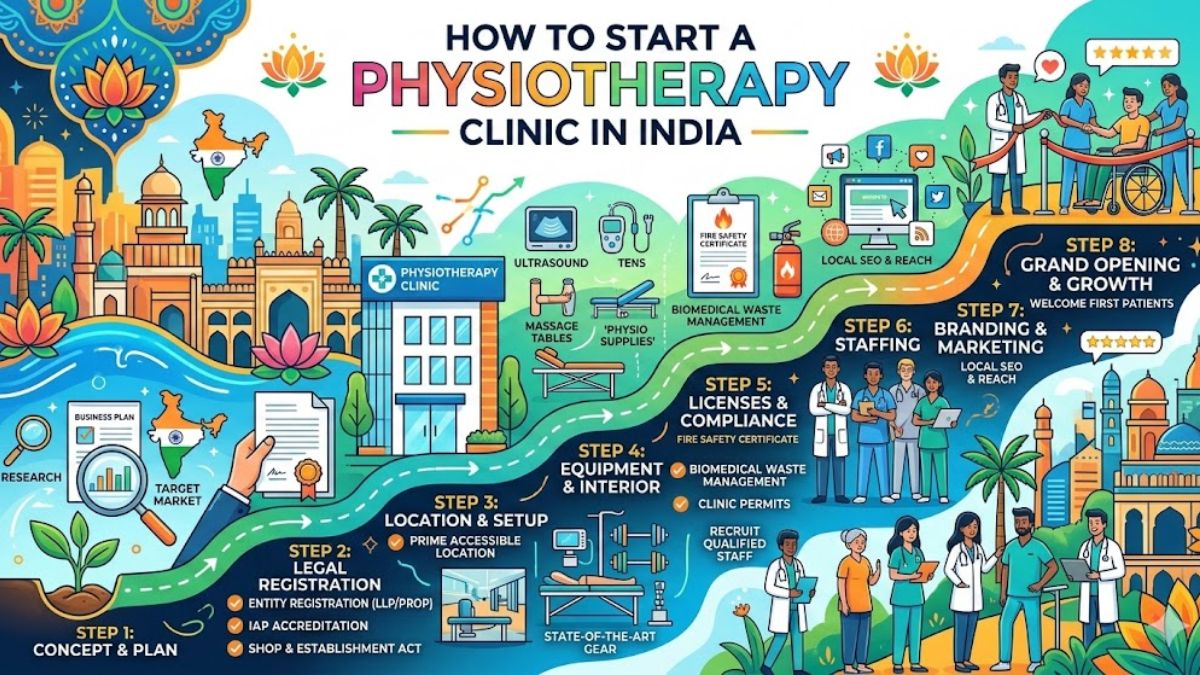
Launching a physiotherapy clinic requires careful planning and execution. Anyone exploring how to start a physiotherapy clinic must follow a structured approach to minimize risks and ensure professional service delivery. The first step involves obtaining the necessary educational qualifications. Physiotherapists in India typically hold a Bachelor of Physiotherapy (BPT) or Master of Physiotherapy (MPT) degree from a recognized institution.
The next step is conducting market research. Founders must evaluate the demand for physiotherapy services in their chosen location and analyze existing competition. Choosing the right location plays a crucial role in the clinic’s success. Clinics located near residential communities, hospitals, sports centers, or gyms often attract more patients. The clinic setup must include treatment rooms, exercise areas, and reception space. Proper lighting, hygiene, and patient comfort are essential for healthcare facilities.
Before the official launch, the clinic should conduct soft-opening activities such as free consultations, health camps, or physiotherapy awareness workshops. These initiatives help introduce the clinic to the local community. Once operations begin, maintaining high treatment quality and patient satisfaction becomes the foundation for long-term success.
8. Budget, Resources & Infrastructure
The physiotherapy clinic setup cost depends on several factors including clinic size, equipment quality, and geographic location. Rental costs typically represent one of the largest expenses. Clinics located in busy urban areas may require higher investment, while smaller towns often provide more affordable commercial spaces. Infrastructure expenses include furniture, treatment beds, therapy mats, exercise equipment, and storage cabinets. The clinic must also maintain proper ventilation, cleanliness, and patient-friendly interiors. The physiotherapy equipment list generally includes ultrasound therapy machines, electrotherapy devices, infrared lamps, exercise cycles, resistance bands, therapy balls, and rehabilitation equipment. Modern clinics may also incorporate advanced technology such as laser therapy machines, shockwave therapy devices, and digital posture analysis tools.
Administrative resources such as patient management software, appointment scheduling systems, and billing platforms help streamline daily operations. For entrepreneurs planning a physiotherapy clinic investment, careful budgeting ensures that the clinic has sufficient resources to maintain professional standards from the beginning.
9. Brand Strategy
Brand perception plays an important role in healthcare services. When entrepreneurs launch a physiotherapy clinic, they must build a brand that conveys trust, expertise, and patient care. The clinic name should be simple, memorable, and relevant to healthcare or rehabilitation. Many successful clinics use names that emphasize recovery, mobility, or wellness. Visual branding elements such as logos, color schemes, and signage should reflect professionalism and medical credibility. Clean design aesthetics help patients feel confident about the quality of care they will receive.
Brand messaging should focus on recovery outcomes, patient comfort, and expert guidance. Sharing patient success stories and rehabilitation journeys can strengthen trust and attract new patients. A consistent brand voice across websites, social media, and clinic communication ensures that the clinic presents a unified identity to patients.
10. Vendor & Partner Strategy
Running a physiotherapy clinic requires reliable suppliers and professional partnerships. Medical equipment suppliers provide therapy machines, rehabilitation tools, and clinical accessories. Selecting vendors that offer certified medical equipment ensures safety and durability. Furniture vendors supply treatment beds, exercise stations, and patient seating areas. High-quality equipment contributes to both patient comfort and professional presentation.
Pharmacies and orthopedic product suppliers may also become partners. These businesses provide braces, supports, and rehabilitation accessories recommended by physiotherapists. Hospitals and orthopedic surgeons can serve as referral partners. Many doctors refer patients to physiotherapy clinics for rehabilitation after surgeries or injuries. Fitness centers and sports clubs can also become strategic partners. Athletes and active individuals frequently require physiotherapy services for injury prevention and recovery. Strong partnerships help clinics build a steady flow of patients and maintain access to reliable medical resources.
11. Go-to-Market & Customer Acquisition Channels
Launching marketing initiatives early is critical for entrepreneurs who want to start a physiotherapy clinic and attract their first patients. Healthcare businesses rely heavily on trust and visibility, so building awareness within the community is essential. Local outreach remains one of the most effective marketing approaches for physiotherapy clinics. Clinics located near residential areas, gyms, sports complexes, and hospitals can promote their services through banners, local advertising, and health awareness programs.
Free health camps and physiotherapy assessment camps are particularly effective. These events allow potential patients to experience professional consultation while learning about the benefits of rehabilitation therapy. Digital marketing has also become a powerful channel. Clinics can build strong visibility through social media platforms by sharing educational content about posture correction, injury prevention, and rehabilitation exercises.
Search engine visibility plays an important role in patient acquisition. Many patients search online for nearby physiotherapy services or information on how to get patients for physiotherapy clinic practices. A well-optimized website can attract these patients organically. Online directories and healthcare platforms can also generate leads. Listing the clinic on healthcare directories increases discoverability and builds credibility among patients seeking treatment. Patient referrals remain one of the strongest drivers of growth. Satisfied patients often recommend physiotherapy clinics to family members and friends who face similar health issues.
12. Growth & Retention Strategy
Building a sustainable physiotherapy clinic requires both patient acquisition and long-term retention. While attracting new patients is important, maintaining strong relationships with existing patients often drives consistent revenue. Patient experience plays a central role in retention. Clinics that maintain clean facilities, professional treatment procedures, and friendly staff interactions tend to build long-term trust with patients. Regular follow-ups and progress tracking also encourage patient loyalty. Physiotherapists who monitor patient recovery and adjust treatment plans demonstrate commitment to successful outcomes.
Educational engagement helps retain patients as well. Clinics can organize workshops on posture correction, ergonomic work habits, and preventive exercises to support long-term health. As the clinic grows, offering specialized services such as sports rehabilitation or neurological therapy can expand the patient base. Diversification of services allows clinics to treat a wider range of medical conditions. Expanding into home physiotherapy services is another growth strategy. Some patients prefer therapy sessions at home, particularly elderly individuals or those with limited mobility. By combining quality treatment, education, and service diversification, clinics can build strong patient loyalty and sustainable growth.
13. Team Structure & Responsibilities
The success of a physiotherapy clinic largely depends on the skills and professionalism of its team. When entrepreneurs start a physiotherapy clinic, the initial team structure is usually small but focused. The founder, often a qualified physiotherapist, typically oversees clinical operations, patient treatment, and therapy planning. The founder also manages business development and strategic decisions. Additional physiotherapists may be hired as the clinic grows. These professionals handle patient sessions, monitor rehabilitation progress, and collaborate on treatment strategies.
Administrative staff manage reception duties such as appointment scheduling, patient records, and billing. Efficient administrative management helps ensure smooth clinic operations. Support staff may assist with clinic maintenance, equipment preparation, and patient assistance during therapy sessions. As the clinic expands, marketing professionals, physiotherapy assistants, and rehabilitation specialists may be added to the team. Some functions such as accounting, website management, and digital marketing can be outsourced. A well-structured team ensures that the clinic maintains professional healthcare standards while delivering efficient service to patients.
14. Risks, Challenges & Mitigation
Like any healthcare venture, launching a physiotherapy clinic involves several operational and business risks. Understanding these challenges allows founders to prepare appropriate strategies. One common challenge is patient acquisition during the early months of operation. New clinics may take time to build credibility within the community. Consistent marketing and awareness campaigns can help overcome this initial hurdle. Competition from hospitals and established clinics can also affect patient flow. New clinics must differentiate themselves through personalized care, modern treatment equipment, and better patient experience.
Operational costs such as rent, staff salaries, and equipment maintenance must also be carefully managed. Financial planning helps ensure that the clinic remains sustainable even during periods of lower patient volume. Another challenge is maintaining consistent treatment quality. Patients expect professional care and measurable recovery outcomes. Regular training and adherence to physiotherapy best practices help maintain service standards. By addressing these risks proactively, clinic owners can create stable and reliable healthcare businesses.
15. Legal, Compliance & Fundamentals
Healthcare services must follow strict regulatory and professional guidelines. Entrepreneurs planning to start a physiotherapy clinic should ensure that the clinic complies with all applicable legal requirements. Professional qualification is the first requirement. Physiotherapists must hold recognized academic degrees such as BPT or MPT from accredited institutions. The physiotherapy clinic registration India process typically involves registering the business under a legal structure such as sole proprietorship, partnership, or private limited company.
Local municipal approvals may also be required depending on the clinic location. Commercial property permissions and safety regulations must be verified before opening the facility. Understanding physiotherapy clinic license requirements is essential for maintaining legal operations. Clinics may need to follow healthcare facility standards related to sanitation, patient safety, and equipment maintenance. Contracts with staff members, suppliers, and referral partners should be documented clearly. Proper agreements protect both the clinic owner and associated professionals. Completing these legal steps helps establish credibility and ensures that the clinic operates within the regulatory framework.
16. Long-Term Vision & Future Outlook
The future outlook for physiotherapy services in India is extremely promising. As awareness about rehabilitation and preventive healthcare grows, more patients are actively seeking professional physiotherapy treatment. Entrepreneurs who start a physiotherapy clinic today are entering a healthcare segment that is expected to expand steadily over the coming years. Increasing lifestyle diseases, sports injuries, and aging populations will continue to drive demand.
Over time, a single clinic can evolve into a multi-location physiotherapy chain serving multiple communities. Some successful clinics expand by opening branches in different neighborhoods or cities. Digital health technology also presents new opportunities. Online physiotherapy consultations and remote rehabilitation monitoring allow clinics to serve patients beyond their physical location. Advanced rehabilitation technologies such as robotic therapy, AI-based posture analysis, and wearable health devices may also transform physiotherapy treatment in the coming years.
Clinics that combine professional expertise, modern technology, and patient-centered care are likely to become leaders in the growing physiotherapy clinic business in India. For healthcare professionals and entrepreneurs interested in building impactful healthcare ventures, learning how to start a physiotherapy clinic can open the door to a sustainable business that improves patient health while contributing to the expanding wellness economy.
About foundlanes.com
foundlanes.com is a growing platform dedicated to sharing startup ideas, founder stories, and practical business insights for entrepreneurs across India. The platform focuses on helping aspiring founders discover promising business opportunities, understand market trends, and learn from real entrepreneurial journeys. Through in-depth startup guides, industry analysis, and case studies, FoundLanes.com aims to empower readers with the knowledge required to build successful businesses in India’s evolving startup ecosystem.