


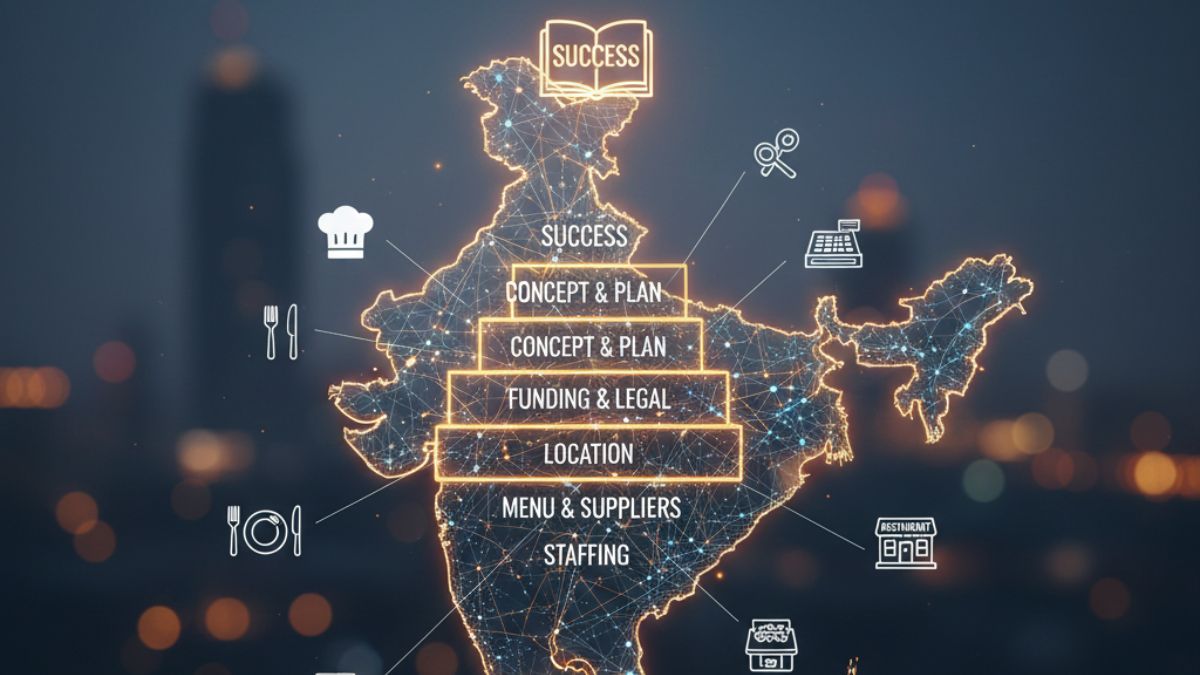
Introduction:
Starting a restaurant business in India has very little to do with recipes and a lot to do with restraint. It is a daily test of judgment. Every morning begins with the same questions. Will customers show up today? Will costs stay under control? the team perform the way they promised they would? To start a restaurant business successfully, founders must navigate these challenges while keeping the experience consistent. Food is the visible layer, but the real work happens behind the scenes, in decisions that never make it to the menu.
India’s restaurant industry sits in a complicated emotional space. Eating out here is not only about hunger. It is about relief after a long workday, celebration after a milestone, comfort during loneliness, and sometimes status. A restaurant becomes a place where memories form. That emotional weight creates massive opportunity, but it also leaves no room for excuses. One bad experience can erase months of goodwill.
The founders who survive this business rarely look like the stereotype
The founders who survive this business rarely look like the stereotype. Many are not chefs. They are ex-corporate professionals, small-town entrepreneurs, or first-time founders who understand process better than passion. They know that love for food does not pay rent. Discipline does. Restaurants now operate everywhere, from high-rent streets of Mumbai and Bengaluru to Tier 2 and Tier 3 towns where organized dining is still earning trust.
There has never been a perfect time to start a restaurant, but the current moment is uniquely conflicted. Food delivery platforms have expanded reach beyond physical footfall. Cloud kitchens have reduced capital barriers. Consumers are more experimental than ever. At the same time, rents are higher, raw material costs fluctuate weekly, compliance is stricter, and competition is brutal. Every advantage comes with a counterweight.
The practical reality begins with hard numbers. The “how” includes market research, licensing, vendor negotiations, staffing models, branding decisions, and launch strategy. The “how much” depends on format and ambition. A focused cloud kitchen or QSR can launch with ₹10–15 lakh if costs are tightly controlled. A casual dine-in restaurant typically needs ₹30–60 lakh to survive the first year. Premium formats demand deeper pockets and deeper patience, often crossing ₹1 crore before breaking even.
This guide breaks down what it actually takes to start a restaurant business in India. Not the romantic version, but the lived one. It focuses on decisions founders lose sleep over. It is written for builders who want durability, not applause.
1. Startup Idea Overview
Starting a restaurant business in India is fundamentally about converting everyday demand into repeatable revenue. The idea sounds simple. Serve food people enjoy, price it fairly, and deliver it reliably. In reality, every word in that sentence hides complexity. What makes restaurants difficult is not demand, but discipline. Food is perishable. Cash cycles reset daily. Staff turnover is constant. Unlike tech startups, restaurants do not get long runways. Feedback is instant. A bad dish shows up as an empty table the next day. A service lapse turns into a one-star review within hours.
The restaurant business exists because it solves a very human need. As Indian cities grow denser and lives grow busier, people outsource cooking more often. Eating out becomes a habit, not an event. From quick weekday meals to family dinners and celebrations, restaurants have woven themselves into daily life. What successful restaurants really sell is not food. It is reliability. Customers return because they know what they will get. The taste will be familiar. The portion will feel fair. The environment will feel safe. This predictability builds trust, and trust builds revenue.
Behind every thriving restaurant is a founder who understands this truth early. They stop chasing novelty and start building systems. They measure wastage, track footfall patterns, renegotiate with vendors, and train staff to handle pressure without breaking. Over time, the restaurant stops being a gamble and becomes an operation. That shift, from hope to structure, is what separates restaurants that close within a year from those that quietly compound for decades.
2. Problem Statement & Solution
The Indian food market is a mosaic of flavors, but it is also a landscape riddled with unpredictability. One street-side eatery may serve a butter chicken so rich it lingers in memory, only for the same place to disappoint the very next day with undercooked vegetables or stale rotis. Hygiene standards fluctuate, portions shift subtly, and pricing often feels arbitrary. For the consumer, dining out or ordering in is an emotional gamble. Every meal carries the hope of satisfaction and the anxiety of disappointment.
Trust is the invisible currency in this industry, and it is in short supply. Urban Indians want more than taste—they want assurance. They want kitchens that look clean enough to eat off the counters, portions that are generous yet consistent, and pricing that doesn’t require a second glance. They want convenience and speed, but not at the cost of flavor or safety. The moment a restaurant fails on any of these counts, the connection erodes, and social media amplifies the misstep in real time.
This is where a professionally run restaurant makes the difference. Success comes not from flair or fancy ingredients but from systems. Standardized recipes ensure that the butter chicken tastes the same on Tuesday lunch and Friday dinner. Staff training ensures service that is courteous even when the restaurant is at full capacity. Supplier contracts guarantee ingredient quality without last-minute compromises. Compliance with health and food business regulations converts trust into a tangible assurance. Technology becomes the backbone: billing systems that reduce errors, inventory software that prevents shortages, and customer feedback loops that catch problems before they snowball.
Founders who approach a restaurant as an operating system rather than a passion project transform unpredictability into reliability. The kitchen becomes a machine calibrated for consistency. Staff are not just employees but trained cogs in a finely tuned operation. When executed well, this approach does more than deliver food—it delivers a repeatable experience, which scales across locations and builds defensibility against competition. The restaurant shifts from being a fragile dream to a durable enterprise.
3. Target Audience & Customer Persona
The audience for a restaurant in India is as diverse as its cuisines, but patterns emerge when you look closely. Most new ventures cater to urban and semi-urban consumers aged 20 to 45—people whose lives are busy, whose schedules leave little time for home cooking, and whose smartphones are constant companions in ordering food. This group is experimental but discerning. They will try new cuisines but measure every experience against expectations shaped by reviews, brand reputation, and past encounters.
Their values are simple yet unforgiving. Taste must deliver the promise. Pricing must feel fair and transparent. Hygiene must inspire confidence, not speculation. Brand awareness exists, but loyalty is earned through repeated, consistent satisfaction.
Consider the persona of Aarav, a 32-year-old working professional in Bengaluru. He orders dinner twice a week from a mix of cloud kitchens and dine-in restaurants. He reads reviews carefully, compares menus, and is quick to abandon a brand that fails him once. Or Meera, a mother in Pune who plans family dinners on weekends, balancing nutrition, taste, and the convenience of a restaurant that accommodates everyone. Both are pragmatic and emotionally invested in the dining experience.
These customers gravitate toward familiarity, even in novelty. A new cuisine is enticing only if presented with clarity, consistency, and reassurance. Menus must be easy to understand, prices transparent, and service predictable. Restaurants that build these trust signals transform casual diners into repeat customers. In an industry where one misstep can break consumer confidence overnight, the ability to understand, anticipate, and meet these expectations becomes the true differentiator between fleeting popularity and lasting success.
4. Market Opportunity & Timing
The Indian restaurant industry is massive, valued in several lakh crores, and yet the organized sector still captures only a small fraction of total food consumption. This imbalance tells a story: millions of meals happen every day in fragmented, inconsistent ways, leaving enormous opportunity for those willing to systematize. Urbanization is reshaping lifestyles. Nuclear families, dual-income households, and long commutes mean people increasingly outsource meals. Dining out is no longer a luxury; it’s a functional, sometimes emotional, necessity. Food delivery platforms have become the great equalizer. Even a modest cloud kitchen in a Tier 2 city can now reach thousands of households without a single table for dine-in. This access has lowered the traditional barriers that once restricted scale to metros.
Timing matters more than most founders realize. After years of pandemic-driven disruption, consumer behavior has stabilized. People are venturing out again, ordering in with confidence, and seeking experiences that match rising expectations. They demand value, predictability, and speed. Novelty alone no longer wins loyalty; it merely sparks curiosity. For founders who understand unit economics, local tastes, and peak-hour dynamics, the market is generous. But it rewards precision, discipline, and relentless execution rather than hype or experimentation. Restaurants that master these factors today are building businesses that can compound for years.
5. USP & Value Proposition
In a crowded market, uniqueness is overrated. The strongest restaurants are rarely “different” in the abstract sense—they are reliably excellent at one thing. Clarity becomes the currency of trust. Confused concepts confuse the customer, and confusion in the kitchen always translates to inconsistent service and waste. A restaurant’s USP could be affordability without compromise, speed without sacrificing quality, authenticity that transports diners, or an atmosphere that makes moments memorable. The key is specificity. A focused menu, for instance, doesn’t just reduce kitchen errors; it sharpens brand recall. Customers should be able to describe the restaurant in one sentence, whether it’s “the place for the crispiest dosas in town” or “your go-to cloud kitchen for quick comfort meals.”
This clarity has cascading benefits. Marketing becomes straightforward because the message is simple. Operations become manageable because the team can execute consistently. Scaling becomes possible because a replicable model exists. In contrast, restaurants that attempt to be everything at once often collapse under the weight of their own ambition. In the Indian market, where competition is relentless and consumers are unforgiving, focus is the ultimate differentiator.
6. Business Model & Pricing Strategy
Revenue streams in a restaurant are traditionally dine-in, takeaway, and delivery. Today, delivery often dominates early-stage economics, especially for startups without the luxury of prime real estate. Every order counts, not just for revenue but for learning—understanding peak times, popular items, and customer behavior. Pricing is a delicate balancing act. It must cover raw material costs, rent, staff salaries, platform commissions, and taxes, all while leaving enough margin to reinvest in growth. Gross margins typically range from 55 to 65 percent before overheads, but achieving this requires discipline. Cutting corners may improve short-term profitability but erodes trust and repeat business.
Sustainable restaurants in India focus on contribution margin rather than flashy pricing. Discounts can attract curious first-time customers, but loyalty is built on value—consistent taste, portion, and service that justify the price. Founders must price for survival, not popularity. Every rupee invested in operations, staff, or supply chain efficiency directly protects the restaurant from the volatility of the market. In essence, a restaurant survives not on ambition alone, but on carefully managed economics that make every decision accountable and every meal dependable.
7. Execution Plan & Launch Strategy
7.1 Validating the Concept
Every restaurant begins as a hypothesis. Founders may have a vision for the perfect menu or the ideal dining experience, but until customers vote with their appetite, it remains untested. Validation is not about surveys or spreadsheets—it is about real meals, real feedback, and real reactions. Pop-ups in community spaces, limited-time menus, or small-scale cloud kitchens offer a low-risk way to see if the idea resonates.
Listening closely at this stage is critical. A customer’s hesitation over a spice level, comment on portion size, or praise for speed contains far more actionable insight than months of planning. Adjustments here—tweaking a recipe, rethinking presentation, or recalibrating pricing—save massive costs and heartbreak later. Founders who treat validation as a disciplined experiment build a foundation of trust, not just menu items.
7.2 Location and Format Selection
Location is often the invisible hand that dictates success or struggle. High-street venues bring visibility and foot traffic but come with the weight of sky-high rent. Delivery-centric setups may lower overheads, but they place the restaurant at the mercy of food platforms, requiring constant optimization to maintain margins. Each decision signals who your customers are, how they find you, and how they experience your brand.
Format matters just as much. Dine-in requires operational depth—trained staff, ambience, seating logistics—while a quick-service restaurant (QSR) demands speed and efficiency at scale. Cloud kitchens reduce upfront costs and provide flexibility, but they rely on marketing, packaging, and delivery consistency to win repeat orders. Choosing the right format is not aspirational; it is an exercise in understanding capital limits, operational bandwidth, and the daily grind of execution.
7.3 Soft Launch and Iteration
The soft launch is a restaurant’s crucible. It exposes gaps that planning cannot anticipate: the lag between the kitchen and the table, inconsistencies in taste, missing ingredients, or billing errors that frustrate staff and customers alike. Early hiccups are inevitable, but the key is to observe, learn, and iterate quietly before any broad marketing push. During this period, founders learn the rhythm of their kitchen, the strengths and weaknesses of staff, and the real cost of serving each dish. Adjustments made in these first few weeks prevent negative reviews and build the credibility that fuels long-term growth. Soft launches turn hope into evidence, refining the system until it hums with reliability.
8. Budget, Resources & Infrastructure
Starting a restaurant requires more than enthusiasm; it demands financial clarity. The investment spectrum is wide. A small cloud kitchen may require ₹10–15 lakh to cover equipment, initial stock, and marketing. A casual dine-in restaurant typically needs ₹40–60 lakh, while premium concepts easily cross ₹1 crore. Major expenses include kitchen equipment capable of withstanding daily intensity, interiors that reflect the brand without overspending, security deposits for space, regulatory licenses, and sufficient working capital to survive the first months of unpredictable revenue. Many founders stumble by underestimating working capital, only to find themselves cash-strapped when demand fluctuates.
Infrastructure should be designed with scale in mind. Modular kitchens allow expansion or relocation without disruption. Standardized equipment ensures consistency, reduces training friction, and simplifies maintenance. Vendor contracts must be strategic, not just transactional, ensuring ingredient quality and supply reliability. Every element, from layout to suppliers, must reduce friction, allowing the team to focus on what truly matters: delivering a consistently memorable experience to every customer.
9. Brand Strategy
A restaurant’s brand is far more than a logo on the wall or a profile picture on a delivery app. It is the memory customers carry with them after the last bite, the emotion they recall when deciding where to eat next. Every element—name, visual identity, tone of communication—must resonate with the audience’s expectations and aspirations. Simple, memorable, and easily pronounceable names outperform clever but convoluted ones. They stick in conversations and search queries alike. Visual identity—colors, fonts, photography style—must translate seamlessly across all touchpoints: signage on a busy street, thumbnails on a food delivery platform, or a social media post. Consistency is crucial because every inconsistency chips away at trust.
The brand voice ties it all together. Whether it is the friendly copy on a menu, the engagement on Instagram stories, or the in-store communication, it must feel authentic and consistent. A misaligned voice creates friction between expectation and reality; a consistent one builds a sense of familiarity, comfort, and reliability. In a market where diners judge restaurants by both food and experience, brand is the emotional bridge that keeps them coming back.
10. Vendor & Partner Strategy
Behind every great meal is a network of reliable partners. Ingredient quality, price stability, and timely delivery form the invisible backbone of a restaurant. Cutting corners on vendors might save a few rupees initially, but inconsistent produce, delayed supplies, or fluctuating costs can erode trust faster than any marketing campaign can build it. Single-vendor dependency is a silent risk. Backup suppliers are not optional—they are a safeguard against disruption. When a tomato truck is delayed or milk prices spike unexpectedly, a well-planned vendor network ensures operations continue smoothly.
Technology partnerships amplify operational efficiency. POS systems that integrate seamlessly with inventory management, automated ordering, and delivery platforms reduce errors, track performance, and free the team to focus on customer experience. Choosing reliable tech partners is as critical as selecting ingredient suppliers; both impact the quality, consistency, and profitability of the restaurant.
11. Go-to-Market & Customer Acquisition Channels
Visibility is the oxygen of a new restaurant. Without it, even exceptional food can go unnoticed. In the current landscape, food delivery platforms provide instant reach to thousands of potential customers, but commissions cut into already thin margins. Founders must weigh reach against profitability, optimizing menu items and operations to make the model sustainable. Offline discovery remains equally important, especially for dine-in formats. Eye-catching signage, strategic placement near foot traffic, and word-of-mouth recommendations build a loyal local following. Even small touches—friendly greetings, memorable plating, or attention to seating comfort—can spark referrals that digital marketing cannot buy.
Smart early marketing blends creativity with precision. Limited-time offers, tasting events, collaborations with influencers, or community engagement campaigns provide initial momentum while gathering real feedback. The goal is not just one-time visits, but creating a network of repeat customers who become advocates. In India, where dining choices are abundant and fleeting, a restaurant’s ability to turn curiosity into loyalty depends on making each interaction memorable, consistent, and emotionally resonant.gs, and community engagement.
12. Growth & Retention Strategy
Scaling a restaurant is often romanticized as opening multiple outlets, but the reality is far more unforgiving. True growth comes from replicating systems, not just spaces. Every new location tests the integrity of recipes, staff training, supplier reliability, and customer experience. Without disciplined processes, expansion quickly erodes quality, leaving a brand that is everywhere but trusted nowhere.
Customer retention is the heartbeat of sustainability. Loyalty programs, discounts, or referral campaigns can only amplify success—they cannot replace it. Retention is earned through consistency: the same flavor, portion, hygiene, and service that customers expect each visit. When diners trust that their experience will be reliable, they return, recommend, and forgive minor lapses.
Many seasoned founders take a measured approach. They expand slowly, ensuring each outlet achieves unit-level profitability before adding the next. This cautious strategy may feel frustrating in the age of rapid scaling, but it creates durable businesses. Every successful chain in India began with a single outlet that mastered execution before ambition overtook capacity.
13. Team Structure & Responsibilities
Early restaurant teams are lean by necessity. Founders wear multiple hats: operations, hiring, vendor negotiations, and financial oversight. The core team usually includes kitchen staff, service personnel, and a floor supervisor who bridges communication between the founders and frontline employees. Clarity of roles is essential. Peak hours can quickly become chaotic if responsibilities overlap or remain undefined. A supervisor ensures orders flow smoothly, the kitchen maintains pace, and diners feel attended to even during rush periods.
Outsourcing non-core functions—like accounting, compliance, and payroll—reduces overhead and allows founders to focus on the operational heartbeat: food quality, staff coordination, and customer experience. Every person in the team should know their contribution matters; small lapses in discipline ripple into visible flaws in service and reputation.
14. Risks, Challenges & Mitigation
Restaurants operate on a razor’s edge every day. Staff attrition, fluctuating demand, ingredient spoilage, and sudden operational hiccups are constants. Unlike digital businesses, problems are immediately visible: a cold dish, an empty table, or a late delivery is noticed and remembered by customers. Mitigation begins with rigorous training and well-documented Standard Operating Procedures (SOPs). Staff must understand exactly how to execute their roles, from prep to plating to service. Conservative financial planning acts as a buffer against unpredictability—overestimating revenue or underestimating costs is a common and deadly mistake.
Overexpansion is another trap. Opening multiple outlets without solid operational control stretches resources, erodes quality, and often accelerates failure. Founders who respect cash flow, track every rupee, and make disciplined decisions survive longer. In the Indian restaurant industry, longevity is a product of patience, operational rigor, and the humility to learn from small missteps before they become catastrophic failures.
15. Legal, Compliance & Fundamentals
The excitement of launching a restaurant can easily overshadow the legal realities that sustain it. In India, starting a food business is not just about passion—it is about permission. Every restaurant, whether a small cloud kitchen or a sprawling dine-in, must secure an FSSAI registration. This is the foundation of legitimacy, the seal that signals to customers, vendors, and authorities alike that the business operates within the law.
Beyond FSSAI, founders navigate a web of licenses and approvals. Trade licenses, GST registration, fire safety clearances, and local municipal permits are not optional bureaucratic hurdles—they are the infrastructure that protects the business. Urban regulators enforce these rules strictly. Non-compliance is not a minor risk; it can halt operations overnight, erasing revenue, reputation, and months of hard work.
Understanding the nuances of each license, particularly the FSSAI, is critical. Timely renewal is non-negotiable, and any lapse can invite penalties or closure. Many founders underestimate this layer, only to face disruptions that could have been avoided with proper planning. In essence, legal compliance is not paperwork—it is a safeguard that allows the creative, operational, and customer-focused aspects of the restaurant to thrive without interruption.
16. Long-Term Vision & Goals
A restaurant’s vision must be grounded in realism. Planning for three to five years ahead provides clarity and focus. Success might mean a single profitable outlet, a small chain of well-run locations, or a brand scalable enough to capture multiple cities. The target should not be expansion for its own sake, but sustainable growth underpinned by robust unit economics.
Metrics tell the true story. Repeat customer rate, operational stability, food consistency, and contribution margins are far more revealing than footfall alone. A restaurant that consistently turns a small profit with loyal customers builds a foundation stronger than one that chases hype and fast growth. Patience is the currency of endurance. The most enduring brands in India started modestly, refining operations and deepening customer trust before taking the next step.
Future Outlook: Why Now Is Still the Right Time to Start a Restaurant Business
Despite rising costs, stricter compliance, and intense competition, the desire to open a restaurant in India remains undiminished—and for good reason. The industry continues to reward founders who treat restaurants as disciplined businesses rather than passion projects.
Technology has transformed the landscape. Data-driven insights into customer preferences, inventory management, and delivery efficiency lower the uncertainty that once burdened founders. Consumer habits have shifted: urban and semi-urban diners are increasingly willing to pay for convenience, quality, and consistency. Expectations are higher, but so are the tools to meet them.
Those who adapt—who marry operational rigor with an understanding of human appetite and behavior—will thrive. The Indian restaurant industry will continue to grow, but it is unforgiving to those who ignore fundamentals. Today, starting a restaurant demands realism, resilience, and respect for the craft. For founders willing to embrace discipline and dedication, there has never been a better moment to build something lasting, meaningful, and truly memorable..
About foundlanes.com
foundlanes.com is India’s leading startup idea and deep-dive platform built for founders, operators, and serious entrepreneurs. We go beyond surface-level advice to deliver grounded, research-backed, and experience-driven startup content.
Every guide on foundlanes.com is designed to help readers think clearly, act strategically, and build sustainably. This cloud kitchen startup guide is part of our mission to document real business pathways in India’s evolving startup ecosystem.