


Summary
Starting a tutoring center has become one of the most accessible business ideas in India’s education-driven economy. Parents want better academic support for their children, professionals look for upskilling options, and students across age groups increasingly seek personalized learning. This rising demand has created an opening for entrepreneurs wondering how to start a tutoring center and build something meaningful as well as commercially sustainable.
A tutoring center offers structured academic support, personalized teaching, and outcome-driven learning programs. The idea works because students often struggle in large classrooms, where teachers cannot provide individual attention. Families see tutoring as an investment, not an expense, which makes the market resilient even during economic slowdowns. The business is attractive for first-time founders because it can be started on a small budget, does not require advanced technology, and becomes profitable quickly with consistent enrollment.
Anyone with an educational background
Anyone with an educational background, a passion for teaching, or a mindset for operational management can build a tutoring business. The model works in urban, semi-urban, and rural locations. It caters to school students preparing for board exams, entrance aspirants, hobby learners, or individuals looking to upgrade skills. The timing is right because the shift toward personalized learning, small-batch coaching, and hybrid classrooms is accelerating.
The process of launching a tutoring center begins with choosing a target segment. It continues by creating a curriculum, setting up a location, hiring teachers, designing pricing, and promoting the center. Startups in this space typically need basic infrastructure such as study rooms, whiteboards, learning materials, and a simple digital presence. The initial investment can vary widely, from a modest amount for a home-based setup to a higher figure for a full-fledged institute.
A founder must analyze the competitive environment and develop a brand that stands out. This involves understanding neighborhood demand, setting tuition fees wisely, and building trust among parents and students. With the right strategy and execution, a tutoring center can scale operations through multiple batches, additional subjects, and new branches. This article breaks down the startup idea step by step and provides a detailed guide for entrepreneurs planning to open a tutoring center, covering the concept, market demand, opportunity, business model, budget, brand strategy, launch plan, and long-term vision.
1. Startup Idea Overview
The idea of starting a tutoring center revolves around offering structured educational support through small-group or personalized learning environments. Students often require guidance beyond regular schooling because classroom instruction is limited by time and attention constraints. A tutoring center fills this gap by offering customized lesson plans and consistent monitoring.
The startup aims to solve the issue of inconsistent academic performance by providing a place where students receive clarity in concepts and a disciplined learning routine. Founders who pursue this opportunity typically focus on targeted subjects, competitive exam preparation, foundational learning, or skill development. The strength of the idea lies in its simplicity, low capital requirement, and predictable recurring revenue.
A successful tutoring center ensures measurable improvement, reliable teaching quality, and trust-building with parents. It becomes a neighborhood institution that supports academic progress and provides stability in a competitive educational landscape. As the business matures, it can expand into additional services such as online classes, weekend workshops, or specialized modules.
2. Problem Statement & Solution
Many students fail to achieve their potential because mainstream classrooms cannot accommodate varying learning speeds. Teachers are responsible for large groups and often struggle to provide personalized feedback. This leads to gaps in understanding, weak fundamentals, and academic stress. Parents frequently search for reliable academic support but encounter challenges such as overcrowded coaching centers, inconsistent teaching quality, and lack of structured learning plans. These issues create frustration and lead families to look for credible alternatives.
A tutoring center resolves these challenges by offering focused attention, tailored instruction, and consistent evaluation. Small groups allow teachers to identify problem areas early and provide timely corrective measures. A well-designed tutoring business builds a disciplined learning environment supported by structured schedules and outcome-based instruction.
The solution also helps students develop habits such as regular study, revision planning, and confidence-building. Over time, parents trust the system because they see measurable improvement. The combination of personalized guidance and academic structure makes the tutoring center an effective and scalable solution.
3. Target Audience & Customer Persona
The tutoring center business caters to a wide spectrum of learners. The primary audience includes school students who need subject clarity or exam support. Parents in this segment actively seek reliable environments that reinforce learning and strengthen performance. A second audience includes learners preparing for competitive exams. These students require deeper conceptual understanding and consistent practice. A tutoring center that specializes in exam-specific modules can attract this demographic effectively.
The model also appeals to students who need remedial learning due to academic gaps. Some learners benefit from slow-paced instruction and personalized mentorship, making a tutoring center ideal for their needs. The business is equally relevant for individuals looking for skill development in areas such as language, computer basics, and foundational knowledge.
The ideal customer persona is a student who values structured learning and consistent guidance. Their family seeks a trustworthy educational environment and is willing to invest in supplemental learning. These customers typically choose a center that demonstrates credibility, experienced instructors, and clear learning outcomes.
4. Market Opportunity & Timing
The tutoring industry has consistently grown because families prioritize education regardless of economic conditions. Enrollment spikes during exam seasons and remains steady throughout the academic year. With growing academic pressure and rising competition, students now depend on support outside school more than ever.
The demand for personalized learning is increasing rapidly. Students prefer smaller batches and focused teaching. This shift creates an ideal moment for founders exploring how to open a tutoring center or how to set up a tutoring institute. Digital learning has expanded awareness, but parents still prefer in-person teaching for foundational subjects. Hybrid models have become popular, making the timing ideal for new entrants who can combine offline and online support.
The overall market includes school children, college students, and working professionals. The rise of neighborhood learning centers and micro-coaching hubs shows clear demand for hyperlocal education. A tutoring center is well positioned to capture this market because it offers convenience, accessibility, and trusted guidance. The timing is also favorable because many educators now explore entrepreneurship. More trained tutors are entering the market, providing a strong talent pool for new centers. With rising aspirations and increased emphasis on quality education, the tutoring center industry continues to be one of the most promising small business categories in India.
5. USP & Value Proposition
A tutoring center succeeds when it stands out in a competitive neighborhood market. Families have many choices, from private tutors to large coaching chains, so the center must offer something distinct. The unique value proposition usually comes from personalized learning, strong academic outcomes, or specialized subject expertise. A well-positioned center focuses on clarity and performance instead of simply completing the syllabus. Its biggest strength often lies in structured teaching and measurable progress. Students appreciate learning environments where doubts are addressed immediately and concepts are reinforced through regular practice. Parents value consistent feedback, scheduled assessments, and clear communication.
Another differentiator is the hybrid or blended learning approach. Some students benefit from recorded lessons for revision, while others need offline group study sessions. A modern tutoring business that blends flexibility and discipline creates strong loyalty. Over time, the center can become known for its teaching style or its achievement record, forming a long-term identity that attracts students year after year.
6. Business Model & Pricing Strategy
The business model of a tutoring center is built around recurring enrollment. Students sign up for monthly, quarterly, or annual programs. This creates predictable revenue and makes financial planning easier for founders. The center can operate through group classes, one-on-one sessions, or specialized courses.
Pricing depends on location, subjects offered, and teacher experience. Founders often begin with a simple model: a fixed monthly fee for each batch. As the center grows, it can introduce tiered plans based on class size, teaching quality, or additional services such as doubt-clearing sessions. A separate fee structure may apply for competitive exam modules, since those require advanced teaching and longer hours.
Margins are typically healthy because operating costs remain manageable once the infrastructure is set up. Expenses often include rent, teacher salaries, electricity, study materials, and marketing. When batch sizes increase, revenue grows without a proportional increase in costs. This makes the tutoring business one of the most profitable small ventures in the education sector.
7. Execution Plan & Launch Strategy
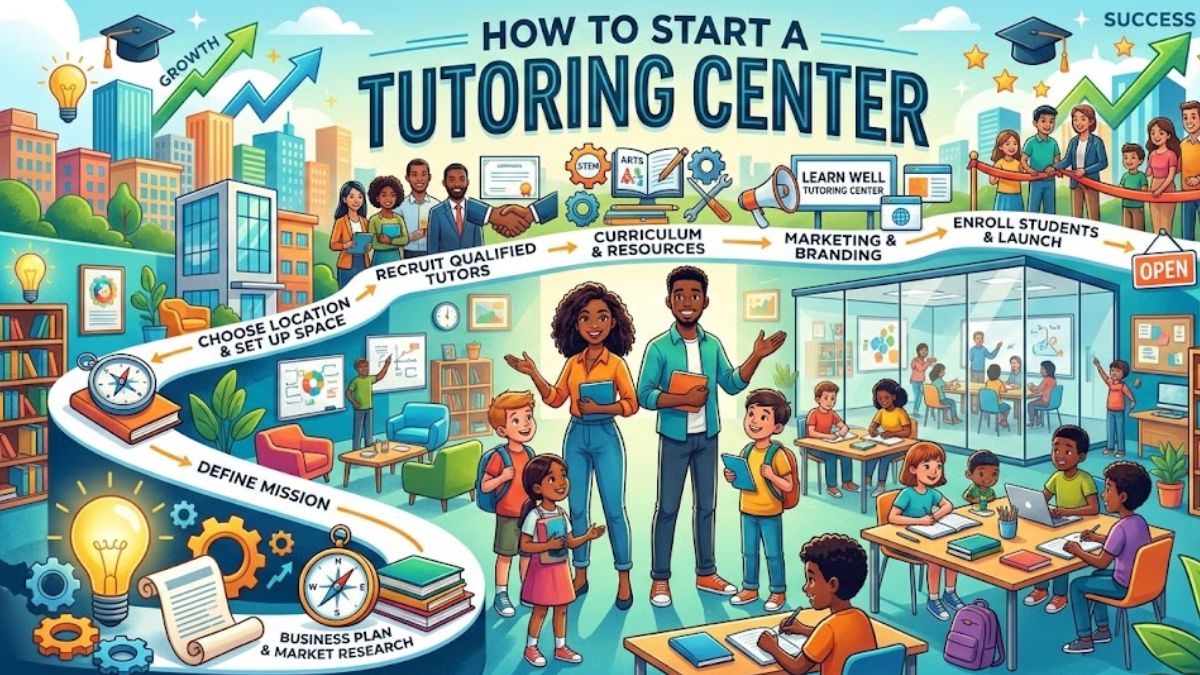
Launching a tutoring center begins with choosing a location. Founders usually prefer residential neighborhoods with easy access for school students. The area must be well connected and safe, since many students attend classes early in the morning or late in the evening. After securing a space, the next step is designing classrooms that support learning. This includes desks, chairs, whiteboards, and proper lighting. Developing a curriculum is the next major task. The plan must align with academic syllabi and focus on depth of understanding rather than excessive content. Many founders create weekly and monthly schedules to ensure systematic teaching. Setting assessment calendars helps track student performance over time.
Once the academic plan is ready, the center must recruit teachers. Founders look for instructors who can explain concepts clearly and maintain discipline in small groups. A combination of experienced teachers and young graduates often works well. After the teaching team is finalized, the center can begin pre-launch marketing. The best way to start is through neighborhood outreach. Parents respond well to open house events, trial classes, and teacher–parent meetings. Digital platforms also help build early awareness. Once the first few batches fill up, the center can launch formally, share its timetable, and begin regular classes.
8. Budget, Resources & Infrastructure
The investment required to start a tutoring center varies based on scale. A small home-based setup needs only basic furniture, learning materials, and teaching equipment. The initial cost is minimal, making this model ideal for first-time founders. A dedicated coaching space requires more resources. Founders must budget for rent, interior setup, whiteboards, seating, electricity, and branding materials. Classroom design is crucial because a comfortable and organized space improves learning quality. Many centers also invest in projectors, digital tools, or learning apps to enhance teaching.
Operational resources include teacher salaries, stationery, student handbooks, and tests. Some centers hire administrative staff to manage scheduling, attendance, and communication. A simple customer management system helps track enrollment and fee payments. Depending on the setup, founders may also allocate funds for marketing. This includes local promotions, social media presence, and print materials. Over time, efficient management and consistent enrollment help recover the initial investment and build profitability.
9. Brand Strategy
A strong brand helps the tutoring center earn trust quickly. Parents look for reliability and assurance, so the brand identity must reflect stability and academic quality. Founders often choose names that convey learning, clarity, or progress. A simple, easy-to-remember name works best for local marketing. The logo should look clean and professional. Many centers choose symbols related to books, light, or growth. The brand voice must be friendly and informative. Every communication, from pamphlets to WhatsApp messages, must reinforce trust.
Positioning the center as a place that improves academic performance is essential. This is achieved through transparent teaching methods, consistent results, and parent communication. A clear positioning strategy helps differentiate the center from private tutors and large commercial institutes. Over time, the brand identity becomes closely associated with the center’s achievements. Testimonials from parents, student success stories, and consistent feedback help strengthen credibility. This reputation becomes the foundation for long-term growth.
10. Vendor & Partner Strategy
Vendors play an important role in running a tutoring center. Founders need dependable suppliers for stationery, printing, furniture, and classroom equipment. A reliable vendor network ensures that study materials and administrative supplies are always available.
Partners can include nearby schools, educational counselors, and freelance tutors. These relationships help in student referrals and operational support. Some centers collaborate with digital learning platforms for supplementary content or assessments. Selecting vendors requires attention to cost, quality, reliability, and timely delivery. Partner relationships must be built on trust and mutual benefit. The right partnerships help the center operate smoothly and expand without disruptions.
11. Go-to-Market & Customer Acquisition Channels
The early success of a tutoring center depends on visibility. Parents discover new centers through neighborhood word-of-mouth, so founders must build a presence in their immediate area. Flyers, banners, and community outreach help generate curiosity. Open house events and free trial classes are effective at attracting early students. Parents want to meet the teachers and observe the environment before committing. Demonstrating teaching quality early helps build confidence.
Digital presence also matters. A simple website, local search listings, and social media pages can bring additional leads. Short demo videos or sample notes help demonstrate expertise. Many parents also rely on reviews and recommendations from other families. Once initial batches fill, the center can build growth momentum through referral programs. Students who experience improvement become the best advocates. Parent meetings and regular updates strengthen trust, ensuring long-term enrollment.
12. Growth & Retention Strategy
A tutoring center grows through consistent results and strong word-of-mouth. When students improve academically, parents naturally share their experiences with other families. This organic momentum is the most reliable driver of long-term success. To sustain growth, founders must focus on outcomes, teacher quality, and a disciplined learning environment. Retention depends on trust. Parents must believe that the center’s teaching method is effective. Regular assessments, progress updates, and parent–teacher interactions help maintain this trust. When students feel supported, they continue from one academic year to the next, ensuring stable revenue.
Expansion opportunities appear once the center reaches full batch capacity. Founders can introduce new subjects, launch weekend workshops, or add special modules for exam preparation. Advanced courses such as problem-solving sessions or revision bootcamps can attract additional students. If the brand becomes well known locally, the next step is opening a second branch or offering hybrid online classes. Growth also comes from operational refinement. A simple student management system can streamline admissions, attendance, and fee collection. Efficient scheduling enables higher batch volumes without compromising teaching quality. By balancing expansion with consistent performance, a tutoring center can scale steadily.
13. Team Structure & Responsibilities
The initial team is usually small, with the founder taking an active role in teaching or administration. A tutoring center needs teachers who can handle core subjects, maintain discipline, and understand student psychology. In the early stages, teachers often perform multiple roles, including curriculum planning and test evaluation. As the center grows, the team structure becomes more defined. An academic coordinator oversees lesson plans and ensures teaching consistency. Additional teachers take charge of subject-specific instruction. Administrative staff manage scheduling, attendance, and communication with parents.
Some tasks can be outsourced, such as content creation, graphic design, or digital marketing. Outsourcing helps founders focus on teaching quality and operations. Freelance teachers can be hired for special topics, weekend classes, or exam modules. Over time, a well-organized team creates stability and supports long-term expansion.
14. Risks, Challenges & Mitigation
Running a tutoring center involves operational and financial risks. One of the biggest challenges is inconsistent enrollment. Some months attract many students, while others see fewer inquiries. To manage this, founders must maintain steady marketing efforts and offer flexible admission cycles. Teacher turnover can also disrupt continuity. Students become attached to specific instructors, so replacing them suddenly affects satisfaction levels. A clear hiring process and teacher training plan help mitigate this. Building a small reserve of backup teachers ensures smooth operations.
Another challenge is competition. Many centers operate within the same locality, and parents often compare options. Differentiation through teaching quality, structured curriculum, and transparent communication helps the center stand out. Operational risks include power outages, scheduling conflicts, and technical issues in hybrid classes. Preparing contingency plans and maintaining backup systems ensures minimum disruption. Financial risks can be reduced by maintaining clear records, disciplined cash flow management, and controlled spending.
15. Legal, Compliance & Fundamentals
Setting up a tutoring center requires basic business registrations. A simple proprietorship model is enough for a small setup. As the business grows, founders may shift to a partnership or private limited company for better structure and liability protection. Registration also improves trust among parents. Some locations require local permissions for running educational centers. This may include occupancy certificates, safety clearances, or neighborhood approvals. Founders must check municipal regulations and comply with zoning rules. Maintaining safety and hygiene in classrooms is essential.
Contracts with teachers and vendors help formalize relationships. These documents outline responsibilities, payment terms, and confidentiality clauses. Transparent agreements prevent misunderstandings and create a professional operational environment. Basic compliance also extends to data protection. Parent and student information must be stored securely. Fee transactions must be recorded accurately for financial reporting. These steps create a stable foundation for long-term growth.
16. Long-Term Vision & Goals
A tutoring center’s long-term vision must go beyond filling batches. Founders should aim to create a center known for consistent academic results and a strong value system. The first goal is to build a stable institution that families trust across academic years. Within three to five years, expansion becomes viable. This can include launching new branches, developing signature learning programs, or partnering with schools for integrated academic support. Hybrid learning models create opportunities to serve students beyond the immediate locality.
A strong brand identity allows the center to diversify into new verticals. This may include online courses, digital study materials, or teacher training programs. Long-term success depends on maintaining teaching quality while scaling operations. A center that prioritizes people, processes, and outcomes becomes a resilient educational business with lasting impact.
About foundlanes.com
foundlanes.com is India’s dedicated startup idea discovery platform designed for founders, creators, and early-stage entrepreneurs. Our goal is to simplify business exploration by offering deeply researched ideas, execution frameworks, and practical guides tailored for the Indian market. Every article we publish focuses on clarity, feasibility, and real-world applicability, helping aspiring founders make confident decisions and launch smarter.