


News Summary
In the middle of an intense public debate around gig work, food delivery platforms, and worker welfare, a rare first-person account has cut through the noise. As the Ola Electric board approves Rs 1,700 Cr funding and signals renewed investor confidence in India’s startup ecosystem, a parallel conversation has emerged around dignity of work, economic mobility, and founder journeys shaped by the gig economy.
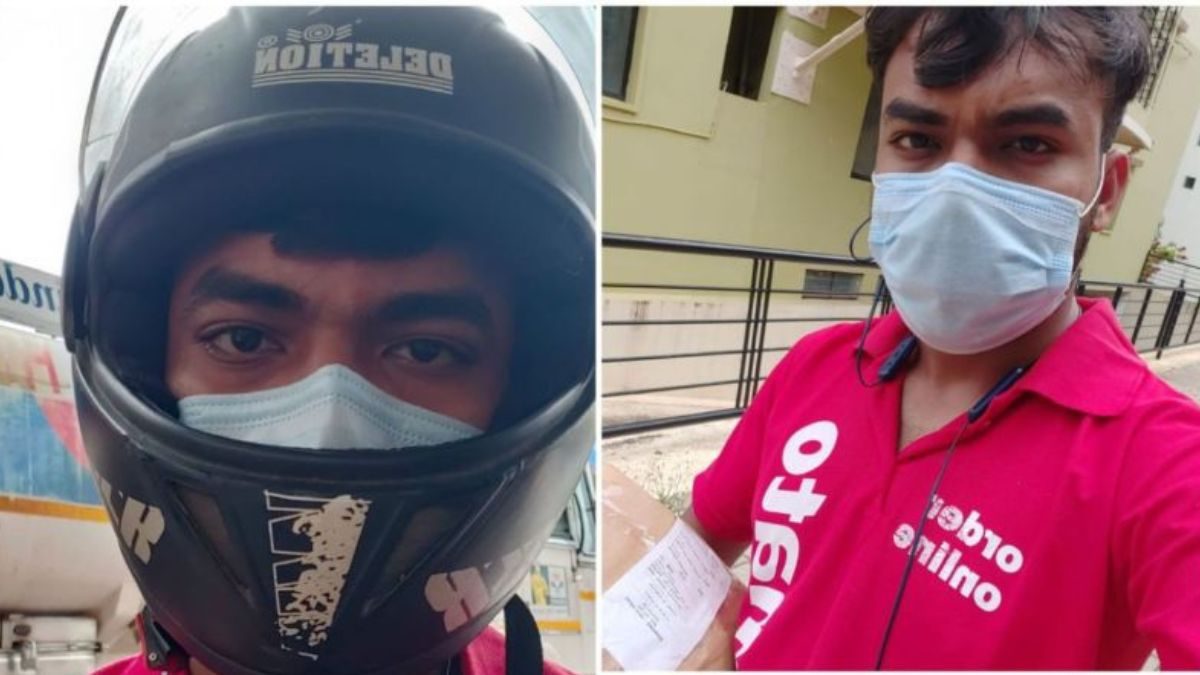
Suraj Biswas, founder and CEO of AI startup Assessli, has publicly stated, “I stand with Deepinder. I worked as a Zomato delivery boy to pay college fees and support my team.” His statement, shared across LinkedIn and reported widely, offers an insider perspective that contrasts sharply with narratives portraying gig work only as exploitation.
Biswas revealed that he worked as a Zomato delivery partner during his college years. The income helped him pay tuition fees and sustain his early startup team. He described gig work as voluntary, flexible, and empowering during a critical phase of his life. His support for Zomato founder Deepinder Goyal comes amid heightened scrutiny of food delivery platforms, fast delivery timelines, and gig worker earnings.
The timing of the statement matters. As the Ola Electric board approves Rs 1,700 Cr funding, investors are again backing founder-led narratives, long-term vision, and operational resilience. Biswas’s story reflects how India’s startup ecosystem increasingly values lived experience over theory.
This episode highlights a deeper reality. Many startup founders emerged from the same gig platforms now under criticism. Their journeys complicate simplistic binaries of exploitation versus empowerment. As India debates startup regulation, labour models, and platform accountability, voices like Biswas’s add nuance rooted in real experience.
1. Context: Founder Voices Emerge as Startup Debate Intensifies
India’s startup ecosystem is at a crossroads. Regulatory scrutiny is rising. Public discourse around gig work has grown sharper. At the same time, capital confidence is returning, as seen when the Ola Electric board approves Rs 1,700 Cr funding.
This environment has encouraged founders to speak openly. Many are sharing personal journeys shaped by platform work, early struggle, and unconventional paths. Suraj Biswas’s statement stands out because it is experiential. He did not comment as a distant observer. He spoke as someone who wore the delivery uniform.
1.1 Why This Statement Gained Attention
Biswas’s post gained traction because it challenged a dominant narrative. It reframed gig work as a stepping stone rather than a trap. Moreover, his message aligned with broader startup optimism. As the Ola Electric board approves Rs 1,700 Cr funding, founder credibility and execution stories are regaining weight in public conversations.
2. Who Is Suraj Biswas and What Is Assessli
Suraj Biswas is the founder and CEO of Assessli, an Indian AI startup focused on skill assessment and hiring intelligence. Assessli operates in the HR technology space. It uses artificial intelligence to help companies evaluate candidates beyond resumes. The platform focuses on skills, cognitive ability, and job readiness. Biswas founded Assessli after firsthand exposure to employment barriers faced by students and early professionals.
2.1 Assessli’s Working Model
Assessli functions as a SaaS platform. Employers integrate Assessli into their hiring pipelines. The platform administers structured assessments. These tests measure role-specific skills. They also evaluate learning agility. Results help companies reduce bias. They also speed up recruitment decisions.
2.2 Revenue Model and Funding Approach
Assessli follows a subscription-based revenue model. Clients pay per assessment or per hiring cycle. The startup targets mid-sized enterprises and fast-growing startups. It also serves enterprises seeking scalable hiring solutions. While Assessli remains early-stage, its focus aligns with broader HR tech growth trends.
3. The Zomato Delivery Experience That Shaped a Founder
Biswas worked as a Zomato delivery partner during his college years. He stated clearly that the decision was voluntary. The income helped him pay college fees. It also supported his early team when Assessli was still taking shape. He described the work as flexible. Highlighted autonomy over working hours. He rejected claims of forced participation.
3.1 Economic Mobility Through Gig Work
Biswas stated that gig platforms enabled economic mobility at scale. He emphasized access without formal credentials. For students and migrants, delivery work provided immediate income. It required minimal onboarding. This perspective echoes broader gig economy data trends across Indian startups.
4. Standing With Deepinder Goyal: Why Biswas Spoke Up
Biswas explicitly said, “I stand with Deepinder.” This statement was directed at Zomato founder Deepinder Goyal. The support came amid criticism of fast delivery timelines and gig worker churn. Biswas argued that policy debates often exclude voices of those who benefited.
4.1 Founder-to-Founder Solidarity
Founder solidarity matters in the startup ecosystem. It signals shared understanding of trade-offs. As the Ola Electric board approves Rs 1,700 Cr funding, similar solidarity is visible across sectors where long-term risk meets public scrutiny.
5. Zomato and the Broader Gig Economy Debate
Zomato is one of India’s largest food delivery platforms. It operates across hundreds of cities. The company has faced criticism over delivery pressure, earnings volatility, and worker churn. At the same time, millions have used the platform for income generation.
5.1 Data Versus Narrative
Public debates often rely on selective data. Biswas’s account added qualitative depth. He highlighted insurance coverage. He mentioned platform support systems. His lived experience contrasted with generalized assumptions.
6. Industry Trends: Gig Work and Startup Employment
India’s gig economy continues to expand. Startups rely on flexible labour models. Platforms provide income access during economic uncertainty. Students form a significant workforce segment. As startup jobs evolve, hybrid employment models are becoming normal.
6.1 Investor Perspective and Capital Confidence
Investors increasingly value resilience. They also value execution clarity. As the Ola Electric board approves Rs 1,700 Cr funding, it reflects willingness to back complex business models. Gig-enabled startups fall within this confidence cycle.
7. Competitor Landscape Around Assessli
Assessli operates in the HR tech and AI hiring space. Direct competitors include skill assessment platforms and recruitment software providers. Indirect competition comes from traditional staffing firms and in-house HR tools. However, Assessli differentiates through AI-driven evaluation and startup-friendly pricing.
8. Startup Ecosystem Signals and Policy Questions
Biswas’s statement intersects with policy debates on startup regulation and worker rights. The challenge lies in balancing protection with flexibility. Rigid frameworks risk reducing opportunities. Over-regulation can shrink startup markets.
9. Learning for Startups and Entrepreneurs
Biswas’s journey offers several lessons. No work is small. Experience compounds. Founders should respect unconventional paths. Platforms can enable progress when designed responsibly. Entrepreneurs must engage in public discourse. Silence allows oversimplification. As the Ola Electric board approves Rs 1,700 Cr funding, it reminds founders that credibility grows from execution and honesty.
The foundlanes View
At foundlanes, Culture Circle’s journey stands out not just for its headline-grabbing numbers but for what it reveals about building modern Indian startups—where trust, verification, and transparency can drive rapid adoption, even as losses widen. The Culture Circle 10x revenue growth reflects a clear market insight executed at speed, alongside the inevitable pressure of scaling through heavy spending on technology, hiring, and marketing. Stories like this matter because they show entrepreneurship as it truly unfolds: fast, demanding, and full of trade-offs, where short-term financial strain is often the price paid for long-term relevance and scale.