


News Summary
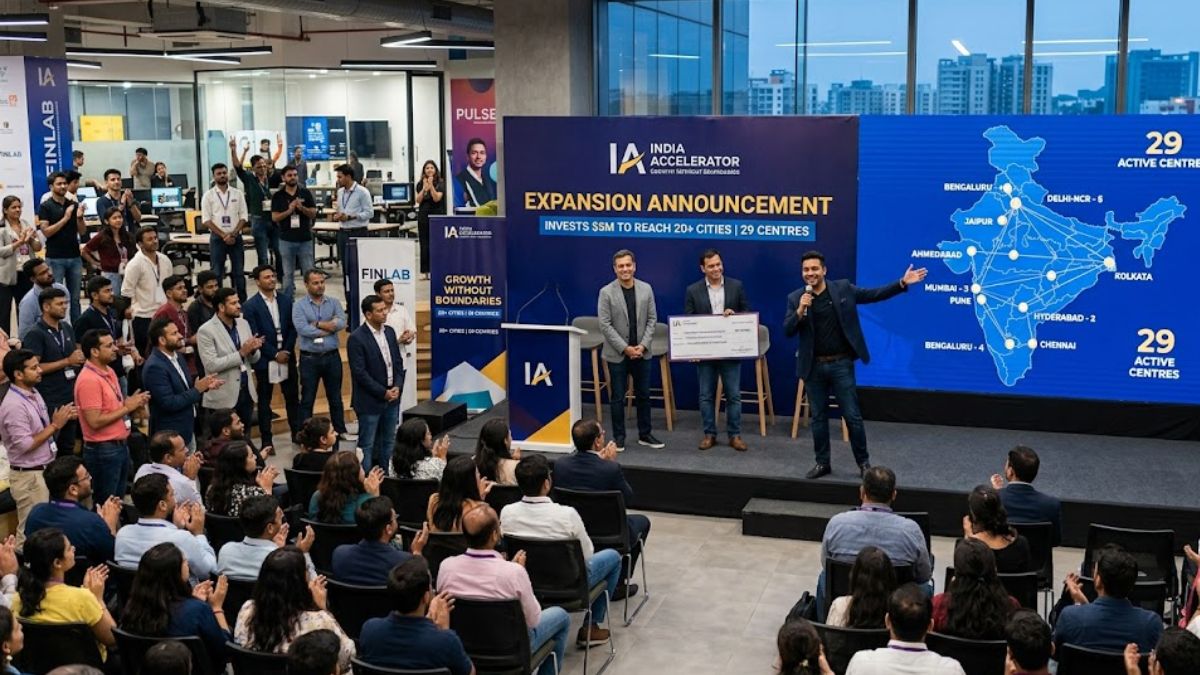
India Accelerator is making a significant move to strengthen its presence in the Indian startup ecosystem by committing $5 million to expand its footprint across more than 20 cities, with plans to operate 29 centres. This expansion reflects a growing demand for structured startup support, mentorship, and early-stage funding across emerging startup hubs beyond metro cities. Founded as one of India’s leading seed-stage accelerators, India Accelerator has played a key role in nurturing early-stage startups by providing funding, mentorship, co-working infrastructure, and access to investor networks. The latest expansion is aimed at tapping into Tier 2 and Tier 3 cities, where entrepreneurial activity is rising but access to capital and structured support remains limited.
The initiative aligns with broader trends in India’s startup ecosystem, where decentralization is becoming increasingly important. With more founders emerging from smaller cities, accelerators are now moving closer to these markets. India Accelerator’s plan to build 29 centres across 20+ cities indicates a strategic shift toward hyper-local startup enablement. The organization’s model focuses on identifying high-potential startups, accelerating their growth through structured programs, and connecting them with venture capital and angel investors. This expansion is expected to create more opportunities for early-stage startups, improve access to mentorship, and strengthen regional innovation ecosystems. As the Indian startup landscape continues to evolve, India Accelerator’s investment signals confidence in the next wave of founders coming from diverse geographies. It also highlights the growing importance of accelerators in shaping startup success, especially in a competitive and rapidly expanding market.
1. India Accelerator Expands with $5M Investment
1.1 Strategic Expansion Across India
There’s something quietly powerful happening in India’s startup ecosystem right now. It’s no longer just about Bengaluru, Delhi, or Mumbai. The energy is spreading and India Accelerator seems to be leaning right into that shift. With a $5 million investment, the accelerator is expanding into more than 20 cities, setting up 29 centres. On paper, that sounds like scale. But in reality, it’s something more meaningful it’s access.
For years, if you had a strong startup idea but lived outside a metro city, you were already at a disadvantage. Investors were far, mentorship was rare, and even finding the right co-founders or networks felt like a struggle. This expansion directly challenges that imbalance. By building physical and operational presence across regions, India Accelerator is not just growing its footprint it’s redistributing opportunity. And that’s where the real impact lies.
1.2 Focus on Emerging Startup Markets
Tier 2 and Tier 3 cities are no longer “emerging” they’re already buzzing with ideas. Spend time talking to founders from cities like Indore, Jaipur, or Coimbatore, and you’ll notice something raw and real: hunger. But here’s the problem. Most of these founders hit a ceiling early. Not because their ideas lack potential, but because the ecosystem around them isn’t strong enough yet. No structured mentorship. Limited investor exposure. Very few people who’ve “been there, done that.”
This is exactly the gap India Accelerator is trying to bridge. By placing centres in these cities, they’re essentially saying: you don’t have to move to build something big. And that mindset shift alone can unlock a wave of new startups that were previously stuck in “idea stage” limbo.
2. Background of India Accelerator
2.1 Origin and Growth Journey
Every credible accelerator has one thing in common it earns trust over time. India Accelerator didn’t become relevant overnight. It started with a clear focus: early-stage startups that needed more than just capital. Over time, it built a system that combined funding with mentorship, something many founders underestimate until they actually experience it. Ask founders who’ve been through accelerator programs, and they’ll tell you this: money helps, but clarity changes everything.
India Accelerator has consistently worked in that space helping founders refine their thinking, challenge assumptions, and prepare for the realities of scaling a business. That’s how it moved from being “just another accelerator” to becoming a serious player in India’s startup landscape.
2.2 Role in the Indian Startup Ecosystem
Accelerators sit at a very critical point in a startup’s journey the messy middle. This is where ideas are still evolving, business models are uncertain, and founders are figuring things out in real time. One wrong decision here can cost months, sometimes years. India Accelerator steps in at this stage and provides structure.
Not rigid rules, but guidance. Not control, but direction. And that’s important because early-stage founders don’t need someone to run their company they need someone to help them see clearly. Whether it’s refining a pitch, identifying product-market fit, or preparing for investor conversations, the role of an accelerator is often underestimated until founders go through it.
3. Working Model of India Accelerator
3.1 How the Accelerator Operates
The cohort-based model sounds simple, but its impact is deep. Startups go through a selection process, and only a few make it in. Once inside, the journey becomes intense. You’re surrounded by other founders, all working through similar challenges, all pushing forward at the same time. That environment matters more than people think.
Because building a startup is isolating. And suddenly, you’re in a room full of people who understand exactly what you’re going through. India Accelerator structures this journey through mentorship sessions, product reviews, strategy discussions, and investor connects. But beyond the formal structure, what really changes founders is the constant feedback loop. You’re no longer building in a vacuum.
3.2 Value Proposition for Startups
Most first-time founders assume accelerators are about funding. They’re not. The real value lies in perspective. Access to people who’ve scaled companies. Honest feedback that you won’t get from friends or early users. Frameworks that help you think long-term instead of just surviving week to week. India Accelerator brings all of that into one place. And if you speak to founders who’ve gone through such programs, a common theme emerges they start thinking differently. Decisions become sharper. Priorities become clearer. Execution becomes faster. That’s the real ROI.
4. Revenue Model and Business Strategy
4.1 Equity-Based Model
Like most accelerators, India Accelerator takes equity in exchange for its support. At first glance, this might feel like a trade-off. But in reality, it creates alignment. If the startup wins, the accelerator wins. That means their incentives are tied to long-term success, not short-term gains. And that changes how they engage with founders. The focus shifts from “program completion” to “real growth.”
4.2 Additional Revenue Streams
Beyond equity, there’s a broader business strategy at play. Co-working spaces, corporate partnerships, and ecosystem collaborations all contribute to revenue. But more importantly, they create an environment where startups don’t just exist they interact, learn, and grow together. It becomes less of a program and more of a community. And in the startup world, that’s often the difference between struggling alone and building with momentum.
5. Industry Trends Driving Expansion
5.1 Rise of Indian Startups Beyond Metros
For the longest time, India’s startup story felt like it belonged to just a few cities. If you weren’t in Bengaluru, Mumbai, or Delhi, you were almost invisible to the ecosystem. That’s no longer true. Today, something far more organic is unfolding. Founders are building from places they once felt they had to leave. Cities like Jaipur, Indore, Kochi, and even smaller districts are quietly producing startups that are solving real, local problems often better than their metro counterparts.
Why is this happening? Because the barriers have come down. Cheap internet, smartphones in every hand, UPI changing how money moves—these aren’t just conveniences, they’ve become equalizers. Add to that government push through initiatives like Startup India, and suddenly the idea of “where you’re from” matters a lot less than “what you’re building.”
But there’s a deeper layer here. Founders from smaller cities tend to build with a different mindset. They’re closer to grassroots problems. They understand their users personally. And that often leads to businesses that are not just scalable, but also meaningful. This shift is exactly what India Accelerator is tapping into. Not chasing trends, but recognizing where real innovation is coming from.
5.2 Growth in Venture Capital and Angel Investment
A few years ago, raising early-stage capital in India felt like trying to break into a closed room. Warm introductions, elite networks, and a lot of waiting. That door has opened wider now. There’s been a noticeable increase in angel investors and micro-VCs willing to back early-stage ideas. Not just in metros, but across the country. Investors are becoming more comfortable taking bets earlier, even when the product is still evolving. But here’s the reality founders don’t talk about enough more capital doesn’t automatically mean easier access.
It just means more competition. Investors are seeing more pitches than ever before. Founders are expected to be sharper, clearer, and more prepared. This is where accelerators become critical. India Accelerator acts as that bridge. It doesn’t just connect startups to investors it prepares them for those conversations. Because raising money isn’t just about having a good idea, it’s about telling the story right, at the right time, to the right people.
6. Problem India Accelerator is Solving
6.1 Lack of Structured Support in Smaller Cities
If you talk to first-time founders outside metro cities, a common frustration comes up again and again they don’t know what they don’t know. There’s no roadmap. No experienced founders around them. No one to tell them that a decision they’re about to make could cost them months. And that’s where many promising startups quietly fade away. Not because the idea was weak, but because the journey was unstructured.
India Accelerator is stepping into this exact gap. By bringing structured programs into these regions, it’s giving founders something they’ve been missing a clear path forward. Mentorship, feedback, accountability these aren’t just “nice to have.” They’re often the difference between a startup surviving or shutting down. And when this kind of support becomes local, accessible, and consistent, it changes how founders operate. They stop guessing and start building with intent.
6.2 Limited Access to Funding
Let’s be honest funding is still one of the biggest bottlenecks. In smaller cities, it’s not just about scarcity. It’s about distance. Founders often don’t even know how to reach investors, let alone pitch to them effectively. India Accelerator reduces that gap in a very practical way.
It creates direct pathways. Investor connects, demo days, curated introductions. But more importantly, it ensures founders are ready when those opportunities come. Because access without preparation doesn’t help. The real impact is not just in connecting startups to capital, but in increasing their chances of actually securing it.
7. Competitive Landscape
7.1 Direct Competitors
The accelerator space in India is getting crowded. There are multiple incubators, corporate-backed programs, and independent accelerators all trying to support early-stage startups. On the surface, many of them offer similar things funding, mentorship, networking. But the difference often lies in execution.
India Accelerator has carved its space by focusing on consistency and founder experience. Not just running programs, but building an environment where founders feel supported throughout the journey. That’s harder to replicate than it sounds.
7.2 Indirect Competition
Then there’s the indirect competition. Corporate innovation programs are trying to attract startups with resources and scale. Venture capital firms are moving earlier in the lifecycle. Even online platforms are offering mentorship and startup education at scale. All of these compete for the same founder attention.
But here’s where India Accelerator’s approach stands out it’s going regional, not just digital. That physical presence, that local connection, that ability to sit across the table from a founder and understand their reality that’s something online platforms and distant investors often can’t replicate. And in early-stage building, that human connection still matters a lot.
8. Expansion Strategy and Execution
8.1 Building 29 Centres
Expanding to 29 centres is not just ambitious it’s operationally intense. Each centre needs more than just space. It needs the right mentors, local partnerships, founder pipelines, and ecosystem alignment. Without that, it risks becoming just another co-working setup. India Accelerator seems to understand this. The idea is to build each centre as a living ecosystem, not a static office. A place where founders meet, exchange ideas, challenge each other, and grow together. If executed well, these centres won’t just support startups they’ll become the starting point for entire local ecosystems.
8.2 Collaboration with Local Ecosystems
No accelerator can succeed in isolation, especially outside metro cities. Local colleges, industry bodies, angel networks, and experienced professionals all play a role. Without them, the ecosystem remains fragmented. India Accelerator’s strategy leans heavily on collaboration. By working with local stakeholders, it’s not just entering new cities it’s embedding itself within them. That makes the support more relevant, more grounded, and more sustainable. Because every city is different. What works in Pune might not work in Ranchi. And recognizing that difference is what separates expansion from real impact.
9. Impact on Startup Ecosystem
9.1 Boost to Emerging Startups
For early-stage founders, timing is everything. The right guidance at the right moment can accelerate growth by years. The wrong move at the wrong time can set everything back. With this expansion, more founders will get access to that critical early support. Not just funding, but clarity. Not just connections, but direction. And when more startups survive the early stages, you naturally see better companies emerge over time.
9.2 Strengthening Regional Innovation
What’s happening here goes beyond individual startups. It’s about decentralizing innovation. When smaller cities start producing successful startups, it creates a ripple effect. More people take risks. More talent stays back instead of migrating. More local problems get solved. Over time, this builds self-sustaining ecosystems. That’s the long game. And if India Accelerator executes this well, it won’t just be known for scaling startups it will be remembered for helping reshape where innovation in India actually comes from.
10. Challenges and Risks
10.1 Operational Complexity
Scaling an idea is exciting. Scaling execution is where things get hard. For India Accelerator, expanding into 20+ cities and running 29 centres isn’t just about opening doors and setting up desks. It’s about maintaining the same quality of experience everywhere and that’s where the real challenge begins. Because consistency doesn’t scale easily.
What happens when a founder in a smaller city doesn’t get the same level of mentorship as someone in a bigger hub? What if the quality of advisors varies from one centre to another? These are not small gaps—they directly impact startup outcomes. And then there’s coordination. Multiple cities mean multiple teams, different local dynamics, and constant communication challenges. Every region has its own pace, its own way of doing business. Managing all of that while keeping a unified vision is a serious operational test. From real-world experience, most expansions don’t fail because the idea is wrong. They struggle because execution becomes uneven. If India Accelerator can build strong local leadership and keep its mentorship quality consistent, it wins. If not, the scale could start working against it instead of for it.
10.2 Competition in Accelerator Space
The accelerator space in India is no longer quiet or niche. It’s crowded, competitive, and evolving fast. New programs are launching every year. Corporates are entering the space. Venture capital firms are moving earlier and offering direct support to startups. Even online platforms are trying to replicate mentorship at scale. So the question becomes simple why should a founder choose one accelerator over another?
That’s where differentiation becomes survival. India Accelerator’s regional focus gives it an edge today. But edges don’t last forever unless they’re continuously sharpened. Founders are becoming smarter. They compare programs, talk to alumni, and look beyond brand names. They care about outcomes. Did startups actually raise funding? Did they scale? Did the accelerator genuinely help, or was it just a structured program with limited impact? In this environment, reputation is built not on promises, but on results. And sustaining that over time is the real challenge.
11. Learning for Startups and Entrepreneurs
If there’s one thing founders often underestimate, it’s the power of the right environment. Building a startup alone sounds heroic, but in reality, it’s exhausting and inefficient. You make avoidable mistakes. You take longer to figure things out. You lose momentum. That’s where ecosystems come in. Accelerators, incubators, mentor networks they compress your learning curve. What might take you a year to understand, you can sometimes figure out in a few weeks with the right guidance. But here’s the catch you have to actively seek it out.
No one is going to come and hand you the perfect opportunity. Founders who grow faster are usually the ones who put themselves in the right rooms, ask the right questions, and stay open to feedback. Another lesson that quietly shows up in stories like this is timing. You can have a great idea, but if the market isn’t ready, growth becomes a struggle. On the flip side, when trends align like digital adoption, funding availability, or shifting consumer behavior even simple ideas can scale fast. Good founders don’t just build. They observe. They wait when needed, and they move fast when the moment is right. And then there’s scalability the part many founders delay thinking about.
It’s easy to focus on getting the first 100 customers. Much harder to think about what happens when you reach 10,000. Systems, processes, team structure these things feel unnecessary in the beginning, until suddenly they’re not. The startups that last are the ones that build with growth in mind from day one. Because success doesn’t break companies. Poor preparation does.
About foundlanes.com
foundlanes.com is India’s leading startup idea discovery platform. It helps entrepreneurs find actionable startup opportunities, market insights, and industry-specific guidance to turn ideas into real businesses. With deep research and practical resources, foundlanes supports founders at every stage, from idea validation to launch and growth.