


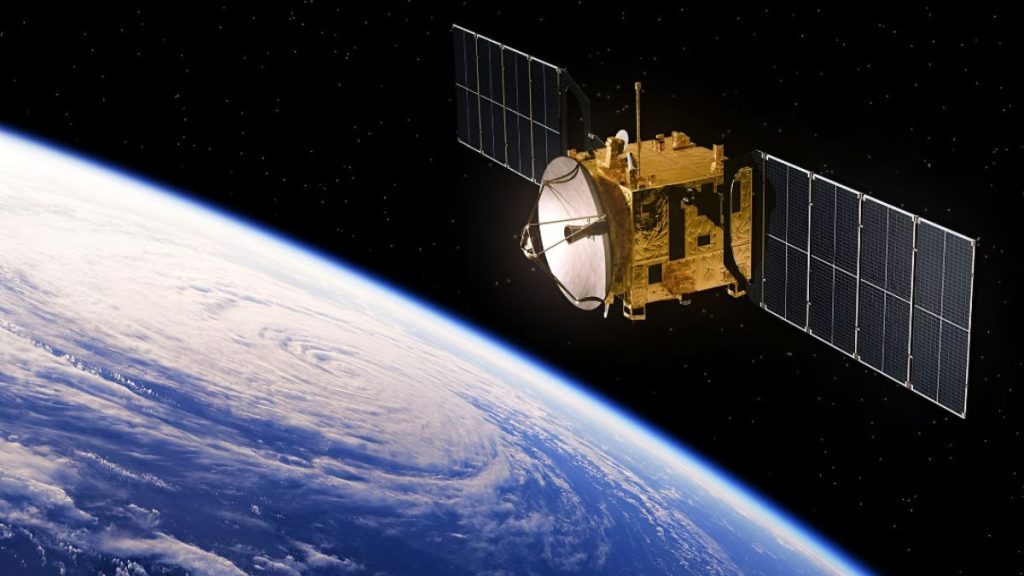
Kaynes Technology India Ltd has just thrown its hat into the celestial ring by launching a new venture: Kaynes Space Technology. This isn’t just a corporate spin-off — it’s a gutsy play into the unpredictable, high-stakes world of space. The company says it’s going to design and build satellites of every flavor, from nimble microsats to heavyweight geostationary machines, all decked out with mission-specific payloads. We’re talking comms, defence, Earth-watching, scientific gadgets — the full cosmic buffet.
The big pitch? Modular satellite platforms, homegrown launch vehicles, and autonomous systems all orbiting LEO, MEO, and GEO. Despite starting with a modest INR 10 lakh investment (yes, just over $11K), the ambition here is anything but small. Kaynes wants the whole stack — ground control, launch ops, satellite lifecycle handling — and it’s pouring resources into propulsion tech, miniaturization, AI brains for satellites, and inter-satellite chatter. They’re cozying up with ISRO, academia, and private players to move fast and break orbit.
This leap comes as India’s space race gets hotter, with private sector engines firing on all cylinders. Investors took note too — Kaynes shares ticked up 1.6% on the BSE post-announcement. Small bump, big signal.
1. Introduction to Kaynes Space Technology
1.1 Background and Company Profile
Kaynes Technology isn’t some random newbie trying to cosplay a space startup. These folks have been neck-deep in electronics for years, cranking out everything from embedded systems to IoT solutions. They’ve long been a go-to vendor for ISRO, and they’re now cashing in on that credibility by shooting for orbit themselves.
Kaynes Space Technology is the logical — and bold — next step. Their target? Multi-purpose satellites for defence, communication, Earth observation, research, and whatever else you can dream up in a vacuum.
1.2 Leadership and Ownership
Jairam P Sampath, CFO at Kaynes Tech, will also sit on the board of the new space arm. That’s not a coincidence — it’s a signal that this isn’t a vanity project. Kaynes is all in. They’re owning 100% of the new subsidiary, and while INR 10 lakh might not sound like a moonshot budget, it’s a symbolic marker: a bet that this isn’t just a project, it’s the future.
2. Working Model and Revenue Generation
2.1 Business Model Overview
Kaynes Space Technology isn’t dabbling — they’re diving into the deep end. From the first pixel on a satellite design to launch pads and orbital babysitting, they’re aiming to own every piece of the value chain. Their secret sauce? Modularity. Satellites that snap together like space-grade LEGO, tailored to any mission, scaled fast, deployed faster.
They’re not stopping at satellites either. Indigenous launch vehicles — yes, full-on rockets — are part of the roadmap. And the company wants to offer the whole enchilada: payload integration, launch services, mission planning, and beyond. Revenue streams? Think hardware sales, service contracts, and tech licensing. They’re trying to build a space ecosystem, not just a product line.
2.2 Research and Development Focus
Forget surface-level innovation. Kaynes is gunning for the deep tech: ion propulsion, chip-scale systems, autonomous AI for satellite decision-making, and robust inter-satellite networking. They’re not trying to catch up to the global players — they’re trying to leapfrog. Partnering with universities and space agencies means they’ll have the intellectual horsepower to push limits and actually ship product, not just prototypes.
2.3 Market and Revenue Potential
India’s space sector is waking up — fast. With NewSpace policy shifts and IN-SPACe opening the gates for private ventures, it’s the perfect storm. Kaynes Space Technology is positioning itself as a serious player amid rising demand for telecom, remote sensing, military-grade surveillance, and climate tracking. The market is hungry, and Kaynes is betting it can feed multiple verticals — from government contracts to global satellite networks.
3. Services and Products
3.1 Satellite Platforms and Payloads
From lunchbox-sized microsatellites to full-fledged orbital beasts, Kaynes Space Tech wants to build them all. Custom payloads? Absolutely. Think high-res cameras, encrypted comms systems, scientific probes — all built with purpose, not just specs on a spreadsheet.
3.2 Launch Vehicles and Infrastructure
Reusable launch tech isn’t just buzz — it’s the only way this becomes sustainable. Kaynes knows that and is investing in rockets that can return, recharge, and relaunch. Alongside that, they’re setting up ground infrastructure to handle mission control, satellite integration, and orbital tune-ups.
3.3 Space-based Applications
Beyond the hardware, this company wants to run real-world missions. Border monitoring, emergency response, environmental data gathering — these aren’t side projects. They’re core deliverables. And they tie directly into national interest and private demand alike.
4. The Problem Solved by Kaynes Space Technology
4.1 Addressing Cost and Accessibility
Space is expensive. It always has been. That’s the hurdle Kaynes is tackling with modularity and reusability. Instead of billion-dollar barriers, they’re building a stairway that startups, schools, and even developing nations can climb.
4.2 Enhancing Indigenous Capabilities
Why send your money abroad when you can build at home? India’s space self-reliance is more than policy — it’s a necessity. Kaynes is aligning with this vision, aiming to manufacture the full stack in India and cut the country’s dependency on foreign tech.
4.3 Bridging Technological Gaps
Too many satellites today still need handholding. Kaynes wants to change that — AI-based autonomy, satellites that talk to each other, smarter systems that adapt in real-time. The idea is to make space infrastructure more like smart infrastructure — intelligent, flexible, and long-lived.
5. Industry Growth Trends and Market Context
5.1 Rising Private Sector Participation in Indian Space
India’s unlocking its space gates — finally. With IN-SPACe paving the way for private launches and manufacturing, we’re seeing a gold rush. Kaynes Space Technology isn’t first out of the gate, but it brings muscle and maturity to the race.
5.2 Global Satellite Market Expansion
It’s not just India. The satellite sector is booming everywhere. High-speed internet, real-time surveillance, data relays for IoT — the sky is no longer the limit. Kaynes, with its engineering chops and domestic edge, is positioning itself to ride this wave instead of watching from the shore.
5.3 Technological Innovations
Reusable rockets, AI-driven satellites, ultra-compact tech — the game is changing. Kaynes isn’t just watching the trends; it’s baking them into its DNA. That’s the only way to stay relevant in a market that moves faster than light (well, almost).
6. Competitors: Direct and Indirect
6.1 Direct Competitors
At home, Kaynes will be jostling with Skyroot, AgniKul, and Bellatrix — all nimble, all hungry. On the global front? It’s a tough crowd: SpaceX, OneWeb, Rocket Lab — names with serious street cred. But Kaynes has one edge: home turf, home talent, and a ready-made partnership with ISRO.
6.2 Indirect Competitors
The indirect threats are trickier: firms building satellite subsystems, software-only solutions, or even telecom giants sneaking into the space domain. Then there’s Amazon and Starlink, reshaping satellite-based internet — indirectly squeezing everyone in the orbit economy.
7. Journey and Background of Kaynes Technology
7.1 From Electronics Manufacturing to Space Technology
This pivot didn’t come out of nowhere. Kaynes has been quietly building the backbone of India’s electronics sector — and working behind the scenes with ISRO for years. Moving from circuit boards to satellites? It’s ambitious, but it’s not a leap. It’s a step forward.
7.2 Milestones and Strategic Decisions
Spinning off Kaynes Space Technology wasn’t just clever. It was essential. It sends a message: we’re not just suppliers anymore — we’re leaders. And in a sector where legacy doesn’t matter nearly as much as guts, this shift matters.
7.3 Financial Performance and Market Position
Q4 FY25 was kind to Kaynes — a 43% profit surge and 54.5% sales growth. Investors clearly like what they’re seeing, and the market gave its nod after the space launch news broke. For a company making its space debut, that’s a strong signal of confidence.
8. Learning for Startups and Entrepreneurs
Here’s the playbook, straight from Kaynes: kick things off by leaning hard into your core advantages — think electronics prowess and those deep-in-the-weeds ISRO tie-ups that aren’t just flashy but foundational. Don’t rush the climb; stack your progress brick by brick, sure, but never forget to swing for the fences while you’re at it. Hitch your wagon to national policy — not because it’s trendy, but because riding that regulatory wave beats swimming against it. And modular design? That’s not some optional flex; it’s the difference between thriving and flatlining in a capital-guzzling arena. This isn’t just a tale of rockets and space dust. It’s a raw, real-world manual for scaling smart, pivoting fast, and hitting way above your weight class.
Conclusion
Kaynes Space Technology isn’t here to follow. It’s here to lead. By betting big on modular spacecraft, indigenous rockets, and autonomous systems, they’re not just catching up with the global space race — they’re helping rewrite the rules. If India is serious about becoming a space superpower, players like Kaynes are going to be the ones building that future — not in theory, but in orbit.
About Foundlanes
At foundlanes.com, we live for these stories — gritty pivots, bold tech bets, and the occasional rocket-fueled ambition. Kaynes’ entry into satellite systems isn’t just newsworthy — it’s emblematic of where the startup and innovation ecosystem in India is heading. Modular satellites, AI-based autonomy, public-private collabs — this is the future, and we’re watching it unfold.