


Summary
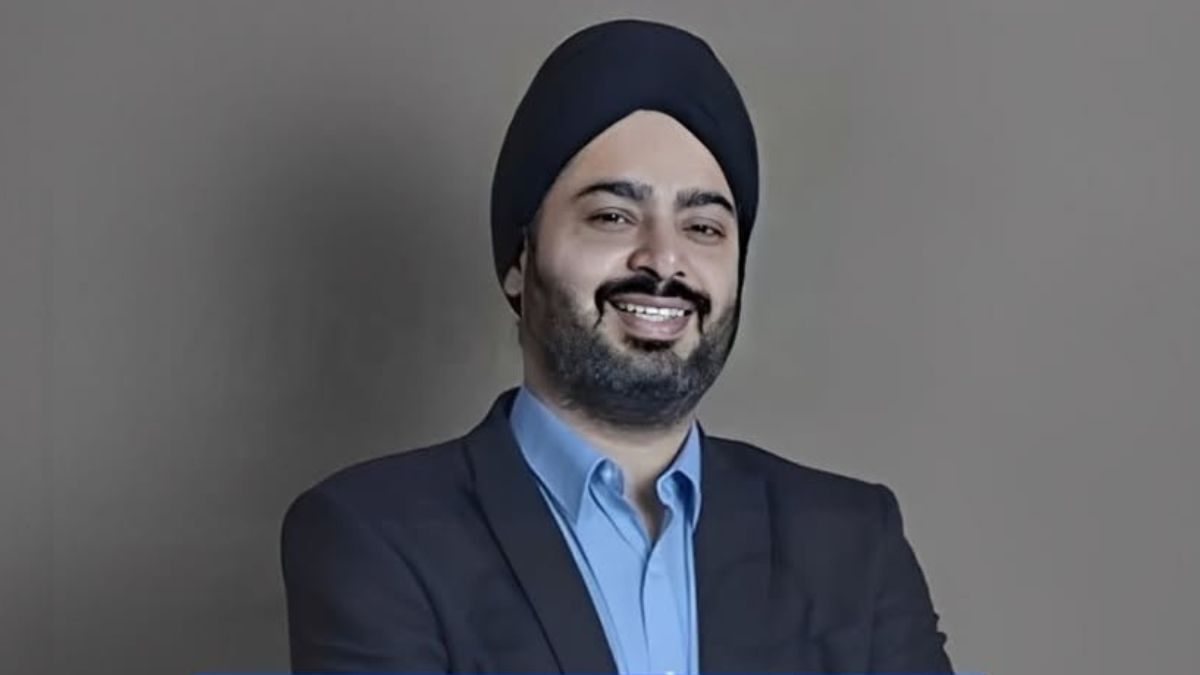
Bipin Preet Singh is the co‑founder and CEO of MobiKwik, one of India’s pioneering fintech startups that reshaped the way millions transact digitally in the country. Born and raised with a passion for technology, Bipin graduated from the Indian Institute of Technology, Delhi and spent years building products and solving problems in hardware and software before launching MobiKwik in 2009. Based in Gurgaon, India.
MobiKwik began as a simple mobile recharge platform at a time when digital payments were nearly non‑existent in the country, and evolved into a full‑stack digital wallet and financial services platform serving more than 180 million users and over 4.7 million merchants. What started with a modest personal investment became a household name in Indian fintech through grit, product focus, and a drive to democratize financial services. Bipin’s journey highlights not just entrepreneurial resilience but the willingness to learn, adapt, and persevere in the face of doubt and intense competition. This story unpacks his early life, the founding of MobiKwik, the hurdles he faced, the key moments of validation, and the lessons that continue to shape his vision for the future of financial inclusion in India.
1. Background and Early Life
Bipin Preet Singh grew up in India, shaped by an early affinity for technology and engineering. Though details of his family life are sparse in public records, his trajectory reflects a curiosity about how systems work and a drive to build solutions that matter. He went on to pursue a Bachelor’s in Electrical Engineering from the Indian Institute of Technology, Delhi, one of the country’s most respected technical institutions. It was here that Bipin absorbed not just engineering fundamentals but the confidence to tackle complex challenges and think beyond traditional career paths.
After graduating in 2002, Bipin entered the professional world with a clear technical edge. He joined major technology companies, including Intel, Nvidia, and Freescale Semiconductor, where he worked as a platform architect and system designer. These years gave him deep insights into large‑scale technology development and product execution, laying the groundwork for his future entrepreneurial journey. His background in engineering and firsthand experience building systems would later be pivotal when he made the leap from corporate life into startup territory.
2. Founder and Company Overview
2.1 Who Bipin Preet Singh Is
Bipin Preet Singh is more than just a fintech entrepreneur; he is a pioneer in India’s digital payments revolution. As co‑founder and managing director of MobiKwik, Bipin’s vision has consistently been grounded in human experience—making digital transactions seamless, accessible, and trustworthy. Alongside his co‑founder, Upasana Taku, he set out to create a platform that could transform the way millions of Indians handled money, bridging the gap between technology and daily life.
Bipin’s leadership is a mix of foresight and grit. He has navigated MobiKwik through regulatory changes, intense competition, and shifting consumer behavior, always with the underlying goal of building a platform that people feel confident relying on. His journey reflects not only entrepreneurial courage but also a deep empathy for the everyday challenges users face when managing their finances.
2.2 What MobiKwik Offers
MobiKwik began as a simple tool: a portal for mobile recharges and bill payments. But its evolution mirrors India’s own journey toward digital financial inclusion. Today, MobiKwik is a full-fledged fintech ecosystem, offering a digital wallet, UPI payments, consumer credit products, investment options, insurance distribution, and a range of merchant services, including QR payments and point-of-sale solutions.
For users, this means convenience and empowerment—one app that allows them to pay, save, borrow, and invest. For small businesses, it is a lifeline—simplifying payment acceptance, reducing dependency on cash, and providing tools that help them scale efficiently. MobiKwik is not just a transactional platform; it is a bridge between technology and everyday human needs, a companion in the financial decisions that affect life in tangible ways.
2.3 Market and Audience
MobiKwik’s audience is diverse and uniquely Indian. From urban professionals seeking fast, frictionless digital payments to rural customers who are just beginning to engage with digital finance, the platform has tailored itself to a wide spectrum of users. Beyond individuals, MobiKwik targets small merchants and businesses, offering credit, loans, and payment acceptance solutions that make financial inclusion possible at scale.
The beauty of this approach is that it is rooted in empathy: understanding the struggles of users who are intimidated by technology or cash-dependent systems, and providing solutions that feel approachable, safe, and empowering. MobiKwik doesn’t just deliver services—it listens to the rhythms of daily life and integrates itself into them.
2.4 When and Where It Started
MobiKwik was born in 2009 in Gurgaon, Haryana, at a moment when digital payments in India were embryonic. The early years were a crucible, shaping both the product and the market’s perception of online wallets. The founders had to educate users, build trust, and demonstrate that digital transactions could be secure, convenient, and reliable. These foundational years laid the groundwork for what would eventually become one of India’s most recognized fintech platforms.
3. The Problem, Insight, and Trigger
In the late 2000s, Bipin saw a problem that was fundamentally human. India’s mobile users were predominantly prepaid, struggling with frequent recharges and fragmented bill payments. There was no single, intuitive solution that made digital transactions straightforward, fast, and trustworthy.
Bipin’s insight was clear: India had the appetite for digital convenience, but the market lacked a platform that connected payments, credit, and daily financial needs in a simple, secure way. Smartphones were spreading, internet access was increasing, yet users were left juggling multiple processes for what should have been simple tasks.
This insight triggered a personal leap of faith. Instead of pursuing an expensive business degree abroad, Bipin chose to invest his own savings into creating a digital payments solution. It was a moment of courage and conviction—he moved from a conventional career path into the uncertainty of entrepreneurship, driven by the belief that he could build something meaningful for millions of people.
4. Early Days and Initial Struggles
The early days of MobiKwik were defined by humility, perseverance, and relentless effort. With just ₹8 lakh of personal savings, Bipin and Upasana operated from a small rented apartment in Dwarka, Delhi, which served as both home and office. They were a team of two wearing every hat—coding, designing, marketing, answering customer queries, and troubleshooting technical issues late into the night.
Those years were far from glamorous. Growth was slow, and convincing people to trust digital payments in a largely cash-based economy was an uphill battle. Each user who adopted the platform was a small victory, each transaction a test of trust. Mistakes were frequent, lessons were learned in real time, and every challenge reinforced the importance of empathy, patience, and persistence.
MobiKwik’s early struggles were not just operational—they were emotional. The founders had to constantly balance hope and uncertainty, vision and practicality, ambition and the harsh reality of building something new in a nascent market. These experiences shaped the company’s culture: resilient, user-focused, and deeply human in its approach to financial services.
5. Failures, Setbacks, and Self Doubt
The toughest times in Bipin’s journey came not just from market resistance but from internal challenges. Building trust in digital wallets was not a simple task in a country where cash was still deeply entrenched. Each regulatory hurdle, customer churn issue, and technology constraint tested the founders’ resolve. There were moments where growth stalled and the path forward was unclear.
There were days when Bipin doubted whether the idea would ever scale. Competing fintech companies, new entrants with deeper pockets, and an evolving regulatory environment put pressure on MobiKwik’s early strategy. In these phases, the team faced self‑doubt and emotional lows, questioning whether their investments—financial and personal—would pay off.
Yet these setbacks also taught invaluable lessons. Facing scepticism forced the team to refine their product, prioritize core functionality, and think creatively about customer value. These early struggles created grit that would serve the company well in later growth phases.
6. Validation and Early Traction
The first real moment of validation for MobiKwik came quietly, in the rhythm of everyday use. Users began to engage with the platform for more than just mobile recharges—they were paying bills, transacting with merchants, and returning repeatedly. This shift marked a subtle but profound change: MobiKwik was becoming a trusted companion in daily financial life, not just a convenience.
The introduction of the digital wallet in 2012 was transformative. Suddenly, money held in the platform wasn’t abstract—it was tangible, ready for use at a moment’s notice. Users were depositing funds, experimenting with its utility, and integrating the wallet into their routines. Each repeated login, each transaction, was an affirmation that MobiKwik was solving a real problem, one rooted deeply in everyday human frustration: managing money in a fragmented, cash-heavy ecosystem.
This early traction gave Bipin and his small team a profound sense of purpose. It wasn’t just numbers on a dashboard—it was the recognition that their solution was creating meaningful change in people’s lives. Encouraged by these signs, the team invested in building richer product features, developing mobile applications, and forging partnerships with merchants. Word of mouth spread, adoption grew, and MobiKwik saw its first meaningful growth inflection—a moment that solidified the founders’ belief in both the product and their vision for India’s digital payments future.
7. Funding, Money, and Growth Constraints
MobiKwik’s early years were a delicate balancing act. The company was largely bootstrapped, relying on the founders’ own savings and a relentless focus on efficiency. Every rupee was precious, every decision weighed against immediate business needs. It was a period defined by scarcity, creativity, and survival instincts—a test of grit that would shape the company’s DNA.
As digital wallets gained mainstream traction and competitors emerged, external funding became essential. MobiKwik raised multiple rounds from marquee investors including Sequoia Capital, American Express, and Net1, totaling close to $120 million over several stages. These investments allowed the company to accelerate product expansion, improve technology infrastructure, and reach more users. Yet, along with capital came pressure—the expectations of rapid growth, the need to demonstrate a viable business model, and the constant balancing act of scaling without losing focus on user trust.
Cash flow constraints persisted for years. Investments in growth had to be balanced with operational realities, and every strategic decision carried weight. For Bipin, the challenge was not simply financial—it was deeply personal. Each funding milestone represented validation, yes, but also a responsibility: to investors, to employees, and most importantly, to the millions of users relying on MobiKwik in their daily lives.
8. Team Building and Leadership Evolution
Building a strong team proved to be as critical—and as challenging—as building the product itself. In the earliest days, the team was tiny, with each member juggling multiple roles. Hiring mistakes were inevitable, and finding people who shared the belief in a fledgling product was often harder than finding technical skill. For Bipin, delegation was initially one of the toughest lessons. As a founder deeply involved in coding, operations, customer support, and strategy, letting go of tasks and trusting others to carry them out required patience and vulnerability. Over time, he learned to empower leaders, create systems, and cultivate a culture that emphasized curiosity, accountability, and empathy for users.
Leadership evolution was gradual but transformative. Bipin increasingly focused on vision, product strategy, and investor relations, while trusted colleagues managed execution and day-to-day operations. These shifts were not just operational—they were human. They reflected a growing understanding that scaling a company required trust, communication, and shared ownership. The team became more than employees—they became partners in a shared mission, contributing ideas, taking ownership, and shaping the company’s identity alongside its founders.
Through these experiences, MobiKwik learned that growth is not just a matter of capital or technology; it is about people. Every hire, every delegated task, every leadership decision mattered because they shaped the platform’s ability to serve its users, maintain trust, and evolve sustainably.
9. Growth, Scaling, and Operational Challenges
As MobiKwik scaled, new challenges emerged. Managing rapid user growth required robust infrastructure, reliable customer support, and operational excellence. Brand positioning in a crowded fintech market became essential. Fintech giants like Paytm, Google Pay, and PhonePe were vying for the same user base, forcing MobiKwik to sharpen its value proposition. Operational breakdowns—whether in payment settlements, merchant integrations, or customer service—had to be fixed quickly. Bipin’s focus shifted to building resilient systems, enhancing risk and compliance frameworks, and streamlining technology platforms to handle millions of transactions daily.
Scaling also meant expanding services beyond wallet payments. The company added UPI payments, credit products like BNPL and ZIP EMI, and investment and insurance offerings. Each addition brought its own set of regulatory and execution challenges, testing the company’s ability to innovate without compromising reliability.
10. Personal Sacrifices and Burnout
The personal cost of building MobiKwik never made the headlines, but it shaped the journey more than most people realize. Entrepreneurship demanded everything from Bipin—time, sleep, stability, and at moments, even a sense of self. In the early years, he and Upasana lived and worked in cramped apartments where the dining table doubled as a product roadmap space and the living room served as a customer support center. Their lives blurred into the company’s life; every bill, every choice, every hour was weighed against what MobiKwik needed to survive.
Burnout wasn’t an abstract threat—it was a constant companion. There were phases when exhaustion went deeper than physical tiredness. There were days when investor meetings, hiring challenges, customer complaints, and product failures collided at once, creating a pressure that felt both relentless and isolating. Personal routines broke down. Family time shrank. Moments of genuine rest became rare.
Yet through every spell of burnout, Bipin kept returning to the mission that had inspired him in the first place: the belief that millions of Indians deserved financial services that were simple, fair, and accessible. That belief became his anchor. He learned to carve out small pockets of recovery—brief pauses that helped him regain clarity before diving back into the demands of leadership. In these quiet moments, even without saying it aloud, he reminded himself why the struggle mattered.
11. Lessons, Beliefs, and Values
Years of navigating uncertainty, growth, setbacks, and reinvention shaped Bipin’s core philosophy—one that guides both his leadership and MobiKwik’s evolution today. He learned early that hype is fleeting, but product value is enduring. A product earns trust not by noise, but by consistency, reliability, and empathy for the user. Another profound lesson was understanding what financial inclusion truly means. For Bipin, it became more than a market opportunity. It evolved into a responsibility—to serve people who historically lacked access to fair credit, digital payments, or investment tools. Every feature MobiKwik built over the years carried this intention: reduce friction, simplify complexity, and make access universal.
He also realized that sustainable growth matters more than short-lived highs. Instead of burning capital on cashbacks and discounts, MobiKwik stayed grounded in building long-term value. It wasn’t the easiest path, especially in a market addicted to instant rewards, but it was the only one aligned with durability. Finally, Bipin came to believe deeply in talent beyond pedigrees. He found unmatched dedication and brilliance in people from nontraditional backgrounds—individuals who brought hunger, resilience, and perspective that elite degrees don’t always guarantee. This belief shaped the team’s culture, encouraging diversity of thought and a shared sense of purpose rather than hierarchy or pedigree-driven pride.
12. Present Challenges and Future Vision
Today, Bipin leads MobiKwik through a landscape that is more competitive and regulated than ever before. Fintech in India has matured, and with maturity comes scrutiny. The company faces constant pressure—from compliance demands to competition from deep-pocketed rivals. Profitability, once a distant aspiration, is now a requirement. The stakes are higher, and the room for error is smaller.
Yet Bipin approaches these challenges with the same resolve that guided him from that first rented apartment. His focus remains unwavering: build a financial platform that genuinely empowers Indians from every walk of life. He sees opportunity not just in serving urban professionals but in reaching the millions of small-town users and merchants who still struggle with outdated financial systems.
He is pushing MobiKwik toward broader credit offerings, more intuitive financial products, and deeper merchant partnerships that go beyond transactions and provide real value. Innovation, for him, is not about flashy features—it is about solving everyday pain points with clarity and integrity.
His long-term vision remains rooted in the same simple, profound problem he first set out to solve: how do you make financial services work for everyone, not just the privileged? It is a mission that continues to guide his decisions, shape the company’s culture, and fuel the resilience with which he navigates the road ahead. MobiKwik’s future will be shaped by technology, competition, and regulation—but its heart will always be shaped by this founding belief: every Indian, regardless of background, deserves tools that help them participate fully in the digital economy.
About foundlanes.com
foundlanes.com is India’s leading startup idea and deep-dive platform built for founders, operators, and serious entrepreneurs. We go beyond surface-level advice to deliver grounded, research-backed, and experience-driven startup content.
Every guide on foundlanes.com is designed to help readers think clearly, act strategically, and build sustainably. This cloud kitchen startup guide is part of our mission to document real business pathways in India’s evolving startup ecosystem.