


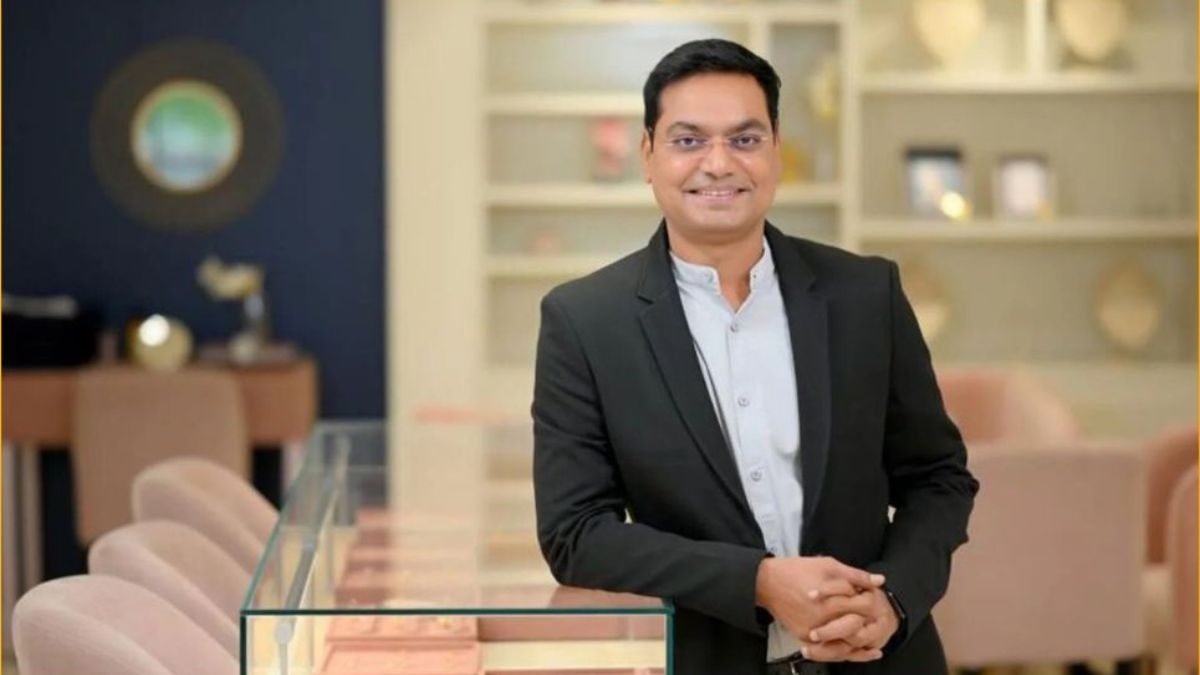
Who is the entrepreneur behind one of India’s most talked-about online jewellery platforms? Gaurav Singh BlueStone Founder is the visionary who drove the company to become a digital-first jewellery brand. What motivated him to start BlueStone, and how did he shape it into a trailblazer in India’s evolving e-commerce and jewellery ecosystem? When and where did his journey begin, and why is his story significant for the industry? How did he navigate the challenges of introducing online fine jewellery shopping to a traditionally offline marketplace?
Gaurav Singh Kushwaha, the BlueStone founder, is a computer science engineer from IIT Delhi who left a thriving career in technology and e-commerce to build a disruptive jewellery brand in 2011. With roots in the tech industry and early experience at Amazon, he saw an opportunity in the highly traditional Indian jewellery market — and chose to reinvent it with a digital-first approach. BlueStone was born out of Kushwaha’s own frustrating experience shopping for jewellery during his marriage, where he discovered a lack of transparency, discoverability, and personalization in jewellery retail. He built the brand on the belief that modern customers deserved a better way to explore, choose, and purchase jewellery online, backed by technology and trustworthy service.
From an online-only e-commerce model to a now thriving omnichannel brand with hundreds of retail locations and a public listing, BlueStone’s evolution reflects India’s broader shift toward digital commerce. Under Kushwaha’s leadership, the company pioneered personalised design, technology-enabled shopping experiences, and omnichannel integration long before it became industry orthodoxy. This story traces his path from early professional days and first entrepreneurial experiments to funding challenges, product building, scaling battles, leadership lessons, personal sacrifices, and the forward-looking vision that continues to guide one of India’s standout jewellery startups.
1. Background and Early Life
Gaurav Singh Kushwaha was born and brought up in India in a family where academics and intellectual curiosity were highly valued. Early on, he demonstrated a strong aptitude for science and analytical thinking, steering him toward engineering. He pursued a degree in Computer Science at the Indian Institute of Technology Delhi (IIT Delhi), one of India’s most selective and prestigious institutions. His rigorous technical education laid the groundwork for his future in technology and entrepreneurship.
During his time at IIT, Kushwaha absorbed more than just engineering skills; he also learned how to think logically, approach complex problems, and break them down into solvable parts. These abilities would later prove critical when he decided to enter the highly unstructured and tradition-bound world of jewellery retail.
After graduating from IIT Delhi, he opted to enter the professional world, gaining experience in both domestic and global technology firms. His early career included roles in software development and product management, most notably with Amazon, where he was exposed to customer-centric e-commerce platforms. This experience was instrumental in shaping his perspective on how internet technologies could solve long-standing consumer challenges. While his academic and early professional journey may appear conventional, it set Kushwaha apart as a founder with both strong technical grounding and deep familiarity with digital product ecosystems. It also instilled in him a confidence to question tradition and imagine new ways of delivering value to consumers.
2. Founder and Company Overview
2.1 Introduction to the Founder
Gaurav Singh Kushwaha is best known as the founder and CEO of BlueStone, one of India’s leading online and omnichannel jewellery brands. His path to entrepreneurship was shaped by years in the tech and e-commerce sectors, where he developed a keen sense for product design, consumer behavior, and platform thinking.
Before BlueStone, Kushwaha co-founded Chakpak, an online entertainment portal, in 2007. He successfully raised two funding rounds for Chakpak before selling its digital catalogue to Flipkart. That early entrepreneurial experience taught him valuable lessons in building internet businesses, fundraising, and leadership — lessons he would carry forward into his next venture.
2.2 Company Overview and Offerings
BlueStone was founded in 2011 in Bengaluru, India, as a modern jewellery platform aimed at redefining how fine jewellery is discovered, experienced, and purchased. At a time when jewellery retail was dominated by traditional shop owners and family businesses, Kushwaha envisioned a tech-driven alternative where customers could explore designs, see certified products, and make purchases with transparency and convenience.
The brand originally launched as an online destination for fine jewellery, offering certified gold, platinum, diamond, and gemstone pieces across multiple categories. Over time, it added personalised collections, curated design segments, and bespoke options to appeal to a broad audience of discerning buyers. BlueStone’s portfolio includes rings, earrings, pendants, bracelets, engagement collections, and mangalsutras — all carefully crafted to meet evolving consumer tastes.
BlueStone’s offerings are built on quality standards backed by industry-recognized certifications, ensuring authenticity, purity, and trust — critical factors in a market where customers often worry about quality and value.
2.3 Target Audience and Market Served
BlueStone serves a diverse customer base ranging from tech-savvy urban buyers to younger consumers seeking contemporary jewellery designs. Its early audience was largely online shoppers interested in transparent pricing and design variety. As it evolved, it began attracting customers who prefer browsing online before visiting stores, blending digital convenience with real-world experience.
The brand operates in India’s vast and highly fragmented jewellery market, which is estimated to be worth tens of billions of dollars, and offers both everyday jewellery and occasion-specific pieces. While traditional jewellery sales remain significant for weddings and festivals, BlueStone carved a niche with modern, design-forward collections that appeal to everyday wear and personalised gifting.
2.4 Year of Founding and Business Stage
Founded in 2011, BlueStone began as an online jewellery startup but quickly evolved into an omnichannel brand with physical retail showrooms across India. Its expansion into offline channels began in 2018, reflecting a strategic pivot to connect digital and physical experiences — a hallmark of mature D2C brands. Today, BlueStone is one of the key players in the Indian jewellery e-commerce ecosystem, backed by prominent investors and operating hundreds of stores in major and emerging cities. It has also made its public market debut, marking a significant milestone in its growth trajectory.
3. The Problem, Insight, and Trigger
Gaurav Singh Kushwaha stumbled on the idea for BlueStone through a personal experience that exposed a deep problem in the jewellery shopping process. During his own marriage preparations, he vividly recalled the frustration of visiting store after store, trying to find a specific piece of jewellery at the right price and design. There was no easy way to browse, compare, or discover modern designs across multiple stores. Jewellery retail in India had remained largely unchanged for decades. It was built around heavy gold pieces, wedding-centric designs, and bargaining-based sales processes. There was little transparency around pricing, limited design variety in many markets, and few options for consumers to browse before buying. The traditional model treated discovery as physical store-dependent, where customers had to visit multiple outlets to find something they liked.
Kushwaha realized that this pain point was not unique to him — it was shared by millions of customers across India. The insight was clear: if jewellery could be presented online in an engaging, trustworthy, and design-oriented way, customers would embrace a new mode of shopping. Growing internet penetration and digital payments were already shifting consumer behaviour toward online discovery across categories. Jewellery, despite being a high-involvement purchase, was next in line for digital transformation. This realization became the trigger for him to build BlueStone. He believed that technology could solve problems that traditional retailers had ignored, from discoverability and design curation to transparent pricing and seamless fulfilment. This fundamental insight — pairing technology with a historically offline category — became the core of BlueStone’s mission.
4. Early Days and Initial Struggles
Starting BlueStone was far from smooth. The early days were shaped by experimentation, steep learning curves, and persistent skepticism from both customers and investors. At first, the concept of purchasing fine jewellery online felt foreign to many Indian customers. Unlike clothing or electronics, jewellery carried emotional and cultural significance. Buyers wanted to touch, feel, and inspect pieces before committing to a purchase. Convincing customers to trust an online platform for high-value purchases was a big hurdle.
Operational challenges compounded the problem. Setting up a supply chain for jewellery was vastly different from many other e-commerce categories. Each piece carries precious metal and stones, requiring meticulous handling, storage, and certification. In the early stages, BlueStone grappled with managing inventory, quality control, and deliveries — all while keeping costs in check and ensuring trust with customers. Convincing jewellery designers and artisans to partner with an online-focused brand was another challenge. Many craftsmen traditionally served local jewellers, not internet startups. Kushwaha had to build relationships, establish quality standards, and prove that BlueStone could help designers reach customers at scale without compromising their craft or authenticity.
On the product front, the brand also needed to curate a catalogue that appealed to diverse Indian tastes — from contemporary minimalist designs to traditional festive styles. This demanded significant investment in design talent, user experience, and product storytelling. These early struggles taught Kushwaha that building a jewellery brand wasn’t just about putting products online; it was about reshaping consumer perceptions, mastering supply chains, and building trust in a category where hesitation and caution were baked into buying behaviour.
2. Background and Early Life
Gaurav Singh Kushwaha grew up in an environment that valued education, discipline, and self-initiative. He was born into a family that encouraged curiosity and analytical thinking, something that shaped his early worldview. Friends from his school years remember him as the kind of student who always looked for patterns behind problems. He liked building things and enjoyed solving puzzles more than memorizing formulas. That instinct for understanding how things work would later influence his approach to product building.
His childhood was not marked by dramatic upheavals or any particular hardship. Instead, the defining theme was exposure to books, ideas, and conversations that pushed him to think independently. He was a quiet kid, but his teachers noticed that he absorbed concepts faster than others. Mathematics and logic-driven subjects came naturally to him, and he often gravitated toward science competitions and coding clubs even before coding became mainstream in Indian schools.
The family placed strong value on academic achievement, and that pushed him toward competitive exams early on. When he secured admission to IIT Delhi, it felt like a natural continuation of his trajectory. At the institute, he found himself surrounded by peers who were just as driven and curious. It was the first environment where he felt he belonged. IIT Delhi exposed him to programming at scale and the excitement of building technology from scratch. It also introduced him to startup culture, though entrepreneurship was still a rare path for graduates at the time.
2.1 Education and Early Influences
During his years at IIT Delhi, Gaurav studied computer science, a discipline that was becoming increasingly relevant in India’s emerging tech scene. He also explored several academic projects that deepened his interest in software development. The campus fostered debate, curiosity, and experimentation, and he grew comfortable with the idea of questioning the status quo. This was also where he first encountered peers who wanted to build new products rather than work for established companies.
He graduated at a time when global tech companies were tapping into India’s engineering talent pool. Many of his peers headed to the United States or joined multinational companies in India, and he followed a similar path early on. His professional career began with jobs that challenged him intellectually, but he soon discovered that he was drawn more to product creation than corporate roles. That internal conflict eventually pushed him to rethink what he wanted long term.
3. Founder and Company Overview
By the time Gaurav Singh Kushwaha launched BlueStone, he had already experienced the Indian startup ecosystem from multiple angles. He had worked with established companies, built his first venture Chakpak, and understood the realities of digital consumer behavior. These diverse experiences made him see the gaps in traditional retail categories, especially in sectors where trust and quality play a major role in purchase decisions.
BlueStone was founded with a clear ambition: to reimagine how Indians buy jewelry. The idea was not to replace the longstanding cultural connection people have with gold and precious stones, but to bring transparency, design variety, and trust to a category traditionally dominated by offline stores. Gaurav believed technology could remove friction from the customer journey, making jewelry discovery and buying more intuitive. Today, BlueStone is widely recognized as one of India’s leading digital-first jewelry brands. It offers a wide catalog of gold, diamond, and gemstone products designed for modern lifestyles. The platform focuses on everyday jewelry rather than just wedding or festival purchases. For a long time, India’s jewelry market was built around large, traditional retailers. BlueStone challenged that dynamic by offering customization, doorstep trial, modern designs, and a more accessible buying experience.
3.1 Target Audience and Market Served
The company has always positioned itself for urban consumers, especially young professionals who prefer contemporary jewelry rather than heavy traditional pieces. Its typical customers are men and women living in metro cities, working in corporate environments, or belonging to upwardly mobile homes. They want design variety, assured quality, and the ability to compare pieces online before making a purchase.
Online jewelry buying was not a mainstream behavior when BlueStone launched, and that is what made the market so interesting to Gaurav. He realized that younger customers were willing to try new platforms if trust was built correctly. The company’s approach to customer experience, certification, transparent pricing, and seamless delivery helped it carve out a niche.
3.2 Year of Founding and Business Stage
BlueStone was founded in 2011, a year that saw several ecommerce categories take off in India. Fashion, electronics, and books dominated online buying at the time, but jewelry was still untouched. The company entered a market that required building trust from scratch. Today, more than a decade later, BlueStone is known for its omnichannel strategy with online discovery and offline experience centers. It has become one of the most recognized names in India’s jewelry e-commerce sector, especially within the D2C jewelry brand ecosystem.
4. The Problem, Insight, and Trigger
The idea behind BlueStone emerged from a combination of personal observation and market research. Gaurav noticed that while categories like electronics and apparel were growing rapidly online, jewelry remained rooted in traditional retail. Buying gold or diamonds still required walking into a showroom, negotiating prices, and relying on sales staff for information. There was little transparency and even less personalization. He realized that the consumer buying pattern was changing, especially among young working professionals. They were becoming comfortable purchasing high-value products online as long as they trusted the platform. He saw a gap in how jewelry brands communicated design, pricing, and certification. He believed an online-first approach could simplify the experience.
The trigger moment came after he observed how much frustration people felt during jewelry shopping. Most stores were crowded, options were limited, and customers had little visibility into what made one piece more expensive than another. He also saw that young women wanted light, everyday jewelry rather than the heavy designs traditionally sold in Indian stores. With this insight, he started exploring how technology could make jewelry buying more intuitive. That eventually became the foundation for BlueStone.
5. Early Days and Initial Struggles
Building an online jewelry startup in 2011 required courage. India’s e-commerce ecosystem was still developing, internet trust was low, and payment security was often questioned. Investors were skeptical of high-value transactions happening online. Some even questioned whether people would buy gold without touching it. The early assumptions were simple: customers would like design variety, transparent pricing, and doorstep delivery. But the reality of execution was far more complicated. The company had to build a supply chain from scratch, design collections that appealed to a new generation, and create trust signals strong enough to overcome consumer hesitation.
One of the biggest early challenges was convincing both investors and consumers that jewelry could be bought online. It was harder than expected to build logistics for fragile, high-value items. The team had to create packaging standards, insurance processes, secure transportation channels, and a quality control pipeline.
Gaurav himself describes those early months as a mix of excitement and anxiety. The idea looked promising on paper, but the challenges surfaced one after another. Building consumer trust turned out to be the biggest battle.
6. Failures, Setbacks, and Self-Doubt
Every founder has a point where the journey tests their resilience, and Gaurav faced his share. The jewelry industry is built on relationships and long-term trust, not quick online conversions. BlueStone’s early months saw inconsistent customer traction. The platform had to invest heavily in marketing, design, and logistics while revenue grew slowly. There were moments when the team questioned whether India was ready for online jewelry shopping. The early failures were often tied to supply chain errors, inaccurate demand forecasting, and customer expectations that changed faster than the company could adapt. Some collections did not perform well. Some marketing campaigns failed to generate meaningful conversions. There were times when cash flow pressure became overwhelming.
These setbacks created phases of self-doubt. Gaurav had built Chakpak before BlueStone, and seeing another venture face such turbulence triggered emotional lows. But instead of walking away, he doubled down. He focused on fixing processes, refining customer experience, and building credibility. Many founders in the Indian e-commerce ecosystem faced similar battles during that period, but the challenges felt heavier for a category like jewelry. BlueStone had no playbook to follow. Everything had to be built from scratch.
7. Validation and Early Traction
The turning point for Gaurav Singh Kushwaha and BlueStone came when the company secured its first meaningful set of customers who returned with positive feedback. In an industry where word-of-mouth matters more than marketing, early validation was a mix of relief and renewed conviction. The team had spent months refining product quality, certification processes, and delivery practices. When the first few orders came through without complaints, it hinted that the model could work at scale.
The early traction did not come from heavy traditional jewelry buyers. It came from young working professionals who wanted everyday wear and valued convenience. These customers liked the transparency of pricing and the variety of designs. Many were women buying for themselves, something that was becoming more common in urban India. Their enthusiasm gave BlueStone its first real boost. Revenue grew slowly at first, but the pattern was encouraging. Repeat customers began emerging. Social media brought in organic interest. Some customers shared their purchase experience online, which helped counter the skepticism surrounding jewelry e-commerce. For a founder dealing with constant self-doubt, these moments were powerful. The idea no longer felt like a gamble. It felt like something that could reshape how India buys jewelry.
7.1 Why Validation Changed Belief
For Gaurav, the shift was emotional as much as strategic. Online jewelry buying had been considered high-risk, and every order that resulted in a satisfied customer proved that trust could be built digitally. Investors who were once hesitant began to pay attention. The team’s energy changed as well. They moved from “Will this work?” to “Let’s scale it responsibly.” This new belief system helped BlueStone push through the next phase of operational challenges.
8. Funding, Money, and Growth Constraints
Funding played a crucial role in BlueStone’s story. The company did not have the luxury of staying bootstrapped for long, because jewelry is capital-intensive. Procuring inventory, producing designs, managing logistics, and maintaining secure delivery systems required serious investment. Early-stage Indian startups in niche categories often struggled with fundraising, but BlueStone managed to build investor confidence because of its strong team and clear market gap.
In the initial years, the company raised funding from several reputed investors, including Accel Partners, Kalaari Capital, and later Ratan Tata, whose association added credibility. With each round, BlueStone gained the capital it needed to refine operations, introduce new collections, and improve its online user experience. But the journey was not smooth. Managing cash flow was a constant concern. Scaling a jewelry brand demanded money at every stage. Growth constraints were tied to economics more than demand. The company had to balance inventory expansion with cash preservation. Unlike fashion, jewelry cannot be produced cheaply or in small batches. Each design required investment before it could be listed online. If it didn’t sell, the loss was hard to absorb.
Gaurav often spoke about how the team had to become extremely disciplined with capital. They tracked data closely, monitored design performance, and avoided reckless expansion. But even with all the discipline, there were moments when funds ran tight and the pressure mounted. Those phases tested the founder’s emotional resilience. He had to make decisions that balanced long-term vision with short-term survival.
8.1 Bootstrapped vs. Funded Mindset
Although BlueStone was funded, Gaurav maintained a mindset closer to a bootstrapped founder. He encouraged slow, steady, data-driven growth rather than chasing vanity metrics. This helped the brand avoid many pitfalls that e-commerce startups faced during that era. The hybrid approach shaped BlueStone’s culture: ambitious, yet grounded in operational clarity.
9. Team Building and Leadership Evolution
One of the hardest parts of Gaurav’s journey was building the right team. In the early days, the company hired quickly because they needed people to handle design, operations, logistics, technology, and customer experience. Some early hires were not the right fit, and the organization learned the cost of hiring without proper evaluation. These mistakes are common among first-time digital-first jewelry brands, but each misstep slowed growth. Leadership at BlueStone evolved gradually. Gaurav started as a founder who liked to handle everything himself. Over time, he realized this approach limited company growth. Delegation became a skill he had to learn consciously. He often mentions how difficult it was to give away control, especially in an industry where product quality and trust are non-negotiable. But scaling was impossible without it.
He learned to identify leaders who could own critical verticals without constant oversight. This helped BlueStone stabilize as it expanded toward omnichannel retail. The company also invested heavily in training and culture-building. They encouraged transparency, customer obsession, and adaptability. As the brand grew, so did its need for specialized talent. Hiring senior leaders with experience in luxury retail and operations helped elevate BlueStone’s presence.
9.1 Leadership Lessons Over the Years
Gaurav’s leadership style changed with experience. He moved from being a hands-on operator to a strategic thinker. He learned the value of trusting teams, setting clear expectations, and making decisions based on data rather than instinct alone. These shifts helped BlueStone scale without losing its identity as a digital-first jewelry brand.
10. Growth, Scaling, and Operational Challenges
Once the company gained traction, the next challenge was sustainable scaling. Moving from a niche online jewelry platform to a mainstream brand required serious operational investment. BlueStone needed stronger supply chains, more design cycles, faster delivery timelines, and a brand identity that stood out in a crowded market. Scaling wasn’t only about growth. It was about avoiding operational breakdowns. Jewelry is fragile, expensive, and deeply personal. A single poor delivery experience could impact customer trust. BlueStone invested heavily in quality checks, secure packaging, and process automation. They also built a robust technology backend that improved browsing, customizations, and customer support.
Brand positioning evolved as well. Instead of being an “online jewelry startup,” BlueStone wanted to be recognized as a modern Indian jewelry brand. The omnichannel strategy played a key role here. Experience centers bridged the trust gap between online and offline buying. Customers could try designs physically and complete their purchase online, or vice versa. This hybrid model helped the brand reach a wider audience.
10.1 Operational Breakdowns and Fixes
There were moments when the system failed. Delayed shipments, design mismatches, and demand surges tested the company’s setup. Each breakdown required detailed analysis and quick resolution. Over time, BlueStone turned these setbacks into learning opportunities. They strengthened vendor networks, adopted advanced forecasting models, and moved toward an agile design-to-delivery cycle. The company learned how to scale without compromising on customer trust.
10. Personal Sacrifices and Burnout
The journey of building BlueStone demanded more from Gaurav Singh Kushwaha than what the outside world could see. The glamour of being a founder rarely reflects the personal cost involved, and in Gaurav’s case, the sacrifices were significant. Running a digital-first jewelry brand meant long hours, unpredictable crises, and constant pressure to deliver. Even during stable periods, the emotional load was heavy because jewelry e-commerce leaves no margin for error. A single mistake can mean a major financial hit or a loss of customer trust.
Entrepreneurship often blurs the line between work and life, and Gaurav was no exception. BlueStone required his attention at all hours. Product reviews, inventory checks, customer escalations, and investor calls filled his days. Nights often stretched into early mornings. There were phases where he barely slept, especially during early fundraising cycles or during big product launches. This lifestyle created strain, even if he rarely acknowledged it publicly.
Burnout did not come in dramatic moments. It showed up quietly. There were days when the fatigue was overwhelming and days when the uncertainty felt heavier than the progress. The fear of a system breaking down, or a miscalculation impacting sales, stayed with him even during family time. Despite this, he pushed forward because the mission felt bigger than the discomfort. BlueStone wasn’t just a business idea. It was a vision for how India could shop for jewelry in the digital age.
10.1 Impact on Personal Life
Running an online jewelry brand affected Gaurav’s personal life in many subtle ways. His social circle became smaller. Personal routines often took a back seat. Travel became mostly work-related. Celebrations were squeezed between deadlines. Yet, despite these constraints, he managed to stay grounded. His family supported him through the toughest phases. That emotional foundation gave him the resilience to keep building BlueStone through the unpredictable swings of startup life.
11. Lessons, Beliefs, and Values
Over the years, Gaurav Singh Kushwaha built a set of beliefs that shaped BlueStone’s identity. The first was the importance of trust. Jewelry is emotional, intimate, and expensive. Without trust, no digital-first jewelry brand can survive. BlueStone invested heavily in certification, transparency, and authenticity because Gaurav believed trust wasn’t something that could be claimed. It had to be earned repeatedly.
Another lesson was the value of patience. Online jewelry was not a category that would explode overnight. It required slow, persistent building. From design to logistics to customer comfort, every element needed time to mature. Gaurav often said that founders who chase explosive growth in categories like jewelry usually burn out or compromise quality. Sustainable growth came from discipline, not speed. He also emphasized data-backed decisions. Coming from a tech background, he relied on metrics rather than assumptions. Every new design, pricing model, or marketing strategy at BlueStone was shaped by insights. It helped the team avoid emotional decision-making and stick to what worked. This belief built a culture where instincts mattered, but only when backed by evidence.
Values played a central role too. Transparency was non-negotiable. Whether it was communicating with customers, employees, or investors, honesty remained central. The company tackled challenges openly rather than hiding them. This value system helped strengthen long-term relationships across the board.
11.1 What Changed Over Time
Gaurav’s perspective on entrepreneurship evolved as BlueStone grew. In the initial phase, he believed building a great product was the hardest part. Over time, he realized consistency was the real challenge. Keeping quality high, responding to market shifts, and leading a growing team required more focus than launching the idea itself. He also learned to embrace uncertainty. The Indian e-commerce ecosystem changed rapidly, and regulations around gold and jewelry often created unexpected roadblocks. Instead of resisting change, he accepted it as part of the journey.
12. Present Challenges and Future Vision
BlueStone today is one of India’s most recognizable digital-first jewelry brands, but the company still faces new challenges. Consumer expectations continue to rise. The market is more competitive than ever. Traditional jewelers have strengthened their digital presence. Logistics continue to evolve. Scaling responsibly without losing the brand’s intimate customer experience remains a daily effort.
The omnichannel expansion brought a fresh wave of operational complexities. Managing inventory across online and offline touchpoints requires advanced forecasting and financial discipline. Customer preferences shift faster than before. Designs that work one season may not resonate the next. BlueStone also has to constantly innovate to stay relevant among younger buyers.
12.1 Current Leadership Philosophy
Gaurav’s leadership today is calmer and more strategic. He focuses on strengthening systems rather than firefighting daily issues. He empowers teams more than ever and relies on specialists to drive verticals. His role is now centered on long-term decisions—technology adoption, design philosophy, branding direction, and customer trust. Even with a broader team handling operations, he stays closely connected to product quality and customer insights.
12.2 Long-Term Vision
Gaurav wants BlueStone to become India’s most trusted modern jewelry brand. The vision extends beyond online jewelry. It revolves around creating a seamless, personalized retail experience that blends technology with tradition. He believes the next decade will redefine how Indians buy jewelry, and BlueStone aims to be at the center of that shift.
He remains obsessed with one core problem: how to simplify jewelry buying for the modern Indian consumer. Whether it’s through better design discovery, transparent pricing, or advanced customizations, he wants BlueStone to make jewelry accessible, enjoyable, and trustworthy for every customer. Despite the intense journey, his passion remains intact. The challenges have changed, but the mission hasn’t. BlueStone’s story is still unfolding, and Gaurav continues to shape it with the same conviction that inspired him years ago.
About foundlanes.com
foundlanes.com is India’s leading startup idea and deep-dive platform built for founders, operators, and serious entrepreneurs. We go beyond surface-level advice to deliver grounded, research-backed, and experience-driven startup content.
Every guide on foundlanes.com is designed to help readers think clearly, act strategically, and build sustainably. This cloud kitchen startup guide is part of our mission to document real business pathways in India’s evolving startup ecosystem.