


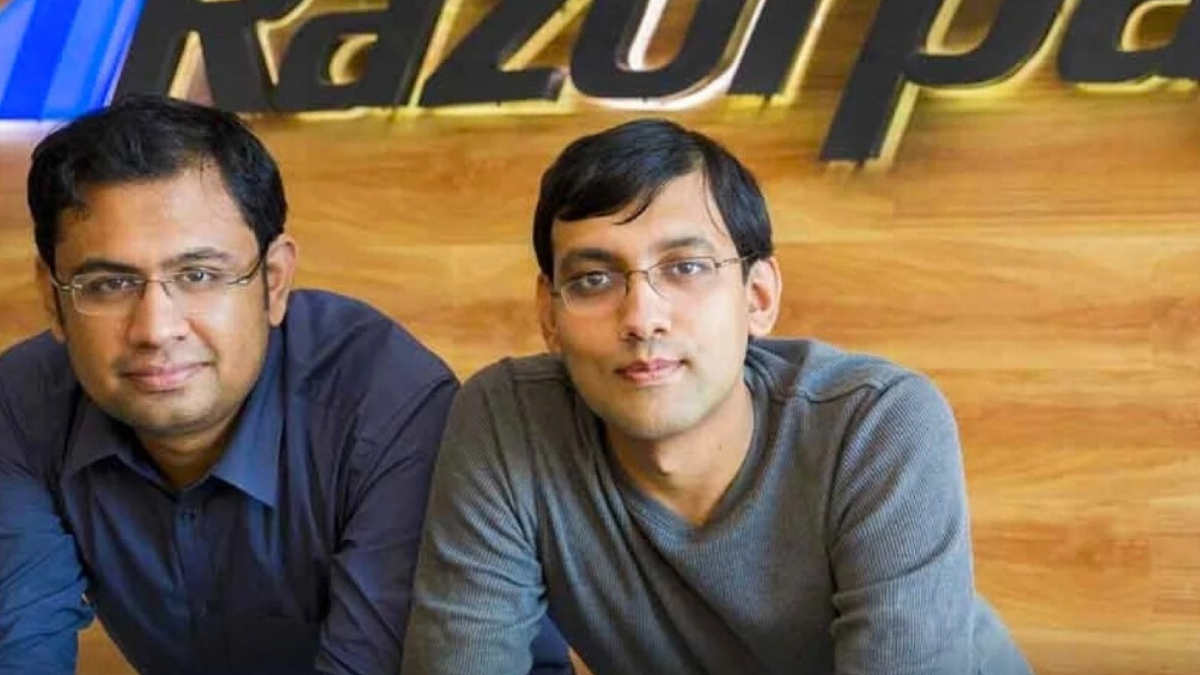
The Early Struggles of Razorpay Founders: From Middle-Class Roots to Fintech Unicorn
Meet Harshil Mathur & Shashank Kumar, Razorpay Founder, is not just a story of startup success. It is a story about frustration turned into obsession, uncertainty turned into resolve, and friendship tested by pressure, failure, and the sheer weight of responsibility.
Harshil Mathur and Shashank Kumar grew up in middle-class Indian homes where success was measured in marks, degrees, and secure jobs. Risk was dangerous; comfort was sacred. Yet, the first sparks of curiosity, irritation, and imagination came early. Harshil loved building systems that worked seamlessly; Shashank loved dissecting complexity and finding patterns. Together, they complemented each other in ways that would later define Razorpay.
The world they inherited in 2010 was fragmented, slow, and unforgiving. Businesses that wanted to accept digital payments faced opaque processes, delayed settlements, and clunky APIs. Customers hesitated to trust online platforms. Cash-on-delivery ruled e-commerce. Every attempt to move money digitally felt like wrestling with an invisible opponent. For Harshil and Shashank, this friction was personal. They had faced it themselves. They had suffered the inconvenience firsthand. And in that discomfort, an idea began to take shape: if no one was going to fix this, why not us?
Razorpay was founded in Bengaluru in 2014, a small two-person team with no brand, no hype, and no guarantees. What followed were years of exhaustion, doubt, late-night coding marathons, regulatory headaches, and operational chaos. There were moments when quitting seemed rational, when sleep felt like a betrayal of the mission, and when every new customer issue felt like a personal failing. But there were also moments of human validation: the first business that trusted them, the first seamless transaction, the first repeat recommendation. Those small sparks became their oxygen.
1. Background and Early Life
1.1 Harshil Mathur: The Restless Builder
Harshil’s childhood was quiet, disciplined, and unremarkable to outsiders. But inside, there was always a tension—a restlessness to understand systems and make them better. Numbers, algorithms, and logical patterns fascinated him, but more than fascination, there was impatience. Why did things have to be slow? Why could problems not be solved elegantly? That impatience would later become a defining force at Razorpay.
1.2 Shashank Kumar: The Patient Analyzer
Shashank was different. While Harshil felt urgency, Shashank cultivated patience. He could sit with complexity, deconstruct it, and wait for patterns to emerge. He internalized the slow workings of systems and observed where failures and inefficiencies lived. Where Harshil asked “why can’t it work now?” Shashank asked “what is required to make it work reliably?” Their partnership would be a balance between urgency and discipline—a tension that would define Razorpay’s early journey.
1.3 Friendship Forged in Ideas and Curiosity
At IIT Roorkee, their paths crossed. Two minds, aligned yet different. They debated, brainstormed, and collaborated on small projects. They challenged each other and respected boundaries. There was no startup plan, no future unicorn vision—only the joy of solving problems, understanding systems, and exploring what technology could make possible. This early synergy planted the seeds for a partnership that would later redefine India’s fintech ecosystem.
2. Founder and Company Overview
2.1 A Simple Problem, A Complex World
Meet Harshil Mathur & Shashank Kumar Razorpay Founder started with a frustration everyone else ignored. Businesses could not accept online payments reliably. APIs were broken, settlements were slow, support was nonexistent. Customers distrusted online payments. Founders became victims of the very system meant to empower them. It was not glamorous. messy. urgent.
2.2 What Razorpay Set Out to Build
Razorpay began as a simple payment gateway, a tool that allowed businesses to accept payments with fewer barriers. But simplicity belied complexity. Behind every seamless transaction were hours of code, nights of debugging, conversations with regulators, and countless edge cases. The goal was not just technology. It was trust—earning the confidence of businesses, developers, and users alike.
2.3 Serving the Unseen Businesses
The first users were small startups, digital-first entrepreneurs, and online merchants struggling to stay afloat while navigating India’s fragmented financial systems. They were invisible to large banks, underserved by incumbents, and desperate for solutions. Razorpay was their quiet lifeline, slowly growing trust, one transaction at a time.
3. The Problem, Insight, and Trigger
3.1 Personal Frustration as Inspiration
Both founders had felt the pain of poor payment infrastructure personally. Every failed integration, every delayed payment, every frustrated customer reminded them that the problem was real—and costly. Empathy became their starting point. They did not just want to build a product; they wanted to fix the system for the people they cared about.
3.2 The Insight That Changed Everything
The insight was simple yet radical: if you focus on making payments invisible, reliable, and developer-friendly, adoption would follow. Complexity had to be hidden. Reliability had to be guaranteed. Support had to be proactive, not reactive. This insight became Razorpay’s north star.
3.3 The Trigger Moment
There was no single “aha” moment. It was repetition—a repeated encounter with friction that refused to be ignored. Every failed payment integration, every angry merchant, every lost opportunity fueled the founders’ resolve. Eventually, they accepted the risk. If no one else was going to solve this, they would.
4. Early Days and Initial Struggles
The first months were brutal. Two founders, minimal resources, and an idea that the market had not yet proven existed. They wrote code, debugged APIs, handled support calls, and educated merchants about a new way to accept payments. Every day was a test of endurance.
They assumed businesses would flock to a better product. They were wrong. Convincing a small merchant to switch gateways was a battle. Trust had to be earned, slowly, through personal interactions, reliability, and tiny wins. The founders’ naivety was quickly replaced with the hard lessons of persistence.
5. Failures, Setbacks, and Self-Doubt
If Part One was about friction and frustration, Part Two begins with moments where the weight of that friction became almost unbearable.
In the early years, Razorpay faced setbacks that could have broken most founders. Banks were skeptical. Regulators were cautious. Every new integration revealed a hundred hidden edge cases. Payments failed. Merchants complained. Startups lost money. And through it all, the responsibility rested entirely on two young men barely out of college.
Harshil remembers nights sitting in front of his laptop, staring at logs of failed transactions, feeling the silent judgment of every customer affected. He questioned if they had overestimated their ability, if the market was ready, if they were foolish to dream so big.
Shashank felt it differently. Where Harshil carried guilt, Shashank carried anxiety—the worry that every misstep might cause irreparable damage to the company or, worse, the trust they were building. They had created a product that the market needed, but delivering it reliably was another story. Self-doubt became a quiet companion, visiting in the middle of sleepless nights.
There were moments when quitting seemed logical. Why endure endless struggle for a product the world didn’t yet understand? But giving up would have meant letting down not only themselves but the small businesses that had already started trusting Razorpay. That responsibility anchored them when despair whispered.
6. Validation and Early Traction
Validation arrived slowly, almost imperceptibly. The first true moment of belief was not a media headline or investor check—it was a small e-commerce startup successfully running a full month of transactions without a single failure.
Suddenly, all the late nights, arguments, and endless debugging made sense. The founders realized that reliability could breed trust, and trust could drive adoption. Small businesses began recommending Razorpay to others. Word-of-mouth, more than marketing, became the engine of growth.
That first wave of real traction was intoxicating. It confirmed what they had long suspected: if they solved payments, the world would notice, but only if they endured the grind to get it right.
7. Funding, Money, and Growth Constraints
Razorpay’s early funding journey was both a lifeline and a test of resolve.
Initial capital came from angel investors who believed in the founders, not just the idea. Every rupee spent was scrutinized. Cash flow was always tight. Salaries, server costs, and operational expenses demanded precision. There was no room for indulgence or mistakes.
This scarcity, while stressful, enforced discipline. Every feature, every hire, every product improvement had to justify itself. The founders learned to maximize impact with minimal resources—a skill that would define Razorpay’s culture forever.
8. Team Building and Leadership Evolution
8.1 Early Hiring Struggles
Hiring in the early days was fraught with mistakes. Some hires were technically brilliant but lacked alignment with the founders’ vision. Others couldn’t endure the relentless pace. Each mismatch came with emotional cost—blame, guilt, frustration.
8.2 Lessons in Leadership
Harshil and Shashank learned that leadership was not about doing everything themselves. It was about building a team they could trust, systems that could function without constant oversight, and a culture where challenges were faced collectively.
The founders evolved from engineers solving problems individually to leaders creating structures that allowed hundreds of employees to solve problems together.
9. Growth, Scaling, and Operational Challenges
Scaling Razorpay revealed challenges no coding session could prepare them for.
Infrastructure needed to handle millions of transactions daily. Downtime was catastrophic. Compliance requirements were ever-changing. Every new feature touched dozens of systems, and every bug could compromise trust.
Mistakes happened. Every outage felt like a personal failure. But each failure became a lesson. The founders realized that growth was as much about resilience and operational excellence as it was about innovation. Scalability was not just code—it was culture, process, and unyielding attention to detail.
10. Personal Sacrifices and Burnout
The human cost of building Razorpay was enormous.
Long hours blurred personal boundaries. Weekends disappeared. Relationships were strained. Every success carried emotional weight, every failure left scars. Burnout didn’t hit suddenly—it accumulated slowly, like water filling a bucket.
Yet, the founders persisted. Harshil recalls moments when sleep felt like a betrayal of responsibility, and Shashank remembers evenings when the anxiety of the next day’s challenges made it impossible to rest. Entrepreneurship, they realized, was as much about mental endurance as technical skill.
11. Lessons, Beliefs, and Values
Through struggle, the founders’ beliefs crystallized:
- Reliability matters more than speed. A trusted product will win, even if adoption is slow.
- Culture compounds faster than code. A disciplined, aligned team sustains growth.
- Empathy is essential. Building for real users, understanding their pain, drives purpose.
These values became the non-negotiable foundation of Razorpay. Every decision, every hire, every product feature was measured against them.
12. Present Challenges and Future Vision
Today, Razorpay is a leading Indian fintech unicorn, central to the country’s digital economy. But the founders’ obsession remains unchanged: making money movement seamless, reliable, and trustworthy for every business, from the smallest startup to the largest enterprise.
Competition is global, regulation is evolving, and consumer expectations are rising. Yet Harshil and Shashank continue to focus on systems, trust, and operational excellence. Their vision is not short-term scale—it is long-term impact: building infrastructure India can rely on for decades.
The story of Razorpay is far from over. It is a story of two young men who refused to accept friction, carried the weight of responsibility, and built a company that changed how an entire country moves money. And perhaps, more quietly, it is a story of how they themselves were changed—hardened, humbled, and humanized by the very problem they sought to solve.
The FoundLanes View
At foundlanes, Culture Circle’s journey stands out not just for its headline-grabbing numbers but for what it reveals about building modern Indian startups—where trust, verification, and transparency can drive rapid adoption, even as losses widen. The Culture Circle 10x revenue growth reflects a clear market insight executed at speed, alongside the inevitable pressure of scaling through heavy spending on technology, hiring, and marketing. Stories like this matter because they show entrepreneurship as it truly unfolds: fast, demanding, and full of trade-offs, where short-term financial strain is often the price paid for long-term relevance and scale.