


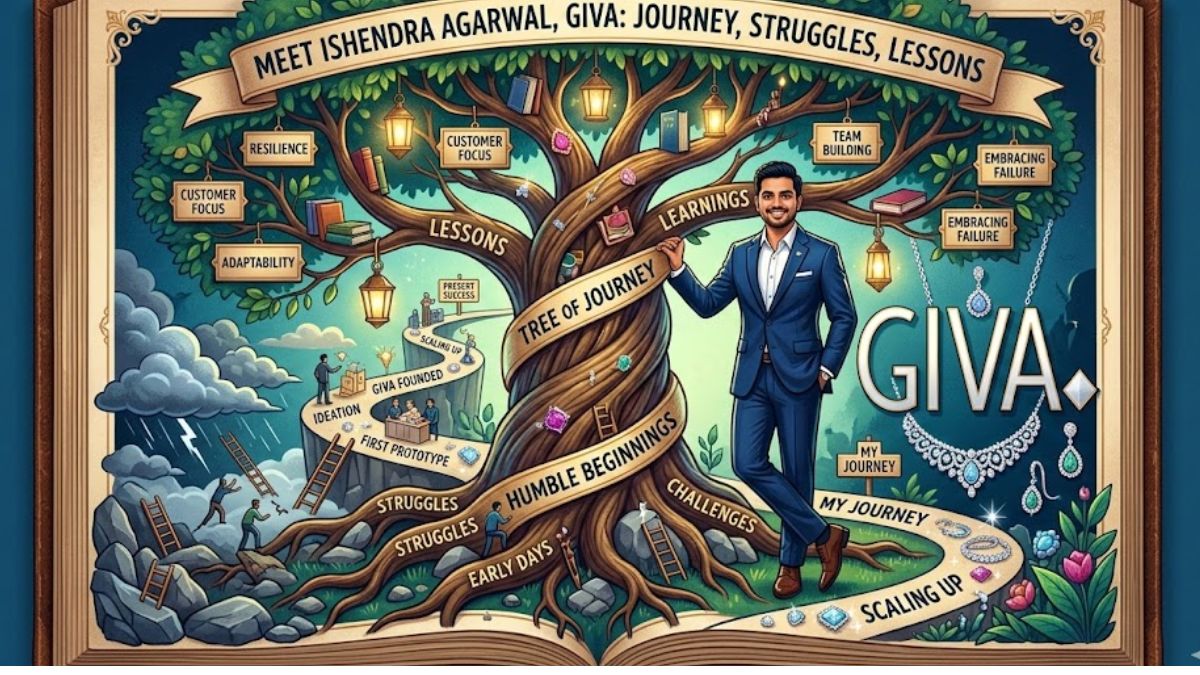
In the crowded world of Indian jewellery, where tradition and legacy rule, one brand has stood out for its sharp focus on design, accessibility, and everyday wear. GIVA, a direct-to-consumer jewellery startup born in Bengaluru in 2019, has rewritten expectations for silver and fine jewellery in India. At the heart of this transformation is Ishendra Agarwal, the founder and CEO who saw an untapped opportunity in a market long dominated by gold and high-end bridal pieces. A graduate of the Indian Institute of Technology Kanpur, Agarwal’s path to entrepreneurship took him from consulting at The Boston Consulting Group to venture capital at Guild Capital before he turned his attention to jewellery retail. He believed modern Indian consumers, especially women aged 20 to 50, were underserved by traditional offerings and wanted pieces that could blend with everyday life at accessible price points.
Under his leadership, GIVA has grown rapidly from an online startup to an omnichannel brand with over 200 physical stores across India and its first international outlet in Sri Lanka. Investors have taken note too. The company has raised significant capital from top-tier firms including Premji Invest, Sixth Sense Ventures, and A91 Partners, backing ambitious plans to expand product lines into gold and lab-grown diamond jewellery while scaling its retail footprint.
But the journey hasn’t been without its challenges. Meeting customer expectations for quality and service, navigating volatile metal prices, and building a cohesive team in a young organisation have all tested Agarwal’s leadership. Through it all, his guiding principle has been clear: make fine jewellery accessible and relevant to a new generation of buyers. This article explores how he identified the opportunity, confronted setbacks, found early validation, and steered GIVA toward its present position as a leader in India’s D2C jewellery landscape.
1. Background and Early Life
Information about Ishendra Agarwal’s early life and family background is sparse in public sources, a sign of how his story is defined more by professional choices than personal biography. What is clear, however, is that education and intellectual challenge played a significant role in shaping his trajectory. He studied at the Indian Institute of Technology Kanpur, one of India’s premier engineering institutions, where he earned a degree in Electronics Engineering.
His time at IIT Kanpur was formative. Surrounded by peers driven to build and innovate, Agarwal was exposed not just to technical problem-solving, but also to the possibilities of entrepreneurship. During college, he co-founded a social networking app, HidnChat, which allowed anonymous chats, demonstrating an early appetite for exploring opportunities that intersected technology, consumer behaviour, and community.
Following his graduation, Agarwal’s initial professional path took him into strategy consulting at The Boston Consulting Group. There, he worked on complex business problems across industries, sharpening analytical skills that would later prove indispensable in steering a consumer brand. He followed this with a stint at Guild Capital, an early-stage venture capital fund, giving him a rare view of the startup ecosystem from the investor’s side. These experiences laid a foundation of business insight, strategic thinking, and market evaluation that would become essential when he turned founder.
While the public record doesn’t delve into his family life or the personal influences that shaped his values, it’s clear that his early professional choices were deliberate. Rather than pursue a conventional engineering role, he opted for positions that expanded his understanding of strategy, markets, and what it takes to build and scale a business.
2. Founder and Company Overview
2.1 Introducing the Founder
Ishendra Agarwal is the co-founder and CEO of GIVA Jewellery, an Indian direct-to-consumer (D2C) brand that has rapidly made its mark in fine jewellery, especially silver. His combination of engineering training, consulting experience, and venture capital exposure positioned him uniquely to identify and pursue a business opportunity that many had overlooked.
Raised in an environment where analytical thinking and problem solving were encouraged, Agarwal embodies a blend of technical discipline and strategic foresight. That balance would later inform how he built GIVA’s product strategy and brand positioning.
2.2 Company Overview and Offerings
GIVA was founded in 2019 in Bengaluru, Karnataka, with a mission to bridge the gap between traditional jewellery offerings and the desires of a modern Indian consumer. At its core, GIVA’s product line includes silver, gold, and lab-grown diamond jewellery. The brand quickly gained recognition for its modern, everyday designs that appeal to a broad audience rather than being restricted to high-end or ceremonial pieces. From bracelets and rings to necklaces, pendants, and earrings, GIVA’s portfolio is designed to appeal to men, women, and children. Its pieces balance contemporary aesthetics with affordability, allowing consumers to wear fine jewellery as part of their daily lives rather than reserving it for occasional use.
2.3 Target Audience and Market Served
GIVA’s primary audience is modern, fashion-forward consumers in India who want jewellery that resonates with everyday style sensibilities at accessible price points. The brand has intentionally positioned itself in the lifestyle segment of jewellery retail, catering to women aged approximately 20 to 50, though its reach now includes men and younger consumers as well. This audience is less interested in heavy, traditional gold jewellery and more drawn to expressive, lightweight pieces that complement contemporary wardrobes. In targeting this demographic, GIVA has tapped into a shift in consumer behaviour, particularly among urban and digitally savvy buyers.
2.4 Year of Founding and Business Stage
Founded in 2019, GIVA quickly moved from an online-only D2C operation to a truly omnichannel brand. The company extended its presence into offline retail in 2022 with its first exclusive brand outlet in Bengaluru. Since then, it has aggressively scaled its physical footprint across India, opening more than 200 stores by 2025. Alongside retail expansion, GIVA has broadened its product range, moved into gold and lab-grown diamonds, and brought in marquee investors to fuel growth. Today, the company is considered one of India’s fastest-growing jewellery brands, aiming for hundreds more stores and continued international expansion.
3. The Problem, Insight, and Trigger
3.1 Core Problem Identified
When Agarwal and his co-founders looked at the Indian jewellery market, they saw a glaring void. Traditional jewellery retail in India had long been dominated by gold and wedding-centric offerings. Silver jewellery existed but was largely unorganised and lacked brand recognition or design focus. Consumers either bought unbranded pieces with uncertain quality or turned to heavy gold, which was expensive and tied to ceremonial occasions. This market imbalance meant that a large segment of consumers who wanted fine jewellery for everyday wear were underserved. There was no strong, trusted, design-led brand that could deliver quality, contemporary jewellery at accessible price points.
3.2 Personal Insight Behind the Idea
Agarwal saw this gap not merely as a business opportunity but as a reflection of shifting consumer tastes. Younger buyers and working professionals were increasingly seeing jewellery as a form of personal expression rather than just an investment or ceremonial purchase. They wanted pieces that fit everyday wardrobes and occasions. His background in strategy and venture capital helped him frame this not as a niche trend but as a structural shift in demand. By combining strong design sensibilities with an omnichannel approach, he believed a brand could unlock a category that others had ignored.
3.3 Trigger Moment to Start
The trigger for GIVA’s founding came in 2019, when Agarwal and his co-founders decided that the market was ripe for disruption. Recognising that digital commerce was lowering barriers to customer access and that demand for modern jewellery was growing, they chose to build a brand that could capitalise on both trends. This decision was rooted in careful observation of market behaviour, consumer feedback, and a belief that a focused brand could create new demand rather than simply compete with existing offerings.
4. Early Days and Initial Struggles
4.1 Early Assumptions and Naivety
Like many first-time founders, Agarwal entered the jewellery business with assumptions about customer behaviour, supply chains. And brand building that would soon be tested. He and his team underestimated the complexity of jewellery retail, particularly around sourcing quality materials. Managing inventory, and delivering consistent customer experiences online and offline. They believed that a strong brand identity and compelling designs would be enough to win over customers quickly. But reality required deeper investments in quality control, trust-building, and operational excellence.
4.2 Entrepreneurial Initial Struggles
In the early days, GIVA was an online-only brand operating in a space where customers were used to tactile buying experiences, especially for jewellery. Convincing consumers to purchase fine jewellery without seeing or trying it on was a significant challenge. The team had to work hard on product imagery, descriptions. Virtual engagement, and trust signals to reduce hesitation and build confidence. Sourcing suppliers who could deliver consistent quality for silver and other metals at scale also proved tough. Jewelry requires precision, fine finishing, and reliability, which meant GIVA had to build strong partnerships and quality checks early on.
4.3 What Turned Out to Be Harder Than Expected
One of the biggest surprises for the team was the role that offline presence played in building credibility. Even as a digitally native brand. GIVA found that many customers needed an in-store experience to fully trust and emotionally connect with fine jewellery. This insight fundamentally changed their strategy and led to the launch of physical stores starting in 2022. Managing rapid expansion across channels also stretched operational capabilities. Retail requires different logistics, staffing, and customer-service skills than e-commerce, prompting a steep learning curve.
5. Failures, Setbacks, and Self Doubt
While specific anecdotes about personal failure aren’t widely documented. Building a jewellery brand from scratch in India did bring its share of setbacks. Early customer hesitation around quality and online purchase behaviour likely led to slower traction than the team hoped for. Especially during the first year or two.
There were also broader market challenges. Jewellery retail in India is deeply tied to cultural expectations, price sensitivity, and trust. Establishing GIVA as a credible alternative to established players required persistence. Occasional consumer complaints about product expectations and finishing quality, documented on social forums. Reflect the ongoing challenge of balancing brand promise with execution. These discussions highlight how customer experience can vary widely with product category and expectations. Through these moments, Agarwal and his leadership team needed resilience to stay focused on long-term goals, refine product offerings, and build systems that could support quality and service improvements.
6. Validation and Early Traction
6.1 First Real Validation
The first significant validation for GIVA came when customers began embracing the idea of everyday fine jewellery. Early revenue growth and repeat purchases signaled that the brand was solving a real problem. As the product range expanded and customer feedback improved, the team gained confidence that they were on the right path.
6.2 Early Revenue Growth or Feedback
Within a few years of founding, GIVA was able to raise funding from notable investors, a powerful form of external validation. Its Series A in 2022 raised $10 million, followed by a substantial Series B round in 2023 led by Premji Invest and others. These investments weren’t just capital infusions; they were signals from seasoned backers that the market opportunity and execution were credible.
6.3 Why This Moment Changed Belief
Beyond funding, real belief shifted when GIVA started opening physical stores and seeing footfall and conversions that rivalled online performance. The expansion from online to brick-and-mortar retail confirmed that there was a strong emotional and aspirational component to how people engage with jewellery. This omnichannel success encouraged the team to think bigger, expanding product lines into gold and lab-grown diamonds and planning hundreds more store openings.
7. Funding, Money, and Growth Constraints
GIVA’s funding journey reflects both opportunity and challenge. Its Series A round in January 2022 brought in about $10 million led by Sixth Sense Ventures, A91 Partners, and others. The momentum continued with a Series B in July 2023 that raised around ₹270 crore, led by Premji Invest with participation from Aditya Birla Ventures and others. By October 2024, GIVA closed an extended Series B round raising ₹255 crore more, demonstrating investor confidence in its expansion into gold and lab-grown diamond segments and offline retail growth.
7.1 Bootstrapped or Funded Journey
While GIVA did not start as bootstrapped it raised early funding to fuel growth it has focused on leveraging capital strategically. Early investment enabled the brand to build an omnichannel play, extend beyond silver into premium categories, and scale retail presence.
7.2 Capital Challenges and Cash Flow Issues
Expanding into physical retail and managing inventory across online and offline channels is capital intensive. Jewellery retail, especially when dealing with precious metals, ties up significant working capital. GIVA needed to balance inventory costs, store leases, and marketing expenses while maintaining quality and customer service. Funding rounds helped ease pressure, but the underlying capital intensity of expansion was a constraint.
7.3 Early Growth Limitations
One constraint GIVA faced was managing the pace of retail expansion with organisational capability. Opening hundreds of stores across diverse regions required logistics, training, and systems that weren’t available at the outset. Growth required deliberate investment in people and processes, even as the brand raced to capitalise on market demand.
8. Team Building and Leadership Evolution
8.1 Early Hiring Mistakes
Like many fast-scaling startups, GIVA likely experienced growing pains in hiring and organisational design. Early decisions on staffing may not have anticipated the demands of scaling both online and offline operations simultaneously. Jewellery retail requires expertise across design, sourcing, customer service, store management, and digital marketing. Aligning these functions under a cohesive culture was a learning process.
8.2 Delegation Challenges
As founder and CEO, Agarwal had to shift from being involved in every decision to empowering senior leaders to run functions autonomously. Delegation is a common challenge for founder-led organisations. Growing beyond the founding team meant institutionalising processes, clarifying roles, and maintaining a balance between control and trust.
8.3 Leadership Learnings Over Time
Over time, GIVA’s leadership team has matured to handle the demands of scaling. Building teams capable of managing product development, omnichannel retail, customer experience, and operational logistics reflects a shift from founder-centric decision-making to distributed leadership. This evolution is essential for maintaining growth momentum while preserving brand values.
9. Growth, Scaling, and Operational Challenges
9.1 Brand Positioning and Go-to-Market Learnings
GIVA’s brand positioning rests on modern design, affordability, and accessibility. Educating customers about silver and lab-grown diamonds as stylish alternatives to traditional gold has been a key part of marketing. The brand’s campaigns, partnerships with celebrities like Anushka Sharma, and omnichannel presence have all reinforced this positioning.
9.2 Scaling Challenges
Scaling across geographies introduced operational complexities. Retail expansion required logistics for inventory distribution, training store teams, and ensuring a consistent customer experience. Balancing the pace of store openings with backend support systems was a challenge, necessitating careful planning and investment.
9.3 Operational Breakdowns and Fixes
Operational challenges included synchronising online and offline inventory, managing returns and exchanges consistently, and building supply chains that could deliver quality at scale. Investing in infrastructure such as warehouses and plating units helped mitigate some issues and gave GIVA greater control over quality and supply chain reliability.
10. Personal Sacrifices and Burnout
The public record doesn’t provide detailed insights into Agarwal’s personal sacrifices or moments of burnout. However, leading a fast-growing startup in a capital-intensive and competitive industry inevitably involves significant personal commitment. Balancing strategic decisions, investor expectations, team management, and the pressures of rapid expansion demands resilience and stamina.
Entrepreneurship at this scale can strain personal life and health, especially when operating across physical stores, online channels, and product categories. Sustaining energy and clarity through such challenges likely required Agarwal to prioritise time, delegate effectively, and build support structures both inside and outside the organisation.
11. Lessons, Beliefs, and Values
11.1 Core Lessons Learned
Ishendra Agarwal’s journey with GIVA has been as much about introspection as it has been about business strategy. One of the most profound lessons he learned early on was the sheer power of listening really listening to customers. The pivot from an online-only model to a carefully curated omnichannel presence wasn’t just a strategic decision; it was a response to the subtle signals from the market. Customers were craving tactile experiences, the ability to feel the weight of silver, the shimmer of lab-grown diamonds, the craftsmanship behind each piece.
Ishendra realised that building a brand in a traditional sector like jewellery isn’t about pushing products; it’s about cultivating trust, patience, and emotional resonance. Jewellery, after all, isn’t bought impulsively it marks milestones, memories, and personal stories. GIVA’s commitment to these values didn’t just enhance customer loyalty; it shaped the company’s identity, creating a bond that translated into steady growth, repeat purchases, and word-of-mouth advocacy.
Another crucial lesson was patience itself. Unlike tech or fast-moving consumer goods, jewellery operates on long cycles of trust. The company’s insistence on quality, lifetime buyback programs, and design integrity wasn’t a short-term growth hack it was a strategic investment in credibility. These deliberate choices yielded tangible results: steady sales across offline and online channels, a growing base of brand advocates, and recognition as a brand that genuinely prioritises customer experience over rapid scale.
11.2 Beliefs That Changed Over Time
In the early days, the GIVA team underestimated the power of physical retail. They initially saw offline stores as cost centers rather than strategic assets. Over time, however, the reality became undeniable: stores weren’t just points of sale they were trust engines. In a category where the tactile experience of jewellery matters immensely, the ability for customers to touch, try on, and feel pieces became a cornerstone of brand credibility.
Simultaneously, GIVA’s product philosophy evolved. The company started with silver jewellery but gradually incorporated gold and lab-grown diamonds in response to customer demand. This wasn’t a haphazard expansion; it reflected a mindset rooted in observation, empathy, and adaptability. By following signals from the market rather than clinging to original assumptions, GIVA was able to capture wider audiences, engage different demographics, and strengthen its relevance in a crowded, competitive space.
11.3 Non-Negotiable Values
At the heart of GIVA’s journey lies a set of unwavering principles. Quality, exceptional customer service, and accessibility have never been negotiable. Every strategic choice be it design, sourcing, or store expansion was filtered through these values. Lifetime buyback and assurance policies weren’t marketing gimmicks; they were manifestations of a deep respect for customers and a commitment to building a brand that inspires confidence. These values have been the compass guiding the company through both turbulent market conditions and aggressive growth phases, consistently differentiating GIVA in an industry where trust is often scarce.
12. Present Challenges and Future Vision
12.1 Ongoing Struggles Today
As of 2026, GIVA is at a pivotal juncture. The company’s retail footprint has already grown to around 300 stores, with ambitious plans to expand to 800–1,000 in the coming years. This growth trajectory reflects the immense confidence the team has in India’s consumer demand, but it also comes with its own set of challenges. Precious metal prices, particularly silver, remain volatile, creating a delicate balancing act between maintaining affordability and protecting margins.
Educating customers about lab-grown diamonds continues to be a strategic focus. These products are relatively new to the mainstream Indian market, and building trust requires consistent communication, transparency, and reassurance. Lifetime assurances, buyback policies, and price guarantees aren’t just operational mechanisms they are ways to translate brand values into tangible customer experiences that build loyalty and reduce hesitation.
12.2 Current Leadership Philosophy
Agarwal’s leadership is deeply human and strategic in equal measure. He combines foresight with empathy, always keeping a finger on the pulse of consumer sentiment. He invests in infrastructure and talent to maintain quality while constantly iterating on the omnichannel model. His philosophy isn’t about chasing trends; it’s about understanding consumer behavior, nurturing it, and aligning operational execution with evolving tastes. This approach has allowed GIVA to sustain steady growth without losing sight of its brand ethos.
12.3 Long-Term Vision
GIVA’s ambitions extend far beyond short-term milestones. Agarwal envisions GIVA as a household name across India and, eventually, in international markets. Expansion into tier II cities and overseas markets is part of a broader strategy to make fine jewellery accessible, aspirational, and relevant for daily wear. The brand is not just growing in numbers it is expanding its emotional footprint, seeking to become an integral part of consumers’ life events and memories.
12.4 The Problem the Founder Remains Obsessed With
At the core of Agarwal’s relentless pursuit is one question: How can fine jewellery become indispensable in people’s lives? Every decision design, pricing, retail strategy, or technology adoption is filtered through this lens. He continues to explore ways to blend aesthetics, technology, and omnichannel experiences to create seamless, delightful customer journeys. Even as GIVA scales, Agarwal’s obsession with making jewellery personal, accessible, and meaningful remains the guiding force behind every innovation, every expansion, and every strategy.
About foundlanes.com
foundlanes.com is India’s leading startup idea discovery platform. It helps entrepreneurs find actionable startup opportunities, market insights, and industry-specific guidance to turn ideas into real businesses. With deep research and practical resources, foundlanes supports founders at every stage, from idea validation to launch and growth.