


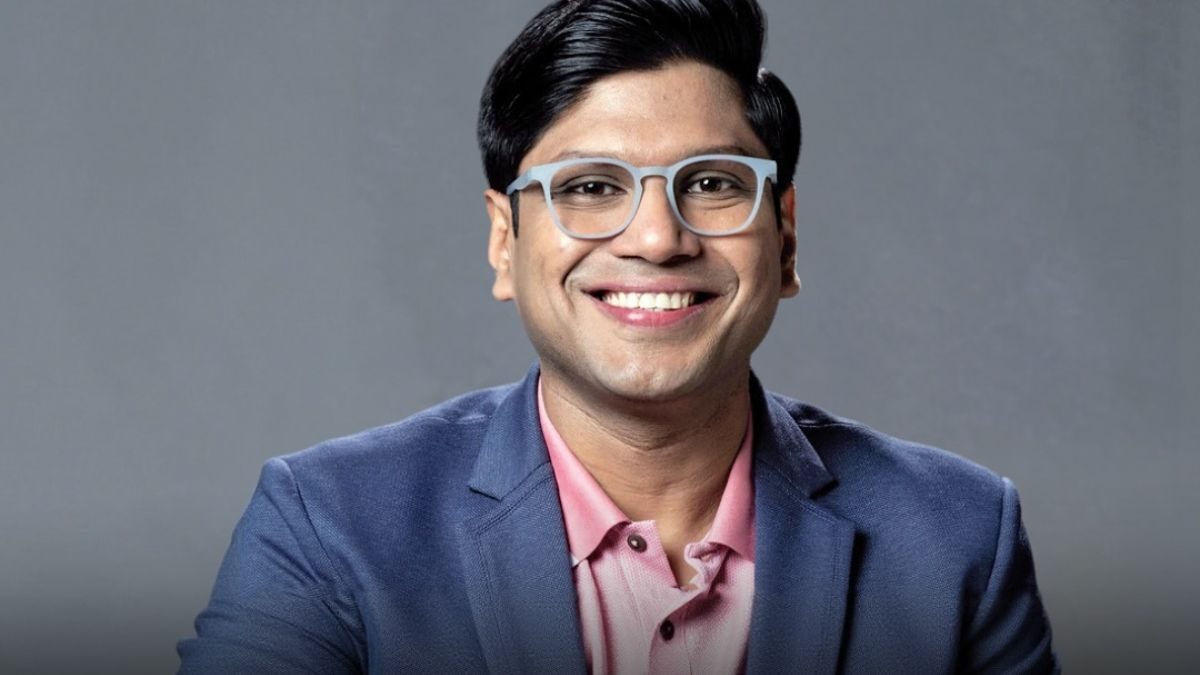
Peyush Bansal’s Journey: From Quiet Discomfort to Revolutionizing Eyewear in India
Meet Peyush Bansal, Lenskart Founder — a name now associated with one of India’s most trusted consumer brands — did not begin his journey dreaming of fashion, retail, or television fame. His story begins with something far quieter and more personal: discomfort. The kind of discomfort that grows slowly when you realize people have accepted a broken system simply because it has existed for too long.
Peyush Bansal is an Indian entrepreneur who built Lenskart, a company that changed how India buys eyewear. But before the omnichannel retail model, before funding rounds, before Shark Tank India, there was a young engineer who could not ignore a simple question: Why is something as essential as vision so expensive, confusing, and inaccessible?
This story unfolds across India and the United States, across classrooms and corporate offices, across moments of privilege and unease. It takes shape around 2010, when eyewear in India was controlled by small local stores, opaque pricing, and a complete absence of consumer trust. Millions needed glasses. Most delayed buying them. Many compromised on quality. Nobody questioned why.
The “what” of Lenskart is eyewear. The “how” is technology, vertical integration, and relentless execution. But the “why” lives in something deeper — in the belief that vision care should not feel like a punishment or a luxury. This is not the story of a founder chasing valuation. the story of someone who walked away from comfort, failed quietly, doubted himself repeatedly, and stayed long enough to build something that worked.
1. A Childhood Shaped by Discipline, Not Drama
Peyush Bansal grew up in a middle-class Indian household where ambition was expressed through discipline, not dreams. There were expectations, not fantasies. Study well. Build a career. Stay grounded. Entrepreneurship was not discussed as a destination. It was seen as a risk — unnecessary, unpredictable, and best avoided. Stability mattered more than expression. Security mattered more than experimentation. As a child, Bansal was observant rather than rebellious. He noticed how systems worked. How people behaved within them. How inefficiencies were tolerated because “that’s just how things are.” There was no defining childhood moment that screamed “future founder.” What there was instead was patience — the kind that quietly absorbs patterns and remembers them. That patience would later become his greatest strength.
2. Education, Distance, and the First Shift in Perspective
Leaving India to study engineering at McGill University in Canada changed Peyush Bansal in ways that were not immediately visible. It exposed him to a world where consumer experiences were designed intentionally, not accidentally. Products were transparent. Pricing was clear. Customer service was expected, not optional.
This contrast stayed with him. Not as criticism of India, but as curiosity. Why couldn’t basic consumer products in India feel just as respectful? After graduating, Bansal joined Microsoft in the United States. From the outside, this looked like success. A prestigious company. A global role. Financial comfort. Inside, something felt incomplete. He was learning, but he was not building. He was contributing, but not creating. The problems were real, but distant from everyday human life. Slowly, a question began to surface — not loudly, but persistently: Is this all I want to do?
3. Comfort Becomes a Cage
The discomfort of comfort is subtle. It does not announce itself as unhappiness. It arrives as restlessness. Bansal was grateful for his job. But gratitude did not erase the feeling that his time was being spent too safely. Too predictably. He began thinking more about India. About scale. problems that affected millions, not thousands. businesses that mattered beyond balance sheets.
The idea of returning to India was emotionally complex. It meant walking away from certainty. It meant explaining a decision that did not fit conventional logic. But the pull grew stronger. At some point, comfort stopped feeling like security and started feeling like stagnation.
4. The Problem Everyone Ignored
Eyewear is not aspirational. It is essential. And yet, in India, buying glasses felt unnecessarily difficult. Prices were high. Choices were limited. Quality was inconsistent. The customer rarely understood what they were paying for. Local optical stores operated on information asymmetry. Customers trusted blindly or not at all. There was no standardization. No transparency. Most people accepted this experience because they had never seen an alternative.
For Bansal, this acceptance was the problem. He did not see eyewear as retail. He saw it as vision care. And vision, he believed, was too important to be left to inefficiency. This insight was not sudden. It was cumulative — built from observation, frustration, and comparison.
5. Returning Home Without a Map
When Peyush Bansal decided to return to India, he did not have a finished business plan. What he had was conviction — fragile, untested, but sincere.Lenskart was founded in 2010, but its earliest days were uncertain and messy. The company started as an online eyewear platform, betting on a consumer behavior that did not yet exist. People were hesitant to buy glasses online. They wanted to touch frames. wanted reassurance. wanted human interaction.
The early assumptions were optimistic. The reality was sobering. Orders were slow. Trust was hard to earn. Every customer complaint felt personal. This was not disruption. This was survival.
6. Early Struggles That No One Applauds
Cash was tight. Logistics were unforgiving. Supply chains were unreliable. Every operational issue demanded attention. There were no layers to absorb mistakes. Bansal was involved in everything — pricing, vendors, customer feedback, and strategy. Failures were not dramatic. They were quiet and exhausting.
Days ended without clarity. Nights were filled with calculations and second-guessing. The idea was sound. Execution was brutal. There were moments when shutting down felt logical. When continuing felt emotional rather than rational. But something kept him going — not optimism, but responsibility.
7. The First Signs of Belief
Belief did not arrive through investors or press. It arrived through customers who came back. Repeat purchases are quiet validations. They don’t celebrate you. They trust you. Customers began returning for second pairs. They referred friends. They complained — which meant they cared. This was the shift. Lenskart was no longer an experiment. It was becoming a habit. For Bansal, this was the moment when fear changed shape. The fear of failure slowly became the fear of not doing enough.
8. Realizing Online Alone Was Not Enough
One of the most important realizations came painfully: India was not ready for pure online eyewear. Trust needed touch. Assurance needed presence. This insight led to a critical pivot — the omnichannel retail model. Physical stores were not a retreat from technology. They were an extension of trust. Opening stores was expensive. Complex. Risky. But it worked. The decision to go omnichannel would later define Lenskart’s identity and separate it from competitors.
9. The Emotional Weight of Staying
Staying is harder than starting. By the time Lenskart began showing signs of stability, Peyush Bansal had already spent years in uncertainty. The fatigue was real. The pressure was constant. There were no guarantees. Only responsibilities. Building a vision care startup meant committing to long timelines. Manufacturing. Quality control. Training. Each step required patience. This was not a fast win. It was a slow construction. And that slowness demanded emotional endurance.
10. When Capital Arrives, Fear Changes Shape
Funding did not arrive at Lenskart like a victory parade. It arrived like a contract with the future. Investors believed in the idea, the market, and eventually the execution. Capital unlocked manufacturing, technology, and retail expansion. But it also introduced a new kind of pressure — expectation. Until then, failure would have meant personal loss. Now, failure would affect teams, investors, and customers who had placed trust in the company. The stakes shifted silently but permanently.
For Peyush Bansal, money was never the goal. Control was. Control over quality. Over pricing. Over customer experience. Funding was useful only if it helped protect that control. Every expansion decision now carried weight. Every burn-rate discussion came with consequences. Growth was no longer just ambition. It was obligation.
11. Scaling Is Where Most Truths Are Revealed
Scaling exposed everything that early optimism had hidden. Hiring fast meant hiring imperfectly. Some leaders struggled with the pace. Others struggled with alignment. Culture stretched thin as teams grew faster than shared understanding. Retail expansion brought its own complexity. Stores looked identical on paper but behaved differently on the ground. Staff training varied. Customer experiences fluctuated. Every inconsistency felt like a personal failure.
Bansal learned that building a D2C brand in India was not about ideas or branding decks. It was about systems that worked on bad days, not just good ones. Execution became the only language that mattered.
12. The Loneliness of Making Hard Calls
As Lenskart grew, decisions became less creative and more painful.
Shutting down experiments. Replacing leaders. Saying no to ideas that people had invested emotion into. These were not strategic moves alone. They were human ruptures. The hardest part was not making the call. It was living with it afterward. There were no applause moments here. No validation. Just the quiet knowledge that leadership often means choosing the least damaging option, not the perfect one. Bansal carried these moments inward. He did not dramatize them. He absorbed them. That absorption had a cost.
13. Burnout Does Not Look Like Collapse
Burnout arrived slowly.
It looked like longer days. Shorter patience. Fewer moments of joy. Wins felt muted. Losses felt heavy. There was always something unresolved. Another store opening. operational issue. review meeting. Rest felt irresponsible. Stepping away felt dangerous. The identity of “founder” consumed the identity of “person.” This is the part of entrepreneurship few talk about — when passion no longer fuels you, but responsibility keeps you moving.
14. Learning to Step Back Without Stepping Away
- Over time, Bansal realized that intensity was not sustainable leadership.
- The company needed systems, not heroics. Leaders, not dependence. Predictability, not constant urgency.Delegation became less about trust in others and more about trust in the process.
- This transition was emotionally difficult. Letting go always feels like loss before it feels like growth.
- But slowly, the organization matured. Decisions traveled without bottlenecks. Teams took ownership. Stability emerged.
- The founder did not disappear. He evolved.
15. Public Recognition, Private Grounding
Publicly, Peyush Bansal’s visibility increased dramatically, especially with his role as a Shark Tank India judge. He became a recognizable face, a symbol of Indian startup success. Privately, his life remained anchored in restraint. Fame did not change the work. Television did not simplify operations. Retail stores still opened every day. Customers still complained. Systems still failed occasionally. The difference was perspective. He no longer chased validation. He focused on durability.
16. What the Journey Rewrote Inside Him
The journey changed Bansal’s beliefs quietly, not dramatically. He stopped believing that speed equals success. stopped believing that scale must come quickly. stopped believing that founders must always appear confident. Instead, he learned that clarity compounds. That patience outlasts aggression. That consistency builds brands more reliably than noise. Most importantly, he learned that entrepreneurship is not about proving brilliance. It is about absorbing responsibility without losing empathy.
17. The Present: Building Without Noise
Today, Lenskart operates at a scale few Indian D2C brands have achieved. Manufacturing, technology, retail, and logistics move in coordination. But challenges remain. Competition is global. Consumer expectations evolve constantly. Efficiency matters more than expansion. Bansal now leads with calm repetition rather than dramatic vision. The same questions are asked again and again: Are we improving quality? Are we lowering friction? Are we earning trust? Leadership, at this stage, is about holding the line.
18. The Future: Still About Vision
Meet Peyush Bansal, Lenskart Founder, remains obsessed with the same problem that started everything — vision. Not metaphorical vision. Real vision. Millions still compromise on eye care. still delay correction. still accept discomfort because access feels inconvenient. The long-term vision is simple and difficult: make quality vision care so accessible that neglect becomes impossible. Not just in India. Everywhere. There is no dramatic ending to this story. No final chapter. No clean arc. Only continuation. And perhaps that is the truest mark of a founder who stayed — not to be celebrated, but to be useful.
The FoundLanes View
At foundlanes, Culture Circle’s journey stands out not just for its headline-grabbing numbers but for what it reveals about building modern Indian startups—where trust, verification, and transparency can drive rapid adoption, even as losses widen. The Culture Circle 10x revenue growth reflects a clear market insight executed at speed, alongside the inevitable pressure of scaling through heavy spending on technology, hiring, and marketing. Stories like this matter because they show entrepreneurship as it truly unfolds: fast, demanding, and full of trade-offs, where short-term financial strain is often the price paid for long-term relevance and scale.