


Introduction:
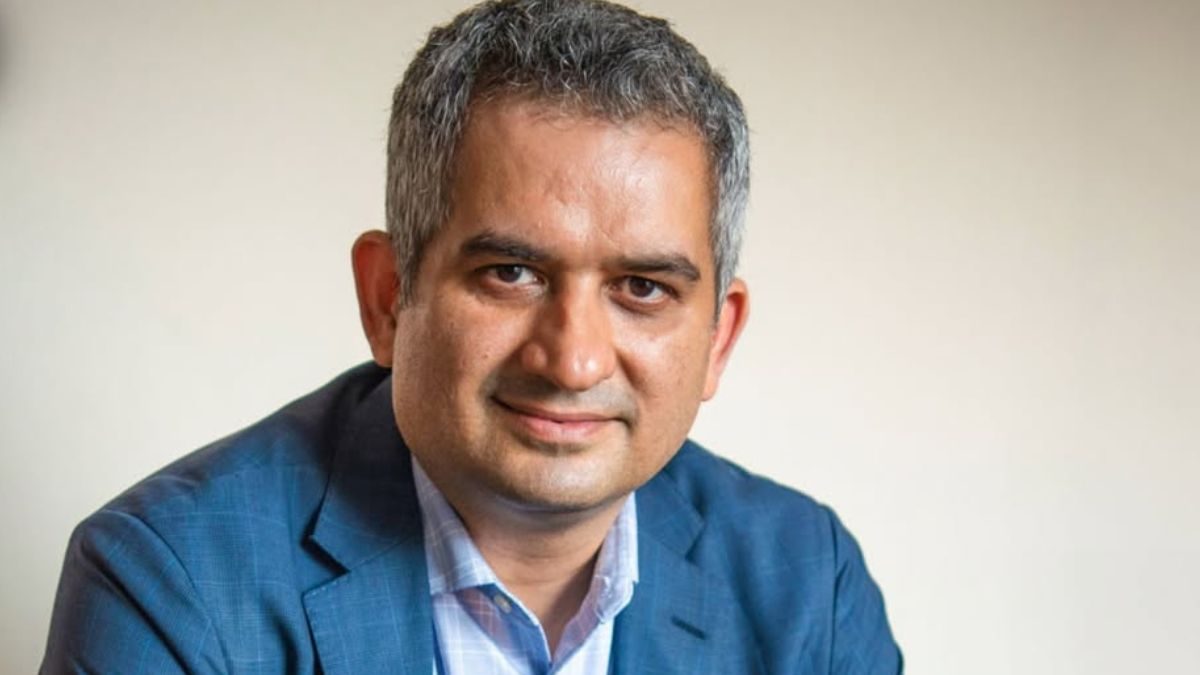
Prashant Tandon, Tata 1mg Founder, is one of India’s foremost healthtech entrepreneurs. He co‑founded 1mg in April 2015, later rebranded as Tata 1mg after a majority acquisition by Tata Digital in 2021. Based in Gurugram, Haryana, Tata 1mg has grown into India’s largest digital healthcare platform, serving millions with e‑pharmacy, lab tests, teleconsultations, and health information. Prashant’s journey didn’t begin with a business plan. Instead, it emerged from a personal insight about the opacity and inefficiency of India’s healthcare system, especially around drug information. He saw an opportunity to help millions of patients navigate medicine choices with transparency, clarity, and affordability — goals that became the core mission of 1mg.
Before founding Tata 1mg, Prashant held roles at Hindustan Unilever and McKinsey & Company, gaining deep business and healthcare insights. He also co‑founded HealthKart, India’s leading health and nutrition ecommerce platform that shaped his understanding of consumer health purchasing behavior. Prashant holds a B.Tech from IIT Delhi and an MBA from Stanford Graduate School of Business.
Under his leadership, Tata 1mg became more than a pharmacy app. It evolved into an integrated healthcare ecosystem that delivers medicines at home, supports diagnostics, and connects patients to doctors online. It climbed to market leadership, overtaking competitors with innovation, customer trust, and a data‑informed model. While relentless execution brought growth, Prashant’s vision, resilience, and commitment to patient‑centric healthcare underpin the company’s story.
This article traces his life from early influences to entrepreneurial struggles, setbacks, breakthroughs, leadership evolution, and the lessons he carries forward. It explores the ideas, decisions, and driving motivations that made Tata 1mg a defining healthtech startup in India’s digital healthcare revolution.
1. Background and Early Life
1.1 Early Life and Family Background
Prashant Tandon’s story begins in New Delhi, a city where ambition and pressure often coexist. He grew up in an environment that quietly but firmly valued education, discipline, and intellectual curiosity. From an early age, he showed a natural inclination toward science and structured thinking, drawn to understanding how systems worked rather than accepting them at face value.
While his family has largely stayed away from the public eye, their influence is evident in his temperament. There is a measured calm to how Tandon approaches problems, a patience shaped by years of rigorous learning rather than shortcuts. Those formative years instilled in him a respect for process, perseverance, and long-term thinking — traits that would later become critical in navigating the complexities of healthcare and technology in India.
1.2 Education and Early Influences
Tandon’s academic path reflects both excellence and intentionality. He earned his Bachelor of Technology from IIT Delhi, one of India’s most demanding engineering institutions. The experience sharpened his analytical rigor and trained him to break down complex problems into solvable components. IIT did more than teach engineering; it cultivated resilience, peer-driven excellence, and a comfort with solving under pressure.
He later pursued an MBA at Stanford Graduate School of Business, where his worldview expanded significantly. At Stanford, Tandon was exposed to global business models, healthcare innovation, and the power of technology-led platforms to reshape traditional industries. This combination of deep technical grounding and global strategic thinking helped him see healthcare not just as a service, but as a system that could be redesigned around transparency, trust, and access.
2. Founder and Company Overview
2.1 Introduction to the Founder
Prashant Tandon is widely regarded as one of the most thoughtful voices among Indian healthtech entrepreneurs. As Co-Founder and CEO of Tata 1mg, he has played a central role in building a platform that sits at the intersection of technology, healthcare delivery, and consumer trust. What distinguishes Tandon’s leadership is restraint. In a sector often driven by aggressive claims and rapid expansion, he focused on credibility, compliance, and long-term reliability. His vision was not just to digitize healthcare, but to make it understandable and dependable for everyday Indians — a far harder problem to solve.
2.2 Company Overview and Offerings
Founded in April 2015 as 1mg, the company began with a simple but powerful idea: make healthcare information and access transparent. Over time, it evolved into a comprehensive digital health platform. Following Tata Digital’s majority acquisition, it became Tata 1mg — a move that brought scale, institutional backing, and deeper consumer trust.
Today, Tata 1mg operates India’s largest online pharmacy and a nationwide diagnostics network. It offers medicine delivery through licensed pharmacies, lab test bookings with digital reports, teleconsultations with qualified doctors, and one of the country’s most trusted repositories of health and medicine information. Each service is designed to reduce confusion, eliminate misinformation, and simplify decision-making for patients.
2.3 Target Audience and Market Served
Tata 1mg serves a wide spectrum of healthcare consumers across India. Its core users include urban and semi-urban individuals who value convenience, accuracy, and reliability in healthcare decisions. Chronic patients rely on the platform for repeat medicine orders. Families use it for diagnostics and consultations. First-time users turn to it for trusted information before making health choices. The platform resonates particularly with users who seek clarity in a system that often feels opaque. By combining access with education, Tata 1mg has positioned itself not just as a service provider, but as a guide through the healthcare journey.
2.4 Year of Founding and Business Stage
Founded in 2015, 1mg has spent nearly a decade evolving with India’s digital health ecosystem. Its early years were defined by trust-building and regulatory navigation. The Tata Digital acquisition in 2021 marked a pivotal shift, transitioning the company into a phase of structured scaling and deeper integration.
Today, Tata 1mg operates in a growth and consolidation stage. It continues to expand services, strengthen infrastructure, and work toward a more integrated healthcare experience across India. The journey reflects patience over speed — a philosophy that mirrors Prashant Tandon’s own approach to building enduring institutions.
3. The Problem, Insight, and Trigger
3.1 Core Problem Identified
Prashant Tandon identified a quiet but dangerous flaw at the heart of India’s healthcare system. Medicines were everywhere, but understanding was not. Patients bought what was prescribed without visibility into pricing, alternatives, or even basic information about what they were consuming. Drug labels were dense, pricing varied wildly across pharmacies, and generic substitutes remained largely invisible to consumers.
This opacity did more than inconvenience patients. It eroded trust and often pushed families into avoidable financial strain. Tandon saw that healthcare decisions in India were being made in the dark. In an industry where trust is everything, the lack of transparency around medicine information and pricing created a systemic failure. That insight became the intellectual foundation of what would eventually become 1mg.
3.2 Personal Insight Behind the Idea
Tandon’s earlier entrepreneurial experiences had already exposed him to the realities of consumer internet businesses. But healthcare triggered something deeper. He saw that most health systems, in India and globally, were designed around institutions — hospitals, manufacturers, distributors, insurers. The patient was an afterthought.
What unsettled him was how little agency individuals had over their own health choices. A prescription felt final, even when alternatives existed. Side effects were rarely discussed. Prices were rarely questioned. Tandon envisioned a patient-first platform that did not replace doctors, but complemented them by giving users clarity. Information, he believed, was not a threat to healthcare. It was the missing link.
3.3 Trigger Moment to Start
The idea did not arrive as a grand epiphany. It emerged gradually through repeated consumer behavior. Early users kept asking the same questions. Why does this medicine cost so much. Is there a cheaper substitute. What does this pill actually do. Can I trust it.
These questions revealed a pattern. The demand was not for faster delivery alone, but for understanding. That realization became the trigger. Tandon and his co-founders recognised that if they could simplify healthcare choices and make information accessible, they could fundamentally change how Indians interacted with medicine. The business was born not from theory, but from listening closely to what people were asking for.
4. Early Days and Initial Struggles
4.1 Early Assumptions and Naivety
In the beginning, the team believed that transparency would naturally drive adoption. If people could see medicine information clearly, they would trust the platform instantly. Reality proved more complex. Healthcare behavior is deeply emotional and cautious. Even when information was accurate, users hesitated. Trust had to be earned slowly, not assumed. They also underestimated how entrenched offline habits were. Pharmacies were familiar. Doctors were trusted. Convincing users to shift even part of that journey online required patience and consistency, not just a good product.
4.2 Entrepreneurial Initial Struggles
Regulation quickly became the defining challenge. Healthcare is not a move-fast sector, and for good reason. Every step — from medicine delivery to diagnostics and teleconsultation — operated under strict legal frameworks. Navigating these while building a scalable technology platform demanded meticulous planning. Logistics added another layer of difficulty. Ensuring that medicines came from licensed sources, maintaining quality standards, and delivering reliably across cities required operational depth far beyond typical ecommerce. Progress was slower than many tech startups, but each milestone mattered more.
4.3 What Turned Out to Be Harder Than Expected
The hardest challenge was trust. Selling a product is transactional. Building confidence in healthcare is deeply personal. Patients needed reassurance that medicines were authentic, advice was credible, and data was secure. Every error carried reputational risk.
To meet this bar, the team invested heavily in quality controls, content accuracy, and partnerships with licensed providers. These systems did not scale overnight. They demanded discipline and restraint. But over time, this commitment to credibility became Tata 1mg’s defining strength. What was initially a hurdle evolved into the moat that protected the business.
5. Failures, Setbacks, and Self Doubt
5.1 The Toughest Phase of the Journey
The hardest phase of building 1mg came quietly, without dramatic collapses or public scrutiny. It was the long stretch where effort outpaced visible progress. In the early years, user growth was steady but monetisation lagged. Healthcare ecommerce was still unfamiliar territory in India, and trust does not accelerate on startup timelines. Convincing users to order medicines online required repeated education, reassurance, and consistency. For the team, this meant operating in uncertainty. The product was working, but the business model was still taking shape. Every month demanded patience. In a sector where lives and health were involved, shortcuts were not an option. That restraint, while necessary, made the journey slower and emotionally heavier.
5.2 Early Failures and Major Setbacks
1mg’s first major bet was on content. The platform began as a trusted source of medicine information, drug interactions, and health education. While this approach attracted millions of users and built credibility, it did not generate immediate revenue. For a long time, the platform was valuable but not yet viable. The pivot from a content-led platform to a full-stack healthcare ecosystem was neither clean nor instant. Building transactional layers such as pharmacy delivery, diagnostics, and consultations introduced new complexities. There were missteps in execution, operational learning curves, and moments when progress felt fragile. But this pivot was essential. It transformed 1mg from an information site into an end-to-end health platform.
5.3 Moments of Self Doubt and Emotional Lows
Leading a healthcare startup carries a different emotional burden. Decisions are not abstract. They affect real people, real health outcomes. Prashant Tandon has acknowledged that skepticism from investors and industry insiders often weighed heavily. Many questioned whether Indian consumers would ever trust an online platform for something as sensitive as medicine.
There were moments of self doubt, especially when growth was slow and criticism was loud. But Tandon chose persistence over defensiveness. Instead of chasing quick validation, he doubled down on building credibility. Those emotional lows sharpened his conviction that healthcare could only be transformed by respecting its complexity, not bypassing it.
6. Validation and Early Traction
6.1 First Real Validation or Customer
The first real validation did not come from revenue dashboards. It came from user behaviour. Millions of people began using 1mg simply to understand medicines better. They searched for side effects, compared prices, and shared links with family members. One widely forwarded WhatsApp message sparked a surge in adoption, spreading the platform organically across households. This moment mattered because it proved something fundamental. Indians were hungry for trustworthy health information. They wanted clarity before consumption. That trust, once earned, was more powerful than any marketing campaign.
6.2 Early Revenue Growth or Feedback
Revenue followed trust. Once pharmacy services, diagnostics, and consultations were layered onto the content platform, users began transacting. Medicine orders increased. Repeat purchases followed. Diagnostic bookings grew steadily. More importantly, feedback showed confidence. Users were not just buying once. They were returning. Chronic patients relied on the platform. Families used it repeatedly. This shift from curiosity to dependence signaled that 1mg was no longer an experiment. It was becoming part of everyday healthcare routines.
6.3 Why This Moment Changed Belief
This phase changed Tandon’s belief about what was possible. It confirmed that Indian healthcare consumers were willing to move online when trust and transparency were prioritized. Convenience alone was not enough. Reliability and clarity mattered more. For the first time, the platform demonstrated that it could influence how people accessed outpatient healthcare at scale. What began as an information platform had evolved into a system that empowered patients. That validation cemented the belief that healthcare in India could be transformed thoughtfully, without sacrificing integrity.
7. Funding, Money, and Growth Constraints
7.1 Bootstrapped or Funded Journey
From early on, 1mg chose the difficult but deliberate path of building with institutional capital rather than chasing fast, unsustainable scale. The company raised early funding from Sequoia Capital and Omidyar Network at a time when healthcare technology in India was still viewed with caution. These investors did more than fund operations. They lent credibility to a young company operating in a trust-deficient sector.
That backing allowed the team to invest patiently in technology, regulatory compliance, and logistics infrastructure. There was no pressure to grow recklessly. Instead, capital became a tool to build depth — better systems, stronger partnerships, and a product that could survive scrutiny in one of India’s most regulated industries.
7.2 Capital Challenges and Cash Flow Issues
Healthcare is expensive to build correctly. Every layer — pharmacy licensing, cold-chain logistics, diagnostics, quality audits, and customer support — demands capital long before it generates returns. Managing cash flow was a constant balancing act. The team often had to choose discipline over ambition. Expansion plans were sequenced carefully. New services were launched only when operational readiness was proven. Growth was never free flowing. It was earned, milestone by milestone. This restraint protected the company during periods when revenue growth lagged investment needs.
7.3 Early Growth Limitations
1mg could not afford the illusion of overnight national scale. Each new city required licensed pharmacy partnerships, local logistics readiness, and doctor and lab onboarding. Trust had to be built repeatedly, region by region. What slowed expansion also strengthened the foundation. By treating healthcare as an ecosystem rather than a marketplace, the company avoided hollow growth. Every new geography added operational complexity, but also reinforced the platform’s credibility and resilience.
8. Team Building and Leadership Evolution
8.1 Early Hiring Mistakes
In the early stages, speed sometimes overshadowed fit. The team learned quickly that healthcare is unforgiving to surface-level expertise. Hiring strong technologists without healthcare context created gaps in execution. These early missteps became lessons. The company began prioritizing domain knowledge, operational maturity, and cultural alignment. Healthcare demanded people who respected process as much as innovation. That shift changed how teams collaborated and how decisions were made.
8.2 Delegation Challenges
As the organization grew, Prashant faced the classic founder dilemma — when to stay hands-on and when to step back. In the beginning, he was deeply involved across product, supply chain, and partnerships. But scale required trust in leadership beyond himself. Delegating ownership of critical functions such as clinical quality, logistics, and product development marked a turning point. Empowered teams moved faster and with greater accountability. Letting go was not about disengagement. It was about building leaders who could carry the mission forward independently.
8.3 Leadership Learnings Over Time
Over time, Prashant’s leadership evolved from execution-driven to principle-driven. He emphasized consistency, ethical rigor, and excellence across disciplines. The company invested in diverse talent — data scientists, pharmacists, operations leaders, delivery teams — each essential to the system. This diversity strengthened Tata 1mg’s culture. It became an organization where healthcare seriousness met technology ambition, without one overpowering the other.
9. Growth, Scaling, and Operational Challenges
9.1 Brand Positioning and Go-to-Market Learnings
Tata 1mg deliberately positioned itself as a health partner, not just a pharmacy. The brand invested heavily in education, accurate information, and patient empowerment. Content was not marketing. It was infrastructure for trust. This positioning differentiated the platform in a crowded market. Word of mouth grew because users felt informed, not sold to. Over time, trust became the strongest growth lever.
9.2 Scaling Challenges
Scaling across India meant confronting complexity at every turn. Regulations differed by state. Supply chains behaved differently in metro cities and smaller towns. Delivering the same quality experience in tier-2 and tier-3 cities required localized solutions, not copy-paste strategies. The team adapted by building flexible systems and local partnerships. Scale was treated as a series of controlled experiments, not a land grab.
9.3 Operational Breakdowns and Fixes
As volume increased, operational cracks surfaced. Stock mismatches, delivery delays, and consultation capacity constraints tested the system. Each breakdown forced introspection. The response was structural, not cosmetic. Backend systems were rebuilt. Inventory forecasting improved. Logistics networks were strengthened. Teleconsultation workflows were refined. These fixes did not just solve immediate problems. They prepared the platform for sustained, reliable scale. In healthcare, growth without operational excellence is fragile. Tata 1mg learned this early — and built accordingly.
10. Personal Sacrifices and Burnout
10.1 Personal Costs of Entrepreneurship
Building a healthcare company is not just intellectually demanding. It is emotionally consuming. For Prashant, leadership came with the constant awareness that real people relied on the systems his team built. A delayed medicine, an inaccurate listing, or a quality lapse was never abstract. It carried consequences for patients and families. This sense of responsibility shaped his work ethic. Days stretched late into nights. Decisions followed him home. Unlike consumer startups, healthcare does not allow mental distance. The founder carries the weight of trust every single day, and that weight quietly compounds over time.
10.2 Burnout Phases and Emotional Pressure
There were phases when the pressure became visible even to those outside the company. Scaling while maintaining regulatory rigor created a unique tension. Move too slowly, and you lose relevance. Move too fast, and you risk compromising safety. Prashant has acknowledged moments of exhaustion, when the demands of innovation, compliance, and leadership collided. Burnout was not dramatic. It was gradual. Learning to pause, reflect, and rebuild mental stamina became essential. Resilience in healthtech, he realized, is not about pushing harder. It is about sustaining clarity under pressure.
10.3 Impact on Personal Life
The early years left little room for balance. Personal milestones were often overshadowed by operational crises or strategic decisions. Like many founders, Prashant postponed parts of life that could not compete with the urgency of building. Over time, perspective evolved. The realization that long-term leadership requires personal well-being reshaped how he approached time, boundaries, and recovery. The company could not outgrow the person leading it.
11. Lessons, Beliefs, and Values
11.1 Core Lessons Learned
The journey reinforced a simple truth. Healthcare rewards patience, discipline, and empathy. Prashant’s leadership philosophy centers on resilience, sustained focus, and a relentless commitment to the patient. Shortcuts may accelerate growth, but they erode trust. And in healthcare, trust is the business. Excellence, he believes, is not a milestone. It is a daily practice embedded into systems, teams, and decisions.
11.2 Beliefs That Changed Over Time
Early on, it was tempting to believe that a single strong product could transform healthcare. Experience proved otherwise. Fragmented solutions only shift the problem. They do not solve it. Prashant’s belief evolved toward integration. Content builds awareness. Pharmacy ensures access. Diagnostics provide certainty. Consultations offer guidance. Together, they form a healthcare loop that serves patients more holistically than any isolated service ever could.
11.3 Non-Negotiable Values
Certain principles never changed. Trust remains sacred. Transparency is not optional. Every product decision must serve patient benefit first. These values are not slogans. They influence hiring, partnerships, and platform design at Tata 1mg. They also act as guardrails during growth. When trade-offs arise, the answer is guided not by convenience, but by what protects the patient. That consistency, over time, is what turned Tata 1mg into a trusted name in Indian healthcare.
12. Present Challenges and Future Vision
12.1 Ongoing Struggles Today
Even as Tata 1mg holds a leading position in India’s digital health space, the journey is far from smooth. Profitability remains a complex puzzle. The business spans multiple high-cost verticals — pharmacy delivery, diagnostics, teleconsultations, and health content — each with its own operational challenges and margin pressures. Prashant Tandon has emphasized that growth alone is not enough. Expanding reach while ensuring consistent service quality, regulatory compliance, and patient trust is a daily balancing act. Competitors like PharmEasy, Practo, and newer digital health entrants intensify the pressure, making efficiency, customer retention, and innovation non‑negotiable priorities.
At the operational level, logistics in tier‑2 and tier‑3 cities remain a challenge. Ensuring timely medicine delivery, reliable lab testing, and high‑quality teleconsultations requires granular planning, predictive analytics, and local partnerships — work that is invisible to the end consumer but critical for long-term credibility.
12.2 Current Leadership Philosophy
Prashant’s approach to leadership has evolved through experience and stress. He champions a philosophy rooted in patient-centric innovation and disciplined execution. Mistakes are treated not as failures but as data points for iterative learning. He cultivates a culture where teams are empowered to take ownership, yet accountability is clear. Decisions are guided by measurable outcomes and patient impact, not vanity metrics. At the same time, he emphasizes building sustainable talent pipelines, knowing that scaling a healthcare platform depends on both operational and human capital maturity.
12.3 Long-Term Vision
Looking ahead, Tata 1mg is positioned to become more than a transactional platform. Prashant envisions a fully integrated, omnichannel healthcare ecosystem where digital and offline touchpoints seamlessly converge. The future he imagines is proactive and personalized. AI-driven insights could help predict health risks, suggest preventive measures, and ensure timely interventions. Patients would not merely react to illness; they would engage continuously with a system that understands their health journey. Expansion is also part of this vision. Beyond metros, Tata 1mg aims to penetrate smaller towns and cities, bringing access to quality healthcare to populations traditionally underserved. Technology, logistics, and partnerships will work in tandem to make this scale feasible without compromising reliability.
12.4 Problem Founder Remains Obsessed With
At the heart of this vision lies Prashant’s enduring obsession: transforming healthcare from opaque and reactive to accessible, understandable, and preventive. He is driven by the conviction that millions of patients should never feel lost navigating prescriptions, diagnostics, or care options. Every product decision, partnership, or operational improvement is measured against this standard. Can a patient trust the information? Can they act on it without confusion?
the solution reach them quickly and affordably? For Prashant, solving this problem is not a business goal — it is a mission to make healthcare human again, bridging knowledge gaps and empowering people before ailments escalate.
About foundlanes.com
foundlanes.com is India’s leading startup idea and deep-dive platform built for founders, operators, and serious entrepreneurs. We go beyond surface-level advice to deliver grounded, research-backed, and experience-driven startup content.
Every guide on foundlanes.com is designed to help readers think clearly, act strategically, and build sustainably. This cloud kitchen startup guide is part of our mission to document real business pathways in India’s evolving startup ecosystem.