


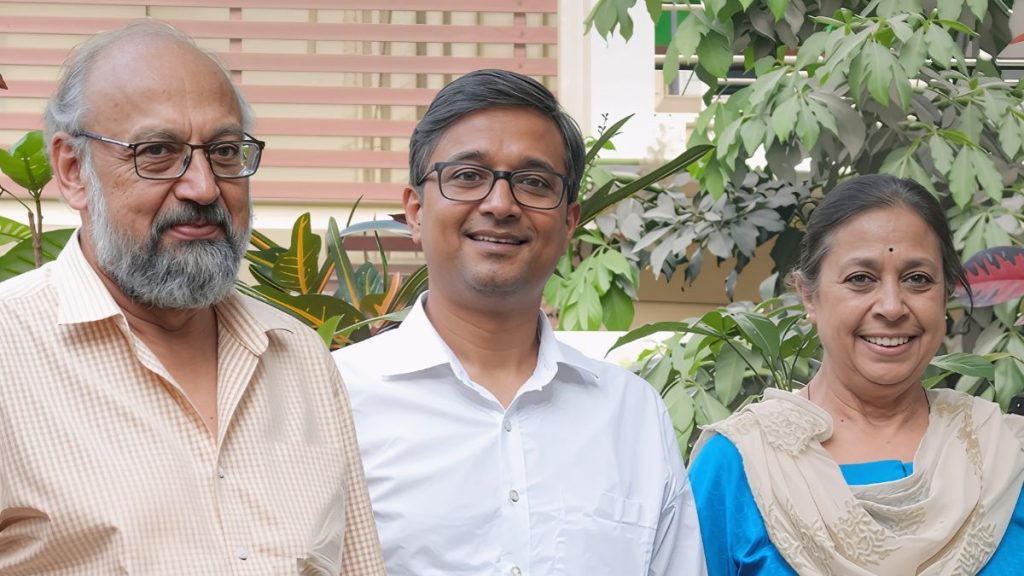
Morphing Machines Raises ₹38 Crore, a Bengaluru-based fabless semiconductor IP startup spun out of the Indian Institute of Science (IISc), securing ₹38.36 crore (around US$4.6 million) in a Series A funding round. IAN Alpha Fund led the investment, joined by Speciale Invest, IvyCap Ventures, Navam Capital, and returning support from earlier seed backers like Golden Sparrow Ventures, IIMA Ventures, and DeVC.
With this fresh capital, Morphing Machines intends to finally bring its proprietary REDEFINE™ architecture to life, a runtime-reconfigurable many-core processor. The startup is looking to nearly double its team from 50 to over 90 people, roll out customer demos, and attract early adoption from data centers, hyperscalers, and cloud infrastructure players. Over the next 12–24 months, the focus will be on proof-of-silicon, paid pilot projects, and refining its software toolchain to make the architecture practical for real-world deployments.
REDEFINE promises ASIC-level performance paired with FPGA-style flexibility for compute-heavy workloads, a combination rarely seen. The technology is rooted in over a decade of IISc research and benefits from Indian government initiatives like the Design-Linked Incentive (DLI) and Chips2Startup (C2S) programs.
Beyond product development, the Series A funding will also accelerate global market entry, particularly in the US and Europe enhance go-to-market efforts, and support cloud and data center deployment. This round reflects growing investor confidence in India’s semiconductor ambitions and positions Morphing Machines as a rising star in the reconfigurable computing arena.
Below is a detailed dive into Morphing Machines’ journey, technology, business model, and lessons for entrepreneurs.
1. Background and Journey
1.1 Founding and Early Years
Morphing Machines Raises ₹38 Crore, marking a major milestone for the startup that originated from deep research at IISc, Bengaluru, under its Technology Entrepreneurship initiative. The core scientific team included Prof. S. K. Nandy (Chief Scientific Advisor), Dr. Ranjani Narayan (CTO), and later, Deepak Shapeti (CEO).
In the early years, Morphing Machines Raises ₹38 Crore focused almost entirely on lab-mode simulations, theoretical models, and proof-of-concept work. Commercialization was not the priority; pure R&D dominated. Early traction came when defence R&D labs, such as DRDO, expressed interest in the technology.
By 2021, Morphing Machines tapped into Karnataka’s Semiconductor Fabless Accelerator Lab (SFAL), gaining access to infrastructure and ecosystem support. This phase allowed them to move from theory to tangible hardware prototypes, software toolchains, and system-level validation.
1.2 Seed Round and Early Support
June 2024 marked a turning point when the startup raised US$2.76 million (~₹23 crore) in a seed round led by Speciale Invest, alongside IvyCap Ventures, Golden Sparrow Ventures, Navam Capital, CIIE Initiatives, and DeVC. The money was earmarked for expanding the engineering team, ramping up prototyping, and initiating early go-to-market efforts.
At the time, the team was 20+ members strong, planning to grow to 40+ to cover full chip design and verification flows. Central government initiatives like DLI and C2S provided additional support through subsidies, further easing the transition from R&D to commercialization.
2. How Morphing Machines Works
2.1 Technology Architecture: REDEFINE™
Morphing Machines’ flagship offering, REDEFINE™, is a runtime-reconfigurable many-core processor soft IP. Unlike fixed ASICs or traditional SoCs, REDEFINE dynamically morphs hardware resources to match workload demands.
Think of it as marrying the performance efficiency of ASICs with the adaptability of FPGAs. The chip can toggle between CPU-like and GPU-like cores or even domain-specific accelerators, on the fly, optimizing resource use for whatever task is at hand.
A dedicated software stack including compilers, meta-compilers, concurrency analyzers, and emulation tools—ensures user applications map seamlessly onto the reconfigurable hardware. The architecture targets AI/ML workloads, analytics, HPC, telecom, and 5G/6G applications, offering flexibility and energy efficiency in one package.
2.2 Business / Revenue Model
Morphing Machines operates on a fabless semiconductor IP model. In short, it licenses REDEFINE IP (soft cores, accelerator blocks, and software toolchain) rather than manufacturing chips itself.
Revenue streams include:
- IP Licensing / Royalties: Cloud providers, hyperscalers, and chip makers embed REDEFINE cores in their systems and pay licensing fees.
- Paid Pilot Projects / POCs: Before full licensing, customers validate performance on real workloads, generating early revenue.
- Support / Integration Services: Customized mapping, compiler integration, and ongoing software updates are monetized.
- Consulting / Design-as-a-Service: Early-stage collaborations with clients to help integrate REDEFINE into existing systems.
Currently, revenues are modest, largely from pilot projects. But as adoption grows, licensing and royalty streams are expected to scale.
3. What Problems Morphing Machines Solves
3.1 Workload Diversity & Fixed Hardware Limits
Traditional hardware is rigid. ASICs are efficient but static; FPGAs are flexible but less optimal. Modern workloads—AI, HPC, cloud computing—are dynamic. A single-purpose chip often underutilizes resources. Morphing Machines allows on-the-fly reconfiguration, boosting utilization and cutting cost per compute.
3.2 Time, Cost, and NRE Constraints
Building a new ASIC is expensive and slow. Non-recurring engineering costs can make multiple iterations prohibitive. REDEFINE avoids this by reconfiguring existing logic, saving both time and money across diverse workloads.
3.3 Energy Efficiency & Performance Gains
REDEFINE allocates resources precisely where needed, promising ASIC-like performance with better energy efficiency—a huge advantage in data centers and HPC environments where power and cooling are expensive constraints.
3.4 Simplified Hardware-Software Co-Design
Morphing Machines provides toolchains that automatically map software to hardware configurations. This lowers barriers for adoption, making complex reconfigurable computing accessible to companies without deep hardware expertise.
4. The Latest Funding & Plans
4.1 Series A Details
The Series A round, where Morphing Machines Raises ₹38 Crore, brought in ₹38.36 crore. Lead investor: IAN Alpha Fund, with participation from Speciale Invest, IvyCap Ventures, Navam Capital, and existing seed investors. This funding signals confidence in Morphing Machines’ ability to move from lab research to scalable commercialization.
4.2 Use of Funds
The capital will fund:
- Chip Development & Testing: Build and test first silicon.
- Team Expansion: Grow from ~50 to 90+, adding engineers in design, verification, and software.
- Customer Demos & Pilots: Start real-world demonstrations.
- Product Strengthening: Improve toolchains and integration.
- Market Expansion: Enter US and European markets.
- Revenue Pipeline: Sign pilot projects, early licensing deals, and build client pipeline.
Over 12–24 months, the focus will be on paid pilots, silicon readiness, and product refinement.
4.3 Strategic Statements & Vision
CEO Deepak Shapeti highlights the goal: deploy REDEFINE across cloud data centers and hyperscalers to deliver “better performance, flexibility, and dramatically lower total cost of ownership.”
IAN Alpha Fund’s Rajnish Kapur calls REDEFINE the “Swiss knife” of processing power. Its dynamic CPU-GPU switching aligns perfectly with the rising AI, HPC, 6G, and cloud workloads. Morphing Machines is eyeing global leadership while contributing to India’s semiconductor self-reliance.
5. Industry Landscape & Trends
5.1 Growing Indian Semiconductor Ecosystem
India’s semiconductor ecosystem is accelerating, with government incentives like DLI and C2S. The government has committed ₹234 crore toward chip design across 22 companies, totaling ₹690 crore in projects. Private funding for RISC-V, AI chips, and semiconductor startups is also on the rise.
5.2 Demand Drivers: AI, Cloud & Edge
AI, cloud, real-time analytics, and next-gen networks are straining traditional architectures. Flexible, efficient accelerators are now a necessity. Morphing Machines’ reconfigurable approach fits this demand, especially in edge AI, 5G/6G, and autonomous systems.
5.3 Competitors & Comparative Landscape
The market is nascent but competitive. FPGAs (Xilinx/AMD, Intel) are flexible but less efficient. AI accelerators are task-specific. Morphing Machines’ differentiator: flexible, reconfigurable cores with decade-long R&D, patents, and software toolchain support.
Indian peers include InCore Semiconductors, Aura Semiconductor, FermionIC Design, and others. Morphing’s niche is reconfigurable many-core compute IP, not just standard SoCs.
6. Founders & Team
6.1 Leadership
- Deepak Shapeti (CEO): Stanford alumnus with a knack for commercialization.
- Dr. Ranjani Narayan (CTO): 35+ years in architecture, parallel computing, and fault-tolerant systems.
- Prof. S. K. Nandy (Chief Scientific Advisor): Provides the academic backbone for REDEFINE’s science and patents.
6.2 Team & Capabilities
Pre-Series A, ~50 team members; post-funding, planning ~90+. Expertise spans VLSI design, compilers, emulation, and hardware-software integration. Bengaluru provides a deep talent pool for this deep-tech venture.
7. Risks, Challenges & Mitigation
7.1 Technical Risk
Designing high-performance, runtime-reconfigurable chips is hard. Signal integrity, timing, power, and latency all pose challenges. Mitigation: decade-long research and incremental validation.
7.2 Market Adoption
Convincing clients to trust a new architecture is tough. Mitigation: paid pilots, benchmarks, and partnerships.
7.3 Competition from Incumbents
Big players may replicate adaptive architectures. Mitigation: focus on niche value, IP defensibility, and speed to market.
7.4 Capital & Time to Market
Hardware takes money and patience. Mitigation: milestone-based spending, pilot revenue, and current funding cushion.
7.5 Ecosystem & Toolchain
Without solid software, adoption falters. Mitigation: early investment in compilers, open tools, and talent acquisition.
8. The Road Ahead & Outlook
Next 1–2 years:
- Build and test proof-of-silicon.
- Sign paid pilot projects.
- Optimize software and compiler toolchain.
- Expand into US and Europe.
- Ramp up partnerships, licensing, and sales.
Success could position Morphing Machines as a niche global player in compute acceleration, combining flexibility and high performance. India’s rising semiconductor ecosystem and government support provide favorable winds.
9. Learning for Startups and Entrepreneurs
- Patience pays: Years of deep research can yield commercial success.
- Hardware alone isn’t enough: Software, toolchains, and UX matter.
- Pilots are gold: Paid trials reduce risk and build credibility.
- Scale incrementally: Start small, learn fast, refine, and grow.
- Leverage ecosystem incentives: Govt programs and accelerators can cut costs and risk.
- IP is power: Patents and long-term R&D create defensibility.
- Think global early: Even domestic success benefits from global outlook.
About Foundlanes
Foundlanes covers the latest trends, insights, and stories from India and beyond. With this funding milestone, it highlights how deep-tech ventures, particularly semiconductor and AI hardware startups—are moving from lab research to commercialization. Morphing Machines will be tracked for licensing adoption, pilot success, and growth trajectory in India’s semiconductor ecosystem.