


PharmEasy Parent API Holdings Raises ₹1,700 Crore Debt debt funding news has once again caught the market’s attention. But this time, the headlines are not about innovation in healthcare delivery, it’s about financial maneuvering, debt, and survival strategy. API Holdings is moving ahead with a hefty ₹1,700 crore (~$193 million) raise through redeemable non-convertible debentures (NCDs). And let’s be honest, this isn’t optional. The crushing weight of the ₹2,700 crore Goldman Sachs loan, which has been draining cash flows with steep interest costs, left the company with very limited choices.
To make the deal attractive, API Holdings pledged Thyrocare Technologies shares as collateral. On paper, this looks like a calculated step. But dig deeper and you’ll see the underlying message: lenders needed reassurance, and PharmEasy was willing to put one of its crown jewels on the table.
The funding round is anchored by 360 One, which alone is pouring in ₹1,231 crore, with additional support from Micro Labs, MVS Ventures, Bennett Coleman, and Alkram Ventures. It’s worth noting, this isn’t PharmEasy’s first dance with debt. In fact, this is its third large-scale debt play in four years. That naturally raises eyebrows: is this a bold financial balancing act, or a red flag about deeper vulnerabilities?
1. Key Numbers (FY25)
| Metric | FY25 | FY24 | Change |
|---|---|---|---|
| Consolidated Net Loss | ₹1,516.8 Cr | ₹2,531 Cr | -40% |
| Operating Revenue | ₹5,872.1 Cr | ₹5,870 Cr | ~0% |
| Thyrocare Profit | ₹90.8 Cr | ₹69.5 Cr | +30.6% |
Cost cuts are showing results, but here’s the uncomfortable truth: without real revenue growth, you can only slash so much before the knife cuts into bone.
2. Introduction to PharmEasy and API Holdings
2.1 Company Overview
Back in 2015, PharmEasy launched as a simple online pharmacy, a platform connecting patients with their prescriptions. Fast-forward to today, and it’s a much bigger beast. The company now spans multiple verticals:
- Diagnostics through Thyrocare
- Teleconsultations with doctors
- Health & wellness products ranging from vitamins to personal care
Its mission? To make healthcare accessible, affordable, and convenient in India. A noble pursuit, no doubt. But in a country where affordability and accessibility are constant trade-offs, it’s a mission easier to market than to achieve.
Expansion came fast, and with it, complexity. Growing scale doesn’t automatically mean growing profit. If anything, the more you expand, the harder it becomes to manage margins, logistics, and capital efficiency.
2.2 Business Model & Revenue Streams
PharmEasy’s money comes from several sources:
- Medicine Sales (Rx + OTC): Connecting patients with pharmacies.
- Diagnostics: Testing services across India and beyond.
- Telemedicine: Paid online consultations.
- Health & Wellness: Supplements, vitamins, personal care items.
That’s a wide spread. But here’s the catch, diversification doesn’t guarantee profitability. It only multiplies the pressure to perform in multiple arenas at once.
2.3 Funding History & Valuation
The funding history of PharmEasy reads like a classic startup rollercoaster:
- 2021: Valued at a lofty $5.6 billion.
- 2024: After a $216M round, valuation crashed to $710 million, a staggering 90% correction.
It’s the kind of swing that reminds you of the startup truth: valuations rise on dreams but fall on balance sheets.
2.4 Founders & Leadership
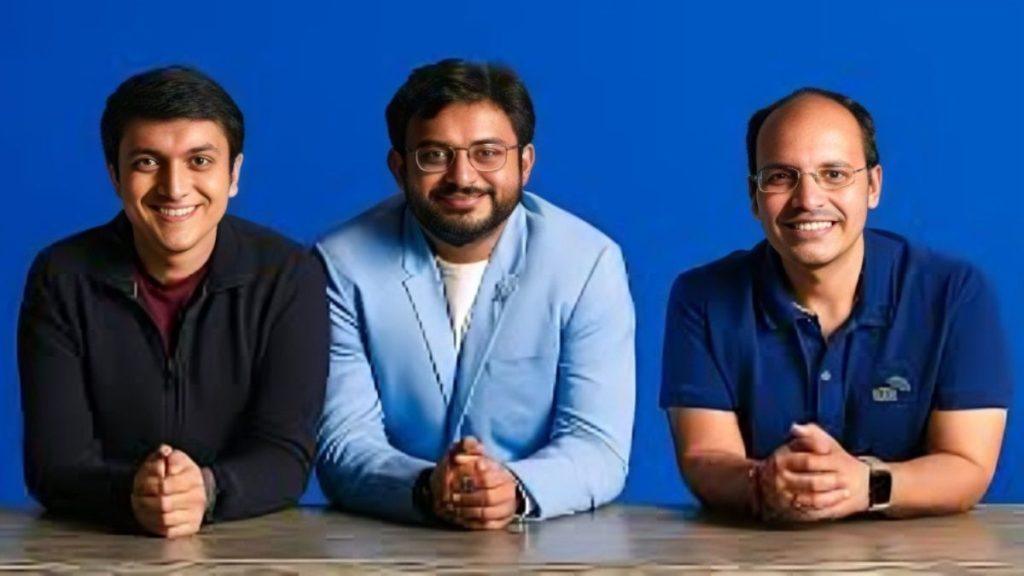
PharmEasy was co-founded by Siddharth Shah, Dharmil Sheth, Dhaval Shah, Hardik Dedhia, and Harsh Parekh. In 2025, leadership shifted gears:
- Siddharth Shah stepped down as CEO, becoming Vice-Chairman at API Holdings.
- Rahul Guha, who previously ran Thyrocare, took over as PharmEasy’s CEO.
This isn’t just a reshuffling of chairs, it’s an attempt to show investors that governance, accountability, and IPO readiness are being taken seriously.
3. Thyrocare: A Strategic Acquisition
3.1 Overview
Thyrocare Technologies, born in 1996 and headquartered in Navi Mumbai, has grown into one of India’s most trusted diagnostic networks, with 1,100+ outlets across India, Nepal, Bangladesh, and the Middle East. When PharmEasy acquired a 66.1% stake in 2021, it wasn’t just a bold move, it was history-making. This was the first time an Indian startup acquired a publicly listed company.
Some hailed it as visionary. Others warned it was reckless. The truth? Probably a mix of both.
3.2 Financial Performance
| Metric | FY25 | FY24 | YoY Growth |
|---|---|---|---|
| Revenue | ₹687.4 Cr | ₹525.6 Cr | +30.7% |
| Net Profit | ₹90.8 Cr | ₹69.5 Cr | +30.6% |
Thyrocare isn’t just a nice-to-have, it’s PharmEasy’s stabilizer. When your core business is bleeding money, a profitable subsidiary is more than a support system—it’s your lifeline.
3.3 Role in Debt Financing
Earlier, 71.06% of Thyrocare’s shares were pledged. With this round, the pledge has come down to 61%. That frees up some room, but the bigger picture is clear: Thyrocare is PharmEasy’s bargaining chip in every major debt deal.
4. Debt Financing Strategy
4.1 Previous Issuances
- 2022: A ₹2,700 Cr loan from Goldman Sachs to refinance a ₹2,200 Cr Kotak Mahindra Bank loan for the Thyrocare acquisition.
- 2023: Covenants were breached, but repayments still went through.
Every refinancing feels like PharmEasy is buying time. The question is, how much time is left before investors demand more than just promises?
4.2 Current Debt Raise
The fresh ₹1,700 crore NCD issuance looks like this:
- Led by: 360 One
- Supported by: Micro Labs, MVS Ventures, Bennett Coleman, Alkram Ventures
The stated purpose is simple: retire Goldman Sachs’ debt and unlock liquidity. But simple doesn’t mean safe.
4.3 Financial Implications
Repaying Goldman Sachs relieves immediate pressure, but the reliance on debt keeps stacking risk. PharmEasy has to prove that this isn’t just another patchwork fix. Profitability, not refinancing, will determine survival.
5. Industry Context & Competitors
5.1 Healthtech Industry Growth
India’s healthtech sector is on fire. With smartphones in nearly every pocket and pandemic-driven shifts in consumer behavior, online pharmacies and telemedicine have gone from luxury to necessity.
But here’s the twist: the very wave that lifted PharmEasy is also lifting its rivals. Growth is a double-edged sword when everyone is scaling.
5.2 Competitors
| Competitor | Focus Area |
|---|---|
| 1mg | Online pharmacy & diagnostics |
| Netmeds | Medicines & wellness |
| Medlife | Pharmacy & diagnostics |
| Tata Health | Telemedicine |
In this battlefield, survival won’t hinge on who grows fastest, but on who builds trust and efficiency into the system.
6. Leadership Changes & Strategic Direction
6.1 Executive Transitions
Rahul Guha stepping into the CEO role sends a message: the company wants to be seen as disciplined, governance-focused, and IPO-ready. Stability at the top is as much about employee morale as it is about investor faith.
6.2 IPO Plans
The IPO plans, shelved in 2023, are back on the table. Reducing debt, showcasing Thyrocare’s strength, and signaling leadership stability are all pieces of this puzzle. Whether the market buys into the story is another question entirely.
7. Financial Performance & Outlook
7.1 Profitability Challenges
Losses have narrowed, yes, ₹1,516.8 crore in FY25, down 40% from FY24. But revenue has flatlined at ₹5,872.1 crore. A business can’t shrink its way into profitability forever. Eventually, you need growth, and real growth feels elusive here.
7.2 Future Prospects
Debt management + IPO execution + sustainable profitability are crucial. Thyrocare’s performance provides a cushion, but competition demands agility and proactive strategy. If PharmEasy manages to balance growth with financial discipline, it could reclaim investor confidence and inch closer to its earlier unicorn glory. The coming year will test whether it can turn survival tactics into a long-term success story. The future rides on three things:
- Managing debt intelligently
- Pulling off an IPO without further hiccups
- Finally proving that the model can be profitable
Thyrocare gives some cushion, but competition ensures there’s no easy road ahead.
8. Lessons for Startups & Entrepreneurs
PharmEasy’s journey isn’t just corporate news, it’s a case study for founders:
- Acquisitions can accelerate growth, but they double the stakes.
- Debt is seductive, it can scale you up, or bury you.
- Leadership transitions must be handled as carefully as investor pitches.
- Compliance isn’t paperwork, it’s survival when IPO ambitions are real.
About Foundlanes
At Foundlanes, stories like PharmEasy’s aren’t just numbers on a page. They are reflections of what happens when ambition collides with reality in India’s startup world. This isn’t just about one company, it’s about what it takes to scale in healthcare: courage to take risks, vision to see beyond immediate hurdles, and resilience to keep going when the spotlight turns harsh.