


News Summary
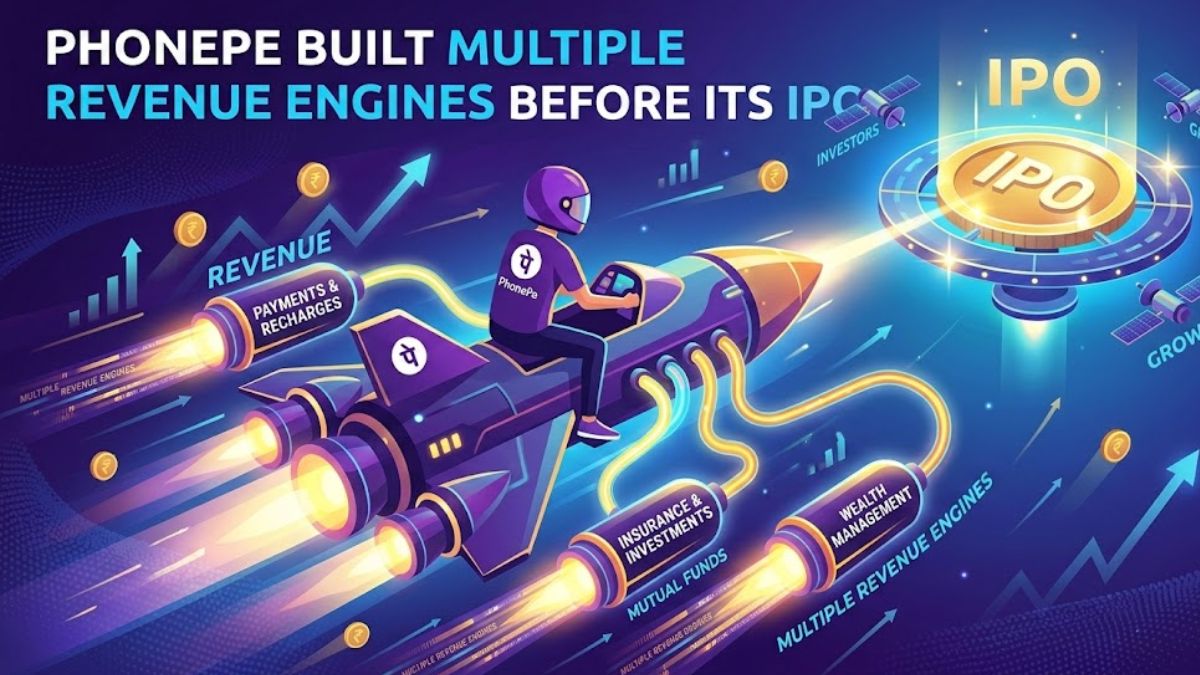
The Indian fintech leader PhonePe is preparing for one of the most anticipated IPO updates in India’s startup ecosystem. The company’s draft IPO documents reveal an important shift in its business strategy. Over the past few years, PhonePe has moved beyond being only a digital payments platform. Instead, the fintech giant created multiple monetization channels across financial services, merchant technology, and digital commerce. Industry analysts now widely acknowledge how PhonePe built multiple revenue engines to strengthen its financial foundation before going public.
PhonePe first gained popularity as a Unified Payments Interface (UPI) app that allowed instant bank transfers and QR payments. However, UPI transactions generate little direct income because most payments remain free for consumers and merchants. As a result, fintech companies needed new revenue strategies. PhonePe responded by building an ecosystem that includes insurance distribution, lending partnerships, investment products, merchant solutions, and digital advertising.
Founded by Sameer Nigam along with Rahul Chari and Burzin Engineer, the company has grown into one of India’s most influential fintech platforms. Backed by global retail giant Walmart, PhonePe has become a central player in India’s rapidly expanding digital payments ecosystem.
Today the platform processes billions of monthly transactions and serves hundreds of millions of users. As India’s fintech sector grows rapidly, PhonePe’s strategy demonstrates how large digital platforms can evolve from simple payment apps into diversified financial ecosystems.
The story of how PhonePe built multiple revenue engines highlights a major shift happening across the startup ecosystem. Venture-backed startups are increasingly focusing on sustainable revenue and profitability rather than only user growth. PhonePe’s journey therefore offers important lessons for entrepreneurs, investors, and the broader fintech industry.
1. Introduction: The Strategy Behind PhonePe Built Multiple Revenue
India’s fintech industry has experienced explosive growth during the last decade. The rise of real-time payments, smartphones, and affordable internet transformed how people interact with money. One company that benefited greatly from this shift is PhonePe. The platform quickly became one of the most used payment apps in the country. However, the company faced a major challenge. Digital payment platforms struggle to generate revenue because most UPI transactions are free.
To solve this issue, PhonePe gradually expanded into several new business verticals. Over time the company built financial services, merchant platforms, insurance marketplaces, and digital advertising tools. This transformation explains why analysts say PhonePe built multiple revenue engines before preparing for its public listing. The strategy reflects broader changes in the startup ecosystem. Today venture-backed startups focus more on sustainable business models. PhonePe’s evolution therefore represents an important case study in fintech innovation, business transformation, and startup growth strategies.
2. Founding Story of PhonePe
2.1 The Entrepreneurs Behind PhonePe
PhonePe was founded in 2015 by three experienced entrepreneurs. The founding team included Sameer Nigam, Rahul Chari, and Burzin Engineer. Before launching the fintech startup, the founders worked together at the Indian e-commerce giant Flipkart. Their experience in digital commerce helped them understand the need for seamless digital payments in India. They saw an opportunity when the government introduced the Unified Payments Interface.
2.2 The UPI Opportunity
UPI was developed by the National Payments Corporation of India. It allowed instant bank-to-bank transfers using mobile apps. This innovation changed the digital payments landscape in India. PhonePe became one of the earliest apps built specifically around UPI technology. The founders believed that mobile payments would become a core infrastructure for India’s digital economy. Their early entry gave them a strong advantage.
2.3 Early Growth and Flipkart Acquisition
PhonePe launched its mobile application in 2016. The company quickly attracted attention due to its simple interface and reliable transactions. Later that year, Flipkart acquired PhonePe. The acquisition gave PhonePe access to Flipkart’s massive customer base and technological resources. This support accelerated the startup’s growth in the competitive fintech market. In 2018, global retail giant Walmart acquired Flipkart for $16 billion. As a result, PhonePe also became part of Walmart’s global digital strategy. The backing of Walmart strengthened investor confidence and enabled large-scale investments in fintech innovation.
3. Growth of PhonePe in India’s Startup Ecosystem
3.1 The Rise of Digital Payments in India
India has become one of the fastest-growing digital payments markets. Several factors drove this growth. Smartphone adoption increased rapidly across urban and rural regions. Affordable mobile internet also made digital platforms accessible to millions of people. Another important factor was the government’s push toward a cashless economy. Policies such as the 2016 demonetization accelerated the shift toward digital payments. UPI soon became the backbone of India’s digital financial infrastructure. Platforms like PhonePe benefited enormously from this transformation.
3.2 Rapid User Growth
PhonePe’s user base grew quickly after its launch. The platform simplified everyday transactions such as sending money, paying bills, and scanning QR codes. Millions of merchants also adopted PhonePe’s QR payment solutions. As a result, the app became deeply integrated into daily economic activity. Today PhonePe processes billions of transactions every month. This massive scale created opportunities to build new financial services on top of the payments platform.
3.3 The Need for New Revenue Streams
Despite huge user growth, fintech payment apps faced an important challenge. UPI transactions generate limited direct income. Most digital payment platforms offer free services to attract users. Therefore companies must find alternative ways to earn revenue. PhonePe responded by gradually expanding into new areas such as insurance, investments, merchant solutions, and digital advertising. This approach allowed the company to diversify its income streams. Consequently, analysts often highlight how PhonePe built multiple revenue engines across its ecosystem.
3.4 Evolution Into a Fintech Super App
Over time PhonePe expanded far beyond payments. The company introduced financial services, wealth products, insurance distribution, and merchant technology tools. The platform began functioning like a fintech super app. Users could access multiple financial products within a single application. This ecosystem approach increased customer engagement and revenue opportunities. Moreover, it positioned PhonePe among the fastest-growing startups in India’s fintech industry.
4. Business Model: How PhonePe Built Multiple Revenue Engines
The growth of PhonePe reflects a major shift in how fintech startups operate in India. Payment apps originally focused on user growth and transaction volume. However, the challenge remained clear. Payment transactions alone generate limited direct revenue. Therefore, the company expanded its ecosystem step by step. Over time, PhonePe built multiple revenue engines across merchant services, financial products, lending partnerships, and digital advertising. This approach helped the platform transform into a diversified fintech marketplace. This strategy also reflects broader industry trends. Across the startup ecosystem, venture-backed startups now prioritize sustainable business models and long-term profitability.
4.1 Merchant Services and Payment Infrastructure
One of the first monetization channels came from merchant solutions. Millions of small businesses across India use PhonePe QR codes for accepting digital payments. While the basic payment service remains free, the company earns revenue through value-added merchant services. PhonePe provides businesses with advanced tools such as payment gateways, analytics dashboards, and transaction management systems. Merchants pay fees for these services because they help improve operational efficiency. Small retailers, restaurants, and e-commerce sellers benefit from data insights and automated payment systems. As a result, merchant services became an important income source within the fintech platform.
4.2 Financial Product Distribution
Another major revenue stream comes from financial services distribution. PhonePe built a marketplace where users can purchase financial products from partner institutions. The company earns commissions whenever customers buy these products through the platform. For example, the app distributes insurance products from companies such as ICICI Lombard and Bajaj Allianz. Insurance remains an underpenetrated sector in India. Many people lack easy access to financial protection products. PhonePe simplified the purchase process by offering quick digital onboarding. Consequently, the insurance marketplace became a significant monetization channel.
4.3 Lending Partnerships and Credit Services
Credit access remains a major gap in India’s financial system. Millions of individuals and small businesses struggle to obtain loans from traditional banks. Fintech platforms are now addressing this issue through digital lending partnerships. PhonePe works with financial institutions that provide loans through the app. Users can access credit lines, personal loans, or merchant loans directly within the platform. PhonePe does not usually lend money itself. Instead, partner lenders provide the capital. The platform earns referral fees or service charges for connecting users to these credit providers. This model reduces financial risk while still generating income for the company.
4.4 Investment and Wealth Products
PhonePe also expanded into investment services. The platform allows users to invest in mutual funds and other wealth products directly through the mobile application. Many Indians are first-time investors who want simple and accessible investment tools. PhonePe simplified the process by integrating investment services into its existing financial ecosystem. The company earns commissions from asset management companies whenever users invest through the platform. This strategy aligns with the long-term goal of building a complete digital finance ecosystem.
4.5 Advertising and Brand Promotion
Digital advertising has become another revenue engine for PhonePe. The platform attracts massive daily traffic due to its payments infrastructure. Millions of users open the app frequently to complete transactions. Brands now use this high engagement to promote products and services within the app interface. Companies pay advertising fees to display promotions or featured products to PhonePe users. This model resembles advertising systems used by large digital platforms. As user engagement grows, advertising revenue can increase significantly.
5. PhonePe Funding and Investor Support
5.1 Venture Capital and Strategic Investment
Like many successful startups, PhonePe relied on strong venture capital support during its early growth phase. Its parent company Walmart has been the largest financial backer. In addition, the company has received investments from global venture capital firms including Ribbit Capital, Tiger Global Management, and TVS Capital. These funding rounds allowed PhonePe to invest heavily in technology infrastructure, hiring, and product innovation. Funding also supported expansion into financial services beyond payments.
5.2 Strengthening Market Position
Large investments enabled PhonePe to compete aggressively in India’s fintech market. Fintech platforms must spend heavily on technology, security, and marketing. Venture capital funding helped the company scale rapidly. As a result, PhonePe emerged as one of the top fintech startups in India. Its growth also contributed to the rise of unicorn companies within the Indian startup ecosystem.
6. Products and Services Ecosystem
The expansion of services explains how PhonePe built multiple revenue engines while strengthening customer engagement. The company now offers a wide range of digital financial products within a single mobile application.
6.1 Digital Payments
Digital payments remain the core product. Users can send money instantly through UPI bank transfers. The platform also supports QR code payments for merchants. These services handle billions of transactions every month. Although the payments themselves generate limited revenue, they drive user engagement and platform growth.
6.2 Bill Payments and Utility Services
PhonePe allows users to pay for electricity, broadband, gas, and water bills. Mobile recharges and subscription payments are also available through the app. These services increase user engagement because customers frequently return to the platform for everyday transactions. Higher engagement improves opportunities for cross-selling financial products.
6.3 Insurance Marketplace
PhonePe’s insurance marketplace offers products such as health insurance, life insurance, and travel insurance. The company partnered with established insurers to offer digital policies through the app. The simplified purchase process allows customers to buy insurance in minutes. This convenience helps expand insurance access while generating commissions for PhonePe.
6.4 Investment Services
PhonePe also built an investment platform for mutual funds and wealth products. The platform targets first-time investors who want easy access to financial markets. Digital onboarding and simple interfaces make investing accessible to millions of users.This approach supports India’s broader financial inclusion goals.
6.5 Merchant Business Tools
PhonePe provides several digital tools for merchants. These tools include payment gateways, transaction analytics, and business dashboards. Small businesses can track sales performance and customer transactions through these tools. Merchants often pay subscription fees or service charges for these solutions. Therefore, merchant technology services contribute to the diversified revenue strategy.
7. Problems PhonePe Solves
The success of PhonePe lies in solving key challenges within India’s financial system. Millions of people historically lacked access to formal banking and financial services. Digital payment platforms removed many of these barriers. Users can now transfer money instantly without visiting a bank branch. Small merchants also benefit from QR code payment systems that eliminate the need for expensive point-of-sale machines. Furthermore, PhonePe simplified access to insurance, investments, and credit. This integrated ecosystem allows users to manage multiple financial services within one application. As a result, the platform supports financial inclusion and digital economic growth.
8. Industry Growth Trends in India’s Fintech Sector
India’s fintech sector has become one of the fastest-growing industries within the global startup ecosystem. Digital finance platforms now serve hundreds of millions of users. The rapid growth of fintech startups reflects the country’s increasing digital adoption and strong technological infrastructure. One major driver behind this growth is the Unified Payments Interface developed by the National Payments Corporation of India. UPI allows real-time bank transfers through mobile applications. This system transformed how Indians send and receive money.
Over the past decade, UPI transactions have grown dramatically. Millions of individuals and businesses now rely on digital payments instead of cash. Platforms such as PhonePe, Paytm, and Google Pay became central to this transformation. Another factor driving industry growth is smartphone penetration. Affordable mobile internet plans allowed millions of users to access digital services for the first time. As a result, fintech startups gained access to a massive market of new customers.
Furthermore, government initiatives promoting digital payments strengthened the ecosystem. Regulatory support encouraged innovation in financial technology, payments infrastructure, and digital lending. These developments created fertile ground for venture capital investment. Investors around the world began funding fintech startups at record levels. Many companies in the sector eventually achieved unicorn status. Within this rapidly evolving environment, PhonePe emerged as one of the most influential fintech platforms. The company’s expansion into multiple financial services reflects broader industry trends. As fintech platforms grow larger, they must build sustainable business models. This is why analysts emphasize how PhonePe built multiple revenue engines to support long-term profitability.
9. PhonePe Competitors in the Fintech Market
Competition in the fintech sector remains intense. Several large companies operate in similar markets and compete for users, merchants, and financial service partnerships.
9.1 Direct Competitors
The most direct competitors of PhonePe are other UPI-based payment platforms. One major rival is Paytm. Paytm began as a mobile wallet and later expanded into financial services, lending, and commerce platforms. Another key competitor is Google Pay. The platform leverages Google’s global technology infrastructure and large user base. Both companies compete with PhonePe for payment transactions, merchant adoption, and financial services distribution.
9.2 Indirect Competitors
Several fintech platforms compete in specific segments of PhonePe’s business. For example, investment platforms such as Groww focus on wealth management and stock market investing. Digital lending startups also compete for users seeking quick credit solutions. Insurance aggregators provide similar insurance marketplaces where customers can compare policies online. Although these companies specialize in individual services, PhonePe competes by offering a broad ecosystem inside one application. This super app approach helps the company retain users and generate multiple revenue streams.
10. Preparing for the IPO
The upcoming public listing represents a significant milestone for PhonePe and the broader Indian startup ecosystem. As the company prepares for its IPO, investors are closely examining its financial performance and growth strategy. One key factor attracting investor interest is the diversified business model. By expanding beyond digital payments, PhonePe created several monetization channels. Merchant services, financial product distribution, advertising, and technology solutions all contribute to the company’s revenue.
This strategy strengthened its financial position ahead of the IPO. Investors often prefer companies with diversified income streams. Such businesses are more resilient during market fluctuations. Therefore, the fact that PhonePe built multiple revenue engines plays a crucial role in its IPO narrative. If the public listing succeeds, PhonePe could join the growing list of successful fintech unicorn startups in India.
11. Impact on the Startup Ecosystem
PhonePe’s journey provides valuable insights into how startups evolve in competitive technology markets. First, the company demonstrates how startups must adapt quickly to changing industry conditions. Payments alone could not sustain long-term profitability. Therefore, the company expanded into financial services and technology platforms. Second, the journey highlights the importance of building ecosystems rather than single products. Digital platforms that offer multiple services can generate stronger user engagement.
Third, the story reflects the increasing maturity of the startup ecosystem. Investors now expect clear business models and sustainable revenue streams. Across the world, venture-backed startups are shifting their strategies toward profitability. PhonePe’s business transformation illustrates this trend clearly. The company’s success shows how innovation, technology investment, and strategic partnerships can create powerful digital platforms.
12. Learning for Startups and Entrepreneurs
The story behind PhonePe built multiple revenue engines offers several important lessons for entrepreneurs and startup founders. First, startups must remain flexible and adapt their business models when markets change. What works during early growth may not remain sustainable later. Second, relying on a single revenue source creates long-term risk. Diversified income streams provide financial stability and growth opportunities.
Third, building strong partnerships can accelerate expansion. PhonePe collaborated with financial institutions, insurers, and technology partners to develop its ecosystem. Fourth, technology platforms benefit from strong user engagement. When users interact frequently with a platform, companies can introduce additional services. Finally, startups should focus on solving real problems. PhonePe succeeded because it simplified digital payments and financial services for millions of Indians. These lessons apply not only to fintech startups but also to entrepreneurs across the global technology industry.
About foundlanes.com
foundlanes.com is India’s leading startup idea discovery platform. It helps entrepreneurs find actionable startup opportunities, market insights, and industry-specific guidance to turn ideas into real businesses. With deep research and practical resources, foundlanes supports founders at every stage, from idea validation to launch and growth.