


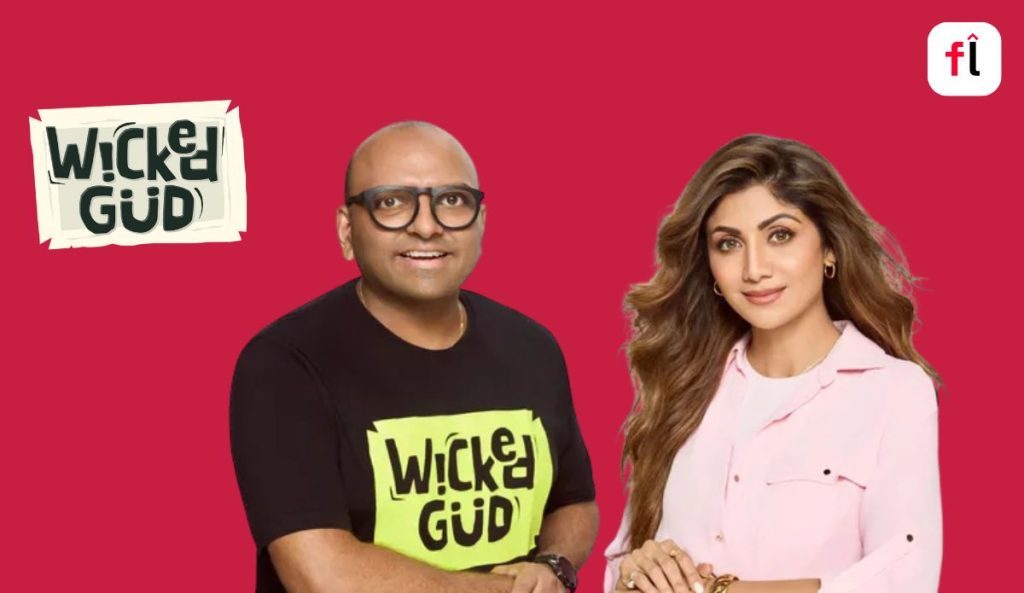
WickedGud raises Rs 20 crore funding at a time when India’s packaged food space is anything but forgiving. The Mumbai-based D2C brand, backed by Shilpa Shetty, is clearly choosing momentum over caution. Instead of playing it safe, the company is leaning into faster scale, wider reach, and more aggressive product bets as it fights for space in both digital carts and physical store shelves. In a market where taste, price, and availability decide survival, this move signals confidence, not comfort.
The funding round saw existing investors such as Orios Venture1 Partners and Asiana Fund double down, alongside continued backing from Shilpa Shetty. That kind of repeat capital rarely comes from hype alone. It usually follows proof on shelves, traction in numbers, and a belief that the brand can hold its ground as competition heats up. It also brought in a new set of strategic investors such as Shajikumar Devakar, co-founder of Neo Wealth Management; Ajay Mehta, former content head at WPP; Sonika Ravula, general partner at Optional Gravity; and Rahul Colaco, CEO of Fraser & Neave. The mix reflects growing interest from both consumer brand builders and seasoned operators.
This round follows WickedGud’s Rs 20 crore fundraise in December last year and an earlier $250,000 raise in June 2023. Together, these back-to-back rounds underline sustained investor confidence at a time when funding across the startup ecosystem remains selective.
Founded in 2021 by Bhuman Dani, WickedGud has carved a space for itself by “unjunking” everyday staples like noodles and pasta. WickedGud did not go down the typical “health-only” route. Instead, it focused on making everyday foods better without ruining taste or pushing prices up.
Flavour still leads, affordability still counts. Its use of steaming and convection air drying helps reduce excess oil while keeping the texture people expect. That balance shows a clear understanding of how Indian consumers actually eat.
The past year changed the tempo of the business. Revenue did not just grow, it surged to three times its earlier level, while the brand quietly pushed its way into more than 5,000 retail stores across the country.
1. WickedGud raises Rs 20 crore funding amid FMCG momentum
WickedGud raises Rs 20 crore funding at a moment when consumer-focused Indian startups are quietly regaining investor attention. While headline funding numbers across tech have cooled, brands solving everyday consumption problems are still attracting capital.
India’s packaged food market is changing fast. Quick-commerce has shortened buying cycles. Younger consumers are experimenting more. At the same time, price sensitivity has not disappeared. In this environment, scaling a food brand requires more than novelty. It requires discipline.
This funding round places WickedGud firmly within the new wave of venture-backed FMCG startups that are trying to balance aspiration with mass relevance. For investors, it is not just about growth. It is about whether the brand can defend its position as competition intensifies.
2. Company Overview: Understanding WickedGud
2.1 Founding and background
WickedGud was founded in 2021 by Bhuman Dani, an entrepreneur who identified a familiar gap in Indian kitchens. Instant foods were convenient and tasty, but nutritionally weak. Health-focused alternatives existed, but they often felt expensive or impractical.
Based in Mumbai, the startup began as a direct-to-consumer brand, allowing it to test products quickly and build early feedback loops. From the beginning, the focus was clear. Improve everyday staples, not reinvent eating habits.
2.2 Brand philosophy and positioning
The company’s core idea revolves around “unjunking” staples rather than eliminating them. WickedGud does not ask consumers to give up noodles or pasta. Instead, it offers versions that feel familiar but are made better.
This positioning has helped the brand avoid being boxed into the premium health segment. By staying accessible on price and taste, WickedGud has been able to appeal to a much wider audience, including families and younger buyers.
3. How WickedGud works: The startup’s operating model
3.1 Product development and technology
At the heart of WickedGud’s product strategy is its use of steaming and convection air drying technology. This method reduces the need for deep frying while preserving texture and flavour.
The company emphasizes ingredient quality but avoids technical jargon in its consumer messaging. That choice reflects a deeper understanding of its market. Consumers want reassurance, not lectures.
This balance between process innovation and simple communication has helped the brand build trust without overwhelming buyers.
3.2 Distribution and omni-channel strategy
WickedGud operates through a deliberately broad distribution model. Online, it sells through platforms such as Amazon, Blinkit, Instamart, Zepto, BigBasket, and Flipkart. These channels drive discovery and impulse purchases.
Offline expansion has been equally aggressive. The brand is now present in more than 5,000 retail outlets nationwide, including over 1,500 Reliance Smart Bazaar stores and 50 DMart locations. For an FMCG startup, this footprint is a critical milestone.
4. Revenue model and monetization strategy
4.1 Core revenue streams
The startup’s revenue primarily comes from product sales across digital and physical channels. D2C sales offer better margins and customer data, while general trade delivers volume.
Quick-commerce platforms play a unique role. They cater to immediate consumption needs and encourage repeat buying, especially in categories like noodles and cup meals.
This channel mix allows WickedGud to balance growth with operational sustainability.
4.2 Pricing strategy
Pricing remains central to WickedGud’s growth thesis. The company has consciously avoided pushing itself into a premium-only bracket.
Its Rs 20 Masala Noodles value pack, launched for general trade, reflects this approach. The move targets price-sensitive markets while keeping the brand competitive against legacy players.
5. Funding journey: From early backing to recent round
5.1 Early funding rounds
WickedGud raised $250,000 in June 2023, which helped fund early expansion and product development. That capital supported foundational work, including supply chain setup and brand positioning.
In December last year, the startup raised Rs 20 crore from existing investors. That round focused on scaling distribution and strengthening backend systems.
5.2 Latest funding round details
WickedGud raises Rs 20 crore funding once again in its latest round. Existing backers such as Orios Venture Partners, Asiana Fund, and Shilpa Shetty doubled down on their bets.
New investors joined the cap table with backgrounds spanning finance, media, venture capital, and FMCG leadership. Their involvement adds both capital and operational perspective at a crucial growth stage.
6. Role of Shilpa Shetty and strategic investors
6.1 Celebrity backing and brand trust
Shilpa Shetty’s association with WickedGud goes beyond visibility. As someone publicly associated with fitness and wellness, her backing reinforces the brand’s core narrative.
In India’s crowded FMCG space, trust plays a decisive role. Celebrity involvement, when aligned with brand values, can accelerate consumer acceptance.
6.2 Strategic value from investors
Investors like Orios Venture Partners bring experience in scaling consumer brands across channels. Others contribute insights into storytelling, governance, and supply chain management.
This collective expertise strengthens WickedGud’s ability to navigate the next phase of growth.
7. Products and innovation focus
7.1 Core product categories
Noodles and pasta remain WickedGud’s primary focus. These categories benefit from habitual consumption and strong brand recall.
Rather than expanding too widely, the company has chosen to deepen its presence within these staples.
7.2 Expansion into high-velocity formats
The startup is now investing in fast-growing segments such as cup noodles and Korean-style spicy noodles. These formats resonate strongly with younger consumers seeking bold flavours and convenience.
New launches like Korean Fiery 2x Spicy and Korean Chilli Cheese reflect this shift toward experimentation without abandoning core products.
8. What problem does WickedGud solve?
8.1 Health versus taste dilemma
Indian consumers often face a trade-off between health and taste. Instant foods deliver convenience but raise nutritional concerns.
WickedGud addresses this gap by improving familiar foods rather than asking consumers to change habits entirely.
8.2 Accessibility and affordability
By avoiding premium-only positioning, the brand ensures broader reach. Affordable pricing allows it to scale across urban and semi-urban markets alike.
This inclusive approach sets it apart from many health-focused startups.
9. Industry overview: Instant noodles and pasta market
9.1 Market size and growth trends
India’s packaged food market continues to expand, driven by urban lifestyles, nuclear families, and faster delivery networks.
Instant noodles remain one of the most competitive segments, dominated by established players but increasingly open to innovation-led brands.
9.2 Consumer behavior shifts
While awareness around nutrition is rising, taste and price remain decisive factors. Brands that fail on either struggle to scale.
WickedGud’s strategy reflects a pragmatic reading of this reality.
10. Competitive landscape: Direct and indirect competitors
10.1 Direct competitors
The startup competes with large FMCG brands that enjoy deep distribution and marketing budgets. It also faces newer D2C food startups targeting health-conscious consumers.
Standing out requires constant innovation and execution speed.
10.2 Indirect competition
Home-cooked meals, ready-to-eat products, and quick-service restaurants also compete for the same consumption occasions.
Despite this, staple categories offer consistent demand and repeat purchase potential.
11. Growth metrics and recent performance
11.1 Revenue and store expansion
Over the last year, WickedGud reported three times revenue growth and rapid offline expansion. These metrics suggest growing acceptance beyond early adopters.
For investors, such traction validates the company’s operating model.
11.2 Online performance
On Amazon, multiple WickedGud products rank among the top sellers in the pasta and noodles category. This indicates strong repeat consumption.
Online traction also strengthens bargaining power with offline retailers.
12. Strategic use of fresh capital
12.1 Distribution expansion
A significant portion of the new funding will go toward expanding presence across modern and general trade. Backend systems and logistics will also be upgraded.
Efficient supply chains are critical in FMCG, where margins are thin.
12.2 Product and category innovation
The company plans to accelerate innovation in high-velocity formats such as cup noodles and spicy variants.
These categories offer faster feedback loops and higher engagement.
13. Role in the Indian startup ecosystem
13.1 Contribution to FMCG innovation
WickedGud represents a shift in how Indian startups approach traditional categories. Instead of disruption through novelty, the focus is on improvement.
This approach resonates with investors seeking sustainable growth.
13.2 Inspiration for emerging startups
The company’s journey highlights the importance of pricing discipline, distribution depth, and consistent execution.
For founders, it offers a playbook grounded in realism.
14. Learning for Startups and Entrepreneurs
WickedGud raises Rs 20 crore funding by solving a simple but widespread problem. The lesson is clear. Scale comes from understanding everyday consumer behavior.
Health positioning alone is not enough. Accessibility matters just as much. Execution over time builds investor confidence.
Foundlanes perspective
foundlanes.com tracks stories like WickedGud because they reflect broader shifts in the startup ecosystem. Consumer brands that balance innovation with mass relevance are gaining ground again.
WickedGud’s journey fits squarely into this narrative, offering insight into where Indian startups are heading next.