


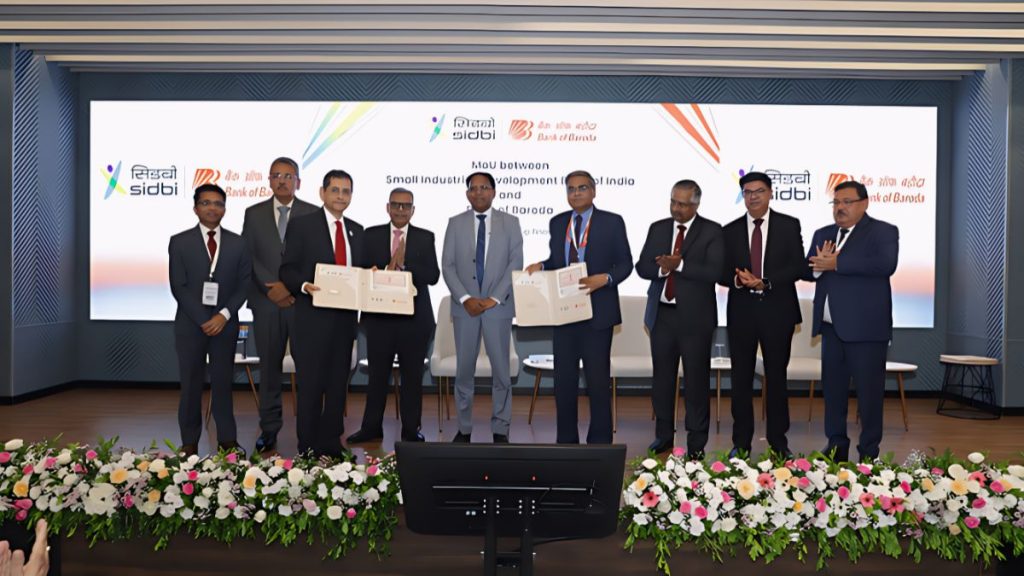
India’s MSME and startup landscape may finally have found a boost with real teeth. SIDBI Partners with Bank of Baroda to Aid MSME Growth, teaming up through a freshly inked MoU. This isn’t just a ceremonial handshake; the partnership promises faster credit, easier working capital access, and practical financial guidance for MSMEs and startups nationwide. Viewed through the lens of Viksit Bharat 2047, it reflects a clear ambition to widen financial inclusion while giving small businesses a fighting chance on the global stage.
The MoU leverages SIDBI’s hands-on experience in MSME growth and venture debt with Bank of Baroda’s expansive domestic and international footprint. It includes joint financing initiatives, digital working capital solutions, startup-focused products, export facilitation, and support for innovation hubs, incubators, and accelerators. Beyond spreadsheets and projections, the partnership hints at a willingness to cut red tape, embrace tech-driven solutions, and create a more humane ecosystem for small enterprises.
Officials like M. Nagaraju, IAS, SIDBI CMD Manoj Mittal, and senior BOB executives highlighted the transformative potential. With developmental banking expertise meeting massive scale, small businesses might finally see financial support arrive not just in theory, but on time, affordably, and with a global perspective.
1. Introduction
1.1 Partnership Overview
SIDBI Partners with Bank of Baroda to Aid MSME Growth isn’t another routine banking press release, it’s a calculated effort to shift the way small businesses experience finance in India. The goal is simple yet ambitious: accelerate credit flow, make working capital management less painful, and deliver solutions that actually fit startups’ needs. By merging SIDBI’s sectoral know-how with BOB’s massive branch network, this collaboration aims to patch a longstanding funding gap that has held back urban, semi-urban, and regional growth clusters.
1.2 Significance for MSMEs and Startups
Consider this: MSMEs account for roughly 30% of India’s GDP and employ over 110 million people. Despite that, accessing timely credit often feels like threading a needle in the dark. The MoU seeks to tackle that with tech-enabled platforms, structured financing, and coordinated interventions. Small businesses now have a real shot at faster growth, healthier liquidity, and a chance to break into international value chains.
2. Key Areas of Collaboration
2.1 Joint Financing for MSMEs
At the heart of this initiative lies joint financing. SIDBI’s deep understanding of MSME sectors meets BOB’s reach, promising quicker approvals and operational simplicity. Whether it’s short-term working capital or long-term modernization loans, the partnership aims to help enterprises invest in technology, sharpen their competitive edge, and upgrade operations without being mired in bureaucracy.
2.2 Working Capital Enablement
BOB’s digital working capital platform is poised to become a lifeline for SIDBI-approved borrowers. Automated disbursement, fewer procedural hiccups, and faster liquidity mean businesses can focus on growth rather than paperwork. For a small business juggling payroll, suppliers, and expansion, this could be a genuine game-changer.
2.3 Startup Financing and Venture Debt
Startups often stumble at the first hurdle: funding. The SIDBI-BOB partnership merges venture debt with startup-specific banking solutions. Advisory services, customized financial instruments, and structured growth capital now become tangible possibilities, giving innovators the room to scale ideas without stalling over cash flow.
2.4 Export Promotion and Global Integration
With BOB’s international connections, Indian MSMEs and startups can finally dream bigger. Export opportunities, global market insights, and cross-border collaborations become less theoretical and more achievable. This could be the moment where Indian small enterprises start competing globally while aligning with Viksit Bharat 2047 ambitions.
2.5 Cluster and Innovation Ecosystem Support
Beyond loans, both institutions plan to engage directly with MSME clusters, incubators, and accelerators. Mentorship, sector-specific programs, and tech interventions mean the partnership isn’t just about money, it’s about giving small businesses the ecosystem to thrive.
3. Background and Journey
3.1 SIDBI’s Role in MSME Development
For over three decades, SIDBI has shaped the MSME and startup finance landscape in India. From traditional lending to tech-enabled interventions, its journey has been one of continuous adaptation. Venture debt programs and strategic partnerships have made expansion, innovation, and survival more feasible in a market that can be unforgiving.
3.2 Bank of Baroda’s Strengths
BOB boasts a vast domestic branch network and a strong global presence. Its financial products, advisory solutions, and export-linked services offer SMEs and startups an entryway to international markets, a crucial advantage for those ready to grow beyond Indian borders.
3.3 Rationale for the MoU
The gaps were obvious: slow credit, limited working capital, under-supported startups. This MoU combines SIDBI’s developmental insights with BOB’s scale, a pragmatic approach to empower enterprises and fuel India’s economic engine.
4. Industry Trends and Growth Potential
4.1 MSME Sector Overview
MSMEs are expanding fast, powered by domestic demand, tech adoption, and policy incentives. Digital inclusion and financing remain the twin engines driving this sector. With 45% of manufacturing output and 48% of exports, MSMEs aren’t just contributors, they’re crucial.
4.2 Startup Ecosystem Trends
India is home to over 100,000 active startups and 100+ unicorns in 2025. Venture debt, angel investment, and strategic partnerships are no longer optional; they’re survival tools.
4.3 Financial Inclusion and Technology
Tech is redefining credit access. BOB’s digital platforms, paired with SIDBI’s interventions, mean liquidity can now reach businesses faster, processes are smoother, and resilience is built into daily operations.
5. Challenges and Solutions
5.1 Credit Gaps
Many MSMEs still face funding obstacles due to lack of collateral or awareness. Tech-driven joint financing is designed to eliminate these barriers, delivering funds precisely when needed.
5.2 Startup Financing Constraints
High-growth startups often stall without capital. The partnership offers a mix of venture debt, advisory support, and tailored banking solutions to keep innovation alive.
5.3 Export Barriers
International expansion is riddled with regulatory, financial, and market hurdles. Through BOB’s global network, small enterprises get insights, finance, and practical guidance to navigate foreign markets.
6. Direct and Indirect Competitors
Other public banks like PNB, Canara Bank, and ICICI are also in the mix. Fintech lenders, NBFCs, and VC firms add indirect pressure. Yet the unique combination of SIDBI’s developmental focus with BOB’s scale makes this collaboration stand apart.
7. Learning for Startups and Entrepreneurs
Key takeaways:
- Collaborations expand funding, networks, and market access.
- Tech in credit management boosts operational efficiency.
- Diversifying funding sources strengthens growth potential.
- Government-backed partnerships provide credibility and stability.
- Global networks enable expansion and competitiveness.
About FoundLanes
At foundlanes.com keeps an eye on India’s startup ecosystem. This SIDBI-BOB partnership exemplifies the kind of practical, innovation-focused collaboration worth covering. Highlighting such initiatives helps entrepreneurs, investors, and policymakers navigate a rapidly evolving MSME landscape, fueling India’s enterprise growth and global ambitions.