


News Summary
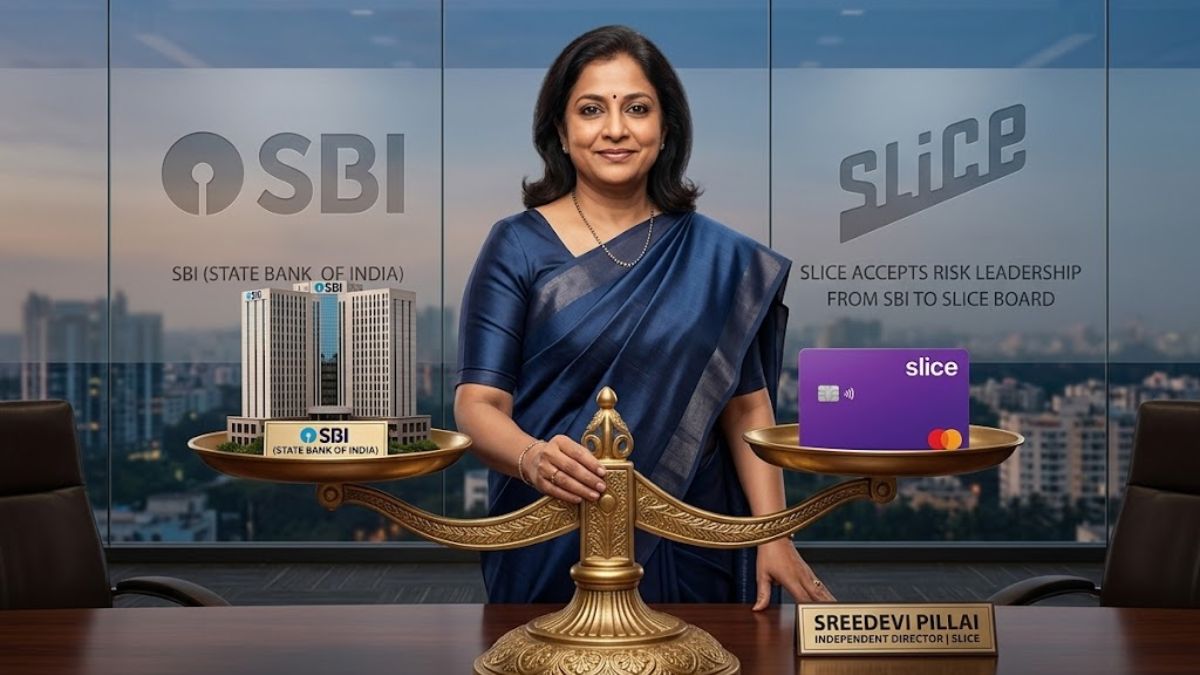
Indian fintech and digital banking company slice has strengthened its leadership team as Slice Appoints former State Bank of India risk management veteran Sreedevi Pillai as an independent director on the board of Slice Small Finance Bank. The move signals a strategic push by the company to enhance governance, risk management, and regulatory oversight as it expands its presence in India’s competitive fintech and digital banking sector. Pillai brings more than three decades of experience in banking and risk management. She previously served as Chief General Manager in the Risk Management division at SBI, India’s largest public sector bank. Her expertise spans credit risk, fraud management, risk modeling, and regulatory compliance. With this appointment, the fintech-backed bank aims to strengthen its governance structure while navigating the evolving regulatory landscape in India’s digital banking and financial services industry.
The development comes at a crucial time for Slice. In recent years, the company has transformed from a consumer fintech startup into a regulated banking institution following its merger with North East Small Finance Bank in 2024. The merger allowed the company to operate as a small finance bank and offer a wider range of services including savings accounts, digital payments, lending, and UPI-based financial products. Industry analysts see the appointment as part of a broader trend where fintech startups are bringing experienced bankers and regulators onto their boards. This strategy helps strengthen corporate governance while building trust among regulators, investors, and customers.
As competition intensifies in India’s digital banking and fintech ecosystem, the move reflects Slice’s ambition to build a technology-driven financial institution that combines innovation with robust risk frameworks. The appointment also highlights the growing role of experienced women leaders in the country’s startup ecosystem and financial sector governance.
1. Introduction: Slice Appoints Experienced Banker to Strengthen Governance
The Indian fintech industry continues to evolve rapidly. In this environment, strong governance and risk management are becoming increasingly important. Recognizing this need, Slice Appoints veteran banker Sreedevi Pillai as an independent director on the board of its banking entity. The appointment highlights the company’s focus on strengthening regulatory compliance and governance. It also reflects the broader transformation of fintech companies into full-fledged banking institutions.
Pillai’s experience with India’s largest public sector bank makes her a valuable addition to the leadership team. Her deep understanding of banking risk management will help the organization navigate the complex financial ecosystem. Furthermore, the move signals the company’s commitment to building a robust financial institution that blends technology innovation with traditional banking discipline.
1.1 Career Journey at State Bank of India
Sreedevi Pillai spent more than 36 years at State Bank of India, where she held several senior roles across banking functions. She began her career as a probationary officer in 1987 and gradually moved into leadership positions across multiple departments. During her tenure, she worked in areas such as branch banking, retail banking, corporate credit, and financial services operations. Over time, she developed deep expertise in risk management and financial governance.
Eventually, she became Chief General Manager in the Risk Management division at SBI’s corporate center. In this role, she oversaw complex risk frameworks and contributed to strategic decisions related to credit exposure and financial stability. Her work also involved fraud risk monitoring, regulatory compliance frameworks, and risk modeling initiatives.
1.2 Expertise in Risk and Financial Governance
Pillai’s specialization lies in risk management, an area that has become critical for fintech companies transitioning into regulated financial institutions. Her expertise includes credit risk analysis, operational risk assessment, fraud prevention systems, and financial modeling. Moreover, she has worked on climate risk and financial resilience strategies, which are becoming important for modern banks. Her experience across diverse banking functions will help the organization maintain balance between rapid innovation and financial stability.
2. Slice Startup Background
2.1 Founding Story of Slice
Slice was founded in 2016 by entrepreneur Rajan Bajaj in Bengaluru. Bajaj, an alumnus of IIT Kharagpur, launched the company with a mission to make credit accessible to young consumers who lacked traditional credit histories. Initially, the startup focused on prepaid cards and credit services targeted at students and young professionals. At the time, many young Indians struggled to access formal credit because they lacked credit scores or financial history. Slice attempted to solve this problem through technology-driven credit underwriting. The platform used alternative data signals and digital processes to evaluate borrowers. As a result, the startup quickly gained popularity among millennials and Gen Z consumers.
2.2 Growth of the Startup
Within a few years, Slice emerged as one of India’s fastest-growing fintech startups. The company attracted venture capital investment from global investors including Tiger Global Management and Insight Partners. The startup entered the unicorn club in 2021 after raising $220 million in a Series B funding round. The investment helped the company expand its product offerings and strengthen its technology infrastructure. However, regulatory changes in India’s digital lending space forced the company to rethink its strategy. Eventually, the startup shifted from a credit card model to building a broader digital banking platform.
3. Transition from Fintech Startup to Bank
3.1 Merger with North East Small Finance Bank
One of the most significant milestones in the company’s journey was its merger with North East Small Finance Bank in 2024. The merger allowed the fintech firm to become a regulated banking institution. This transformed the startup into Slice Small Finance Bank, a full-fledged financial entity under the supervision of India’s banking regulator.This transition marked a major shift for the company. It moved from operating as a fintech platform to becoming a licensed bank. Such transitions are becoming more common globally as fintech companies seek regulatory legitimacy.
3.2 Digital Banking Strategy
After becoming a small finance bank, Slice expanded its services beyond credit cards. The bank began offering digital savings accounts, UPI payments, and lending services. It also introduced a UPI-linked credit card, which combines traditional credit with India’s digital payments infrastructure. Within a short period, the bank opened millions of accounts and expanded its digital banking footprint. The company also aims to bring formal banking services to underserved consumers across India.
4. Why Slice Appointed Sreedevi Pillai
Leadership decisions inside financial institutions are rarely symbolic. They usually reveal the direction a company is preparing to take. When Slice brought Sreedevi Pillai onto its board, it sent a strong signal to the market: the company is entering a phase where discipline, governance, and long-term financial stability matter as much as innovation.
Fintech startups often begin their journey by focusing on speed. They experiment, launch products quickly, and try to capture users before competitors do. But as these companies mature and begin operating at a larger scale, the priorities naturally shift. Suddenly, risk management, regulatory compliance, and responsible lending become critical. In the financial world, a single oversight in these areas can have serious consequences. This is exactly where experienced banking leaders like Pillai become invaluable.
4.1 Strengthening Risk Management
One of the most important reasons behind the appointment is the need to strengthen risk governance. Digital lending platforms process enormous volumes of financial transactions and consumer loans. Unlike traditional banks, fintech companies often rely heavily on automated systems and data analytics to make lending decisions. While technology allows for faster approvals, it also introduces new forms of risk.
If credit models are poorly designed, companies may end up approving loans for borrowers who cannot repay them. Over time, this can lead to rising defaults and financial instability. Professionals like Sreedevi Pillai, who spent years working at State Bank of India, bring deep expertise in building robust credit frameworks.
Their experience helps companies create systems that answer difficult but essential questions:
- Who should receive credit?
- How much risk is acceptable?
- How can default risks be minimized without restricting access to credit?
For a digital bank like Slice, having such expertise at the board level can significantly strengthen decision-making. It ensures that innovation does not come at the cost of financial prudence.
4.2 Improving Regulatory Compliance
The Indian fintech sector has grown rapidly over the past decade, but that growth has also attracted increasing attention from regulators. Financial technology companies operate in an industry where trust is everything. Customers trust them with money, data, and sensitive financial information. Governments and regulators must ensure that these platforms operate responsibly. As a result, compliance requirements in the fintech industry have become more stringent.
Companies must meet regulatory standards related to:
- Customer protection
- Data security
- Lending practices
- Financial reporting
By bringing in a senior banker with decades of experience, Slice is clearly signaling its commitment to responsible growth. For regulators, such appointments show that the company is serious about building governance structures similar to traditional financial institutions. For investors, it sends another reassuring message: the company is preparing itself for long-term sustainability rather than short-term growth alone.
5. Business Model of Slice
At its core, Slice operates as a digital-first banking platform designed for a generation that prefers managing money through smartphones rather than visiting physical bank branches. The company blends technology and financial services to create a seamless digital banking experience.
5.1 Digital Banking Platform
The platform allows users to access essential banking services directly through a mobile application. Customers can open accounts, monitor spending, transfer funds, and manage financial activities without dealing with traditional banking paperwork.
The app offers services such as:
- Savings accounts
- Digital payments
- Lending services
- Real-time financial tracking tools
What makes this model powerful is its simplicity. For many young users, traditional banking processes often feel slow and complicated. Slice attempts to remove that friction by designing an interface that feels closer to a modern tech product than a conventional bank. Everything from account management to payments happens within a few taps on a smartphone. This user-centric approach has helped fintech companies attract millions of users who prefer speed, transparency, and convenience.
5.2 Credit and Payments Infrastructure
Another important pillar of Slice’s business model is its credit and payments ecosystem. Many of its products are designed around helping users manage short-term credit and everyday transactions more efficiently. The platform offers digital credit products that allow customers to borrow small amounts and repay them over time. These services are particularly useful for younger consumers who may not yet qualify for traditional bank credit cards.
Behind the scenes, the company relies heavily on data analytics and machine learning models to assess creditworthiness. Instead of relying solely on traditional credit scores, these systems analyze multiple behavioral and financial signals to determine a user’s ability to repay loans. This technology-driven model allows the company to approve loans faster and extend credit to individuals who might otherwise be excluded from traditional banking systems.
6. Revenue Model
Like most financial institutions, Slice generates revenue through several different streams. The most significant source of income comes from interest earned on loans issued through its platform. When users borrow money and repay it over time, the interest becomes a key driver of revenue. In addition to lending income, the company also earns money through interchange fees. These fees are generated when customers use their cards or payment services to complete transactions. Every time a digital payment is processed, a small fee is shared between financial institutions involved in the transaction ecosystem.
The company also generates revenue through other financial products such as:
- Fixed deposit offerings
- Lending services
- Payment infrastructure
In the financial year 2023, Slice reported operating revenue of approximately ₹847 crore. This growth reflects the increasing adoption of digital payments and fintech services across India. However, like many rapidly expanding startups, the company has also reported losses. These losses are largely tied to investments in technology infrastructure, product development, and customer acquisition. For high-growth fintech companies, such spending is often viewed as part of the long-term strategy to capture market share.
7. Problems the Startup Is Solving
The success of fintech platforms like Slice is rooted in their ability to solve real financial challenges faced by millions of Indians.
7.1 Limited Access to Credit
One of the biggest challenges for young consumers in India is the lack of credit history. Traditional banks rely heavily on credit scores to evaluate loan applications. However, many young professionals and students have never taken loans before, which means they have little or no credit history. As a result, they often struggle to access credit cards or personal loans.
Slice attempts to solve this problem by offering digital credit products designed specifically for first-time borrowers. By using alternative data and advanced analytics, the platform can assess risk more effectively and extend credit to users who might otherwise be overlooked by traditional banks. For many young customers, this becomes their first step into the formal credit system.
7.2 Expanding Financial Inclusion
Another major goal of the platform is improving financial inclusion. Despite major progress in recent years, a large segment of India’s population still has limited access to modern financial services. Digital platforms have the potential to change that. Because fintech companies operate online, they can reach customers in areas where traditional banks may not have physical branches. By reducing operational costs and simplifying processes, companies like Slice can offer financial services to a wider audience. In doing so, they help bring more people into the formal financial ecosystem.
8. Competitors in the Fintech and Digital Banking Sector
The digital banking space in India has become one of the most competitive segments of the startup ecosystem. Multiple companies are racing to build the next generation of financial platforms.
8.1 Direct Competitors
Several fintech startups offer similar services focused on digital payments, credit products, and banking tools.
Key competitors include:
- Razorpay
- BharatPe
- Jupiter
- Fi Money
These platforms compete by offering innovative financial products, improved user experiences, and new technology-driven services. Each company is trying to become the primary financial platform that users rely on daily.
8.2 Indirect Competitors
Fintech startups also compete with traditional banks that are rapidly upgrading their digital capabilities.
Large financial institutions such as:
- State Bank of India
- HDFC Bank
- ICICI Bank
have invested heavily in mobile banking apps, digital payment infrastructure, and online lending systems. These banks already possess vast customer bases and financial resources, which makes them formidable competitors. As a result, fintech startups must constantly innovate to stay relevant. They need to move faster, design better user experiences, and develop smarter financial tools that attract modern consumers.
9. Industry Trends in the Indian Fintech Ecosystem
India’s fintech sector has evolved from a niche innovation hub into one of the world’s most dynamic digital financial ecosystems. Over the past decade, the country has witnessed an explosion of fintech startups across payments, lending, insurance, wealth management, and neobanking. The introduction of systems like UPI (Unified Payments Interface) has completely transformed how millions of Indians interact with money. Today, sending money, paying bills, or splitting expenses happens in seconds—a level of convenience that was unimaginable just a few years ago.
Venture capital has recognized this rapid transformation. Billions of dollars have flowed into India’s fintech startups, fueling innovation in areas like AI-driven credit scoring, digital lending for underserved populations, and embedded finance for e-commerce platforms. Startups are not just chasing growth they are reshaping the financial behaviors of an entire generation.
However, rapid growth has come with growing responsibilities. Regulators like the Reserve Bank of India and the Securities and Exchange Board of India have tightened oversight to ensure consumer protection, financial stability, and data security. Startups can no longer succeed purely on speed and user acquisition; governance, compliance, and risk management have become central pillars for long-term viability. Those companies that master the balance between rapid innovation and regulatory discipline are the ones poised to dominate the market.
10. Women in Leadership in the Startup Ecosystem
The appointment of Sreedevi Pillai as an independent director at Slice underscores a transformative trend in India’s startup ecosystem: the rise of women in financial and strategic leadership roles. Across fintech and other tech-driven sectors, more women are joining boards and executive teams, bringing diverse perspectives that often improve decision-making, risk evaluation, and corporate governance. Research consistently shows that companies with gender-diverse leadership outperform their peers in both profitability and resilience. In a fast-evolving industry like fintech, having leaders who combine technical knowledge, strategic thinking, and empathy can make a real difference. Women like Pillai are not just symbolic appointments they are game-changers who help startups navigate complex challenges while building trust with stakeholders, regulators, and customers.
11. Strategic Significance of the Appointment
Slice’s decision to bring on an experienced banking professional like Sreedevi Pillai is a statement of intent. It signals to investors, partners, and the market that the company is serious about building a credible and stable digital banking institution. In an era where fintech firms are often scrutinized for aggressive growth strategies, appointing senior, experienced professionals to the board reassures the ecosystem that long-term sustainability and regulatory compliance are core priorities. It also reflects the company’s ambition to evolve from a digital payments platform into a trusted full-service digital bank, capable of serving millions of customers across India.
This move is not just about governance; it’s about confidence. Experienced leaders bring with them institutional knowledge, risk management skills, and mentorship capabilities that can help startups avoid common pitfalls and accelerate growth responsibly.
12. Future Outlook for Slice
With strengthened leadership, Slice is positioning itself for both expansion and impact. The company plans to scale its digital banking offerings, reaching more consumers while integrating innovative financial technology with reliable infrastructure. Financial inclusion remains a key focus. By leveraging technology, Slice aims to bring underserved populations into the formal banking ecosystem, offering credit, payments, and savings products to those who traditionally have limited access.
The company’s long-term vision is to combine speed, innovation, and trust, creating a platform where users feel secure, empowered, and connected. Leadership appointments like Pillai’s are not incremental—they are foundational to the company’s ability to sustain growth and maintain credibility in a highly competitive industry.
13. Learning for Startups and Entrepreneurs
Slice’s move offers several key lessons for founders navigating complex markets:
- Governance and Compliance Are Non-Negotiable – Rapid growth is exciting, but without strong compliance, startups risk regulatory pushback and reputational damage.
- Experienced Leadership Accelerates Growth – Professionals with industry experience help startups anticipate challenges, make better strategic decisions, and gain investor confidence.
- Balancing Innovation With Discipline – In fintech, disruption is critical, but it must coexist with strong operational and financial controls.
- Building Trust Is Fundamental – Success comes not just from products but from credibility. Engaging transparently with regulators, partners, and customers fosters long-term loyalty.
For entrepreneurs, these insights go beyond theory. They represent real lessons from the field, showing how deliberate, human-centered leadership and disciplined innovation can turn a promising startup into a respected, scalable institution in India’s fintech ecosystem.
About foundlanes.com
foundlanes.com is India’s leading startup idea discovery platform. It helps entrepreneurs find actionable startup opportunities, market insights, and industry-specific guidance to turn ideas into real businesses. With deep research and practical resources, foundlanes supports founders at every stage, from idea validation to launch and growth.