


News Summary
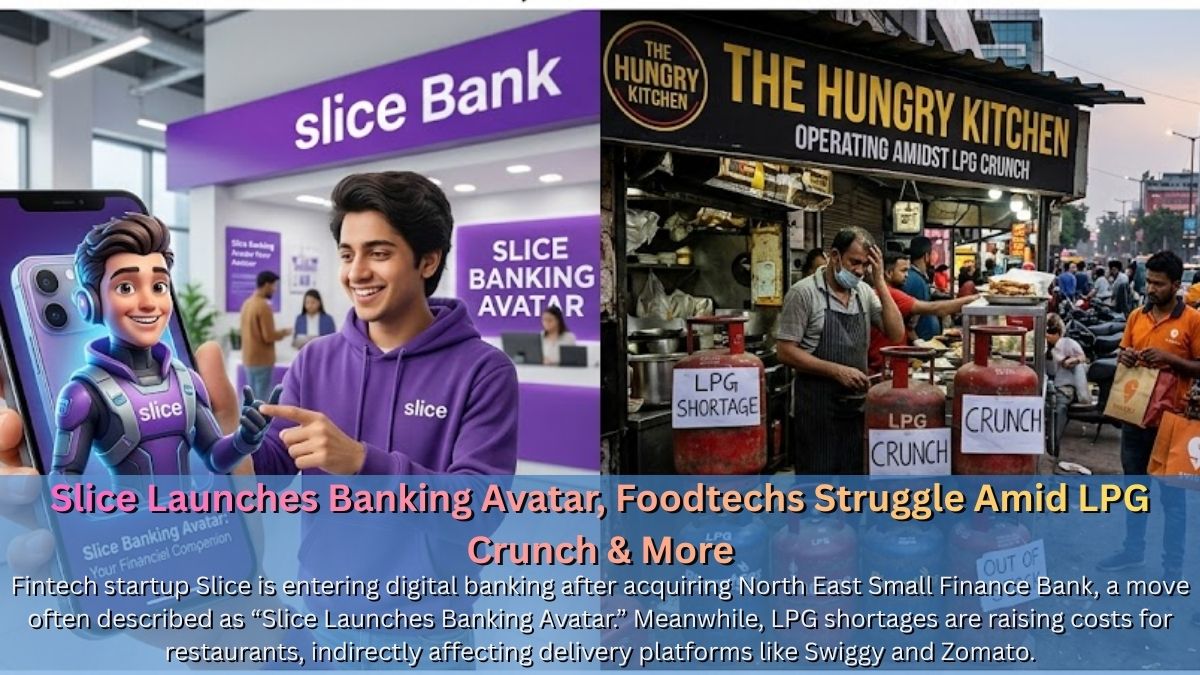
The Indian startup ecosystem continues to evolve rapidly. Major developments in fintech and foodtech highlight both innovation and operational challenges. One of the biggest updates comes from the fintech sector where Slice is moving deeper into banking. The company is transforming itself from a credit-focused fintech platform into a full digital banking experience. This strategic move is widely described as “Slice Launches Banking Avatar”, reflecting its ambition to rebuild how young Indians interact with banking services. The shift follows the company’s acquisition of North East Small Finance Bank, which enables Slice to offer regulated banking services and strengthen its fintech infrastructure.
Meanwhile, the Indian foodtech sector faces an unexpected challenge. A severe LPG supply shortage is increasing operational costs for restaurants and cloud kitchens. Since most food delivery partners rely heavily on LPG for cooking, the crisis is affecting several businesses across the ecosystem. Platforms such as Swiggy and Zomato indirectly feel the impact as restaurant partners struggle to manage rising costs and limited fuel availability.
These developments highlight the contrasting realities of India’s startup ecosystem. On one side, fintech startups are moving toward deeper integration with the formal banking system. On the other, foodtech companies are dealing with operational disruptions that threaten margins and service reliability. The story behind Slice Launches Banking Avatar also reflects broader fintech trends. Indian digital payment adoption continues to grow rapidly, supported by innovations in UPI payments, neobanking, and digital credit. However, the shift toward becoming a regulated banking platform shows how fintech startups are now focusing on long-term sustainability and compliance. Together, these developments reveal the evolving dynamics of Indian startups, where innovation, regulation, and operational realities intersect.
1. Slice Launches Banking Avatar: A New Phase in Indian Fintech
The phrase Slice Launches Banking Avatar marks a turning point for the Indian fintech sector. The startup is shifting from a credit-first model to a complete digital banking ecosystem. Initially, Slice built its reputation by offering credit cards designed for young consumers, especially students and first-time credit users. However, regulatory changes and evolving market conditions pushed the company to rethink its business strategy. Therefore, Slice began moving toward building its own regulated banking infrastructure. This transition aligns with broader startup trends in India where fintech companies increasingly seek banking licenses or partnerships to scale sustainably.
1.1 The Journey of Slice
1.1.1 Founding and Early Growth
Slice was founded in 2016 by Rajat Manglani and Deepak Malhotra. The startup entered the market with a clear goal. It wanted to make credit accessible to young Indians who lacked formal credit history. Traditional banks often rejected these users. As a result, millions of students and first-time earners struggled to access financial products. Slice solved this problem through a technology-driven credit platform. The company launched a digital credit card that required minimal paperwork and offered a flexible repayment model. Consequently, Slice quickly gained popularity among Gen Z and millennials.
1.2 Business Model of Slice
The original business model of Slice focused on three major components. First, the company issued prepaid or credit cards that allowed users to make payments across digital and physical platforms. Second, it earned revenue through interchange fees from card transactions. Third, it generated income through interest on delayed repayments. However, regulatory changes affecting prepaid cards and lending partnerships forced fintech startups to adapt. Therefore, Slice decided to build deeper infrastructure within the banking ecosystem.
2. How Slice Launches Banking Avatar to Fix a Broken Banking Model
The concept behind Slice Launches Banking Avatar is simple. The startup wants to build a digital bank designed for modern users. Traditional banks often struggle with slow onboarding processes and outdated technology. In contrast, fintech platforms offer fast, mobile-first experiences. Slice aims to combine the strengths of both worlds. By acquiring North East Small Finance Bank, Slice gains access to a full banking license and regulatory framework.
This allows the company to offer services such as:
- Digital savings accounts
- Instant payments and UPI services
- Debit and credit card products
- Lending solutions for young users
As a result, the company can operate as a fully integrated fintech banking platform.
2.1 Revenue Model After Banking Transition
After Slice Launches Banking Avatar, the revenue model expands significantly. Earlier, the company depended mainly on credit-related income. Now it can generate revenue through multiple channels.
- Net interest income from deposits and loans.
- Payment transaction fees from digital transactions.
- Cross-selling financial services such as insurance or investments.
- Merchant partnerships and fintech integrations.
This diversified model reduces reliance on one single product. Therefore, it improves long-term financial sustainability.
3. Funding Journey and Venture Capital Support
Like many venture-backed startups, Slice raised several rounds of funding from global investors. Major investors include Tiger Global, Insight Partners, and Blume Ventures. The company raised hundreds of millions of dollars in venture capital funding during its growth stage. These funding rounds helped Slice expand its technology infrastructure and customer base. They also allowed the startup to invest heavily in fintech innovation and digital payments. Therefore, Slice became one of the fastest-growing fintech startups in India.
4. Foodtech Industry Faces LPG Crisis
While fintech celebrates innovation, the foodtech industry faces operational pressure. A shortage of LPG cylinders has disrupted restaurant operations across several Indian cities. This shortage affects thousands of cloud kitchens and restaurants that supply food to delivery platforms. Many restaurant owners report higher costs and limited gas availability. Consequently, some food outlets have reduced operating hours or temporarily paused services.
4.1 Impact on Food Delivery Platforms
Food delivery companies such as Swiggy and Zomato depend heavily on restaurant partners.If restaurants cannot cook due to LPG shortages, delivery orders naturally decline. This creates a chain reaction across the foodtech ecosystem. Cloud kitchens, small restaurants, and franchise outlets face the biggest pressure. In addition, rising fuel costs also increase overall food prices. As a result, customer demand may slow down.
5. Industry Trends in Indian Fintech
The story behind Slice Launches Banking Avatar reflects a major shift in the fintech industry. India has become one of the world’s largest digital payments markets. Platforms like National Payments Corporation of India have built infrastructure that enables millions of daily transactions. UPI transactions continue to grow every year. This digital payment revolution supports the rise of fintech startups across the country. Neobanks, lending platforms, and digital wallets are transforming how people interact with money. However, regulators now expect fintech companies to operate within stronger compliance frameworks. Therefore, many startups are partnering with banks or acquiring financial institutions.
6. Competitors in the Fintech and Digital Banking Space
When Slice Launches Banking Avatar, it steps into one of the most competitive sectors in India’s startup ecosystem. Digital banking and fintech have become crowded markets. Yet, the competition also proves one thing clearly. Millions of Indians want simpler financial services. For decades, traditional banks dominated the financial system. However, they often failed to serve young consumers, freelancers, gig workers, and first-time earners. Opening an account could take days. Credit approval could take weeks. Many applicants faced rejection simply because they had no credit history.
Fintech startups saw this gap and moved quickly. Today, several neobank platforms focus on building digital-first banking experiences for modern users. These companies combine technology, mobile apps, and banking partnerships to create services that feel faster and easier than traditional banking.
6.1 Direct Competitors Targeting Young Digital Users
Some startups compete directly with Slice by targeting the same audience: digitally savvy users who expect banking to work as smoothly as social media apps. One major competitor is Jupiter. Jupiter focuses on a digital savings account experience built on top of a banking partner. The platform offers tools that help users track spending patterns, automate savings, and manage budgets. Many young professionals appreciate the app’s simple design and financial insights.
Another player is Fi Money. Fi Money built its reputation around smart financial management features. Its platform provides detailed spending analytics, automated investment suggestions, and integrated payment tools. The startup aims to help users build long-term financial habits rather than just offering transactions. Similarly, Niyo entered the market by offering travel-friendly banking products and digital savings accounts. Niyo built a loyal user base among international travelers and remote workers who want transparent foreign exchange services. Each of these startups represents a different angle of fintech innovation. However, they all share the same core idea. Banking should feel simple, transparent, and accessible.
6.2 Competition from Large Fintech Platforms
Beyond neobanks, Slice also faces competition from larger fintech companies that dominate India’s digital payment ecosystem. Platforms such as Paytm and PhonePe already serve hundreds of millions of users. Their apps allow customers to pay bills, transfer money, buy insurance, and even invest in mutual funds. Because these platforms are deeply integrated into everyday life, they naturally compete with any startup that enters digital banking. However, Slice is taking a slightly different path.
While large fintech companies focus on broad services for mass audiences, Slice focuses strongly on young users and first-time credit customers. Many of its early users were college students who had never owned a credit card before. That early experience built trust with a generation that often feels ignored by traditional banks. In many ways, the competition is not just about technology. It is about understanding people’s financial lives. If Slice can maintain its strong connection with young users, the company may carve out a powerful niche in the fintech market.
7. Growth of the Indian Startup Ecosystem
The developments surrounding Slice Launches Banking Avatar and the LPG challenges affecting foodtech startups show two sides of the same story. India’s startup ecosystem is growing rapidly, but it also faces real-world obstacles. Over the past decade, India has emerged as one of the world’s most dynamic startup hubs. Entrepreneurs across the country are building companies in fintech, artificial intelligence, SaaS, clean energy, logistics, and health technology. According to multiple industry reports, India now hosts tens of thousands of recognized startups. Venture capital firms continue to invest billions of dollars every year into new ideas and emerging technologies. This growth did not happen by accident. Several structural factors helped build today’s startup environment.
7.1 Digital Infrastructure as a Foundation
One of the most powerful drivers of startup growth in India is digital infrastructure. The rise of affordable smartphones and inexpensive internet access changed how millions of Indians interact with technology. Suddenly, startups could reach customers in small towns and rural areas without building physical branches. In addition, digital public infrastructure such as UPI has transformed payments. Millions of people now send and receive money instantly using their mobile phones. For fintech startups like Slice, this infrastructure created an opportunity that did not exist a decade ago. Building a digital bank today is far more realistic because the entire ecosystem supports online transactions.
7.2 Government Initiatives Supporting Innovation
Government initiatives have also played a significant role in shaping the startup ecosystem. Programs connected to the Digital India vision encouraged technology adoption across industries. Meanwhile, startup recognition programs helped founders access funding opportunities and mentorship networks. These initiatives gave many early-stage startups the confidence to experiment with new business models. When founders see policy support for innovation, they feel more comfortable taking risks.
7.3 Venture Capital and Angel Investment
Another critical factor is the growing presence of venture capital and angel investors in India. A decade ago, founders often struggled to raise early-stage funding. Today, several venture capital firms actively invest in emerging startups across sectors. Fintech, artificial intelligence, SaaS, and climate tech startups continue to attract strong investor interest. However, funding cycles are not always smooth. Some years bring aggressive investments and rapid startup growth. Other years bring funding slowdowns and cautious investor behavior. This cycle is natural in every startup ecosystem. What matters most is whether founders can build sustainable business models.
8. Challenges for Startup Founders
While startup stories often celebrate innovation and funding rounds, the daily reality of building a company is far more complex. Both fintech and foodtech sectors illustrate how unpredictable the journey can be. Fintech founders, for example, must operate in one of the most tightly regulated industries. Financial services involve strict compliance rules, customer protection laws, and data security standards.
Even a small regulatory change can reshape an entire business model. The transition where Slice Launches Banking Avatar reflects exactly this challenge. Regulatory changes in digital lending pushed the company to rethink its structure and move closer to licensed banking operations. For many founders, these moments feel like standing at a crossroads. They must either adapt quickly or risk losing relevance. Foodtech startups face a completely different type of challenge. Their businesses depend heavily on logistics, supply chains, and operational reliability.
A shortage of LPG cylinders, for example, may sound like a simple supply issue. Yet, it can quickly disrupt thousands of restaurant kitchens. When restaurants cannot cook, food delivery orders fall. When orders fall, revenue drops across the entire ecosystem. For startup founders, moments like these test both resilience and creativity. The most successful entrepreneurs learn to treat problems as signals rather than setbacks. They ask difficult questions. They adjust their strategies. And sometimes, they reinvent their companies entirely.
9. Learning for Startups and Entrepreneurs
The story behind Slice Launches Banking Avatar offers lessons that go far beyond fintech. At its heart, the story is about adaptation. When Slice first entered the market, it focused on a simple idea: helping young people access credit. That idea worked because it solved a real problem. However, markets evolve.
Regulations change. Competition increases. Customer expectations grow. Instead of resisting these changes, Slice chose to evolve. The company moved from being a credit-focused fintech platform toward becoming a full digital banking system. That shift required bold thinking, significant investment, and a willingness to rethink the original business model. Many founders face similar turning points.
Sometimes the product that launched the startup cannot sustain long-term growth. At that moment, leaders must decide whether to stay comfortable or embrace transformation. Another lesson is the importance of diversified revenue models. Companies that depend on a single income stream often struggle during market disruptions. Expanding services, partnerships, or products creates stronger financial stability. Equally important is anticipating operational risks.
The LPG crisis affecting foodtech startups shows how external factors can disrupt even well-run businesses. Entrepreneurs must constantly analyze supply chains, vendor dependencies, and regulatory environments. Finally, the most powerful lesson is about purpose. Startups succeed when they focus on real problems that affect real people. Slice gained traction because it addressed the financial challenges faced by young Indians. When founders build solutions with empathy and understanding, customers notice. Trust grows slowly, but it becomes a startup’s most valuable asset. In the end, technology alone does not build great companies. People do.dressed the credit access gap among young Indians. Similarly, startups that solve genuine market needs have higher chances of success.
About foundlanes.com
foundlanes.com is India’s leading startup idea discovery platform. It helps entrepreneurs find actionable startup opportunities, market insights, and industry-specific guidance to turn ideas into real businesses. With deep research and practical resources, foundlanes supports founders at every stage, from idea validation to launch and growth.