


News Summary
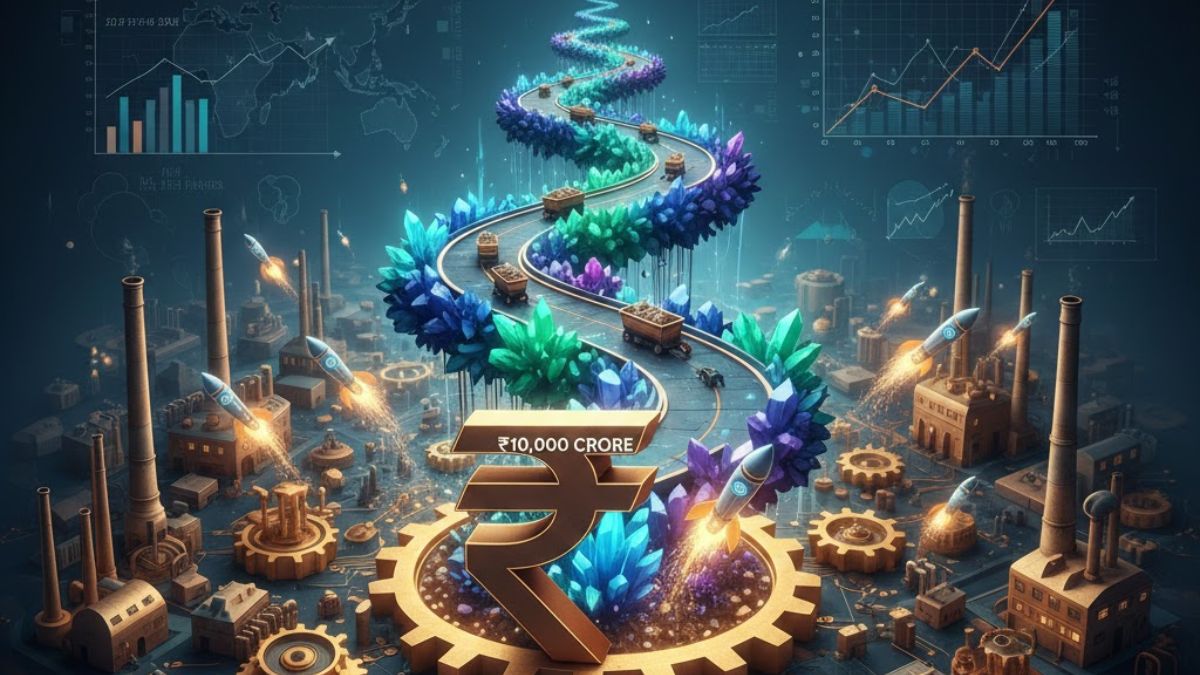
Union Budget 2026 arrived at a moment of global uncertainty and domestic ambition. Supply chains remain fragile. Capital has grown cautious. Yet India’s policymakers used the budget to signal intent rather than fear. Two announcements stood out and reshaped the conversation across boardrooms and startup hubs. The first focused on building Rare Earth Corridors, a long-term industrial bet aimed at reducing import dependence and securing materials critical to clean energy, electronics, and advanced manufacturing. The second unveiled a ₹10,000 crore SME-focused push, designed to revive grassroots entrepreneurship, unlock business funding, and strengthen India’s startup ecosystem.
Together, these measures framed Union Budget 2026 as more than an annual fiscal exercise. It became a strategic blueprint. Rare earth elements power electric vehicles, semiconductors, defense equipment, and renewable energy systems. Global supply remains concentrated, while geopolitical risks continue to rise. By proposing structured corridors that link mining, processing, logistics, and manufacturing, the government signaled a shift from raw extraction to value creation within India.
At the same time, the ₹10,000 crore SME initiative targeted a long-standing pain point. Small and medium enterprises employ millions but struggle with credit access, technology adoption, and market reach. The budget linked capital support with digitization, innovation, and startup-friendly regulations. This approach resonated strongly across Indian startups, venture-backed startups, and angel investor networks. For founders, operators, and investors, Union Budget 2026 offered clarity. It connected industrial policy with startup news, clean energy ambitions, tech innovation, and global competitiveness. The message was direct. India wants to build deeper supply chains, support emerging startups, and create resilient business models that can scale globally.
1. Understanding the Context of Union Budget 2026
1.1 A Budget Shaped by Global Pressure
Union Budget 2026 did not arrive in a quiet year. It came at a moment when the world felt unusually fragile. Global growth was slowing, and the fractures in trade were becoming impossible to ignore. Countries that once relied on open markets were turning inward. Supply chains that had stretched across continents were being pulled back home. Strategic minerals were no longer just resources; they had become bargaining chips in tense geopolitical conversations.
Inside India, policymakers could feel this shift in the air. Industry leaders were anxious. Startup founders spoke often about unpredictable import prices. Manufacturers admitted that dependency had become a strategic risk. The country needed a different path. India could continue relying on foreign suppliers, or it could take the harder road and build the capabilities it lacked.
The budget chose the latter. It leaned toward long-term strength instead of short-term comfort. It reflected a mindset shaped by real pressures that founders, investors, and engineers feel every day. Aligned with global momentum in clean energy, new-age tech, and advanced manufacturing. And while it carried the weight of macroeconomics, its tone suggested something simpler. It was a call to build, not just consume.
1.2 Why Rare Earths Matter Now
Rare earth elements rarely attract attention, but they live at the center of modern life. They sit inside EV motors that hum quietly on highways. They strengthen the magnets in wind turbines. Make smartphones faster and batteries more reliable. Yet, India imports nearly everything it needs. Founders in electronics and EV supply chains often describe rare earth dependency as “the one variable they cannot predict.” Import costs swing without warning. Delays ripple across production. Investors hesitate when raw materials are unstable. The vulnerability is real, and every startup that works with hardware feels it.
This is why Union Budget 2026 did more than allocate funds. It made rare earth corridors a national priority. It tied mineral security to economic resilience. Acknowledged that the next decade of Indian innovation depends on what happens beneath the ground as much as what happens in labs and boardrooms. The move was both strategic and deeply practical, shaped by years of friction felt across industries.
2. Rare Earth Corridors Explained
2.1 What Are Rare Earth Corridors
A rare earth corridor is not just a cluster of factories. It is an ecosystem designed to reduce friction at every stage. Exploration teams map resources. Mining units extract ore with clear oversight. Processing facilities refine it to usable form. Manufacturers in electronics, mobility, and clean energy work next door instead of thousands of kilometers away. The output moves efficiently to ports and global markets.
Union Budget 2026 committed to building these integrated zones with clarity and purpose. The corridors are expected to attract global funding and pull in venture capital that has been waiting for India to build deeper supply chains. They promise simpler regulations and faster approvals, both of which have long been bottlenecks.
In many ways, they represent India’s first serious attempt to own the materials that power modern technology.
2.2 How the Corridor Model Works
The corridor model is built on proximity and coordination. Mines supply refiners located within the same industrial zone. Refined minerals flow directly to hardware, EV, and clean energy factories without delays. Logistics hubs sit close enough to reduce transport time and cost. Digital systems track production, quality, and export paperwork.
The result is a smoother chain where startups are not at the mercy of distant suppliers. Hardware innovators get consistent materials. Manufacturers avoid costly downtime. Investors gain confidence because raw materials become predictable instead of risky. For India, this solves a structural problem. For startups, it removes the fear that a single delayed shipment could derail an entire year of work.
2.3 Impact on Clean Energy and Tech Startups
Clean energy founders often say they “build on top of minerals,” because rare earth magnets and battery materials define their product costs. AI startups that build hardware accelerators need advanced components that depend on rare earths. Deep-tech ventures require stability before they can scale.
By securing supply, Union Budget 2026 changes the risk equation. When materials are reliable, investors show more trust. Angel networks step up. Venture-backed startups get room to experiment and grow. Global collaborators approach Indian companies as partners, not dependents. The corridors could mark a turning point where Indian clean energy and tech companies compete not just on price but on quality and innovation.
3. The ₹10,000 Crore SME Push
3.1 Why SMEs Needed Urgent Support
SMEs carry much of India’s economic weight, yet many struggle in silence. Founders often describe the early years as a battle between ambition and cash flow. Traditional lenders hesitate. Digital adoption is uneven. Scaling feels possible but rarely reachable without support.
Union Budget 2026 responded to this reality with a ₹10,000 crore push aimed at removing the barriers that slow small businesses. Policymakers recognized that startups often begin as SMEs, and their survival shapes the strength of the startup ecosystem. The budget’s design reflected lessons gathered from conversations with founders, incubators, and industry experts who spoke honestly about gaps in support. The move didn’t just offer money. It offered a framework to modernize, digitize, and compete.
3.2 Structure of the SME Funding Program
The program uses blended finance to reduce risk for lenders. The government absorbs part of the exposure, giving banks and NBFCs confidence to extend better credit terms. Digital platforms monitor how funds are used. This ensures transparency without adding bureaucratic burden.
The design encourages collaboration. Incubators guide SMEs toward upgrades. Accelerators help with digital tools. Mentors step in to bridge skills gaps. The stack works like a support net rather than a patchwork of schemes. This structure is built for outcomes, not announcements.
3.3 Expected Impact on Indian Startups
Most Indian startups begin small. Access to early capital often decides whether they stay alive long enough to find product-market fit. By easing credit and encouraging tech adoption, the SME program strengthens the startup pipeline.
In time, more early-stage teams may scale into fast-growing startups. Hiring could rise. New markets may open. Sectors like clean energy, fintech, mobility, and electronics may see broader participation from smaller players. The effect may not be immediate, but founders will feel it. Investors will feel it. The ecosystem will grow stronger from the bottom up. This is the kind of structural support that builds resilience over years, not quarters. If you’d like, I can continue rewriting the next sections in the same tone and depth.
4. Linking Policy With Startup Ecosystem Growth
4.1 How Startups Fit Into the Budget Vision
Union Budget 2026 approaches entrepreneurshipnot as an afterthought but as a central driver of India’s economic future. The corridors for rare earth minerals, alongside the ₹10,000 crore SME push, are not isolated policies—they are deliberate signals that startups are essential to national resilience. By embedding startups into industrial and financial priorities, the government is creating an ecosystem where innovation and policy reinforce each other.
Hardware and deep-tech ventures, previously constrained by raw material uncertainty, can now envision scaling without the fear of supply shocks. Service-based and platform startups gain indirect benefits through improved SME funding, mentorship networks, and access to blended finance. Investors, angel networks, and venture capital funds respond to this clarity by taking calculated risks. In practice, the budget gives entrepreneurs more than capital; it offers predictability, which is often as valuable as any seed funding.
Startups now sit at the intersection of national strategy and global opportunity. The corridors and SME support are a framework for sustainable growth, ensuring that innovation isn’t just celebrated, but also protected and nurtured.
4.2 Case Context: Gamezop and Global Expansion
Gamezop, founded by brothers Yashash and Gaurav Agarwal, provides a tangible illustration of how Indian startups can scale when structural support aligns with ambition. Gamezop operates a plug-and-play casual gaming platform that embeds HTML5 games directly into apps and websites, eliminating the friction of downloads.
Revenue streams are diverse, including advertising, brand partnerships, and monetization through integrated content. Early seed funding, followed by Series A investment from Bitkraft Ventures, enabled the company to grow its technology stack and reach. A $4 million investment established a Middle East presence with a Bahrain headquarters, expanding the brand into new markets.
While Gamezop’s journey is in gaming rather than manufacturing or rare earths, the underlying lesson is universal: startups thrive when capital, strategic vision, and regulatory clarity intersect. Union Budget 2026 aims to replicate this kind of pathway across sectors, ensuring Indian startups can scale domestically and internationally.
5. Startup Working Models Under the New Policy Lens
5.1 Platform-Based Startups
Platform startups, whether in gaming, fintech, or SaaS, rely on infrastructure that scales efficiently. Access to cloud computing, AI services, and digital tools is critical. With SME funding enhancing capital access, smaller teams can adopt cutting-edge technologies without prohibitive cost. Policy certainty reduces investor hesitation, encouraging venture capital and tech investment to flow toward Indian platforms. Startups can therefore innovate freely while maintaining sustainable growth.
5.2 Manufacturing and Hardware Startups
Startups producing hardware or physical products face unique risks. Raw material shortages or price volatility can derail even the best ideas. Rare earth corridors introduced under Union Budget 2026 provide startups a buffer against such volatility, enabling consistent access to essential inputs. EVs, battery technologies, and electronics ventures benefit most. With reliable materials and improved supply chains, startups can focus on product development, prototyping, and market expansion rather than firefighting shortages.
5.3 Revenue Models and Sustainability
Stronger supply chains and better financial support transform the economics of startups. Margins improve as material costs stabilize, and credit access reduces the burden of high-interest debt. For investors, this signals lower risk. For founders, it allows a shift in focus—from survival to innovation and market capture. Startups can experiment with diversified monetization strategies, including subscription models, B2B collaborations, and integrated services. Sustainability becomes achievable, not aspirational.
6. Industry Growth Trends After Union Budget 2026
6.1 Clean Energy and Advanced Manufacturing
Clean energy remains at the forefront of policy and investment priorities. Rare earth access accelerates the domestic production of EVs, wind turbines, and other green technologies. Startups operating in these sectors now benefit from predictability in both supply and financing, which previously limited growth. The budget aligns climate goals with business strategy, creating fertile ground for entrepreneurial experimentation and technological innovation.
6.2 Venture Capital and Angel Investment Trends
Investors respond to certainty. By reducing regulatory ambiguity and providing a clear roadmap for industrial development, Union Budget 2026 encourages venture capital, angel networks, and corporate investors to re-engage with Indian startups. Funding rounds that were previously stalled due to supply chain or policy uncertainty may now resume, and startup mergers or acquisitions become more strategically viable. The ecosystem gains confidence, which translates into faster scaling and better job creation.
6.3 Global Competitiveness of Indian Startups
A stable, integrated industrial environment improves the global competitiveness of Indian startups. With reliable access to rare earths and structured SME financing, Indian ventures can negotiate confidently in international markets. Startups like Gamezop illustrate that when local infrastructure and global strategy converge, Indian companies can export innovation, not just products. The corridors and funding programs set the stage for India to become a hub for both domestic and international startup collaboration.
7. Competitive Landscape
7.1 Direct Competitors
India’s rare earth and advanced manufacturing ambitions face stiff global competition. Countries such as China and Australia have long dominated mining, processing, and refining of critical minerals. Their established supply chains, advanced processing technologies, and scale advantages have made them hard to challenge. For Indian startups, this is both a risk and a lesson: competing on cost alone is insufficient. Success demands innovation, agility, and integration across the value chain.
Union Budget 2026 attempts to narrow this gap. Rare earth corridors, technology support, and SME financing provide domestic ventures with a foundation to compete internationally. Startups now have access to structured supply chains, stable input sources, and capital that previously were unpredictable. Those who can combine operational excellence with strategic partnerships may claim leadership positions in both domestic and global markets.
7.2 Indirect Competition
Indirect competition comes from startups exploring alternative materials, recycling technologies, and substitute components. Lithium recycling, rare earth alternatives, and advanced composites are rapidly gaining attention. While not direct substitutes today, these innovations can disrupt markets tomorrow. Indian startups benefiting from corridor access and SME support must remain vigilant. Policy support under Union Budget 2026 is a catalyst, but competitive advantage will depend on speed, research capabilities, and adaptability.
Investors are already tracking these emerging spaces. Venture-backed startups that can demonstrate both technical capability and strategic alignment with national priorities stand to gain early-mover advantage. The budget indirectly incentivizes such innovation by offering funding, mentorship access, and regulatory clarity.
Challenges and Risks
8.1 Execution Risks
Implementing rare earth corridors is a complex endeavor. It requires coordination across mining, refining, manufacturing, and export logistics. Any delay or misalignment can reduce the impact, slowing startup growth and investor confidence. SMEs accessing the ₹10,000 crore funding program may struggle if mentorship, digital integration, and financial literacy are inadequate.
Founders and startup teams must plan meticulously. They need strong project management, data-driven decision-making, and constant communication with regulatory authorities. Union Budget 2026 provides the scaffolding, but execution is ultimately a human responsibility. The difference between thriving and merely surviving will be determined by operational discipline.
8.2 Market Risks
Global demand for rare earths and technology inputs is cyclical. Price fluctuations, geopolitical tensions, and trade restrictions create uncertainty. Startups that rely solely on policy incentives risk overconfidence. Agility, diversified revenue streams, and flexible supply chain management are essential.
Moreover, digital platforms, AI startups, and hardware ventures must constantly innovate to remain relevant. Union Budget 2026 reduces some systemic risk, but it does not immunize startups from market realities. Investors and founders alike must embrace resilience as a strategic principle, not just a buzzword.
9. Learning for Startups and Entrepreneurs
Union Budget 2026 offers more than capital; it provides insight into the alignment of policy and opportunity. Founders who understand national priorities, such as clean energy, advanced manufacturing, and digital infrastructure, can make strategic decisions that resonate with investors and customers alike.
Entrepreneurs must also embrace resilience. Access to funding improves survival rates, but execution defines ultimate success. Mentorship, network access, and real-world problem-solving remain invaluable. Startups that combine innovative ideas with practical execution, guided by policy clarity, can scale sustainably. Finally, this budget teaches an enduring lesson: national strategy and individual entrepreneurship are not mutually exclusive. They are intertwined. Those who read the signals, act decisively, and adapt thoughtfully will not just survive—they will define the next era of India’s startup ecosystem.
10. The Startups News Perspective
TheStartupsNews.com has long chronicled how policy and entrepreneurship are inseparable in shaping India’s innovation landscape. Through detailed reporting on startup funding, tech innovation, and venture-backed growth, the platform captures how government decisions ripple through every level of the ecosystem. Union Budget 2026 offers a vivid example.
By establishing rare earth corridors, the budget creates predictability for hardware and deep-tech startups, giving investors confidence to commit capital. The ₹10,000 crore SME initiative goes beyond a simple funding announcement—it provides tangible support to small enterprises, encouraging digital adoption, mentorship, and operational scaling. Startups now have a clearer path from ideation to market leadership, reflecting an ecosystem where policy actively nurtures entrepreneurship rather than merely regulating it.
For founders and investors, TheStartupsNews.com highlights how these measures are more than fiscal instruments—they are instruments of transformation. Startups like Gamezop illustrate that when structural support, capital, and strategic clarity converge, scaling globally becomes possible. The platform emphasizes that tracking these trends, understanding the budget’s nuances, and acting decisively can be the difference between a startup surviving and defining a new market segment.
Conclusion: Union Budget 2026 as a Strategic Reset
Union Budget 2026 signals a deliberate shift in India’s economic narrative—from short-term relief measures to long-term structural strategy. Rare earth corridors address vulnerabilities that have historically constrained high-tech manufacturing, providing a reliable backbone for both large firms and ambitious startups.
Simultaneously, the ₹10,000 crore SME push empowers grassroots entrepreneurs, ensuring that capital, mentorship, and digital infrastructure are accessible where it matters most. This combination strengthens the entire startup ecosystem, improving domestic competitiveness while attracting global funding and fostering business transformation. For founders, investors, and policymakers, the message resonates clearly: the country is not merely reacting to economic pressures; it is building capacity for scale, resilience, and global relevance. Union Budget 2026 is, in essence, a blueprint for turning ambition into execution—where vision, funding, and structural support converge to enable India’s startups to thrive in a connected and competitive world.
About foundlanes.com
foundlanes.com is India’s leading startup idea and deep-dive platform built for founders, operators, and serious entrepreneurs. We go beyond surface-level advice to deliver grounded, research-backed, and experience-driven startup content.
Every guide on foundlanes.com is designed to help readers think clearly, act strategically, and build sustainably. This cloud kitchen startup guide is part of our mission to document real business pathways in India’s evolving startup ecosystem.