


Summary
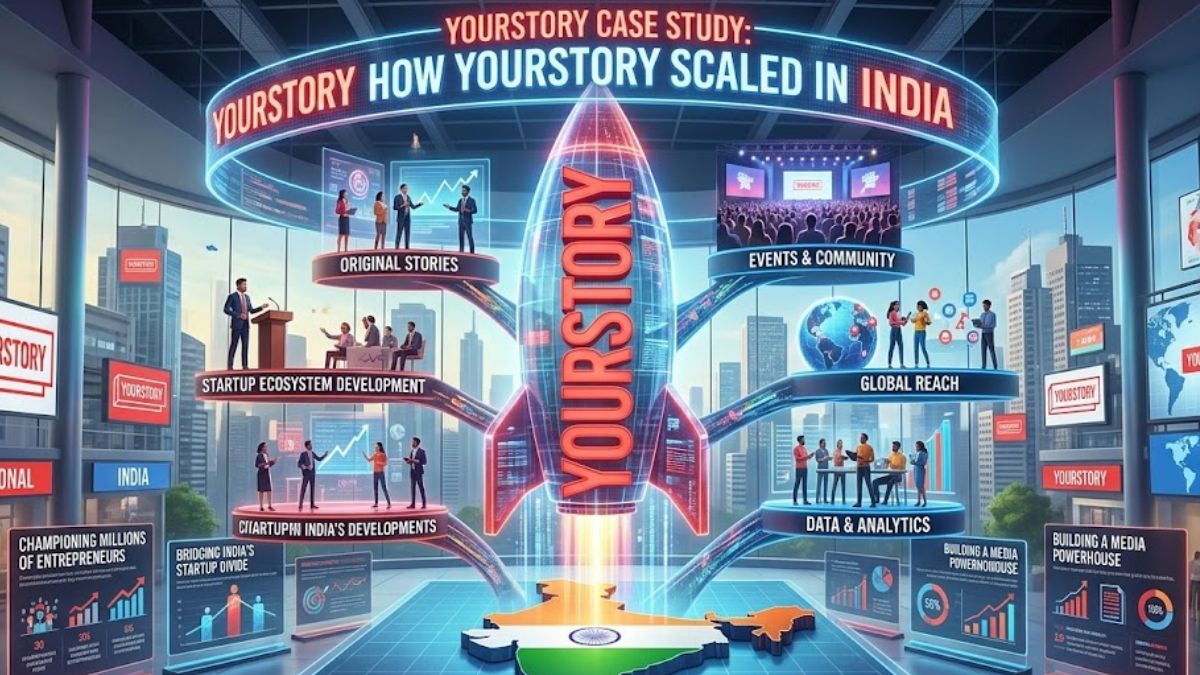
YourStory began as a simple idea in a small apartment in Bengaluru. It eventually became one of the most influential voices in the startup world of India. The platform was created by Shradha Sharma, who believed that the stories of India’s entrepreneurs especially those outside the spotlight deserved a permanent space online. What started in 2008 as an independent digital storytelling initiative grew into a media brand that documented thousands of founders, millions of readers, and a new generation of entrepreneurial culture. The company operates from Bengaluru, with a team that blends journalism, product thinking, design, and market research into a single storytelling engine. Over the years, it evolved into a digital publication supported by advertising, branded content, events, and community-driven business verticals.
The YourStory Case Study begins with an important question: how did a bootstrapped digital media startup break into a market dominated by traditional newspapers and corporate media houses? The answer lies in timing, positioning, and an instinct for spotting a shift before it became mainstream. In 2008, India’s startup ecosystem had almost no dedicated media platform. Funding was limited, events were scattered, and founders struggled for visibility. When YourStory launched, it addressed a gap that the traditional press ignored. Entrepreneurs wanted recognition, and readers wanted authentic narratives. YourStory offered both.
The business worked by publishing founder stories
The business worked by publishing founder stories, news analysis, market trends, and ecosystem insights. Its model relied initially on organic growth, community goodwill, and the growing hunger for digital media. Later, the company diversified revenue through branded content, sponsored reports, startup events, and ecosystem partnerships. Publicly available information shows that YourStory has raised funding from investors including Ratan Tata, Kalaari Capital, and UC-RNT Fund. While exact revenue numbers are not publicly disclosed, the platform has repeatedly been described as revenue-generating with a growing portfolio of verticals.
This case study explores the full arc of YourStory’s journey from its early struggles to its present influence while documenting how the organization built trust, scaled operations, and created one of India’s strongest entrepreneurial media brands. It also examines the leadership philosophy behind the platform, the competitive landscape, and the strategic decisions that shaped its growth. The analysis is crafted for readers of FoundLanes.com who look for high-depth, editorial-quality case studies rooted in real events, verifiable insights, and a clear narrative of how Indian startups scale.
1. Origin and Early Background
YourStory began at a time when India was just beginning to understand the potential of its entrepreneurial talent. Global tech media rarely covered Indian founders, and local newspapers viewed startups as side stories. The coverage gap was massive. Young founders, early-stage entrepreneurs, and first-generation professionals had no dedicated space that recognized the significance of their work.
The founder’s background played a key role in shaping the initiative. She previously worked with major media companies, where she witnessed editorial gaps in how India’s business stories were curated. The realization that mainstream journalism favored large corporates over emerging creators motivated her to build a counter-model. She wanted to create a digital-first media brand that valued personal stories, grassroots innovation, and the energy of new-age businesses.
The origin of the platform was modest. It started with a basic website, self-written articles, and a one-person newsroom. There was no significant funding or marketing. Growth depended on consistency, trust-building, and relentless documentation. The platform gained credibility because it was one of the few places that gave early-stage founders visibility.
2. Founder Journey, Motivation, and Early Struggles
The founder’s journey was marked by resilience. Starting a media business without capital, infrastructure, or a newsroom was challenging. She conducted interviews herself, edited them herself, and uploaded them manually. She had to convince entrepreneurs to speak with her at a time when the publication had almost no readership. Many early stories fetched fewer than a hundred views. Another challenge was sustainability. Bootstrapping a media startup requires balancing journalism with business pressure. Without early funding, expenses were tightly managed. The founder relied on personal savings and community support to keep the platform alive. The motivation, however, was unwavering. The belief that India’s founders needed visibility became the driving force.
Social barriers also played a role. The founder was often told that digital media was not a viable business, that founder stories weren’t newsworthy, and that Indian entrepreneurship did not have enough momentum. Over time, those assumptions would be proven wrong.
3. The Problem YourStory Identified in the Market
Before YourStory scaled, Indian business journalism primarily focused on corporates, markets, and policy. Early-stage founders had no media representation. Startup events were rare and poorly documented. Investors lacked a consistent source of information on young companies. Entrepreneurs outside metro cities found it even harder to get noticed.
The problem was not just coverage but accessibility. Existing media companies required PR connections, corporate influence, or advertising relationships. Small founders could not break through. The ecosystem lacked transparency, narrative depth, and emotional appeal.
YourStory solved this by democratizing storytelling. It published stories based on merit rather than influence, creating a library of founder journeys that represented every stage of entrepreneurship. This addressed unmet needs not just for media coverage but for motivation, learning, and representation.
4. How the Product Evolved Over Time
The platform’s initial product was simple: narrative-driven stories about founders and startups. Over the years, the product evolved into a multi-format digital platform that includes news reports, market analysis, interviews, videos, podcasts, startup directories, ecosystem data, and sector-specific verticals. The editorial strategy broadened to include deep-dive features, policy commentary, funding reports, and regional startup coverage. The shift from text-only to multimedia helped the brand reach younger audiences.
The product also expanded into communities. The platform introduced specialized verticals focusing on women entrepreneurs, small businesses, technology innovation, sustainability, and emerging sectors. Events and on-ground activations became part of the product offering, allowing the brand to deepen its engagement beyond digital content.
5. Early Traction and First Customers
Traction grew slowly but steadily. Early readers were founders, students, and technology enthusiasts. The publication gained popularity when readers began sharing stories organically across social networks. Entrepreneurs loved being featured because it offered exposure at a time when startup visibility was rare.
The first paying customers came from branded content assignments and sponsored features. Companies in SaaS, fintech, and enterprise tech found value in reaching an entrepreneur-centric audience. Eventually, larger corporates and ecosystem partners joined, seeing the platform as a gateway to the emerging startup community. Traction accelerated as India’s startup ecosystem matured. When accelerators, incubators, and venture capital firms multiplied, YourStory’s coverage became indispensable reading for founders and investors.
6. Business Model and Revenue Approach
The YourStory business model has evolved but remains rooted in digital media economics. Revenue comes from branded content, advertising partnerships, sponsored events, digital campaigns, and research-driven content collaborations. Branded content became a major revenue driver. Startups and technology companies wanted storytelling support that aligned with their brand narratives. Sponsored events generated strong cash flow, particularly during the rise of entrepreneurship gatherings in India.
The media model balanced editorial independence with commercial partnerships. The company introduced verticals that aligned with sectors like enterprise tech, SMBs, women-led startups, and regional innovation clusters. Each vertical attracted relevant sponsors, creating a diversified revenue base. While exact numbers are private, YourStory is known to operate as a revenue-generating digital media organization with multiple income streams.
7. Funding History and Capital Strategy
YourStory raised funding from a small group of high-profile investors. Publicly available information indicates investment from Ratan Tata, Kalaari Capital, Qualcomm Ventures, and UC-RNT Fund. The funding was not excessive compared to other media companies, which meant the business operated with caution, efficiency, and long-term sustainability in mind.
The capital strategy prioritized autonomy. Maintaining editorial independence was important, so the company did not pursue aggressive fundraising. Instead, it focused on building a lean model where content, community, and credibility formed the core value. Bootstrapping in the early years also shaped the company culture. Even after raising funds, the organization operated with startup-like discipline.
8. Go-to-Market Strategy and Distribution Channels
YourStory’s distribution strategy relied heavily on organic traffic. It used storytelling as a marketing engine. Each founder story became a distribution node, shared by entrepreneurs, teams, investors, and followers. This created an exponential visibility effect. Social media acceleration played a major role. Facebook, LinkedIn, and later Instagram and YouTube allowed the platform to amplify stories without large marketing budgets. Email newsletters helped build a loyal reader base. Events became a distribution channel as well. On-ground summits and thematic conferences allowed the publication to reach founders beyond digital interactions. These gatherings built trust, deepened brand loyalty, and established physical presence.
9. Brand Positioning and Messaging Evolution
In the early years, YourStory positioned itself as the voice of the entrepreneur. As the platform scaled, the messaging evolved to highlight empowerment, innovation, and inclusivity. It focused on emotional narratives rather than transactional news. This positioned the brand as more than a publication it became a community platform. The brand identity embraced storytelling at a time when most media outlets preferred headline-driven content. This created a distinct editorial personality. Startups trusted YourStory because it offered dignity to their journeys, portraying them with nuance and authenticity.
The messaging broadened as the ecosystem grew. Coverage expanded to women entrepreneurs, student founders, small-town innovators, and social enterprises. This strengthened the platform’s cultural relevance.
10. Challenges, Failures, and Turning Points
Several challenges shaped YourStory’s evolution. Digital media economics were volatile, especially during years when advertising revenue fluctuated. Competing with established newsrooms required resourceful strategies and disciplined execution. Hiring was another challenge. Building a newsroom that could balance editorial rigor with startup sensitivity required careful selection. Journalists needed to understand technology, business, and storytelling simultaneously.
A major turning point was the rise of India’s unicorn wave. As more startups gained global attention, YourStory’s early investment in the ecosystem paid off. The publication became a trusted historical archive of founder journeys, covering companies long before mainstream media recognized them. The shift to mobile-first content was another milestone. When audiences moved from desktop to smartphones, the publication adapted its design, storytelling formats, and social distribution strategies to stay relevant.
11. Operational Execution and Scaling Decisions
YourStory scaled by staying close to its community. Its operations were optimized around speed, accuracy, and narrative quality. Editorial teams worked alongside design, product, marketing, and research departments to create a cohesive workflow. Hiring decisions prioritized passion for entrepreneurship. Many journalists joined because they were deeply connected to startup culture. The organization built processes for interviews, scripting, multimedia production, and rapid publishing. Scaling required smart resource allocation. Instead of pursuing mass newsroom expansion, the company focused on strategic hires, partnerships, and technology-driven efficiency. This kept the organization lightweight and agile.
12. Competitive Landscape and Differentiation
The competitive landscape evolved significantly over the years. As India’s startup ecosystem grew, several media platforms emerged. However, YourStory maintained a unique position because of its early start, community-first approach, and emotional storytelling style. Traditional media companies could not replicate its depth because their structures were built for corporate reporting. Global platforms focused on international stories. YourStory owned the niche of Indian founder narratives. Differentiation came from editorial intimacy. The platform covered entrepreneurs long before they became industry leaders. This created long-term trust and loyalty.
13. Growth Metrics, Milestones, and Achievements
Public domain information indicates that YourStory has published tens of thousands of stories, reaching millions of readers across digital channels. It has hosted large startup events, launched sector-based initiatives, and established itself as a respected media brand in the entrepreneurial space. A key achievement was becoming the default reference point for India’s startup ecosystem. Many founders received their first public exposure through the platform. Investors often discovered early-stage companies through YourStory features.
Another milestone was the platform’s ability to survive and grow despite operating in a challenging digital media environment. Sustained relevance for more than a decade is a significant achievement in this industry.
14. Team Building and Leadership Approach
The company’s culture didn’t happen by accident. It was shaped intentionally through a leadership style rooted in empathy, resilience, and a deep belief in the power of storytelling. The founder understood early on that building a media brand in a noisy digital world required more than talent. It demanded people who cared about the mission as much as the craft.
Hiring became a thoughtful, almost personal process. The team grew into a blend of writers, designers, videographers, product thinkers, analysts, and community builders who could bring stories to life from every angle. This multidisciplinary setup allowed the organisation to create content that felt rich, human, and layered. Collaboration was constant. Writers learned to think visually. Designers learned narrative structure. Videographers learned editorial discipline. Everyone stretched themselves.
The culture encouraged people to experiment, question, and stay curious. Mistakes weren’t punished; they were treated as creative iterations. Leaders also made diversity a non-negotiable value. Women played central roles across editorial, design, leadership, and product, reinforcing the company’s commitment to representation long before it became an industry talking point. This mix of empathy and ambition became the backbone of the organisation’s identity.
15. Technology, Operations, and Workflow
Behind the storytelling was a complex technological engine that most readers never see. Publishing at scale requires far more than writing an article. It needs structure, discipline, and systems that don’t break under pressure.
The company invested heavily in its content stack. Custom content management systems, analytics tools, multimedia editing setups, and workflow software kept the machine running smoothly. Every story no matter how small moved through a tight but fluid process. Interviews were recorded, transcribed, verified, and fact-checked. Editors reviewed drafts. Designers and video teams added visual depth. Product managers ensured the story reached the right audience through search, social, and distribution channels.
As the platform expanded into new categories, regions, and languages, the backend had to evolve too. Sector-specific microsites, local editions, and multimedia verticals required infrastructure that could handle spikes in traffic without sacrificing speed or quality. The goal was simple: maintain storytelling depth while operating at the scale of a digital newsroom serving millions.
16. Regulatory, Legal, or Industry-Specific Hurdles
Operating in India’s digital media space is not for the faint-hearted. The rules shift often, sometimes without warning, and every change can impact how a platform publishes, monetizes, or distributes content. YourStory had to grow up in an environment shaped by new IT guidelines, evolving advertising norms, and increasing scrutiny on online news. None of it was simple. Every decision required thoughtfulness, documentation, and a level of caution that most readers never see.
The team built its editorial framework around accuracy and ethics because they knew credibility is fragile in the digital world. Stories were published only after confirming permissions, cross-checking facts, and ensuring that interviews were recorded and properly sourced. This wasn’t just process; it was protection. In an industry where even established players have stumbled into regulatory trouble, YourStory avoided major disputes or controversies, at least in the publicly verified record.
This discipline came from a clear belief that shortcuts might win clicks, but they destroy trust. By choosing slow, responsible scaling over aggressive expansion, the platform earned something rare—respect from founders and investors who relied on it to tell their stories honestly. It also allowed the company to operate with confidence during times when the broader media environment felt unpredictable.
17. Current Status of the Startup
Today, YourStory stands as one of the most recognizable names in India’s entrepreneurship ecosystem. It is more than just a publication. It has become a go-to reference point for founders seeking visibility, investors tracking emerging sectors, and policymakers wanting to understand the pulse of innovation across the country.
The platform continues to publish thousands of stories each year, covering everything from early-stage startups to major industry trends. It runs events, sector-focused summits, and community-driven programs that bring entrepreneurs together under one roof. Over time, it has also expanded into multiple content verticals, regional language editions, and thematic microsites, reflecting the diversity and scale of India’s startup landscape. Despite the rapid changes in media and technology, the company has managed to stay relevant by leaning into what it does best telling stories that feel personal, hopeful, and grounded in real entrepreneurial experience. That narrative strength keeps its brand alive in a crowded digital world.
18. Future Outlook (YourStory Case Study Requirement)
The future of YourStory depends on its ability to adapt to the changing digital media landscape. With video content rising and AI-driven platforms altering consumption patterns, the publication must continue evolving its storytelling formats. The brand has strong foundations, a loyal audience, and historical credibility. These strengths position it well for long-term relevance. The YourStory Case Study shows that its next phase may involve deeper regional coverage, more multimedia content, and expansion into ecosystem intelligence. As India’s startup culture matures, the demand for narrative-driven media remains strong. The company is likely to continue leading this space as long as it maintains editorial integrity, audience trust, and operational agility.
About foundlanes.com
foundlanes.com is India’s leading startup idea discovery platform. It helps entrepreneurs find actionable startup opportunities, market insights, and industry-specific guidance to turn ideas into real businesses. With deep research and practical resources, foundlanes supports founders at every stage, from idea validation to launch and growth.