
News Summary
PhonePe’s updated Draft Red Herring Prospectus (DRHP) has brought fresh focus on the digital payments giant’s shareholder structure and leadership ahead of its much-anticipated initial public offering (IPO). The Bengaluru-based fintech firm, backed by global retailer Walmart and other marquee investors, recently filed an updated DRHP with the Securities and Exchange Board of India (SEBI), marking a major regulatory milestone on its path to becoming a publicly listed company. The update comes after SEBI’s approval of PhonePe’s confidential DRHP filing in 2025, setting the stage for a pure offer-for-sale (OFS) IPO.
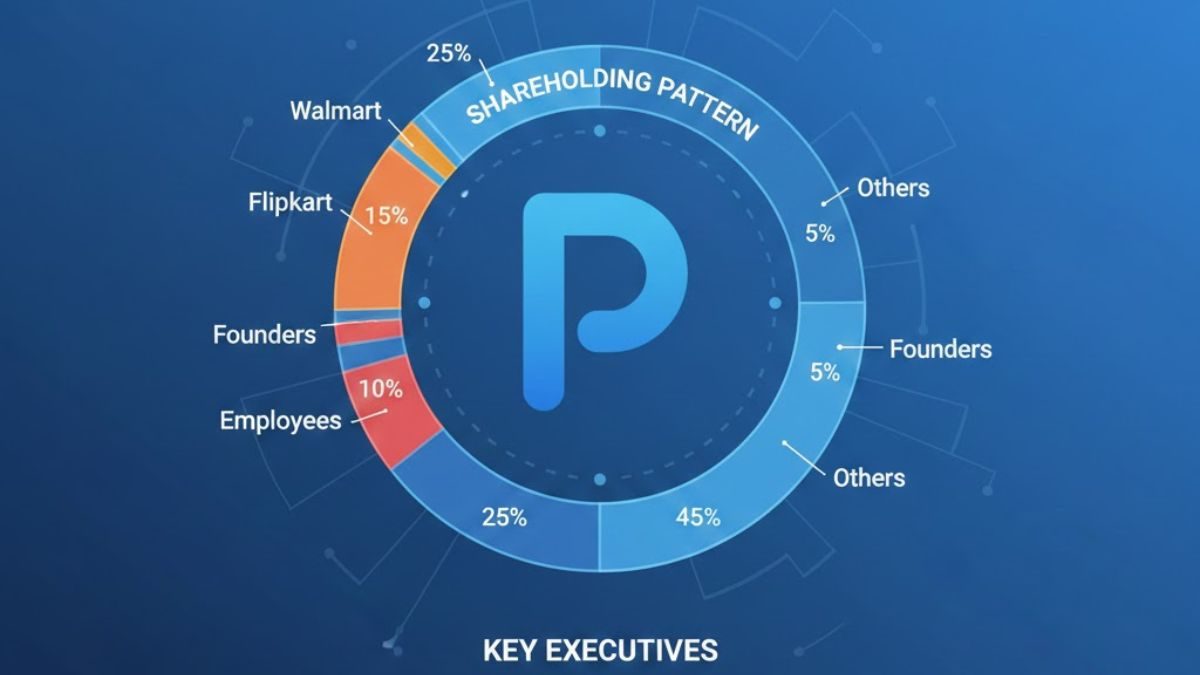
Under the updated DRHP structure, the IPO will consist entirely of existing shareholders selling their shares with no fresh capital raised by PhonePe. Majority stakeholder Walmart, through its entity WM Digital Commerce Holdings, plans to sell about 9.06 percent of its stake via offer-for-sale. Early investors such as Microsoft Global Finance and Tiger Global are also set to completely exit their positions. Other significant stakeholders include General Atlantic Singapore and Headstand, holding stakes of roughly 8.98 percent and 5.73 percent respectively.
PhonePe’s cofounders Sameer Nigam and Rahul Chari currently each hold 2.55 percent of the company and, in a pre-IPO transaction in September 2025, sold shares worth about ₹3,937 crore to private equity firm General Atlantic to meet tax obligations on ESOPs.
The updated DRHP also details strong business growth, with 40 percent revenue rise in FY25 (₹7,115 crore) and a diversified business beyond digital payments, including lending and insurance distribution. PhonePe’s executives have disclosed their remuneration ahead of the listing, offering transparency into the leadership team’s compensation. As India’s largest UPI payments platform moves closer to a public market debut, the DRHP highlights its shareholder dynamics, internal leadership, and strategic evolution, setting a benchmark for fintech IPOs in the Indian startup ecosystem.
1. Introduction to PhonePe DRHP and IPO Journey
1.1 What is the PhonePe DRHP?
The term PhonePe DRHP refers to the Draft Red Herring Prospectus filed by PhonePe Limited with SEBI in preparation for its initial public offering. A DRHP is a critical regulatory document that offers an in-depth look into a company’s business operations, finances, shareholding structure, and executive leadership. The filing acts as a foundational blueprint for investors and regulators before the company formally launches its IPO.
1.2 Timeline of the PhonePe IPO Filing
PhonePe originally filed its confidential IPO papers in September 2025. On regulatory approval from SEBI in January 2026, the company submitted its updated DRHP, clearing one of the last major compliance steps before the public offering. The refined filing anticipates a listing on both the National Stock Exchange (NSE) and Bombay Stock Exchange (BSE), with notable global investment banks serving as book-running lead managers.
2. PhonePe’s Shareholding Pattern
2.1 Promoters and Major Stakeholders
PhonePe’s shareholding pattern ahead of its IPO reveals the company’s deep reliance on a small number of major backers, reflecting both strong institutional confidence and a concentrated ownership structure. This is not unusual for a high-growth fintech, but it also highlights how the company’s future is tied closely to the strategic decisions of a few powerful investors.
2.1.1 Walmart and Promoter Equity
Walmart, through its subsidiary WM Digital Commerce Holdings, remains the dominant stakeholder in PhonePe. With ownership nearing 72 percent, Walmart’s influence over strategic direction, governance, and long-term vision is substantial. The upcoming IPO marks a critical turning point: Walmart plans to divest approximately 9 percent through an offer-for-sale. This move makes Walmart the single largest selling shareholder in the IPO, signaling a shift from private ownership to broader public participation. For many observers, this is a defining moment—an acknowledgment that PhonePe has matured beyond its early-stage growth story and is now ready for public scrutiny and accountability.
2.1.2 Institutional Investors: Microsoft, Tiger Global, and Others
PhonePe’s investor base includes several high-profile institutions, each of which played a key role in scaling the business. Early investors such as Microsoft Global Finance and Tiger Global are set to exit completely through the IPO, selling their entire holdings to public investors. Their exit reflects a common lifecycle in venture-backed fintechs: once the company reaches a certain scale, early backers often choose to realise returns and reallocate capital.
Other notable institutional investors still holding significant stakes include General Atlantic Singapore (about 8.98 percent) and Headstand Pte Ltd (about 5.73 percent). These holdings underline PhonePe’s broad investor base built across multiple funding rounds. While the IPO will reduce the concentration of private ownership, it also raises questions about how the company will balance rapid growth with profitability and public market expectations. The shareholding pattern, therefore, is not just a snapshot of ownership—it is a reflection of PhonePe’s journey, its backers’ confidence, and the challenges it will face as it transitions into a publicly listed company.
2.1.3 Cofounders and Management Stakes
Cofounders Sameer Nigam and Rahul Chari hold 2.55 percent each of PhonePe’s equity ahead of the IPO. The founders sold a portion of their stake in September 2025 to General Atlantic in a transaction worth approximately ₹3,937 crore. This move was partly aimed at meeting tax obligations arising from ESOP exercises ahead of the IPO.
3. Key Executives and Leadership Team
3.1 Founders Driving the Vision
PhonePe’s leadership has been central to its transformation from a fledgling startup into a dominant fintech player over the past decade. The founders’ long-term commitment, technical depth, and operational focus have helped PhonePe weather multiple cycles of competition, regulation, and market shifts.
3.1.1 Sameer Nigam – CEO and Whole-time Director
Sameer Nigam serves as the Chief Executive Officer and whole-time director. His leadership has been shaped by the constant pressure of scaling a platform that millions of users rely on daily. In FY25, Nigam drew a remuneration of ₹2.6 crore, reflecting the company’s effort to retain top leadership as it moves toward public markets. The DRHP also indicates that Nigam’s approved gross compensation is set to rise over the next three years, a move aimed at leadership continuity during the IPO transition. This is a strong signal that PhonePe is preparing for long-term institutional stability rather than short-term gains.
3.1.2 Rahul Chari – Co-founder and Whole-time Director
Rahul Chari, co-founder and whole-time director, also earned ₹2.6 crore in FY25. Chari’s technical leadership has been pivotal to PhonePe’s product development, platform reliability, and innovation in payments and financial services. His stake in the business mirrors Nigam’s, indicating shared ownership and aligned long-term incentives. Chari’s role has always been more than technical execution; he has helped build the architecture that supports PhonePe’s scale, speed, and reliability.
3.2 Other Members of the Executive Team
The DRHP disclosures also highlight other senior leaders whose roles are critical to PhonePe’s continued growth and governance. Adarsh Nahata, Chief Financial Officer, earned ₹2.5 crore in FY25. His role becomes increasingly important as PhonePe transitions into a public company, requiring greater financial discipline, transparency, and reporting standards.
Hemant Manilal Gala, CEO of the lending business, and Sonika Chandra, Chief Business Officer – Consumer Payments, received significant remuneration, reflecting the strategic importance of their divisions. Lending and consumer payments are key growth engines for PhonePe, and these leaders carry responsibility for balancing growth with risk and customer trust.
Karthik Raghupathy and Vivek Lohcheb hold key strategic and business roles that support PhonePe’s expansion and execution. Their presence underscores the depth of PhonePe’s leadership bench and the company’s readiness to operate as a mature public enterprise.
These disclosures signal PhonePe’s commitment to transparency and corporate governance standards as it prepares for its public listing. The leadership team’s remuneration, roles, and responsibilities are not just numbers—they reflect PhonePe’s intention to build a sustainable institution capable of delivering long-term value.
4. Business and Revenue Model Explained
4.1 How PhonePe Works
PhonePe began in 2016 as India’s first non-bank UPI payments app, built on the promise of making digital payments effortless for every Indian. Over time, it has evolved into a full-stack fintech platform that extends far beyond basic payments. Today, PhonePe offers a broad suite of services including digital payments, lending distribution, insurance offerings, mutual funds, stock broking, and even software infrastructure through platforms like the Indus Appstore.
This evolution reflects a deeper strategic belief: financial services should be accessible, simple, and embedded in daily life. PhonePe is not just a payments app; it is a financial ecosystem designed to meet users where they are—on their phones, in real time, and in everyday moments. Its growth from a UPI-first product to a multi-service platform demonstrates how the company has continually adapted to user needs while building a scalable technology backbone.
4.2 Revenue Streams and Growth
PhonePe earns the majority of its revenue from payments services, which contribute more than 80 percent of total revenue. In FY25, the company reported approximately ₹7,115 crore in revenue, representing a 40 percent year-on-year increase. This growth is a testament to PhonePe’s expanding user base, increased transaction volumes, and deeper integration into everyday commerce.
In addition to payments, PhonePe has diversified into lending and insurance distribution. These verticals together contribute about 10 percent of revenue, and they represent PhonePe’s strategic shift toward becoming a full-stack financial platform. While these services are still developing, they show the company’s ambition to broaden its value proposition beyond transactions.
Despite strong top-line growth, PhonePe continues to operate at a net loss. However, the losses have narrowed over recent years, indicating improved operational discipline and a gradual move toward profitability. This pattern is typical for large fintech platforms where scaling the user base and building trust comes first, and profitability follows as the business matures.
5. What Problems PhonePe Solves
PhonePe addresses critical gaps in India’s financial ecosystem and simplifies everyday financial life for millions of users. Its impact is not just technological—it is deeply human.
First, it streamlines fast, real-time digital transactions through the Unified Payments Interface (UPI). PhonePe makes payments feel effortless, whether it’s paying a shopkeeper, transferring money to a friend, or paying bills. This ease of use is crucial in a country where time and convenience matter deeply.
Second, PhonePe brings financial products like lending, insurance, and investments to users who were previously underserved by traditional banks. For many Indians, accessing these products meant complex paperwork, long waits, and limited options. PhonePe removes those barriers and makes financial services accessible through a few taps.
Finally, by integrating multiple services into one platform, PhonePe reduces friction and builds trust. Users don’t need multiple apps for different financial needs. They can manage transactions, savings, and protection in one place. This seamless experience is what makes PhonePe more than an app—it is a financial companion for millions of Indians.
6.Industry Trends and Growth Context
6.1 Fintech Adoption in India
India’s fintech sector has experienced an unprecedented surge in digital payments adoption. The country has moved rapidly from cash-dominant transactions to an ecosystem where digital payments are not just convenient but often the default. PhonePe has been at the center of this transformation, controlling around 45 percent of UPI transaction value. In December 2025 alone, the platform processed nearly 9.8 billion transactions—an astounding number that reflects not just growth, but deep integration into everyday life.
This level of adoption does not happen by accident. It is the result of consistent trust-building, product reliability, and a user-first approach. For millions of Indians, PhonePe has become a daily habit. This is a major achievement in a market where trust in financial products is fragile and easily broken.
6.2 IPO Momentum in Indian Tech
PhonePe’s DRHP filing comes at a moment when the Indian tech ecosystem is entering a new phase of public market participation. 2026 has seen a wave of DRHP filings, with over 20 tech startups submitting their documents to SEBI. This IPO momentum reflects growing investor confidence in Indian technology companies, but it also raises the bar for performance.
Public market investors are now watching closely for companies that demonstrate strong fundamentals and a credible path to profitability. PhonePe’s IPO is not just a financial event—it is a test of the fintech’s ability to transition from a high-growth startup to a mature public company. The pressure is real, and the stakes are high.
7. Competitive Landscape
PhonePe competes directly with other digital payment platforms, each fighting for dominance in India’s fast-evolving fintech market. Google Pay and Paytm remain its closest rivals, especially in UPI and broader fintech services.
Competition is no longer limited to basic payments. Each platform is expanding into value-added services like wallets, credit lines, insurance, and investments to deepen user engagement and increase monetization. In this environment, PhonePe’s diversified portfolio and wide user adoption give it a significant edge.
However, the competitive landscape is also shaped by regulatory forces. Any changes in UPI market share limits or policy shifts could reshape the balance of power. PhonePe’s success will depend not only on product execution, but also on navigating regulatory changes while maintaining user trust and consistent growth.
8. The Startups News
TheStartupsNews.com is more than just a news site—it is a pulse check for the startup ecosystem, especially in India. The platform focuses on the stories that matter: funding rounds, IPOs, leadership shifts, regulatory changes, and the strategic moves that define market winners. In the context of PhonePe’s DRHP filing, TheStartupsNews.com frames the fintech’s IPO as a milestone in India’s larger startup growth story.
PhonePe’s journey is not just about numbers or a public listing. It reflects how Indian startups have matured into serious market players capable of building scalable, regulated, and profitable businesses. For readers, the DRHP is not only a financial event—it is a narrative about the rise of fintech innovation, the resilience of Indian founders, and the growing confidence of public market investors in the country’s tech sector. TheStartupsNews.com positions this story as part of a broader trend: India’s startup ecosystem is now ready to step onto the global stage, and PhonePe is one of the leading examples of that transition.
9. Learning for Startups and Entrepreneurs
PhonePe’s journey offers lessons that go beyond fintech, applicable to any startup aiming for long-term scale:
- Strategic diversification strengthens resilience. PhonePe did not rely solely on payments. It expanded into lending, insurance, investments, and platform services. This diversification creates multiple revenue streams and reduces dependency on a single product, which is critical when markets shift.
- Corporate governance builds trust. The DRHP disclosure of leadership roles, remuneration, and ownership signals transparency. For startups, this is not just compliance—it is a strategic move to earn investor confidence. When you are preparing for public markets, governance becomes a core part of your brand.
- Growth without discipline is fragile. PhonePe’s story shows that rapid expansion must be paired with financial discipline. The company continues to operate at a net loss, but the narrowing of losses indicates improved operational efficiency and better unit economics. Investors watch this closely, and so should founders.
- Secondary markets and ESOPs must be managed thoughtfully. Early investors like Microsoft and Tiger Global plan to exit through the IPO, while Walmart is selling a portion of its stake. These decisions are not only financial—they shape control, morale, and the long-term vision. Founders must balance liquidity needs with maintaining control and team stability.
- Regulatory and market awareness is essential. Fintech growth in India is inseparable from policy changes. PhonePe’s ability to navigate regulations while continuing to innovate is a key reason it has reached this stage. Startups must treat regulatory strategy as a core competency, not an afterthought.
These lessons are not theoretical—they are hard-earned truths from a company that has built scale, faced pressure, and still continued to move forward. For entrepreneurs, PhonePe’s path is a reminder that building a lasting business is about endurance, clarity, and consistent execution.
About foundlanes.com
foundlanes.com is India’s leading startup idea and deep-dive platform built for founders, operators, and serious entrepreneurs. We go beyond surface-level advice to deliver grounded, research-backed, and experience-driven startup content.
Every guide on foundlanes.com is designed to help readers think clearly, act strategically, and build sustainably. This cloud kitchen startup guide is part of our mission to document real business pathways in India’s evolving startup ecosystem.