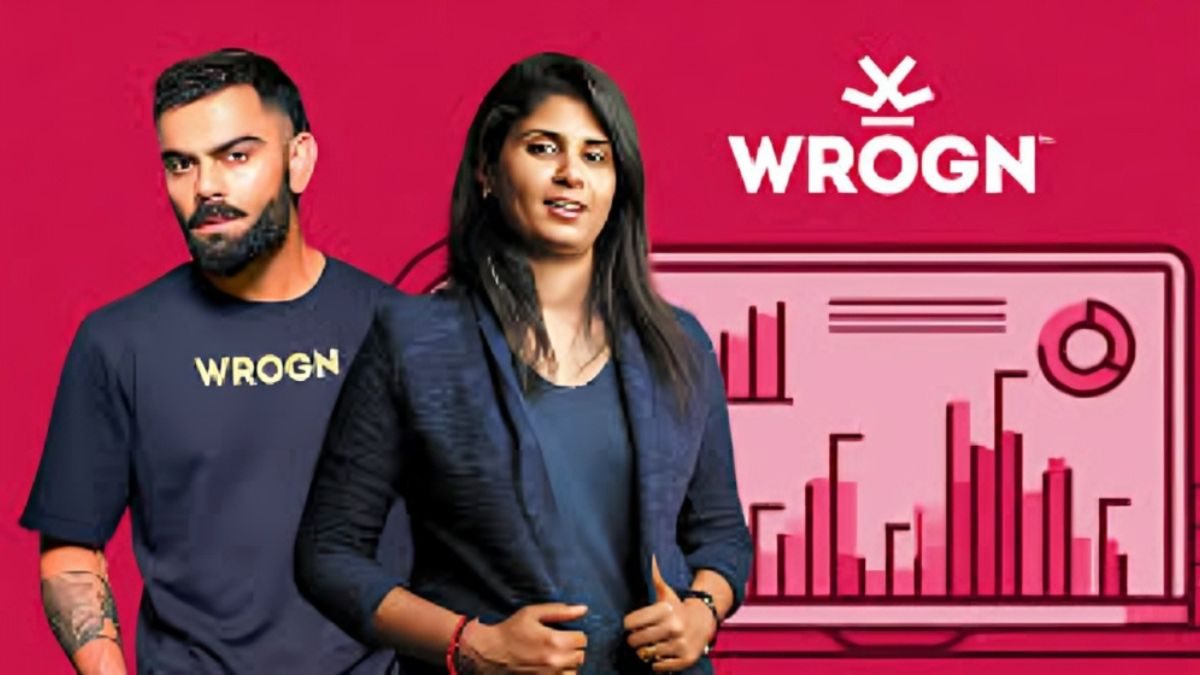
Virat Kohli’s WROGN brand reports ₹76 crore loss, highlighting the financial storm the company is facing. The FY25 numbers reveal a harsh reality check for a label co-founded by one of India’s most celebrated sports icons. Revenue from operations dipped 9% year-on-year to ₹223 crore, marking a second consecutive year of decline.
Despite raising over $90 million from heavyweight investors like Aditya Birla’s TMRW House of Brands, Flipkart, and Accel Partners, WROGN couldn’t avoid the financial turbulence. Rising procurement costs, ballooning employee benefits, and aggressive marketing campaigns pushed net losses to ₹75–76 crore. Total expenses surged to ₹313 crore, reflecting significant outlays in offline store expansion, talent acquisition, and promotional activities.
The pressures on WROGN are compounded by an unforgiving competitive landscape. Online-first brands like Snitch, Bewakoof, Rare Rabbit, and The Pant Project are moving faster—cycling through new products, offering sharper pricing, and creating social media campaigns that resonate deeply with Gen Z and millennials. The takeaway? Celebrity endorsements—even from someone as influential as Virat Kohli—cannot replace smart strategy and operational discipline.
FY25 is more than just a number for WROGN. It reflects broader challenges in India’s D2C fashion sector: rising costs, shifting consumer tastes, and cutthroat digital competition. For WROGN, the coming year is critical. How it innovates, manages costs, and engages digitally could determine whether it recovers or continues to bleed. Entrepreneurs, investors, and fashion enthusiasts can draw key lessons from this saga about balancing star power with business fundamentals.
1. Introduction: Virat Kohli’s WROGN Brand Reports ₹76 Crore Loss
A ₹76 crore loss isn’t something you can ignore—it’s a loud wake-up call. Revenue fell 9% to ₹223 crore, while operational costs in salaries, advertising, and procurement spiraled, making the losses almost inevitable.
Many believed Virat Kohli’s endorsement was a guarantee of invincibility. FY25 financials tell a different story: celebrity alone cannot sustain growth. WROGN’s numbers expose operational weaknesses, intense competition, and rapidly changing consumer preferences. This is a vivid reminder that even a superstar face cannot compensate for the lack of relentless innovation.
2. Background of WROGN
2.1 Founding Story
WROGN was launched in 2014 by siblings Anjana and Vikram Reddy in partnership with Virat Kohli. Their goal? A youth-focused men’s fashion brand combining street-smart trends with urban appeal. From Myntra to Flipkart, Meesho to offline stores, WROGN quickly became a brand to watch.
The strategy was straightforward: leverage celebrity influence, craft aspirational marketing campaigns, and design apparel that spoke to India’s urban youth. And for a time, it worked. But FY25 proves that even a strong launch doesn’t shield a brand from the evolving market dynamics.
2.2 Mission and Vision
WROGN strives to provide stylish, affordable, and comfortable apparel, footwear, and accessories for modern Indian men. Its approach balances digital presence with offline retail while expanding product offerings. But FY25 reveals a harsh reality: prioritizing visibility over sustainable operational efficiency can quickly backfire.
3. WROGN’s Business Model
3.1 Product Offerings
Casual wear is WROGN’s core: t-shirts, shirts, jackets, trousers, and sneakers, along with a range of accessories. Apparel drives revenue, with footwear and accessories supporting. While the brand blends urban fashion trends with lifestyle designs, in today’s market, freshness and adaptability are more critical than ever.
3.2 Revenue Model
Revenue streams include e-commerce, offline stores, and franchise tie-ups. FY25 total income was ₹232 crore, including ₹9 crore from interest and financial assets. Yet revenue from operations fell 9% from the previous year. Visibility alone isn’t enough—especially when consumer tastes shift faster than product cycles.
3.3 Operational Strategy
WROGN invested heavily in marketing, promotions, and offline expansion. Total expenses surged to ₹313 crore—advertising up 63%, employee benefits up 14%, procurement costs ₹126 crore. The aim was greater brand visibility, but the outcome? Even with ample funding, losses deepened.
4. Funding History and Milestones
4.1 Early Investments
WROGN attracted investors like Accel Partners, Flipkart, Alteria Capital, and TMRW House of Brands early on. Funding fueled offline expansion, digital infrastructure, and marketing, giving WROGN a strong platform in India’s D2C menswear market.
4.2 Recent Funding
In June 2024, WROGN raised ₹125 crore from TMRW House of Brands, followed by $9 million in October. ABDFVL’s stake now stands at 32.84%, reflecting continued investor confidence despite mounting losses. The challenge remains whether these investments will translate into sustainable growth.
5. Revenue and Expenses in FY25
5.1 Revenue Trends
Revenue fell from ₹245 crore in FY24 to ₹223 crore in FY25—a second consecutive year of decline. Including other income, total revenue was ₹232 crore, down from ₹266 crore. The pattern highlights structural challenges: retaining customers, managing competition, and adapting to rapidly shifting tastes.
5.2 Rising Expenses
Expenses escalated sharply. Employee benefits reached ₹39 crore (up 14%), advertising surged 63% to ₹49.2 crore, and procurement costs remained high at ₹126 crore. Spending aggressively without revenue growth is a recipe for deep losses.
5.3 Net Losses
Net losses jumped 31.6% to ₹75–76 crore from ₹57 crore. Accumulated losses now touch ₹709 crore. Key financial ratios—ROCE at -70% and EBITDA margin at -27.5%—signal the struggle to achieve sustainable returns.
6. Why WROGN Is Struggling
6.1 Changing Consumer Preferences
India’s mass-premium fashion segment is evolving fast. Gen Z and millennials prioritize fresh designs, affordability, and social engagement over celebrity endorsements. Brands like Snitch, Rare Rabbit, Bewakoof, and The Pant Project exploit these shifts, rolling out products faster and marketing smarter.
6.2 Operational Inefficiencies
High costs in salaries, marketing, and procurement erode profits. WROGN’s heavy marketing spend hasn’t yielded proportional revenue. The gap between spending and sales is widening, squeezing margins.
6.3 Competitive Pressures
Agile, online-first startups constantly refresh products and connect digitally with young consumers. Despite Virat Kohli’s backing, WROGN is being squeezed from all sides.
7. WROGN’s Competitive Landscape
7.1 Direct Competitors
Brands like Snitch, Bewakoof, Rare Rabbit, and The Pant Project launch rapidly, market digitally, and price strategically. They pose a direct threat to WROGN.
7.2 Indirect Competitors
Lifestyle brands like Roadster and HRX, plus offline casual wear and sports-inspired stores, compete indirectly. WROGN must fight on multiple fronts to stay relevant.
8. Strategic Moves and Future Outlook
8.1 Cost Management
Expense control is essential. Aligning spend with revenue targets will be critical to restore profitability.
8.2 Product Innovation
WROGN must rethink product cycles, launch trend-driven collections, and embrace digital campaigns. Collaborating with influencers beyond cricket could broaden appeal to younger audiences.
8.3 Digital Engagement
Boosting social media presence and e-commerce is essential. Festival promotions, IPL tie-ins, and interactive campaigns could reclaim consumer attention and sales.
8.4 Funding and Expansion
Future rounds of $60–100 million may be needed. But the key is efficient capital use rather than indiscriminate spending.
9. Learning for Startups and Entrepreneurs
WROGN’s FY25 results offer crucial lessons:
- Celebrity endorsements attract attention but cannot replace operational efficiency, cost control, or product-market fit.
- Consumer tastes evolve quickly; agile product development and digital engagement are vital.
- Aggressive spending without proportional revenue risks worsening financial health, even with substantial funding.
- Structural inefficiencies, rising costs, and intense competition demand disciplined strategies for survival.
About Foundlanes
Foundlanes is a trusted platform covering India’s startup ecosystem. From funding updates and business models to brand deep dives like WROGN, it provides actionable insights for entrepreneurs, investors, and industry watchers. By highlighting challenges, growth strategies, and market trends, it serves as a practical guide for navigating a fast-evolving business landscape.