Summary
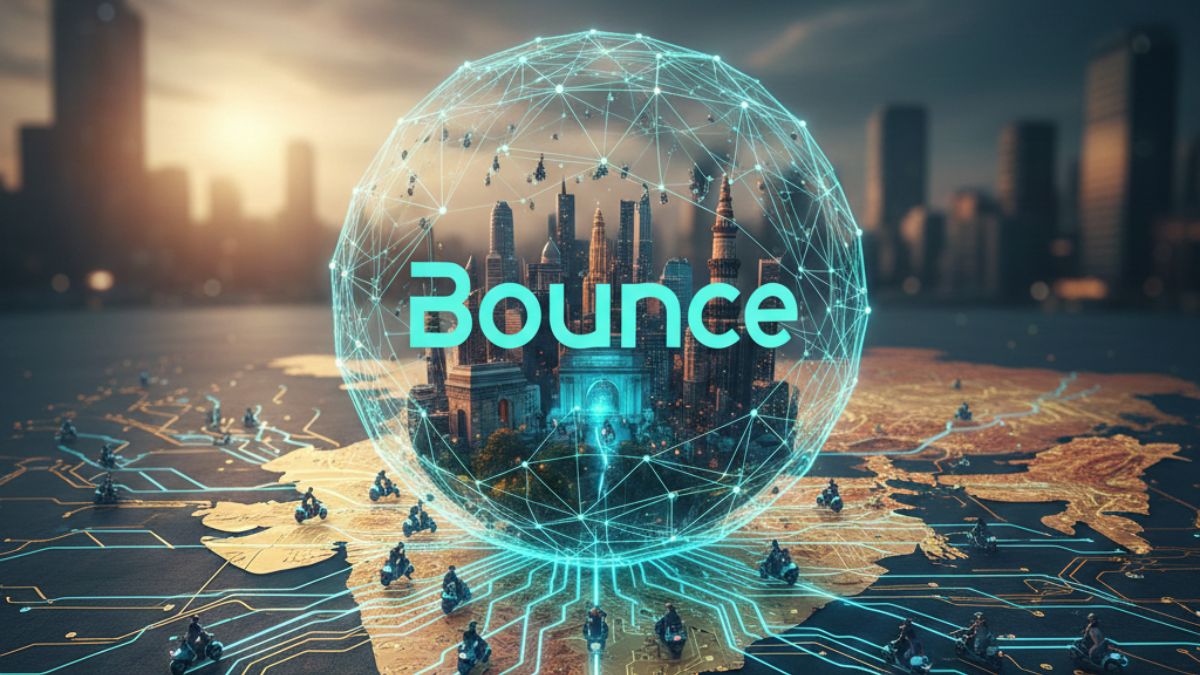
The story of Bounce sits at the intersection of urban mobility, economic accessibility, fleet operations, and India’s rapid shift toward practical transportation alternatives. Bounce started as a dockless scooter rental platform offering last-mile mobility in dense urban corridors. The company found early traction by building a user experience around instant access, low cost, and autonomous operations powered by smart locks and IoT-led fleet management. Founded by Vivekananda Hallekere, Anil G, and Varun Agni, the mobility startup began its journey in Bengaluru, which later became both its primary market and the proving ground for its most ambitious experiments.
Bounce was formally launched in 2018, although the founding team had been operating in the mobility space under the brand Wicked Ride since 2014. The transition from premium motorcycle rentals to a mass-market, dockless scooter model came after the founders recognized a persistent gap in affordable daily commute options. Internal data from Wicked Ride hinted that convenience, not aspirational bikes, would be the larger, long-term consumer need. This insight pushed the founders toward a new approach to urban transportation.
Bounce’s solution was simple: tap, unlock, ride, drop
Bounce’s solution was simple: tap, unlock, ride, drop. The startup deployed scooters equipped with IoT modules, GPS tracking, remote immobilization, and smart locks. Riders could pick up a scooter, travel to their destination, and leave it anywhere legally permissible. At its peak, the company claimed hundreds of thousands of rides per day across multiple cities in India, competing directly with players such as Vogo and indirectly with cab aggregators offering shorter routes. Its early success made Bounce one of the fastest-scaling mobility startups in the country.
The startup raised significant venture capital from investors including Sequoia Capital India, Qualcomm Ventures, and Accel Partners, helping expand operations and invest in battery-swapping technology. While the publicly available funding figure varies across sources, Bounce is known to have raised well over $100 million during its rapid-growth years. Later, the company pivoted toward electric mobility, pushing its Bounce Infinity electric scooter line and building a swapping-led EV ecosystem. This marked a new phase in its journey, shaped by regulatory challenges, unit economics pressures, and post-pandemic mobility shifts. What follows is a deeply reported Bounce Case Study built for FoundLanes readers, unpacking the origin story, scaling strategies, operational frameworks, business model, challenges, pivots, and long-term vision of one of India’s most ambitious mobility startups.
1. Origin Story and Early Background
The origins of Bounce go back to 2014, when co-founder Vivekananda Hallekere launched Wicked Ride with partners Anil G and Varun Agni. The initial concept was simple: premium motorcycles available for rent. This helped the team understand the vehicle rental market, user expectations, and operational burdens that come with maintaining a fleet. The founders soon noticed a mismatch between aspirational rentals and functional demand. A meaningful portion of users were not renting high-end bikes for leisure, but rather using them for commuting. This hinted at a broader problem: dependable and affordable last-mile transportation was still missing in Indian cities.
Bengaluru’s traffic congestion, extended metro routes, and fragmented bus connectivity shaped the team’s thinking. The founders realized their next opportunity wasn’t in leisure mobility but in solving daily commute challenges for millions. This shift in understanding set the foundation for Bounce.
2. Founder Motivation and Early Struggles
The founders of Bounce were driven by a mix of frustration and vision. Living in Bengaluru, they experienced firsthand the unpredictability of last-mile travel. Public transport was fragmented, auto-rickshaws were scarce at peak hours, and surge pricing made daily commutes expensive. Even with metro and bus networks expanding, the first- and last-mile problem remained unsolved. In the early days, the team faced two critical questions: Would Indian riders trust a self-service model for vehicles? Both carried real operational and financial risk. Every experiment involved nights of analysis, long rides with test scooters, and repeated pilot failures.
Their first prototype relied on manually operated stations. Soon, they realized human dependency would throttle growth. The founders pivoted aggressively, exploring IoT-enabled smart locks, GPS tracking, and telemetry-based monitoring. Over countless trials, this stack became the backbone of Bounce’s dockless scooter model robust, scalable, and responsive to rider behavior.
3. Market Problem Identification
Indian cities were expanding faster than infrastructure could keep pace. Commuters craved predictable, cheap, and instantly accessible last-mile options, yet most public transport left them stranded. Bounce saw an opportunity: build a dockless, scalable mobility platform that bridged the gap without requiring fixed parking hubs.
The founders knew that success hinged on operational efficiency. The cost per ride had to drop sharply to compete with autos, cabs, and traditional bikes. This demanded deep technology integration far beyond what conventional rental businesses attempted. From route analytics to usage behavior, every decision had to optimize fleet productivity and minimize downtime.
4. Product Evolution
Bounce started as a simple rental app connected to scooters with smart locks. But the team quickly realized that technology alone wouldn’t guarantee adoption. They observed riders’ behavior meticulously where scooters were left, what times usage peaked, and which areas faced low availability.
From these insights, Bounce developed location-based repositioning strategies. Scooters were redistributed dynamically to meet real-time demand, reducing idle vehicles and increasing revenue per scooter. Remote diagnostics and immobilization features ensured safety and reduced maintenance bottlenecks. Theft-prevention mechanisms created trust among users wary of dockless systems.
As the platform matured, the company introduced electric scooters, reducing fuel and maintenance costs while aligning with India’s green mobility ambitions. Bounce then expanded into manufacturing with Bounce Infinity, signaling a long-term commitment to EV infrastructure. The evolution wasn’t just technical it reflected a deep understanding of riders, cities, and urban mobility culture.
5. Traction and Validation Phase
Bounce first gained traction in Bengaluru. Users loved the convenience of unlocking a scooter anywhere and dropping it off without docking concerns. The founders measured success not in total downloads but repeat usage. Riders were using scooters multiple times daily, demonstrating genuine product-market fit.
Positive word-of-mouth accelerated adoption. Early fleets showed that operational reliability, transparent pricing, and safety measures were non-negotiable for long-term growth. Expansion followed naturally to Hyderabad, Vijayawada, and other metros, eventually making Bounce one of India’s largest dockless scooter-sharing operators. The company proved that urban commuters would embrace technology-enabled mobility when it truly solved a pain point.
6. Business Model and Revenue Approach
Bounce’s revenue model initially revolved around per-ride payments, calculated by distance and duration. For many urban commuters, rides were cheaper than autos or cabs for short distances. But the real breakthrough came from operational efficiency. The company invested heavily in automation smart locks, IoT monitoring, and real-time fleet analytics minimized human intervention, driving down costs. As Bounce scaled into electric mobility, additional revenue streams emerged: direct scooter sales, subscription packages, and battery-swapping services. These initiatives not only diversified income but also strengthened the company’s ecosystem, creating multiple touchpoints for customer engagement and loyalty.
Ultimately, Bounce’s approach combined human-centered design, relentless operational discipline, and technology-driven optimization. Every feature, process, and strategic decision reflected a commitment to solving real commuter pain points while building a scalable, sustainable mobility business.
7. Funding and Investor Involvement
From the very beginning, Bounce drew the attention of investors who saw the transformative potential of urban mobility in India. The founders’ vision of reliable, dockless scooters for last-mile commuting resonated with venture funds that understood the country’s growing pain points in city transportation. Early funding wasn’t just capital it was a vote of confidence in the team’s ability to execute in a chaotic, fragmented market. With backing from global investors such as Sequoia Capital India and Accel Partners, Bounce could rapidly expand fleets, invest in research and development, and lay the groundwork for electric mobility infrastructure.
Each round of investment brought not only financial muscle but also operational expectations. Investors demanded that the company scale responsibly while refining margins, optimizing fleet usage, and demonstrating clear unit economics. For the founders, this pressure was a double-edged sword empowering growth while forcing rigor in execution.
8. Go-to-Market Strategy
Bounce’s approach to market entry was aggressive, intelligent, and rooted in real-world human behavior. The team studied commuter patterns meticulously, identifying hotspots like metro stations, tech parks, college campuses, and residential neighborhoods. Scooters weren’t scattered randomly they were densely concentrated in micro-markets to maximize visibility and usage.
This hyperlocal density strategy proved crucial. It created a network effect: the more scooters in a small area, the easier it became for riders to rely on Bounce for their daily commute. Beyond placement, the team leaned on performance marketing, app-store optimization, and partnerships with commercial hubs. Word-of-mouth played a surprisingly critical role; when one rider found the system convenient, their friends and colleagues quickly adopted it, creating organic growth momentum.
9. Brand Positioning and Messaging
Bounce’s brand communicated practicality, freedom, and reliability. The promise was simple: unlock a scooter anywhere and move without friction. Early riders were drawn to the independence and cost efficiency offered by the platform. As the company evolved, messaging matured alongside product innovation. With the launch of Bounce Infinity electric scooters, the narrative expanded to sustainability and long-term cost savings. Riders began to associate Bounce not only with convenience but also with smart, environmentally conscious commuting. The swapping-based EV model reinforced this positioning by offering flexible ownership, consistent performance, and predictable operational costs—making sustainability tangible for daily users.
10. Challenges, Failures, and Turning Points
The dockless model was far from frictionless. Vehicle damage, theft, and improper parking tested the team relentlessly. Each incident prompted iterative improvements in technology smart locks, location tracking, and remote immobilization to maintain fleet integrity. Unit economics were another persistent challenge. Fuel costs, maintenance cycles, and repairs created a volatile profit landscape. Electrifying the fleet wasn’t just an environmental choice it became a strategic necessity to stabilize costs and scale sustainably.
Regulatory complexities across Indian cities added another layer of difficulty. Every municipality had unique rules on fleet operations, parking zones, and EV adoption incentives. Expansion required patience, adaptation, and strong local relationships. Then came the Covid-19 pandemic, a true stress test. Ridership collapsed overnight, forcing the founders to rethink the core business model. The crisis accelerated the pivot toward electric scooters and battery-swapping infrastructure, a move that eventually strengthened resilience, reduced operational overhead, and positioned Bounce as a future-ready mobility platform.
11. Operational Execution and Scaling Decisions
Scaling a dockless scooter platform in Indian cities was far from simple. Bounce built an intricate operational framework to keep thousands of scooters functional, charged, and in the right locations at the right time. Field teams became the unsung heroes—they repositioned scooters during peak demand, performed quick repairs, replaced batteries, and ensured safety compliance.
Predictive analytics formed the backbone of planning. Using historical ride data, commuter patterns, and city-specific insights, the team forecasted demand zones and proactively repositioned scooters. This wasn’t a spreadsheet exercise it required constant human judgment, intuition, and on-the-ground feedback. For instance, a small festival or office relocation in a neighborhood could spike demand overnight, and the team had to react within hours. When it came to scaling, density mattered more than geographic spread. Instead of scattering scooters thinly across cities, Bounce focused on concentrated clusters, ensuring high utilization and reliable access. This approach maintained operational control, optimized maintenance, and maximized ride frequency a lesson learned from countless failed attempts to stretch fleets too far too quickly.
12. Competitive Landscape
Bounce operated in a crowded urban mobility ecosystem. Direct competition came from scooter-sharing players like Vogo, while indirect rivals included taxis, app-based cab aggregators, bicycle rentals, rickshaws, and public transport systems. To carve out an edge, Bounce leaned on technology and operational precision. Autonomous docking with IoT-enabled smart locks reduced dependency on manual stations. Dense fleet deployment ensured that riders could find scooters instantly, creating loyalty. And the early shift to electric scooters positioned Bounce ahead of peers, offering lower operating costs and environmental credibility.
Competition forced relentless innovation. Every pricing strategy, fleet management algorithm, and operational process was scrutinized, iterated, and refined. Bounce didn’t just compete on rides it competed on trust, reliability, and convenience, which proved critical in cities where commuters had dozens of alternatives.
13. Growth Metrics and Milestones
Bounce’s growth wasn’t measured just in scooters it was measured in behavioral adoption. Thousands of users in Bengaluru alone began using the service daily, often multiple times a day. High ride frequency reflected deep product-market fit, not just novelty.
The launch of Bounce Infinity, the company’s electric vehicle line, marked another milestone. The company had transformed from a mobility operator into an EV manufacturer and infrastructure player, capable of designing, deploying, and operating its own fleet. This pivot opened doors to India’s expanding EV market, demonstrating Bounce’s long-term vision beyond last-mile commuting. Other notable metrics included consistent uptime of vehicles, faster ride fulfillment, reduction in maintenance downtime, and positive customer retention trends—all signs that the operational framework was scaling effectively.
14. Team Building and Leadership
Bounce’s growth story was inseparable from its people. The founders built a team of engineers, operations experts, and mobility professionals who could navigate the messy realities of city transport. Leadership roles were structured to manage hyperlocal execution, while also aligning with the company’s strategic ambitions. Cross-functional collaboration became essential. Tech teams needed insights from field operations; customer support had to feed data into product enhancements; and operations leaders worked closely with analytics to anticipate demand patterns. The culture encouraged experimentation if a new battery-swapping workflow failed, the team would iterate quickly rather than wait for months to correct it.
Leadership was practical, grounded, and patient. Founders spent nights on the streets observing scooter usage, talking to riders, and learning what worked and what didn’t. They didn’t just plan they experienced the problem firsthand, and their empathy for users and field teams became a key differentiator in scaling sustainably.
15. Technology and Supply Chain
At Bounce, technology wasn’t just a tool it was the nervous system of the entire business. IoT sensors, GPS trackers, and smart locks enabled scooters to operate with minimal human intervention. Remote diagnostics allowed the team to monitor battery health, location, and usage patterns in real time. Every technical upgrade was guided by one question: how can we make this invisible to the user while reducing operational friction?
The move toward electric scooters added an entirely new layer of complexity. Battery-swapping infrastructure had to be engineered from scratch, balancing reliability, safety, and speed. Managing the supply chain for hardware became a high-stakes operation procurement delays could halt city operations, poor-quality batteries could compromise rider safety, and misaligned manufacturing partners could threaten scalability. Thiru-like precision, constant communication, and relentless problem-solving became everyday requirements for the team.
Scaling EV operations meant synchronizing hardware, software, and human teams like never before. Engineers worked alongside field ops to test battery durability under real-world conditions. Logistics teams ensured timely delivery of replacement units to swap stations. Every failure was studied as an opportunity to improve, and every success reinforced the operational playbook.
16. Regulatory and Industry Hurdles
India’s regulatory landscape posed another layer of complexity. Parking restrictions, fleet permits, and compliance rules varied dramatically across cities, sometimes from street to street. Bounce had to negotiate with local authorities, adapt operating procedures, and, in some cases, redesign city-level deployment strategies.
The shift to EVs introduced additional challenges. Safety certifications, battery transport regulations, and charging norms were often ambiguous, forcing the company to work closely with policymakers to establish best practices. This wasn’t merely a bureaucratic hurdle it was a constant exercise in balancing innovation with compliance, ensuring that the company could grow while remaining fully operational in each market.
17. Current Status
Today, Bounce has pivoted to focus on electric mobility through Bounce Infinity, leveraging its learnings from the dockless scooter era. Battery-swapping stations are being deployed strategically, addressing one of the most common EV adoption barriers: downtime during charging. While the dockless scooter business has scaled down, the data, operational insights, and consumer behavior knowledge accumulated over years continue to guide the company. Decisions around fleet placement, maintenance cycles, and EV product features are deeply informed by real-world experience, not just algorithms.
18. Future Outlook
Bounce’s path forward is deeply tied to India’s electrification journey. The company’s vision is to make urban mobility convenient, reliable, and green. This means not only building scalable battery-swapping infrastructure but also innovating around subscription models, fleet ownership, and direct-to-consumer EV solutions. The Bounce story demonstrates that experimentation, resilience, and adaptability are as important as funding or technology.
Each obstacle from broken batteries to regulatory delays was an opportunity to learn, iterate, and strengthen the foundation for long-term growth. The company is positioned to lead in EV mobility, not because it chased trends, but because it built systems, trust, and processes that can endure complexity. Bounce illustrates a core truth about Indian startups: real impact comes from facing messy operational realities head-on, learning from failure, and designing solutions that reflect the human, everyday needs of the market.
About foundlanes.com
foundlanes.com publishes deeply researched startup case studies, founder journeys, and operational insights focused on India’s evolving startup ecosystem. The platform blends narrative storytelling with factual analysis to document how India’s most innovative companies are built, scaled, and sustained.