
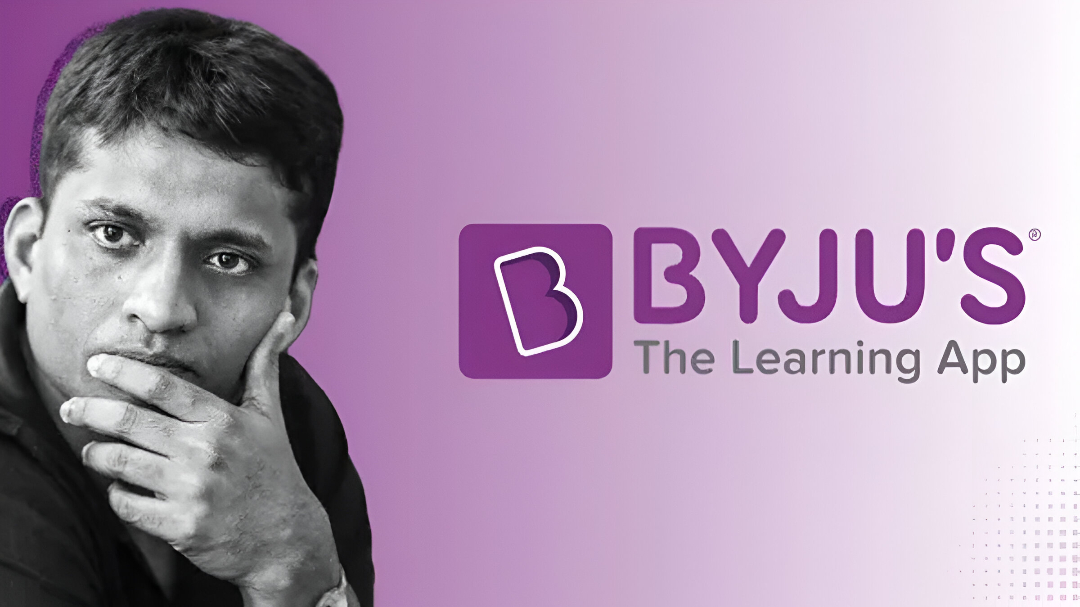
In a dramatic twist in the ongoing BYJU’S meltdown, resolution professional Shailendra Ajmera has filed a scorching legal complaint against the edtech firm’s former top brass—Byju Raveendran, Riju Ravindran, and Divya Gokulnath. The National Company Law Tribunal (NCLT) received the petition in April 2025, alleging murky asset transfers, including a jaw-dropping $533 million funneled through BYJU’S U.S. arm, BYJU’S Alpha, and an eyebrow-raising ₹130 crore moved within its Indian units. Ex-CTO Jiney Thathil is also caught in the legal crossfire.
This legal cannonball comes as part of Ajmera’s larger effort to clean up the financial wreckage left in the wake of BYJU’S insolvency proceedings. After the NCLT ditched the previous RP for alleged management blunders, Ajmera stepped in with sharper scrutiny. His lawsuit brands the asset transfers as fraudulent and damaging—funds he insists rightfully belong to the company’s creditors.
Unsurprisingly, BYJU’S founders fired back, calling the claims laughably false and painting the suit as yet another attempt to tarnish their names. Meanwhile, the Institute of Chartered Accountants of India (ICAI) is back on the scene, digging into BYJU’S books once again. The agency’s new disciplinary teams are revisiting allegations of sketchy accounting raised earlier by the Financial Reporting Review Board.
This isn’t just another day in court—it’s a multi-pronged mess. Add in a U.S. bankruptcy court siding with creditors over a $1.2 billion loan tied to BYJU’S Alpha, and the July 9 hearing is set to be a pivotal showdown. The case is a loud, messy reminder of how fast startups can nosedive when oversight slips and pressure mounts.
1. Introduction to the BYJU’S RP Lawsuit
1.1 Overview of the Legal Action
Shailendra Ajmera, newly installed as BYJU’S resolution professional, has gone on the offensive. He’s taken former directors Byju Raveendran, Riju Ravindran, Divya Gokulnath, and ex-CTO Jiney Thathil to court over alleged backroom asset deals. The lawsuit filed with the NCLT claims that a staggering $533 million was quietly transferred via BYJU’S Alpha to unnamed “related entities,” while ₹130 crore slid from Think & Learn into an Indian unit. According to Ajmera, these transactions weren’t just fishy—they actively hurt the company’s financial standing and shortchanged creditors.
1.2 Founders’ Response
The accused didn’t hold back. Dismissing the claims as “baseless noise,” BYJU’S founding trio called the whole thing a smear job. They argue this isn’t the first time these allegations have surfaced—and, conveniently, they say there’s still no real proof. Whether you believe them or not, their reaction adds fuel to the fire already raging over corporate governance failures in high-growth Indian startups.
2. BYJU’S Startup Background
2.1 Founders and Founding Story
Born in 2011 out of Byju Raveendran’s chalk-and-talk coaching hustle, BYJU’S transformed into a tech juggernaut almost overnight. With classroom charisma and smart branding, he and co-founder Divya Gokulnath (also his spouse) rode the edtech wave to stratospheric heights. What began as a modest test-prep venture morphed into a flagship of India’s tech-driven learning revolution.
2.2 Business Model and Revenue Streams
The company’s core formula? Subscription-based learning delivered via mobile apps. From middle school math to cracking the IIT-JEE, BYJU’S built a content library targeting every rung of India’s education ladder. Paid subscriptions—sometimes bundled with face-to-face coaching—were the cash cow. Their U.S. push via BYJU’S Alpha was supposed to be the next leap. Instead, it became a legal landmine.
2.3 Products and Services
Video tutorials, live classes, personalized learning paths powered by AI—BYJU’S offered the whole toolkit. Gamification, quizzes, adaptive feedback—everything a tech-savvy student could want. Their M&A spree added firms like WhiteHat Jr and Aakash Institute, padding out their offerings and raising expectations.
3. BYJU’S Industry Context and Growth Trends
3.1 The Edtech Boom
India’s edtech market went supernova post-2015, and BYJU’S was right at the epicenter. With affordable data, digital-first parents, and school disruptions thanks to the pandemic, online learning exploded. Projections pegged the sector’s value at over $10 billion by 2025. BYJU’S leveraged slick marketing and premium content to ride the boom—until it all started unraveling.
3.2 Competitors in the Edtech Space
Unacademy, Vedantu, Toppr—BYJU’S had no shortage of domestic rivals. Global disruptors like Coursera and Khan Academy added to the pressure. Yet, through sheer scale, relentless ads, and deep investor pockets, BYJU’S managed to hold its crown… at least for a while.
4. Funding History and Financial Challenges
4.1 Funding Milestones
BYJU’S wasn’t short on cash. With over $3.5 billion raised, its backers included Silicon Valley royalty—Tiger Global, Sequoia, and the like. At its peak, BYJU’S boasted a mind-boggling $22 billion valuation, earning the rare “decacorn” badge.
4.2 Financial Irregularities and Regulatory Scrutiny
But the money trail started to blur. In 2022, ICAI flagged suspicious accounting practices. Auditors were accused of turning a blind eye, and the FRRB accused them of “gross negligence.” Fast forward to June 2025: a reinvigorated ICAI disciplinary bench is back on the trail, this time with sharper teeth.
4.3 Insolvency and Resolution Professional Appointment
As financial missteps piled up, the NCLT finally stepped in and launched insolvency proceedings. The original RP, Pankaj Srivastava, got the boot amid creditor complaints. Enter Ajmera, with a mandate to unravel a tangled mess of shadowy deals and boardroom breakdowns.
5. Detailed Look at the Lawsuit Against Former Directors
5.1 Legal Grounds and Allegations
Ajmera’s case leans on the Insolvency and Bankruptcy Code, specifically its clauses on undoing “preferential” or “fraudulent” transactions. The heart of the lawsuit? Two major red flags: the $533 million funneled by BYJU’S Alpha and a separate ₹130 crore transaction on the Indian side. Ajmera argues these were not just suspicious—they were flat-out detrimental to the company’s ability to repay its lenders.
5.2 Impact on Creditors and Stakeholders
If proven, these transfers effectively shortchanged everyone with skin in the game—creditors like GLAS Trust and Aditya Birla Capital. The lawsuit’s ripple effect could reshape stakeholder rights in startup bankruptcies. It’s not just about numbers—it’s about accountability in the Wild West of high-growth tech.
6. Related Legal and Regulatory Developments
6.1 U.S. Bankruptcy Court Ruling
Earlier this year, a U.S. court weighed in on the drama—siding with lenders over a contested $1.2 billion loan linked to BYJU’S Alpha. The ruling cited the same $533 million transfer now at the heart of Ajmera’s case. It gave creditors new ammo and turned up the heat on BYJU’S leadership.
6.2 Allegations of Collusion
Not ones to take punches quietly, BYJU’S founders threw allegations of their own, accusing ex-RP Srivastava, EY auditors, and certain lenders of “criminal collusion.” A LinkedIn post-turned-battle cry accused them of orchestrating a takedown. Whether that defense holds water or just muddies the narrative remains to be seen.
7. BYJU’S Business Model and Market Position
7.1 Core Educational Technology
BYJU’S built its empire by combining slick tech with strong pedagogy. AI-backed content, adaptive quizzes, and gamified learning paths made the platform engaging for millions. It wasn’t just another app—it aimed to be the default classroom of the future.
7.2 Revenue Model
The engine running all this? Subscriptions, bundled coaching, and a growing international footprint. Partnerships with schools, corporates, and governments were supposed to be the next frontier. But now, that dream’s in limbo.
7.3 Market Leadership and Competition
Even amid controversy, BYJU’S isn’t irrelevant. Its massive user base and brand familiarity still carry weight. But with trust eroding and nimbler competitors on the rise, the throne is anything but secure.
8. Industry Growth Trends and Challenges
8.1 Market Expansion
India’s digital-first education boom shows no sign of stopping. Government policy is largely favorable, and tech penetration keeps growing. Hybrid models are becoming the new norm, driven by pandemic-era shifts.
8.2 Challenges
But with scale comes responsibility. BYJU’S troubles spotlight glaring issues—data privacy gaps, weak compliance, and fractured oversight. The biggest question: can edtech giants grow fast without losing control?
9. Background Story of BYJU’S Journey and Recent Troubles
9.1 From Startup to Unicorn
BYJU’S is the stuff startup legends are made of—humble beginnings, rapid scale, global ambition. It outpaced competitors, raked in cash, and built a brand synonymous with learning. But speed bred sloppiness.
9.2 Governance Issues and Insolvency
Rapid expansion masked internal fractures. Audits were sloppy, compliance patchy, and decision-making opaque. The RP’s lawsuit may be just the start of peeling back layers of mismanagement and self-dealing.
10. Learning for Startups and Entrepreneurs
- Governance can’t be optional: If you scale fast, your oversight must scale faster.
- Handle funding like a scalpel, not a firehose: Big money without accountability is a recipe for disaster.
- Engage with regulators early: Waiting until you’re under investigation is… not ideal.
- Keep communication clear: Silence breeds suspicion, especially during a crisis.
- Manage risk proactively: Especially when dealing with cross-border transactions and big-ticket loans.
About Foundlanes
At foundlanes.com doesn’t just report—it dissects. From the courtroom chaos of BYJU’S to the quiet rise of a stealth-mode fintech, it’s the sharp-eyed chronicler of India’s startup jungle. Founders chasing relevance, VCs hunting the next big flip, policy nerds decoding bureaucratic curveballs—this is their daily fix. Capital flows, regulatory shockwaves, unicorn meltdowns? All tracked, all untangled, all laid bare.