Summary
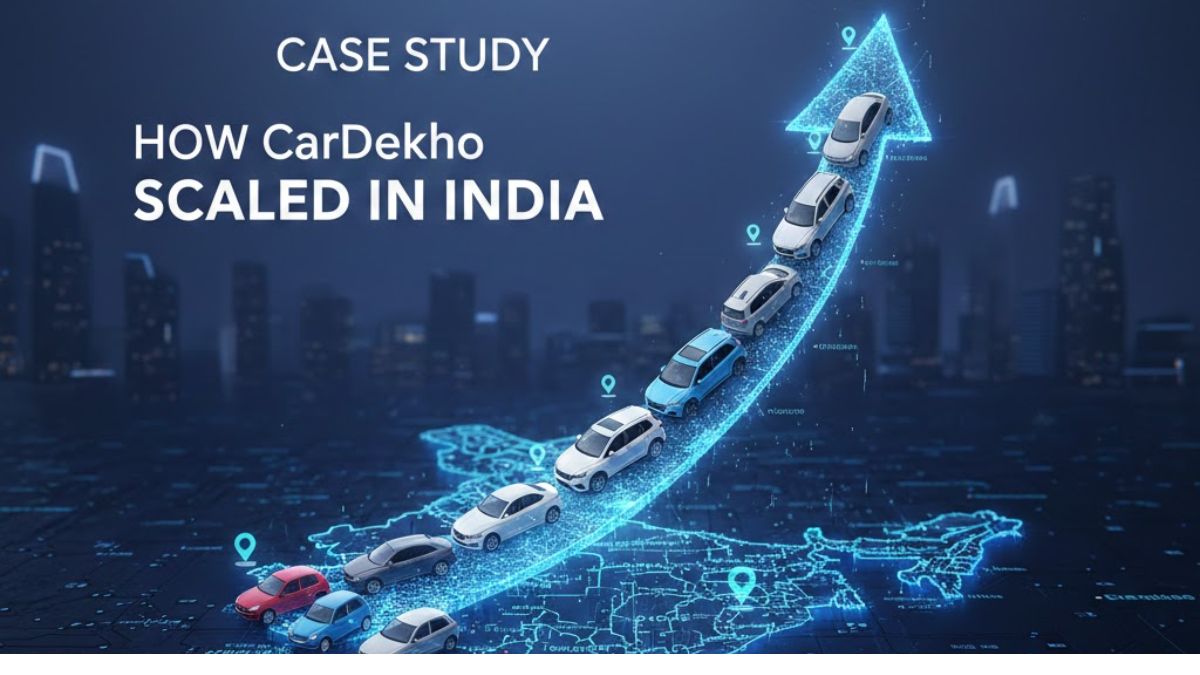
CarDekho began as a simple idea born inside a small Jaipur home after two brothers returned from the 2008 Auto Expo. Today, it has grown into one of India’s largest auto-tech platforms, expanding across new cars, used cars, insurance, loans, and digital dealerships. This CarDekho Case Study explores how the company built an integrated marketplace that changed how Indians research, buy, sell, and finance vehicles. CarDekho is operated by GirnarSoft, founded by siblings Amit Jain and Anurag Jain. Based in Jaipur, the startup launched the CarDekho platform in 2008 after the founders noticed the absence of trustworthy automotive information online. Indian consumers relied heavily on dealer guidance or word-of-mouth recommendations. Accurate pricing, expert reviews, comparison tools, and ownership insights were difficult to find.
The founders wanted to fill this gap by creating a digital hub where users could compare cars, read trusted editorial reviews, and access transparent on-road pricing. Over time, the platform expanded beyond automobile research into a full-stack used-car marketplace, fintech products, and dealer digitalisation solutions. The platform works through a hybrid model. On the consumer side, it offers listings, content, inspection services, financing, and support for both buyers and sellers. On the dealer side, it provides CRM systems, lead management tools, and digital storefronts.
CarDekho has raised more than $500 million across multiple rounds, backed by investors such as Sequoia Capital India, Hillhouse Capital, and CapitalG. As of public reports, the company reached unicorn status in 2021 after a Series E fundraise and has continued to strengthen its used-car and fintech ecosystem. This CarDekho Case Study breaks down the origin story, founder motivations, product evolution, business model, revenue approach, operational complexity, funding journey, and the long-term vision driving one of India’s most influential automotive startups.
1. Origin Story and Early Background
The roots of CarDekho trace back to 2007–08, when Amit Jain and Anurag Jain, both engineers by training, left stable corporate jobs and returned home to start a technology company. They launched GirnarSoft as a bootstrapped venture providing custom software development services. Working out of their home in Jaipur, the brothers built websites and enterprise solutions for clients across India and abroad. The real inflection point arrived when they attended the 2008 Auto Expo in Delhi. They explored dozens of stalls, clicked hundreds of photos, and collected technical brochures from various automobile manufacturers. When they tried looking up additional details online afterward, they realised there were barely any Indian platforms offering structured, verified, or easy-to-understand automotive information. There was no single place where a potential buyer could compare two car models, check expert reviews, or understand true on-road prices. This gap sparked the idea that would become CarDekho.
2.1 Founder Journey, Motivation, and Early Struggles
Amit and Anurag grew up in a business family, but their interest leaned more toward technology. Their decision to quit secure roles and start a bootstrapped company came with financial pressure and uncertainty. Initially, GirnarSoft survived on small projects that demanded long hours and modest pay.
When conceptualising CarDekho, the founders had to balance sustaining their existing business while building a new consumer-facing product. They lacked early capital, industry connections, and media visibility. The brothers spent nights writing content, uploading images from the Auto Expo, and building comparison tools from scratch. Their motivation came from the belief that vehicle purchases were emotional and high-value decisions. If India was going online, the auto sector would follow. They decided to build a product that combined technology, trust, and transparency.
2.2 The Market Problem CarDekho Identified
In 2008, the Indian automotive market was growing, but information asymmetry defined much of the customer journey. Buyers relied heavily on dealership salespeople for technical details and pricing. Independent reviews and clear comparisons were rare. There were scattered automobile forums, but no structured, authoritative platform covering the full buying cycle. Consumers wanted clarity on mileage claims, safety ratings, long-term ownership cost, and resale value. Dealers, too, lacked digital tools to reach customers online. CarDekho identified three major gaps: trusted information, transparent pricing, and structured discovery. The founders believed that solving these would significantly influence purchase decisions. Their hypothesis aligned with rising internet penetration and the early stages of e-commerce adoption in India.
2.3 How the Product Was Built and Evolved
The first version of CarDekho was a simple website built on the content the founders collected at the Auto Expo. It featured basic model comparisons, photos, and expert commentary curated from various sources. Early traction came from users searching for car reviews on search engines. As traffic grew, the team built more advanced features. They introduced video reviews, 360-degree views, price calculators, and detailed on-road pricing. Over time, CarDekho became an authority for expert automotive reviews, supported by an editorial team and in-house video production.
The product evolved into a multi-layer platform:
- New car research and comparison
- Used-car listings aggregated from dealers and individual sellers
- Car loan and insurance offerings
- Vehicle inspection and valuation tools
- Digital dealer solutions powered by SaaS
The platform also developed an AI-led recommendation engine to help users compare cars based on budget, usage, and preferences. Between 2015 and 2020, CarDekho expanded into new verticals, including bike comparisons and commercial vehicles.
2.4 Early Traction, First Customers, and Validation
Initial traction was driven organically through SEO, as Google searches for car reviews led users to the site. There was unmet demand for high-quality automobile content, and CarDekho filled that space quickly. The first customers were everyday buyers researching models like the Maruti Swift, Hyundai i20, and Honda City. As organic traffic increased, manufacturers and dealers began noticing the platform. They saw CarDekho as a valuable channel for qualified leads. The real validation came when large auto OEMs started partnering with the platform for digital marketing campaigns. Consumer trust, repeat visits, and brand recognition strengthened as the platform expanded into used cars and financial services.
2.5 Business Model and Revenue Approach
CarDekho earns through multiple revenue streams. Initially, advertising and lead generation fueled its business. As the used-car ecosystem matured in India, CarDekho shifted toward transactional revenue.
The business model evolved into a hybrid structure:
- Advertising and OEM partnerships
- Lead generation for car dealers
- Commissions from loans and insurance
- Fees from used-car transactions
- Dealer subscriptions for CRM and digital solutions
- Inspection and valuation services
Over time, the company placed strong emphasis on used cars, a market with higher margins and deeper customer engagement. The ability to provide financing, insurance, and documentation created an integrated revenue stack.
2.6 Funding History and Investor Participation
CarDekho attracted strong investor interest after demonstrating consistent growth and category leadership. Early funding came from Sequoia Capital India. Later, major global investors such as Hillhouse Capital and CapitalG joined subsequent rounds.
The 2021 Series E round pushed CarDekho to unicorn status, with the company valued at over $1.2 billion. Public disclosures indicate that CarDekho has raised more than $500 million across multiple rounds, strengthening its used-car marketplace and fintech expansion. The funding allowed the company to build inspection centers, hire auto experts, expand technology teams, and fuel nationwide marketing campaigns.
3. Go-to-Market Strategy and Distribution Channels
CarDekho followed a phased GTM strategy. In the early phase, the company focused on capturing online search traffic by producing expert content and building a repository of automotive knowledge.As the platform matured, CarDekho invested heavily in on-ground operations, especially in the used-car segment. It built inspection hubs, partnered with dealers, and launched CarDekho Gaadi Stores across cities.
Distribution occurred across multiple layers:
- Content-led discovery
- Dealer networks
- On-ground inspection centers
- Video reviews and comparison tools
- CRM tools used by dealerships
This mix ensured strong consumer reach as well as deep involvement in dealer supply chains.
4. Brand Positioning and Messaging Evolution
CarDekho’s branding evolved alongside its expanding product lines. In the early years, the brand positioned itself as a trusted automotive research companion. The company invested in editorial reviews, expert-led videos, and structured comparison tools to build credibility. The messaging focused on empowering buyers with transparency and accuracy at a time when most consumers relied on dealers for information. As the used-car market in India matured, CarDekho expanded its narrative beyond research. It began positioning itself as a full-stack ecosystem that helped users at every stage of the car journey: discovering, comparing, buying, selling, financing, and insuring. The shift required a more holistic brand voice, moving from content-driven trust to transaction-driven assurance.
The brand also highlighted its tech-led approach, promoting inspection standards, verified listings, and fair market pricing. Campaigns emphasized convenience and reliability, two themes that resonated with a younger, mobile-first audience. This transition helped CarDekho appeal to consumers seeking frictionless used-car buying experiences in an increasingly competitive market.
5. Key Challenges, Failures, and Turning Points
Every high-growth startup faces inflection moments, and CarDekho is no exception. The early challenge came from limited resources. Building a content-heavy platform demanded writers, reviewers, and production capabilities. Funding constraints forced the founders to personally take on multiple roles until the platform gained traction. Competition in the automotive classifieds industry intensified around 2010–2015, with several large players investing heavily in online listings. CarDekho had to differentiate itself through product features, depth of research, and trust. This period was a test of resilience, especially as marketing costs increased and customer acquisition became more competitive.
The biggest turning point came with the rise of India’s used-car economy. As platforms like OLX and emerging dealer networks accelerated consumer interest in used cars, CarDekho recognized that listings alone would not create a moat. The company needed deeper involvement in the transaction. This led to the launch of CarDekho Gaadi Stores. The move brought the brand into offline markets through inspection centers, where sellers could receive evaluations and instant offers. This hybrid model became a crucial pivot, allowing CarDekho to capture transactions rather than rely solely on digital classifieds.
Covid-19 created another inflection point. While new car sales slowed, used-car demand surged as customers preferred private mobility over shared transport. CarDekho adapted quickly, scaling its inspection capabilities and improving online-to-offline workflows. The pandemic accelerated the consumer shift that the company had anticipated.
6. Operational Execution and Scaling Decisions
Scaling a nationwide automotive platform involves operational challenges far more complex than typical internet startups. CarDekho had to manage thousands of dealer relationships, build inspection infrastructure, and run on-ground teams across dozens of cities. One of the company’s smartest decisions was decentralizing operations. Instead of controlling everything from Jaipur, CarDekho built city-level clusters managed by local teams. This allowed rapid scaling in regions with strong used-car ecosystems such as Delhi NCR, Mumbai, Bengaluru, Hyderabad, and Pune. Inspection centers played a pivotal operational role. They offered structured evaluations, documentation assistance, and buyer-seller coordination. The teams were trained in automotive diagnostics, customer interaction, and digital workflows.
Technology underpinned these operations. CarDekho developed internal tools for lead management, inventory tracking, pricing algorithms, and bidding systems. These tools reduced human error and accelerated transaction speeds. As the company expanded, the tech-enabled workflow helped maintain consistency across locations. The decision to combine digital discovery with physical verification ultimately helped CarDekho build trust in a market where used-car fraud, odometer tampering, and hidden damages were common concerns.
7. Competitive Landscape and Differentiation
The automotive classifieds sector in India has always been competitive. Platforms like OLX, Quikr, and several regional dealer networks offered used-car listings. On the new car research side, many websites attempted to replicate model comparison and review-based formats. CarDekho differentiated itself through depth rather than breadth. Its early investment in expert reviews, editorial content, and technologically structured comparisons set it apart. While competitors focused on ad-driven classifieds, CarDekho evolved into a transaction-focused business with deep operational involvement.
The Gaadi Store model further differentiated the company. It established standardized inspection processes, transparent valuation, and verified transaction workflows. These capabilities allowed CarDekho to compete with newer players experimenting with full-stack used-car models. The platform’s advantage also came from its ecosystem approach. Insurance, loans, and extended warranties created a value chain that few competitors could match. Automotive OEM partnerships strengthened its credibility. Across 15 years, CarDekho built a rare combination of trust, data, and industry relationships that reinforced its leadership position.
8. Growth Metrics, Milestones, and Public Achievements
CarDekho’s growth story includes several public milestones that demonstrate its scale. The platform crossed millions of monthly users as early as 2015, fueled by its search dominance in car reviews and comparisons. Over time, the company expanded to serve consumers across new and used cars, along with financing and insurance. Reaching unicorn status in 2021 was a significant milestone, reflecting investor confidence in its multi-layered automotive platform. CarDekho also reported strong revenue growth across its transactional businesses, especially in used cars and insurance distribution.
The company has built dozens of inspection centers across India, enabling large-scale used-car operations. Public data also reflects strong gains in loan and insurance products sold through the platform. These achievements underscore CarDekho’s evolution from a research portal to a broad-spectrum automotive solutions provider.
9. Team Building and Leadership Approach
CarDekho’s founders have often spoken about building a culture defined by discipline, humility, and long-term vision. They hired early team members who could operate across multiple domains — technology, automotive expertise, sales, and operations. This interdisciplinary strength became essential when the company expanded aggressively. Leadership at CarDekho prioritizes data-driven decision making. Teams are encouraged to run experiments, measure outcomes, and iterate quickly. The founders built strong middle-management layers so that each city or cluster could operate autonomously while maintaining brand and process consistency.
The company also invested in editorial and video production teams early on, understanding that automotive content required both authority and accessibility. This foresight strengthened the brand and helped CarDekho gain user trust before competitors could catch up. The leadership approach balanced operational hustle with structured scaling. This helped the company maintain quality even as it expanded into more complex business verticals.
10. Technology, Operations, and Supply Chain Insights
CarDekho’s tech backbone evolved significantly over the years. The platform’s earliest versions were simple content-management systems, but today its infrastructure supports millions of monthly sessions with fast search functionality, comparison algorithms, and dynamic pricing tools.
On the operations side, the company built:
- AI-led pricing engines for used cars
- Vehicle inspection apps used at Gaadi Stores
- A proprietary CRM for dealer networks
- Automated lead-routing systems
- Insurance and loan integration APIs
The supply chain for used-cars is decentralized and unpredictable. CarDekho addressed this by building a playbook for evaluations, documentation, and dealer engagement. Training programs ensured that inspection quality remained consistent across states. The company’s digital dealership solutions enhanced dealer visibility. These tools helped local businesses modernize their online presence, effectively digitizing a traditionally offline ecosystem.
11. Regulatory, Legal, and Industry-Specific Hurdles
Operating across India’s automotive sector means dealing with varying state-level regulations, RTO processes, and compliance frameworks. CarDekho had to build robust documentation processes to handle ownership transfers, hypothecation, insurance renewals, and loan settlements. Used-car regulations differ widely, making interstate expansion complex. The company invested in legal and compliance teams to structure processes around each region’s requirements.
In finance and insurance, CarDekho had to comply with IRDAI and lending regulations. Licensing, certifications, and disclosures were integrated into the platform’s workflows. The biggest industry-wide hurdle remained trust. The company addressed this through transparent valuation reports, verified listings, and standardized inspections.
12. Competitive Landscape and Positioning
By the time CarDekho expanded aggressively into the used-car market, several well-funded rivals were already shaping customer expectations. Players like Cars24, Spinny, and OLX Autos had taken distinct positions in the ecosystem.
CarDekho had to balance being an established information leader with the need to operate a capital-intensive retail business.
- Cars24
Cars24’s auction-led model allowed quick, no-friction sales for sellers. Its promise of instant liquidation appealed deeply to customers who valued speed over price maximization. This model also helped it build liquidity early, which further strengthened its seller network. - Spinny
Spinny positioned itself as a premium, trust-first used-car retailer. It leaned heavily into certified vehicles, quality control, and end-to-end transparency. Its focus on consistent buyer experience set a benchmark. - OLX Autos
OLX Autos leveraged the massive user base of OLX to funnel supply for inspections and dealer auctions. Its advantage was low customer acquisition cost combined with high inventory flow. - CarDekho’s Competitive Edge
CarDekho approached the market from a different angle. With years of authority built through new-car research content, reviews, comparisons, and a strong editorial footprint, CarDekho had organic access to millions of intent-driven users. Many buyers researching new cars transitioned into used-car buyers because of budget constraints. This gave CarDekho a natural funnel that competitors could not easily replicate.
The real challenge was turning this audience advantage into operational superiority in the used-car marketplace. The company had to design logistics, training, inspection SOPs, and pricing algorithms that matched or exceeded existing benchmarks.
11. Major Challenges CarDekho Faced
11.1 Transitioning from a Light Marketplace to a Heavy Operational Business
For nearly ten years, CarDekho had thrived as a lean, digital-first marketplace. The media-and-leads model required minimal infrastructure: websites, content, and lead management systems. But moving into used-car retail was a seismic shift. Suddenly, the company had to orchestrate a complex physical ecosystem: city-wide inspection teams, refurbishment centers, pricing operations, dealer networks, warehouse-style car hubs, and transportation fleets.
The operational intensity was a stark contrast to the light-touch digital workflows the team had mastered. CarDekho had to develop a muscle memory for offline execution, learning to coordinate people, vehicles, and inventory with the same precision it applied to online data. The challenge wasn’t just logistics—it was cultural. Teams accustomed to digital efficiency now needed on-ground discipline, real-time problem solving, and relentless attention to detail. Every missed inspection, delayed car delivery, or refurbishment overrun carried real financial and reputational consequences.
11.2 Unit Economics Pressures
Used-car retailing is notoriously low-margin. Success depends on scale, precise cost control, and flawless pricing. CarDekho faced multiple pressures: inspection rework costs, refurbishment overruns, uneven city-wise demand, fluctuating auction liquidity, and market volatility during COVID.
The team had to iterate constantly. If pricing models underestimated repair costs, margins vanished. If inspection accuracy faltered, buyer trust eroded. Even minor operational missteps could cascade into lost revenue. Balancing growth with operational discipline became a daily challenge. CarDekho learned quickly that trust and profitability must grow hand-in-hand, or the business could collapse under its own complexity.
12. Dealer Network Expectations
CarDekho’s dealer network was central to its marketplace. Dealers expected transparent auctions, reliable inventory flow, and attractive margins. As competition intensified, they became more price-sensitive and selective, often demanding loyalty benefits and priority access to high-demand vehicles.
Maintaining strong dealer relationships while expanding the B2C side of the platform required delicate navigation. CarDekho had to ensure transparency, fairness, and responsiveness while managing thousands of dealer accounts. A misstep could undermine trust built over years. The company’s ability to balance B2B and B2C priorities became a strategic differentiator, defining its credibility in a fragmented and competitive market.
13. Pandemic Disruption
COVID-19 was both a challenge and a turning point. In the short term, physical inspections halted, retail operations froze, and used-car demand dropped sharply. The market seemed frozen overnight, leaving teams scrambling to maintain cash flow and support partners. Yet the long-term effects created unexpected opportunities. New-car production slowed, public transport usage dropped, and private vehicle demand surged. Used cars became a preferred mobility solution, driving prices upward and shifting consumer behavior. CarDekho had to navigate uncertainty while preparing to capture this boom, scaling inspection teams safely, digitizing processes wherever possible, and reinforcing dealer and consumer trust.
14. Expanding into Financial Services
Integrating loans, insurance, and credit products introduced another layer of complexity. Each vertical required compliance oversight, banking and NBFC partnerships, underwriting models, and specialized teams. Mistakes could undermine trust or create regulatory risk.
CarDekho’s approach was disciplined. Financial services were embedded as enablers, not distractions. Every insurance sale, loan disbursal, or warranty package was designed to enhance the core transaction rather than dilute focus. The company’s ability to execute operationally complex services at scale reinforced both revenue growth and customer confidence.
15. Strategic Turning Points and Key Decisions
15.1. Launch of CarDekho Gaadi Stores
The introduction of Gaadi Stores marked CarDekho’s decisive shift into offline retail. These centers became multi-purpose hubs for inspections, customer walk-ins, test drives, and dealer auctions.
Gaadi Stores also allowed CarDekho to control more of the buyer-seller journey instead of relying entirely on external partners. This hybrid approach (online discovery with offline execution) strengthened trust and improved customer satisfaction.
15.2 Investment in AI-Driven Pricing and Inspections
At the core of CarDekho’s used-car marketplace lies a deceptively simple challenge: accurate pricing and reliable inspections. Without trust in valuations, both buyers and sellers hesitate, slowing the entire market. CarDekho recognized this early and invested deeply in technology to solve it. The company developed machine-learning models that could analyze thousands of transactions, regional trends, and car-specific variables to produce precise, dynamic pricing. Coupled with image-assisted damage detection, the platform could identify scratches, dents, and wear patterns automatically, reducing human error and increasing inspection speed. Standardized checklists ensured every car underwent the same rigorous evaluation, while telematics data and predictive refurbishment algorithms allowed the team to anticipate repair costs before a sale.
The results were tangible: pricing variance dropped significantly, buyers gained confidence in their purchases, and sellers felt assured they were getting fair value. The platform no longer relied on guesswork. it became a trusted arbiter of car value, fundamentally changing how used cars were bought and sold in India.
15.3 Focus on Financial Products as Revenue Multipliers
CarDekho understood that a used-car transaction could be more than a one-time sale it could be the start of a financial ecosystem. Rather than treating insurance and loans as optional add-ons, the company built them into the platform as revenue multipliers. Every transaction became an opportunity to cross-sell motor insurance, car loans, warranties, and renewal services. By integrating these financial products seamlessly into the buyer journey, CarDekho enhanced unit economics, increased customer lifetime value, and diversified revenue streams beyond simple transaction margins. Buyers benefited from convenience and transparency, while the platform captured more predictable, high-margin revenue.
This strategy reinforced trust and loyalty. Customers knew they could complete the entire purchase and financing cycle in one place, while CarDekho could scale revenue without relying solely on transaction fees. Over time, these initiatives positioned the company as a holistic marketplace, not just a used-car listing portal, redefining the economics of the sector.
15.4. Selective Geographic Expansion Instead of a Blitzscale Play
Instead of growing into 100 cities rapidly, CarDekho took a calibrated approach. It focused on cities with strong demand-supply balance and stable dealer ecosystems. This disciplined scaling reduced cash burn and improved operational consistency.
15.5. Brand Building Through Trust and Content
CarDekho continued investing in content expert reviews, comparison tools, ownership cost calculators, editorial videos, and influencer partnerships. This strategy maintained top-of-funnel dominance. Even in competitive markets, consumers continued to associate CarDekho with credibility and transparency.
The brand’s trust-first positioning allowed it to scale transactions more organically.
16. Business Model Overview
CarDekho has evolved far beyond a simple listings website. Today, it operates a multi-vertical auto-tech ecosystem designed to capture value at every stage of a car owner’s journey. Instead of relying on a single revenue source, the company has carefully layered its model to monetize discovery, transactions, financing, and ownership, creating a self-reinforcing flywheel.
The business spans five key pillars:
- New Car Discovery & OEM Partnerships – connecting consumers with manufacturers and dealerships through lead generation and marketing services.
- Used Car Marketplace & Retail (Gaadi Stores) – providing an end-to-end solution for buying, selling, inspecting, and refurbishing used vehicles.
- Car Loan & Insurance Products – offering financial solutions embedded in the purchase journey to boost unit economics.
- Data, Pricing & Enterprise Solutions – delivering actionable insights for dealers, insurers, and OEMs.
- International Operations (Southeast Asia) – replicating its platform playbook in emerging markets with high growth potential.
This structure allows CarDekho to monetize multiple touchpoints: a customer researching a car online may end up buying, financing, insuring, or selling through the platform, generating recurring value while reinforcing trust.
17. New Car Discovery & OEM Partnerships
17.1 Lead Generation
CarDekho began as a consumer research platform, helping users make informed choices about which car to buy. Over time, it became one of the largest sources of high-intent leads for OEMs and dealerships. Verified buyer leads, premium listings, and targeted marketing campaigns are monetized directly, while CarDekho also partners with manufacturers during new model launches to run comparisons, reviews, and educational modules.
This model is grounded in real-world impact. Dealers report higher conversion rates from CarDekho leads compared with generic advertising, and manufacturers leverage the platform to understand buyer intent, regional preferences, and demand trends. It’s not just a marketplace; it’s a market intelligence engine influencing decisions before the first purchase occurs.
17.2 Influence on Consumer Behavior
CarDekho’s editorial content, expert reviews, videos, and comparison tools deeply influence buyers in the research phase. Users spend time on the platform weighing options, comparing trims, and evaluating ownership costs. These insights allow CarDekho to sell leads at a premium, as they represent buyers actively considering a purchase rather than casual browsers.
The platform doesn’t simply capture attention it shapes buying behavior, creating trust and positioning itself as an indispensable partner for consumers and manufacturers alike.
18. Used Car Marketplace & Retail (Gaadi Stores)
While used cars are CarDekho’s most operationally intensive vertical, they also hold the highest growth potential. The segment demanded a hands-on, trust-driven approach, blending digital convenience with offline execution.
18.1 Seller-Facing Services
Sellers gain multiple options: they can book home inspections, receive dynamic price benchmarks, sell instantly at a Gaadi Store, or submit their vehicle to dealer auctions. CarDekho earns revenue either through resale margins or auction fees, ensuring flexible monetization.
18.2 Buyer-Facing Services
Buyers benefit from certified, inspected vehicles backed by warranties, return policies, and bundled financing or insurance. These features build confidence, bridging the trust gap that often plagues used car transactions. The platform benchmarks its experience against peers like Spinny and Cars24, but CarDekho’s scale and integration of offline infrastructure give it a unique edge.
18.3 The Role of Gaadi Stores
Gaadi Stores act as the physical backbone of the marketplace. They serve as inspection hubs, refurbishment centers, logistics nodes, dealer auction points, and walk-in experience centers. By linking digital discovery with offline execution, these centers allow CarDekho to maintain predictable operations at scale, ensuring that a customer browsing online experiences the same level of reliability when completing the transaction in person.
This hybrid model technology-enabled marketplace supported by physical infrastructure—is what makes CarDekho’s used-car vertical both scalable and trustworthy. It’s a playbook grounded in real operational rigor, deep customer understanding, and iterative learning from the market, rather than theoretical assumptions.
19. Financial Services: Loans, Insurance, and Warranties
CarDekho’s financial services are not just complementary offerings they are the backbone of revenue diversification and a critical factor in building trust with buyers and sellers alike. By integrating loans, insurance, and warranties into the platform, CarDekho ensures that every transaction carries multiple value streams while giving customers peace of mind.
19.1 Car Loans
CarDekho partners with banks and NBFCs to provide auto loans tailored to the buyer’s profile. Through this, the company earns commissions per disbursal, incentives for maintaining high credit quality, and cross-sell revenue from bundled offerings like insurance or service packages.
Behind the scenes, CarDekho operates a loan marketplace powered by machine-learning models. These models evaluate borrower profiles, credit scores, and risk parameters to match users with the right lender quickly. The result is a faster, more transparent loan process that improves conversion rates and customer satisfaction, while also giving the company a steady, recurring revenue stream beyond one-time transaction fees.
19.2 Motor Insurance
Insurance is another strategic multiplier for CarDekho.
Every car transaction new or used creates a natural insurance lead, and the platform distributes:
- New motor insurance policies
- Used-car insurance
- Renewal policies
Margins in insurance are healthier than traditional transaction fees, and the integrated approach ensures that buyers are covered from the moment of purchase. This reduces buyer hesitation and enhances trust in the platform. Over time, CarDekho has built a loyal customer base that returns for renewals and upgrades, creating repeatable financial flows.
19.3 Warranties and Value-Added Services
Extended warranties, service packs, roadside assistance, and car accessories further increase per-customer revenue while boosting confidence. Customers feel reassured when buying used cars, knowing that post-purchase support is reliable. This strategy not only drives financial performance but also strengthens brand reputation, turning each transaction into a holistic ownership experience rather than a single-point sale.
20. Data, Pricing, and Enterprise Solutions
At the heart of CarDekho’s operational advantage lies its intelligence engine, an internal platform that powers pricing decisions, refinancing options, and inventory management. This data-driven approach ensures that every car listed, sold, or financed is valued correctly, reducing risk and improving margins.
20.1 Who Uses CarDekho’s Data Products
The company’s data solutions are market tools as well as revenue generators, serving multiple stakeholders:
- Banks use the platform to assess loan applications more accurately, reducing default risk.
- Insurers rely on CarDekho’s vehicle insights to underwrite policies with confidence.
- OEMs analyze market trends and buyer behavior to plan launches and promotions.
- Dealers leverage pricing benchmarks and demand forecasts to optimize procurement and sales.
20.2 Competitive Advantage Through Pricing Accuracy
Pricing accuracy is more than just numbers it builds trust. CarDekho’s predictive algorithms account for vehicle age, model, mileage, regional demand, and condition. By combining machine learning with real inspection data, the company creates transparent valuations that buyers and sellers respect.
The results are evident: faster deals, higher repeat transactions, and a marketplace where trust translates directly into revenue. Unlike platforms that rely solely on listings, CarDekho’s data-centric approach reduces information asymmetry, ensuring every stakeholder from farmers to buyers, from insurers to OEMs feels informed and confident.trength. This category includes enterprise SaaS products built from years of transaction data.
About foundlanes.com
foundlanes.com is India’s leading startup idea discovery platform. It helps entrepreneurs find actionable startup opportunities, market insights, and industry-specific guidance to turn ideas into real businesses. With deep research and practical resources, foundlanes supports founders at every stage, from idea validation to launch and growth.