News Summary
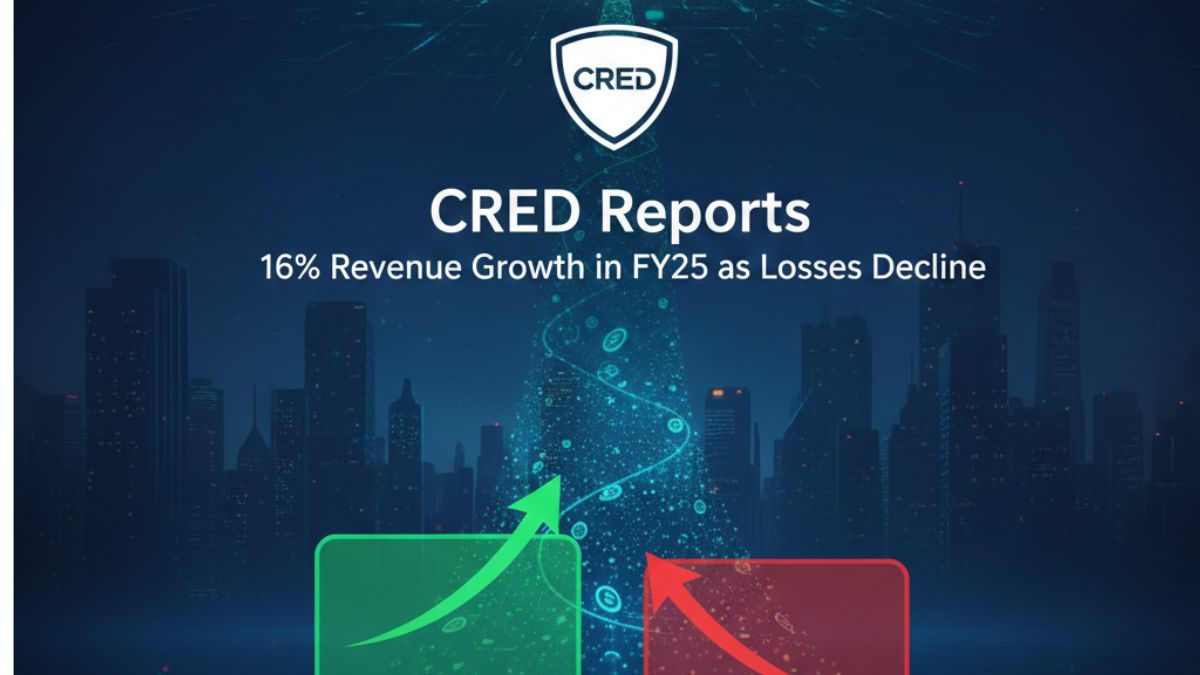
CRED, the Indian fintech unicorn, reported a 16% revenue growth in FY25, achieving Rs 2,735 crore in revenue. The company’s operating losses halved to Rs 298 crore, while net losses declined 11.5% to Rs 1,457 crore. The performance was driven by higher product adoption, as around 45% of active users engaged with three or more products on the platform. Monthly transacting users rose 14.5% to 1.26 crore, while transaction frequency grew 34% to 14.4 per user. The platform processed Rs 8.5 lakh crore in payments, up 23% year-on-year. Lending, insurance, and payments were key revenue drivers. Despite remaining net loss-making due to non-operating expenses like ESOPs and depreciation, CRED aims for full profitability in FY26. Gross margins stood at 70%, and the average revenue per user reached approximately Rs 2,000. The startup also expanded its product portfolio, including CRED Money, CRED Cash+, and CRED Garage. With over $1 billion raised across nine funding rounds, including a $72 million down round led by GIC, CRED continues to strengthen its presence in India’s growing fintech ecosystem.
1. Introduction
1.1 Overview of CRED’s FY25 Performance
CRED’s story in FY25 is more than just numbers on a balance sheet—it’s a story about people, choices, and trust in the digital age. The company recorded a 16% jump in revenue, reaching Rs 2,735 crore, a clear signal that users are increasingly seeing CRED as more than a fintech platform—they see it as a companion in their financial journey. Behind this figure lies hundreds of thousands of small human decisions: a user paying a credit card bill on time, another exploring a new product, a young professional tracking their finances for the first time.
Operating losses fell by 51%, down to Rs 298 crore, while net losses dropped 11.5% to Rs 1,457 crore. These numbers aren’t just financial milestones—they are proof of persistence, of strategic choices, and of a team that believes in building something meaningful even when the path is long and uncertain. Gross margins held firm at 70%, reflecting CRED’s ability to extract real value while delivering real benefits to its users. Each percentage point here represents not just efficiency, but trust earned, and trust is never free.
1.2 User Engagement and Platform Metrics
To understand CRED’s growth, you need to look at the human stories behind the statistics. Monthly transacting users grew 14.5% to 1.26 crore—each one a person consciously choosing to rely on the platform to manage their money better. Transaction frequency increased 34%, meaning users aren’t just engaging—they’re interacting repeatedly, weaving CRED into the fabric of their financial lives.
Even more telling, 45% of users explored three or more products. These are individuals seeking more than convenience—they are seeking control, clarity, and confidence over their finances. The platform processed an extraordinary Rs 8.5 lakh crore in payments, and average revenue per user rose to Rs 2,000. Behind every transaction is a story of ambition, of responsibility, and often, of a small victory over financial stress.
Every metric reflects a deeper truth: managing money is not just functional, it’s emotional. It’s about feeling empowered, being recognized for discipline, and discovering small moments of pride in everyday financial choices. CRED is capturing not just revenue—it is capturing human aspiration.
2. CRED’s Business Model
2.1 How CRED Works
At its heart, CRED is a platform that celebrates financial responsibility. It rewards users for paying their credit card bills on time—a simple act that carries profound meaning. Each on-time payment is a silent affirmation: “I am in control. I am responsible.”
But CRED is more than rewards. It offers tools to understand, track, and optimize credit scores, manage cards, and even plan finances. These tools are not just products—they are instruments of empowerment. A user checking their credit score is not just looking at a number; they are measuring their growth, their discipline, their future possibilities. In an age where money can feel abstract, CRED gives it human form: measurable, understandable, and achievable.
2.2 Revenue Model
CRED’s revenue model mirrors the complexity of real human behavior. The company earns through lending, payments, and marketplaces for financial products. Lending assets under management reached Rs 22,000 crore—a reflection of trust between the platform and its users. Insurance and other financial services are growing as revenue contributors, but more importantly, they signify deeper engagement.
What sets CRED apart is how its monetization grows naturally with user behavior. The more products a user adopts, the more frequently they interact, and the more value is created for both sides. Every payment, every insurance purchase, every loan interaction tells a story of confidence building, risk managed, and control regained—a human story hidden inside corporate strategy.
2.3 Key Products and Services
CRED’s product suite is carefully crafted to meet the needs of real people navigating real financial pressures:
CRED Money – Lending and personal finance tools that help users bridge gaps, plan better, and feel secure in their financial decisions. Each interaction is a small, personal win.
CRED Cash+ – Short-term credit solutions that give users the comfort of flexibility. A moment of financial uncertainty becomes manageable, and fear transforms into confidence.
CRED Garage – A marketplace for insurance that offers choice, transparency, and peace of mind. Selecting coverage is no longer stressful—it’s a conscious step toward protection and foresight.
Card and Score Management – Tools to monitor and optimize credit health. These aren’t just features—they are daily affirmations of responsibility, small reminders that discipline matters, and that users can shape their own financial narrative.
FY25 at CRED isn’t just about revenue growth or loss reduction—it’s about human transformation. It’s about giving users control, dignity, and confidence in a world where money can feel overwhelming. Behind every statistic, every crore of revenue, every product adoption, lies a deeply human journey—a story of discipline, trust, aspiration, and empowerment.
3. Founders and Funding Journey
3.1 Founding Story
Behind CRED’s sleek interface and soaring numbers is a deeply human vision, born from the mind of Kunal Shah. A serial entrepreneur whose first success, FreeCharge, changed the way India transacted, Shah saw something deeper in the lives of financially disciplined users. He noticed a quiet struggle: highly creditworthy individuals juggling multiple cards, juggling payments, juggling the anxiety of maintaining their financial health—often without recognition or guidance.
For Shah, this wasn’t just a market gap—it was a human problem. He wanted to create more than a product; he wanted to create an experience. An ecosystem that not only tracked payments but celebrated responsibility. Every feature, every reward, every interaction on CRED is designed to honor the moments when someone chooses diligence over convenience, foresight over impulse.
CRED is, in essence, a platform that tells its users: “We see your discipline. We respect your choices. And we’ll help you grow.” For many users, opening the app isn’t just a transaction—it’s a small ritual, a moment of self-affirmation. Paying a credit card bill on time becomes a quiet victory, a feeling of control in a world that often feels financially overwhelming.
3.2 Funding Rounds
CRED’s financial journey mirrors its human journey: full of ambition, belief, and the occasional hard lesson. Over nine funding rounds, the company raised more than $1 billion, attracting investors who believed not just in numbers but in the vision—Sequoia, Tiger Global, and GIC.
May 2025 brought a reality check: a $72 million down round led by GIC, valuing CRED at $3.64 billion, down from $6.4 billion in 2022. On paper, it looked like a setback. But for CRED, it became a moment of reflection and resilience. The company doubled down on what mattered most—building trust with users, deepening engagement, and refining its ecosystem of products. The numbers weren’t just about valuation; they were about survival, growth, and purpose. Investors stayed not because of hype, but because they saw something rare: a company that cared about the people it served, not just the bottom line.
Each funding milestone is a testament to human belief: belief in vision, in discipline, and in the capacity of technology to elevate ordinary moments into meaningful experiences.
4. Problem Solved
CRED is solving problems that are deeply human in nature.
First, it rewards discipline. Late payments, forgotten bills, and lost opportunities are common frustrations, even for financially capable individuals. CRED transforms these stressful moments into recognition—users earn rewards, points, and a subtle sense of pride for doing what is responsible. It’s financial accountability paired with acknowledgment, turning obligation into empowerment.
Second, it unifies fragmented financial lives. Managing multiple credit cards, tracking scores, and evaluating loans can feel like navigating a maze. CRED creates clarity, structure, and a sense of control. Each login, each interaction, is a small reclaiming of confidence in one’s financial life.
Third, it opens doors to financial opportunities—loans, insurance, and curated products—especially for high-credit users who are often underserved. Here, the platform does more than transact; it nurtures. It ensures users feel supported, understood, and respected, rather than lost in the complexity of financial choices.
In short, CRED solves the quiet, emotional tension many people feel about money: the desire to be responsible, the anxiety of managing it well, and the wish for recognition when they do. It’s not just convenience; it’s dignity and empowerment.
5. Industry Growth Trends
CRED exists in a moment of profound change in India’s fintech landscape. Digital payments, credit scoring, and lending tools are no longer niche—they’re becoming essential parts of everyday life, especially for urban millennials navigating complex financial realities.
But growth here isn’t just numbers; it’s human behavior. More people are thinking consciously about credit, planning for the future, and seeking tools that make them feel capable rather than intimidated. Platforms that succeed are those that don’t just offer transactions—they offer confidence, clarity, and trust.
CRED’s rise is a reflection of this trend. It connects technology to human aspiration, transforming financial responsibility into a story people can live every day. Each payment made, each product adopted, each score improved is more than a metric—it is a human moment, a personal triumph, and a quiet affirmation of self-discipline and empowerment.provide multiple services, like CRED, benefit from increased engagement and higher revenue per user.
6. Competitor Analysis
6.1 Direct Competitors
In the crowded arena of Indian fintech, CRED stands tall—but it does so while constantly watching the horizon. PhonePe, with its ubiquity in payments and wallet services, reminds CRED that convenience and reach are critical. Paytm, a household name, offers a vast ecosystem of payments, lending, and financial services, proving that brand trust can be as powerful as innovation. Razorpay, focused on business payments and fintech solutions, underscores the importance of solving complex financial challenges with seamless technology.
Each of these competitors represents a different kind of pressure, a different type of user expectation. But for CRED, competition isn’t just about numbers—it’s about understanding human behavior. It’s about asking: How do we not only retain users but deepen their trust, loyalty, and engagement? In a market where alternatives are always a tap away, the real battle is for hearts, not just wallets.
6.2 Indirect Competitors
Beyond direct rivals, CRED faces the subtle challenge of indirect competitors. Traditional banks have long dominated lending and credit management. Their legacy systems, customer base, and regulatory heft are formidable. Yet, they often fail to create experiences that feel personal, rewarding, or empowering.
Neo-banks, the app-first challengers, bring a different kind of pressure—sleek interfaces, instant insights, and a sense of modernity that appeals to younger users. For CRED, these indirect competitors serve as reminders that financial platforms must not only deliver utility but also emotion—trust, recognition, and a sense of control that feels almost personal.
In every comparison, CRED’s advantage lies in its understanding of human aspiration. It’s not just about transactions; it’s about celebrating discipline, nurturing confidence, and turning mundane financial tasks into moments of pride.
7. Detailed Journey and Background
CRED’s journey began in 2018 with a simple yet profound focus: serving high-credit users who often felt overlooked by traditional financial platforms. Early adoption was fueled by a human-centric insight—timely payments, when recognized and rewarded, create habits, build trust, and generate satisfaction. Users weren’t just using an app; they were experiencing affirmation for responsible behavior.
As the company matured, it expanded beyond rewards. Lending, insurance, and short-term credit solutions became integral parts of the ecosystem, offering users not just convenience, but empowerment and peace of mind. Every new product was designed to meet real human needs: flexibility, security, and control over financial choices.
By FY25, the platform had grown to 1.26 crore monthly transacting users, processing a staggering Rs 8.5 lakh crore in payments. Strategic funding rounds enabled this expansion while ensuring that the platform remained stable, reliable, and deeply user-centric. Behind these figures are countless personal stories: a young professional feeling secure for the first time, a small entrepreneur navigating credit with ease, and millions discovering that financial responsibility can be rewarding, not stressful.
8. Financial Highlights FY25
CRED’s financial story in FY25 is both a reflection of growth and a testament to resilience.
- Revenue: Rs 2,735 crore, a 16% year-on-year increase. This isn’t just growth—it’s proof that users are increasingly engaging with the platform and its suite of products, finding real value in every interaction.
- Operating losses: Rs 298 crore, a 51% reduction. Operational discipline and strategic focus have transformed what was once a structural burden into a pathway toward sustainable growth.
- Net losses: Rs 1,457 crore, down 11.5%. Even amid continued investment in products and technology, CRED is steadily narrowing the gap between aspiration and profitability, signaling the possibility of a future where the company thrives financially while enriching user experiences.
- Gross margins: 70%. Each rupee earned reflects not only efficient monetization but the human trust embedded in every transaction.
- Monthly transacting users: 1.26 crore, up 14.5%. Each user represents a person who trusts CRED to manage something deeply personal: their finances.
- Average revenue per user: Rs 2,000. A reflection of meaningful engagement—users aren’t passive; they are exploring, adopting, and benefiting from multiple products.
- Total payment value processed: Rs 8.5 lakh crore. Beyond the staggering scale, this number tells a human story: the countless decisions, the daily commitments, the quiet victories of financial discipline turned into action.
CRED’s FY25 performance is more than metrics—it is a story of human aspiration meeting technology. It demonstrates how a platform can nurture responsibility, reward diligence, and transform mundane financial actions into moments of empowerment, recognition, and pride.
9. Product Expansion and Strategy
CRED’s growth story is as much about people as it is about numbers. The company understands that retaining users is not a matter of flashy marketing—it’s about creating meaningful experiences that feel personal, rewarding, and trustworthy.
Payments remain the backbone of the platform. By encouraging higher transaction frequency and adoption, CRED transforms ordinary financial behavior into an engaging ritual. Each successful payment is a small victory for users, a quiet affirmation of discipline in their everyday lives. Over FY25, the rise in transaction frequency was not just a statistic; it reflected thousands of moments where users felt empowered and recognized for their financial responsibility.
Lending has emerged as a powerful growth engine, with assets under management reaching Rs 22,000 crore. But these numbers hide the human stories behind them: individuals who needed quick access to credit, who trusted CRED to provide fair, transparent solutions, and who experienced relief and confidence in moments of financial uncertainty. Lending on CRED is not transactional—it is transformational.
Insurance, through CRED Garage, is another testament to the company’s user-centric approach. By partnering with multiple providers, CRED has built a marketplace that simplifies complex financial decisions, offering users peace of mind while creating a new revenue channel. Each insurance purchase represents a user taking control of their future, reducing anxiety, and making empowered choices—an emotional experience wrapped in financial services.
User retention is carefully cultivated through reward programs. By encouraging adoption across multiple products, CRED strengthens engagement while giving users moments of delight, recognition, and satisfaction. The strategy is clear: growth does not come solely from new sign-ups but from deepening existing relationships, nurturing trust, and turning everyday actions into rewarding experiences.
10. Market Positioning
CRED positions itself in the fintech ecosystem not just as a service provider, but as a premium partner for financially disciplined, high-credit urban users. Unlike competitors who focus solely on convenience or reach, CRED blends rewards, credit management, lending, and insurance to create an ecosystem that feels curated, personal, and aspirational.
This positioning allows CRED to maintain a competitive edge. Every product, feature, and interaction reinforces a sense of exclusivity and responsibility. Users feel seen, respected, and supported in ways that go beyond traditional banking or simple payment apps. CRED is selling more than finance; it is selling recognition, empowerment, and control. In a world where financial decisions often feel impersonal or overwhelming, this approach resonates deeply.
11. The Startups News
Platforms like TheStartupsNews.com play an important role in amplifying the human story behind numbers. By reporting on CRED’s growth, they highlight not only the company’s financial achievements but also the trends shaping India’s fintech landscape: increased adoption of digital payments, the rise of engagement-driven revenue models, and the growing importance of multi-product platforms.
These stories are not just industry updates—they are narratives of aspiration, resilience, and innovation. They reflect how startups like CRED are transforming the way people relate to money, making financial responsibility something celebrated rather than feared.
12. Learning for Startups and Entrepreneurs
CRED’s journey offers lessons that are both practical and deeply human:
- Diversification drives growth: Offering multiple products keeps users engaged, deepens relationships, and creates a more resilient business. It’s not just about revenue—it’s about creating an ecosystem where users feel supported in every aspect of their financial lives.
- Efficient monetization matters: Even while being loss-making, CRED demonstrates that thoughtful monetization strategies can set the stage for long-term profitability. The lesson here is that sustainability comes from creating value for users, not just chasing valuations.
- Strategic funding rounds enable focus: Funding can accelerate product expansion, but careful planning ensures that vision and operational integrity are not compromised. Each round should empower, not distract, the company from its mission.
- High-value users are powerful: Focusing on financially disciplined, high-credit users yields higher engagement, trust, and revenue per user. It’s a reminder that quality often outweighs quantity.
- Data-informed decisions drive retention: Understanding user behavior in depth allows for better product development, more meaningful engagement, and stronger loyalty. It is here that empathy meets analytics—where human insight translates into actionable strategy.
In essence, CRED’s story is a testament to what happens when technology meets human emotion. The company doesn’t just provide tools—it nurtures confidence, celebrates responsibility, and transforms financial management into an experience that feels personal, empowering, and deeply human.
About foundlanes.com
foundlanes.com is India’s leading startup idea and deep-dive platform built for founders, operators, and serious entrepreneurs. We go beyond surface-level advice to deliver grounded, research-backed, and experience-driven startup content.
Every guide on foundlanes.com is designed to help readers think clearly, act strategically, and build sustainably. This cloud kitchen startup guide is part of our mission to document real business pathways in India’s evolving startup ecosystem.