Summary
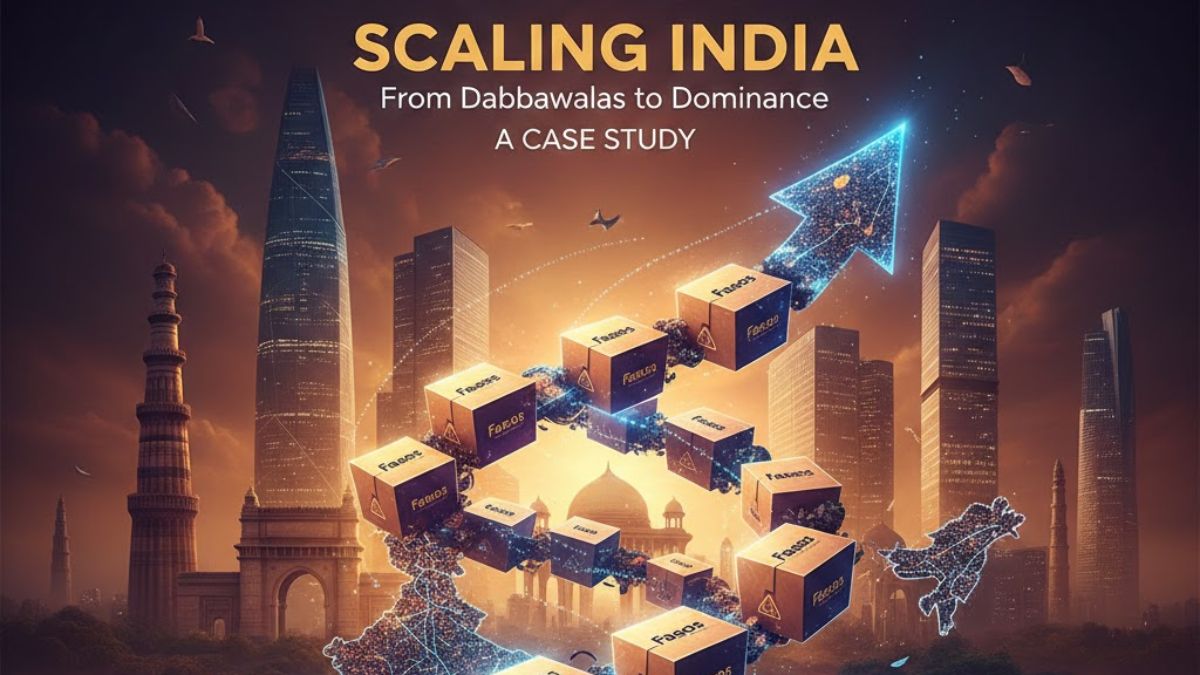
In the crowded, competitive world of food tech, one name stands out for fundamentally reshaping how Indians eat at home: Faasos. Today known as part of Rebel Foods, Faasos helped pioneer the cloud kitchen model that now dominates online food delivery across India. The brand’s journey from a small kitchen in Pune selling wraps to becoming part of a global network of 4,000+ internet restaurants across 10 countries is a study in strategic pivoting, data-driven innovation, and operational resilience. Faasos was founded to build a convenient alternative to traditional dine-in restaurants. Its early days focused on quick service and home delivery of Indian rolls, driven by founders Jaydeep Barman and Kallol Banerjee. Over time, they realised that rent-heavy storefronts were bleeding capital. In 2015, the company made a decisive shift to a cloud kitchen model delivery-only virtual kitchens that drastically reduced costs while increasing reach.
This pivot laid the foundation for a multi-brand cloud kitchen powerhouse. Rebel Foods, the parent company under which Faasos operates, now runs multiple virtual brands such as Behrouz Biryani. Oven Story Pizza, SLAY Coffee, and Sweet Truth on the same underlying infrastructure. With backing from top investors like Sequoia Capital, Goldman Sachs, and Temasek, Rebel Foods has raised hundreds of millions of dollars, achieved unicorn status, and expanded into international markets.
This case study explores the full arc of Faasos’ evolution why it started, how its founders navigated early struggles. The strategic choices behind its pivot to cloud kitchens, its business model and revenue drivers, its go-to-market playbook. The challenges it faced scaling operationally and technologically, and its place in India’s broader food delivery eco-system. Through a blend of public filings, interviews, and industry reports, we trace how Faasos went from a single brand to a multi-brand global cloud kitchen network.
1. Origins and Early Background of Faasos
Faasos traces its beginnings back to 2011, when founders Jaydeep Barman and Kallol Banerjee launched it as a quick-service restaurant in Pune, India, focusing on Indian wraps and rolls. Both Barman and Banerjee had strong academic and professional backgrounds. Barman later worked with McKinsey, and Banerjee was in sales leadership roles abroad before returning to India to build Faasos. The early years saw steady expansion with physical outlets across cities. Initially, Faasos operated traditional dine-in and takeaway outlets. Customers could visit physical stores, order food, and enjoy meals on site. But the founders quickly encountered challenges: high rental costs, staff overheads, and inconsistent footfall. Taking orders online became a bigger part of business as aggregators like Swiggy and Zomato gained popularity.
Rebel Foods the umbrella company for Faasos was formally registered in 2011, marking the shift to a broader food technology vision. The brand name “Faasos” remained for wraps and related offerings even as new virtual brands would follow.
2. Founder Journey, Motivation, and Early Struggles
Jaydeep Barman and Kallol Banerjee’s entrepreneurial paths were shaped by both opportunity and frustration. Barman, while working in Europe, often missed familiar Indian comfort food like Kolkata egg rolls. That craving ultimately planted the seed for Faasos.
When the pair launched Faasos, they faced steep competition from entrenched casual dining and QSR brands. Their initial concept a brand offering Indian wraps charmed early adopters but struggled to break into scale. Rapid expansion of physical outlets introduced operational cost pressures. In its first few years, high rentals and staffing strains led to unsustainable economics. A pivotal insight came from customer feedback: most customers ordering food online had never even visited their outlets. This suggested a glaring mismatch between physical presence and consumer behaviour. It pushed the founders to reimagine the business not as a restaurant chain, but as an internet restaurant focused on delivery rather than dine-in experiences. This realisation would become a defining moment in Faasos’ journey.
3. Identifying Market Challenges
In the early 2010s, India’s food delivery market was nascent. Consumers were gradually adopting online ordering through platforms like Zomato and Swiggy, but the majority of restaurants were still dine-in centric. Physical restaurant models carried high rental costs, unpredictable revenue streams, and limited scalability due to location constraints. For the Faasos founders, this presented two intertwined problems:
The first was inefficiency in traditional restaurant economics. High rent often consumed up to 20% of revenue, leaving little for staff or marketing. The second was that online food orders did not require eat-in space. If customers predominantly ordered from aggregators, why invest in high-street locations at all? Their strategic answer was to remove the most expensive and least value-adding part of the business customer-facing dine-in space and focus instead on kitchens that prepare food solely for delivery. This solved multiple problems at once: lowering costs, increasing capacity utilisation, and improving margins.
4. Product Evolution: From QSR to Cloud Kitchen Platform
In 2015, Faasos took a bold step that would redefine its entire trajectory. The term “cloud kitchen” might sound technical or abstract, but in practice, it’s a radical shift in how food reaches people. A cloud kitchen is a kitchen with no dine-in space purely for cooking and delivery. For Faasos, this wasn’t just a cost-saving measure; it was a strategic leap into the future of food service. The team realized that the traditional quick-service restaurant (QSR) model bright, street-facing outlets paying hefty rents was limiting growth. By pivoting to cloud kitchens, Faasos could set up in less expensive neighborhoods, closer to where orders were actually coming from, and focus all energy on preparing great food efficiently.
This pivot wasn’t just operational; it transformed the company’s mindset. Menus were streamlined for speed and consistency, preparation processes were standardized, and every decision was informed by data. The founders watched order patterns, customer preferences, and feedback closely, adjusting recipes and offerings with near real-time precision. It was a laboratory for learning every delivery was a data point, every repeat order a validation of taste, and every complaint a chance to improve.
The real genius of this shift became evident when Rebel Foods, the parent company, started experimenting with multiple virtual brands under the same kitchen roof. Beyond Faasos, brands like Behrouz Biryani, Oven Story Pizza, The Good Bowl, SLAY Coffee, and Sweet Truth began emerging, each catering to different cravings yet sharing the same infrastructure. Customers didn’t have to commit to one brand; they could explore different cuisines in a single order ecosystem. For the business, this multi-brand strategy was a revelation: kitchens were no longer tied to a single concept, capacity utilization soared, and customer lifetime value increased because the same household could order repeatedly without feeling limited.
5. Early Traction and Validation Phase
The results of this pivot were nothing short of transformative. Operationally, the move to cloud kitchens slashed costs dramatically. Rent which had eaten up roughly 20% of revenue in high-street outlets plummeted to under 2% in optimized kitchen locations. With shared kitchens supporting multiple brands, every square foot worked harder, producing more meals without proportionally increasing costs.
This efficiency translated into tangible growth. Within a few years, sales quadrupled, proving that the cloud kitchen model could scale faster and more profitably than traditional QSRs. Public filings from 2017–18 reveal the magnitude: revenue jumped 67% year-on-year, from ₹89 crore to ₹149 crore, while operational losses shrank. These weren’t just numbers they represented the validation of a vision. The team could see the potential of a model that prioritized food quality, customer satisfaction, and cost efficiency over flashy storefronts. For the founders, every new order was evidence that their gamble on cloud kitchens was paying off.
6. Business Model and Revenue Approach
At the heart of Faasos’ approach is a simple yet powerful principle: decouple the brand from physical space and focus on delivering experiences that customers love. The business model revolves around cloud kitchens and virtual brands, allowing Rebel Foods to scale rapidly without being tied to expensive dine-in locations. Revenue comes from two primary channels: direct sales through its mobile apps and third-party delivery platforms like Swiggy and Zomato. These partnerships give Rebel Foods access to an enormous customer base. Though it means sharing a percentage of revenue a trade-off that’s more than worth the reach.
The genius lies in multi-brand kitchens. One kitchen can serve Behrouz Biryani, Oven Story Pizza, and The Good Bowl simultaneously. This improves kitchen utilization, spreads fixed costs over more orders, and enhances unit economics. Customers benefit too they experience a variety of choices without compromise. Unlike traditional restaurant chains, this model allows Rebel Foods to launch new concepts quickly, experiment with offerings, and exit ideas that don’t resonate, all without the financial and logistical burden of physical outlets.
The cloud kitchen strategy didn’t just change how Faasos operates; it reshaped the company’s relationship with its customers, its team, and the market. It’s a story of taking risks, trusting data, and using empathy toward both employees and customers to craft a business model that’s efficient, scalable, and deeply human.
7. Funding History and Investor Involvement
Unlike many standalone startups, Faasos grew into a larger food tech entity under the parent company Rebel Foods, which has attracted significant venture capital interest. Sequoia Capital was among the earliest investors, leading initial funding rounds that supported early expansion. By 2019, Rebel Foods raised substantial capital, including a reported $125 million Series D round led by major global investors such as Goldman Sachs and others, bringing the company valuation into the mid-hundreds of millions.
Debt funding rounds also complemented equity raises. In 2022, Rebel Foods secured ₹100 crore in debt funding from InnoVen Capital and Trifecta Capital, with previous debt infusions from Alteria Capital. Industry reports suggest the company had raised over $520 million in debt and equity at a valuation of around $1.4 billion. By 2024, the company had secured a $210 million Series G round led by Temasek, along with participation from existing investors like Evolvence, supporting further geographic expansion and product diversification.
8. Go-to-Market Strategy and Distribution Channels
Faasos’ approach to reaching customers was never about the glitzy storefronts or premium addresses that most restaurants chase. From the start, the company understood that food today moves at the speed of delivery apps, not foot traffic. Instead of flagship locations, Faasos built a network of hyper-local cloud kitchens small, efficiently run spaces strategically placed near areas with high delivery demand. These kitchens were invisible to the public but fully optimized for speed, quality, and scalability.
This strategy allowed Faasos to test micro-markets with agility. A new cuisine concept could be launched in one neighborhood, monitored through order patterns, feedback, and repeat rates, and either refined or scaled across the city. The data never lied every order was a real-time insight into what people wanted, when they wanted it, and how quickly they expected it.
Third-party aggregators like Swiggy and Zomato became crucial partners in this ecosystem. They provided immediate access to thousands of potential customers without Faasos having to spend heavily on customer acquisition. Meanwhile, the company’s own mobile app offered a direct channel, enabling loyalty programs, personalized recommendations, and deeper engagement.
Marketing in this world was digital-first. Social media campaigns, influencer partnerships, and storytelling for each virtual brand created distinct personalities while connecting them back to the Rebel Foods umbrella. Customers didn’t just receive food they experienced a narrative: Behrouz Biryani was indulgence, Oven Story was comfort, SLAY Coffee was energy. Each touchpoint reinforced brand values and made ordering feel personal, not transactional.
9. Brand Positioning and Messaging Evolution
Faasos’ brand journey mirrors its operational evolution. It began simply, as a wrap-focused QSR, but the cloud kitchen model unlocked the ability to explore new cuisines and customer segments. Rather than stretching a single brand too thin, the company developed a portfolio of virtual brands, each carefully curated to resonate with specific tastes. Behrouz Biryani became the destination for rich, aromatic Indian biryani lovers. Oven Story Pizza captured pizza enthusiasts with fresh toppings and quick delivery. SLAY Coffee tapped into a growing urban demand for beverages that fit a fast-paced lifestyle. Each brand had its own identity, voice, and visual storytelling, yet all lived under the Rebel Foods ecosystem.
This multi-brand strategy was more than clever marketing it solved a real operational challenge. Consumers often seek variety without having to navigate multiple platforms or providers. By offering distinct yet co-located brands, Rebel Foods increased average order value, enhanced customer retention, and strengthened trust: every brand promised quality and consistency, backed by a single, disciplined operational backbone. The overarching message became clear: convenience, choice, and reliability in a digitally native format. Customers weren’t just buying meals; they were buying confidence that each order would meet expectations.
10. Key Challenges and Turning Points
Faasos’ rise was far from a smooth climb. Early financial records revealed steep losses as the company invested heavily in new kitchen infrastructure and technology. The cloud kitchen pivot itself was a high-stakes gamble, requiring operational expertise that didn’t exist overnight and cultural adaptation across teams used to traditional restaurant workflows. Competition intensified quickly. Established food tech platforms and legacy restaurant brands rushed to explore cloud kitchens, forcing Rebel Foods to continually differentiate on speed, quality, and brand experience. Managing multiple virtual menus from shared kitchens introduced operational complexity one slip in quality control could affect multiple brands simultaneously.
Regulatory hurdles added another layer of pressure. Cloud kitchens operate without face-to-face customer interaction, raising questions about food safety, hygiene, and logistics. Standardizing operations across kitchens while staying compliant with evolving regulations became a continuous challenge. Despite these obstacles, the team leaned on disciplined execution. Technology became a lifeline automated kitchen workflows, real-time order tracking, and predictive analytics ensured consistency and efficiency. Cultural shifts were embraced: every chef, delivery partner, and operations manager understood that every meal carried the company’s reputation. The result was remarkable: Rebel Foods grew steadily, built customer trust across brands, and proved that a cloud-kitchen-first approach could scale without sacrificing quality.
It’s a story of perseverance, experimentation, and empathy both for the teams running the kitchens and the customers receiving the food. Every challenge faced became a lesson, every operational tweak a small victory, and every satisfied order a proof point that innovation and care could coexist in the world of food delivery.
11. Operational Execution, Technology and Supply Chain Insights
After pivoting to the cloud kitchen model, a major part of Faasos’ (and Rebel Foods’) success came from execution on the ground and a strong technology backbone. The company built what it calls Rebel OS, a proprietary operating system that standardises and streamlines kitchen operations, inventory management, forecasting, customer engagement and data analytics across all kitchens. This full-stack technological platform has been vital in scaling efficiently and maintaining quality across cities and brands.
Rebel OS helps manage multiple brands from a single kitchen, reducing redundant equipment and workforce costs. It also supports demand forecasting using real-time data from delivery partners and internal apps, which enables the company to keep stock just-in-time, minimise waste, and optimise food preparation. These data-driven insights affect menu decisions and help tweak offerings based on local tastes and peak order timings.
This system has empowered Rebel Foods to operate consistently across 450+ cloud kitchens in 75+ cities, including international markets such as the UAE and the UK. These kitchens collectively serve millions of customers each month with a variety of menus under brands like Faasos, Oven Story, Behrouz Biryani, Lunch Box, and Sweet Truth. The supply chain strategy is tightly integrated with these operational systems. Rebel Foods negotiates directly with ingredient vendors and centralises key procurement processes to maintain consistency across locations. By aggregating demand and handling logistics centrally, it achieves better pricing and quality control than standalone restaurants could on their own.
12. Competitive Landscape and Differentiation
When Faasos first shifted to cloud kitchens, few Indian players were pursuing the model at scale. Today, the cloud kitchen landscape in India is crowded, with competitors like Curefoods, EatClub, Biryani by Kilo, and others emerging. Some traditional aggregators such as Zomato and Swiggy have experimented with their own ghost kitchen networks or partnerships.
12.1 But Faasos and Rebel Foods set themselves apart in several ways:
- First, they pioneered the multi-brand kitchen concept, where different cuisine brands run from the same kitchen infrastructure. This improves capacity utilisation and allows cross-selling to customers who might order everything from biryani to pizza to coffee.
- Second, the technology has been a competitive moat. Many smaller operators lack a robust backend to coordinate demand, stock, delivery times, and menu forecasting. Rebel OS’s analytics and forecasting capability gives the company an edge in optimizing costs and reducing turnaround times.
- Third, the company’s global footprint – with kitchens not just in India but also in foreign markets – underscores its operational scalability compared to many regional players still confined to a handful of cities.
13. Growth Metrics, Milestones and Achievements
Most of Faasos’ growth story must be understood through the performance and evolution of Rebel Foods as the parent entity, since individual brand metrics aren’t always disclosed publicly. A key milestone came in 2021, when Rebel Foods became a unicorn after raising $175 million in a funding round led by Qatar Investment Authority, valuing the company at about $1.4 billion. This was one of the first cloud kitchen companies in India to achieve unicorn status, underscoring investor belief in the model. In FY24, the company posted revenues of approximately ₹1,420 crore, up 19% from ₹1,195 crore in FY23, and significantly narrowed its losses by 42% to ₹378 crore. This performance reflects an operational focus on efficiency and scaling sustainably as margins improve.
At the time of the Series G funding in late 2024, Rebel Foods’ cloud kitchen network was operating in more than 75 cities in India and overseas, with hundreds of kitchens and over 45 brands in its portfolio. This scale makes it one of the largest cloud kitchen networks globally. Notably, many of the brands housed under Rebel Foods have achieved independent success: for instance, Behrouz Biryani became one of the standout brands and significantly contributed to overall revenue growth.
14. Team Building and Leadership Approach
The leadership team at Rebel Foods has balanced entrepreneurial vision with operational discipline. Founders Jaydeep Barman and Kallol Banerjee set the strategic direction, while co-founder and CEO Sagar Kochhar has been instrumental in scaling operations, driving technology adoption, and exploring new categories like quick commerce through products like QuickiES.
Rebel Foods’ organisational structure encourages cross-functional collaboration. The technology, culinary innovation, operations, and data analytics teams work closely to ensure that product development, kitchen execution, and customer delivery are aligned. This integrated approach is a contrast to traditional restaurants, where kitchen and business teams often operate in silos. The company has also made strategic hires to bolster international expansion and brand management as it grows beyond India into Southeast Asia, the Middle East, and the UK.
15. Regulatory and Industry-Specific Hurdles
Operating a cloud kitchen business at scale carries its own regulatory and legal complexities. Food safety regulations vary by region, and compliance with municipal health authority standards is essential. Rebel Foods has navigated these requirements by implementing standardised hygiene protocols and ensuring that each kitchen remains compliant with local food safety laws. Regulatory frameworks affecting food delivery and cloud kitchens remain evolving, and companies must adapt to regional licensing requirements and quality audits.
There are also industry dynamics around food delivery aggregators. Commission structures on platforms like Zomato and Swiggy can impact margins, and cloud kitchen operators must continually negotiate, innovate, and sometimes diversify channels to mitigate dependency on any single partner.
16. The Current Status of Faasos and Rebel Foods
By 2026, Rebel Foods stands as one of the most expansive internet restaurant companies in the world. It operates hundreds of cloud kitchens across India and has a meaningful presence internationally. Its portfolio includes over 45 brands serving various cuisines from Indian comfort food to global favourites, from biryani to coffee.
The company remains private and continues to refine operations while exploring an initial public offering (IPO), which public statements indicate could occur within the next 18–24 months. Its leadership has consistently reiterated that profitability and efficiency improvements remain strategic priorities ahead of any listing.
17. Future Outlook
Rebel Foods and by extension, Faasos operates in a market that continues to evolve rapidly. The cloud kitchen model is increasingly accepted in India and globally as a viable alternative to traditional restaurant formats. As technology improves and customers grow more comfortable with delivery-only brands, the advantages of cloud kitchens are likely to expand.
The company’s future strategy appears focused on three core fronts: continuing to deepen penetration in Tier 2 and Tier 3 cities, strengthening its tech and data infrastructure, and expanding omnichannel formats like physical food courts and hybrid outlet experiences under concepts like EatSure. These formats allow the company to tap into both delivery and offline demand at the same time.
Rebel Foods’ investment in expanding cloud kitchens and branded formats signals confidence in sustained demand for diversified, delivery-optimized food brands. With the planned expansion to over 120 cities and continued innovation, Faasos and its sibling brands are positioned to remain central players in India’s food delivery ecosystem well into the next decade.
About foundlanes.com
foundlanes.com is India’s leading startup idea discovery platform. It helps entrepreneurs find actionable startup opportunities, market insights, and industry-specific guidance to turn ideas into real businesses. With deep research and practical resources, foundlanes supports founders at every stage, from idea validation to launch and growth.