News Summary
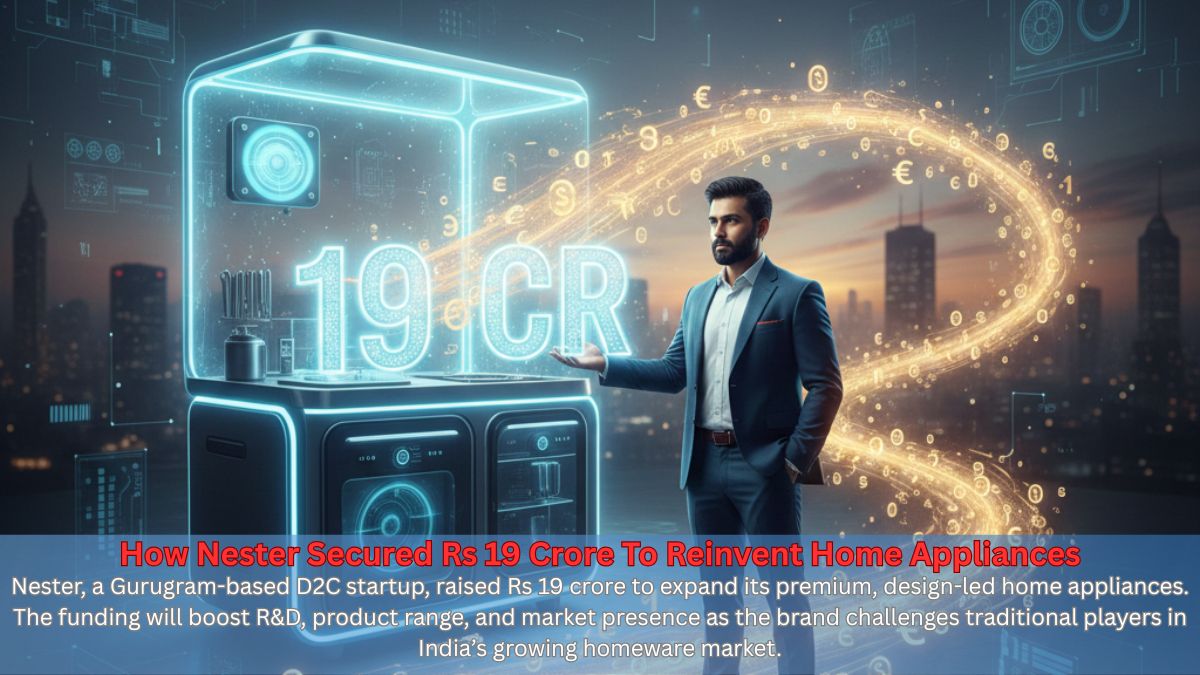
Nester Secured Rs 19 Crore in a pre‑Series A funding round that could be a turning point for design‑led home appliances in India. The Gurugram‑based startup raised the capital from leading early‑stage investors Fireside Ventures and OTP Ventures, with additional support from Sadev Ventures and Titan Capital. Founded in late 2025 by Abhinav Singh. Nester is a direct‑to‑consumer (D2C) brand focused on premium. Multi‑functional small home appliances and homeware products that aim to simplify daily routines with thoughtful design and advanced usability. The company plans to use the funds to deepen product research and development, expand its portfolio. And strengthen its go‑to‑market presence across online and offline channels.
In a market where legacy players often compete on price alone, Nester’s approach stands out with design‑first, tech‑enabled appliances that fill noticeable gaps in functionality and user experience. Products like steam air fryers, toasters, and wooden seasoning grinders reflect this philosophy. The startup also intends to scale manufacturing capabilities, potentially shifting from contract production to in‑house facilities to improve quality control and margin management.
The broader home appliances market in India is growing rapidly due to higher disposable incomes. Expanding ecommerce penetration, and increased consumer interest in premium products. This structural shift has drawn investor interest to startups that combine smart engineering with strong branding. Particularly in segments historically dominated by large incumbents. With Nester Secured Rs 19 Crore and backed by seasoned investors, the brand is poised to challenge traditional norms and capture a larger share of the evolving homeware landscape. This article explores how Nester’s model works, the challenges it addresses, the competitive environment, and what this funding means for the startup and India’s consumer goods ecosystem.
1. The Story Behind Nester and Its Funding
1.1 Founding a Modern Homeware Brand
Nester’s journey began with a simple insight: many home appliances in India lag behind global standards in design and functionality. Founder Abhinav Singh, who previously served as chief growth officer at Progcap until 2024, saw an opportunity to change how everyday kitchen and home products are built and experienced.
In October 2025, Singh formally launched Nester, positioning it as a premium, design‑first, and tech‑driven D2C homeware brand. The idea was to build products that are not just functional but intuitive and aesthetically pleasing, blending form with purpose. This contrasted with the legacy market where most products focus primarily on price and basic features.
From the beginning, Nester aimed to leverage functional engineering to solve everyday problems. For example, while many air fryers produce dry food, Nester’s variants use technologies such as SteamLock to retain moisture and enhance taste. Early consumer feedback suggested this focus on utility and user delight resonated with urban buyers who are increasingly quality conscious.
1.2 Nester Secured Rs 19 Crore: The Funding Details
In February 2026, Nester closed a pre‑Series A round that saw the startup Secured Rs 19 Crore from a strong lineup of investors. Fireside Ventures and OTP Ventures led the round, highlighting confidence in the company’s vision and execution. Sadev Ventures and Titan Capital participated as co‑investors, bringing additional strategic support and expertise.
This capital injection marks an important milestone for the young brand. It will support deeper research and development (R&D), product innovation, and expansion of the product portfolio in the premium home appliances space. The investment underscores the belief that well‑engineered, design‑focused consumer products have strong long‑term potential in India’s growing market.
2.0 Understanding Nester’s Business Model and Strategy
2.1 D2C Retail Model and Customer Focus
Nester operates primarily as a direct‑to‑consumer brand. It sells products through its own website and marketplaces like Amazon. This allows the company to gather first‑hand customer feedback and tailor its product roadmap based on real responses. Offline retail expansion and presence on quick‑commerce platforms are also planned to bring products closer to customers.
The D2C model gives Nester flexibility in pricing, branding, and customer engagement that traditional retail channels often lack. It can control brand narrative, showcase product innovation clearly, and adapt quickly to changing consumer trends. This agility is a key strength in a market where customer expectations are evolving fast.
2.2 Revenue Streams and Product Portfolio
Nester’s revenue comes from the sale of small home appliances and complementary homeware products. Its current lineup includes tech‑enhanced devices such as steam air fryers, juicers, toasters, grinders, and lifestyle accessories like aprons. The focus is on premium, multi‑functional products that address real household needs.
The startup plans to roll out four to five new products in the coming months, with further launches later in the year. This expansion is aimed at capturing a broader share of the homeware and kitchen appliance market as consumer preferences shift toward quality and design. Nester’s revenue model also emphasises upselling and repeat purchases. Functional products that provide clear value can encourage consumers to explore more offerings from the brand. This, combined with a strong online presence and future offline availability, creates multiple growth levers.
2.3 Addressing Consumer Pain Points
Many small appliances in the Indian market suffer from dated design, lack of functional innovation, and a focus on price over experience. Nester’s products are engineered to solve specific user frustrations. The steam air fryer’s moisture‑retention technology is one example of this problem‑solving mindset. By focusing on ergonomic design and multi‑functionality, Nester aims to reduce customer churn and build deeper brand loyalty. The rationale is simple: products that perform better and feel thoughtfully designed are more likely to be recommended and repurchased.
3. Industry Trends and Competitive Landscape
3.1 Growth in India’s Home Appliances Market
India’s home appliances and consumer durables sector is experiencing structural growth driven by rising disposable incomes, increased ecommerce penetration, and a growing preference for premium products. Analysts estimate that the market could breach $30 billion by 2030, growing at a compound annual growth rate (CAGR) of around 7.2 percent from 2025 levels.
As middle‑class households grow and lifestyles change, demand for appliances that combine functionality with design is rising. Consumers are willing to spend more on products that simplify daily routines and offer superior experiences. This trend creates room for new entrants like Nester to carve out a meaningful niche.
3.2 Competitive Landscape
Nester competes with both emerging startups and established legacy brands. Direct competition comes from other design‑led D2C appliance brands such as Nuuk, Atomberg, Geek Technology, and Wonderchef, which also seek to capture market share through innovation.
However, legacy players like Havells and USHA continue to dominate larger parts of the home appliances market due to scale, distribution networks, and brand equity built over decades. Competing against these incumbents requires not just product innovation but careful execution of supply chain and marketing strategies. Nester’s strategy is to leverage its design focus and functional differentiation to appeal to younger, quality‑conscious consumers who value both form and function. This positioning may help the brand navigate intense competition and build lasting customer relationships.
4. Founders, Leadership, and Vision
4.1 Leadership and Founding Team
Abhinav Singh, the founder and CEO of Nester, is not just a strategist but a problem solver at heart. Before founding Nester, he spent years at Progcap, driving growth initiatives and learning the intricate balance between data, customer needs, and business scalability. These experiences shaped his philosophy that products must do more than just exist they must actively improve the user’s daily life. For Abhinav, a blender or a toaster is not just a machine; it is an extension of the home, designed to save time, reduce frustration, and bring a touch of delight into routine moments.
Building Nester, Abhinav focused on more than assembling a team; he sought kindred spirits who shared his obsession with functional beauty. Engineers, designers, and marketers were chosen not only for their skill but for their curiosity and empathy for users. The leadership culture he fostered emphasizes disciplined execution, iterative learning from real consumer feedback, and a relentless drive for excellence. Employees describe a work environment where ideas are tested honestly, failures are celebrated as learning, and every decision is grounded in the user’s experience.
This human-centric approach has resulted in early products that feel thoughtful, intuitive, and alive—appliances that genuinely respond to how people live, cook, and organize their homes. Investors noticed this clarity and purpose, seeing a founder who could combine vision with meticulous execution, a rare trait in a crowded D2C landscape.
4.2 The Startup Journey So Far
Though Nester was founded in late 2025, its journey is already packed with pivotal lessons and tangible results. The first challenge was translating Abhinav’s vision into actual products. The team started by conducting immersive field research, spending hours in kitchens, observing routines, and identifying frustrations with conventional appliances. This led to innovations like the SteamLock air fryer, designed to retain moisture while cooking, and ergonomically crafted grinders that felt natural in hand, not just functional.
From the initial concept to the first product launch took mere months a testament to the startup’s agility. But what truly set Nester apart was its willingness to listen to users constantly. Early customers provided detailed feedback, sometimes critical, sometimes glowing, which the team internalized and acted upon immediately. Each product iteration reflected a deep empathy for the user experience, blending technology and design in a way that felt personal.
Securing Rs 19 crore in pre-Series A funding was not merely a financial milestone; it validated the team’s painstaking attention to detail and its ability to identify a gap in the market. The funding allows Nester to expand its R&D capabilities, hire specialized talent, and scale production without compromising quality. More importantly, it gives the team the mental and financial bandwidth to dream bigger, experiment more boldly, and refine products to perfection. Early sales numbers suggest growing traction, with repeat customers praising both reliability and aesthetics a sign that the startup is resonating deeply with its audience.
Investors saw the results of this thoughtful approach: strong early adoption metrics, high customer satisfaction, and a clear roadmap to become a market leader. Abhinav reflects, “For me, funding is a tool, not a goal. The real measure is whether our products make life better, and so far, that’s what keeps the team awake at night.”
5. The Startups News
TheStartupsNews.com has chronicled Nester’s journey because it exemplifies a new wave of consumer-first startups in India. Here, startups are not only building products but creating stories, experiences, and lifestyles. Coverage of Nester Secured Rs 19 Crore demonstrates how emerging homeware brands are challenging decades-old norms.
By merging design, technology, and deep user empathy, Nester reflects a trend where startups act as problem-solvers rather than mere product sellers. Platforms like TheStartupsNews.com play a critical role in spotlighting these journeys, sharing insights on leadership strategies, innovation, and how funding can translate into meaningful customer impact. Readers ranging from aspiring founders to investors—gain actionable knowledge about how intentional design, careful scaling, and a human-first approach can disrupt even entrenched markets.
6. Learning for Startups and Entrepreneurs
6.1 Prioritize Product Purpose Over Novelty
Nester teaches a profound lesson: innovation without purpose is noise. Every appliance launched is intentionally designed to solve a tangible problem. Startups should emulate this approach, asking not just “what’s new?” but “what’s meaningful for the user?” Abhinav and his team spent weeks identifying small but critical pain points, turning each into a feature that genuinely mattered. Results? Early adopters not only bought the products but shared them with friends and family, driving organic growth.
6.2 Use Funding to Strengthen Core Strengths
Nester Secured Rs 19 Crore strategically it was not splurged on marketing alone but directed toward R&D, talent acquisition, and production efficiency. Entrepreneurs often chase flashy campaigns; Nester’s experience shows that investing in what differentiates you creates sustainable impact. The startup now has the resources to enhance quality, test new prototypes, and scale distribution actions that directly affect long-term customer loyalty.
6.3 Balance Innovation and Execution
Building exceptional products is only half the battle. Startups must ensure supply chains, quality control, and operations scale alongside innovation. Nester’s disciplined approach demonstrates that even the most creative ideas fail without robust execution. The team’s iterative design cycle, backed by responsive manufacturing and attentive customer support, creates a virtuous loop: better products lead to happier users, which lead to higher retention and word-of-mouth advocacy.
6.4 Understand Your Market’s Evolution
Finally, timing matters. Nester’s rise coincides with a shift in India toward premium, design-conscious consumption. Entrepreneurs must not just build products; they must anticipate market trends and consumer expectations. By aligning product strategy with evolving lifestyles, Nester positioned itself not as a challenger but as a pioneer in a space where thoughtful appliances were once rare.n and design‑aware consumption. Recognizing broader trends and timing market entry accordingly can significantly impact growth trajectories.
7. Conclusion
Nester Secured Rs 19 Crore in a pre‑Series A round is more than a funding milestone. It signals investor confidence in premium, design‑first home appliances and the power of meaningful product innovation. By addressing real consumer needs with functional, aesthetically driven products, Nester is positioned to reshape how Indian households think about homeware. As the company expands its portfolio, strengthens manufacturing, and grows its market reach, it could become a notable player in the evolving consumer durables landscape. This funding underscores a broader shift in India’s startup ecosystem where design and functionality increasingly define success.
About foundlanes.com
foundlanes.com is India’s leading startup idea discovery platform. It helps entrepreneurs find actionable startup opportunities, market insights, and industry-specific guidance to turn ideas into real businesses. With deep research and practical resources, foundlanes supports founders at every stage, from idea validation to launch and growth.