Summary
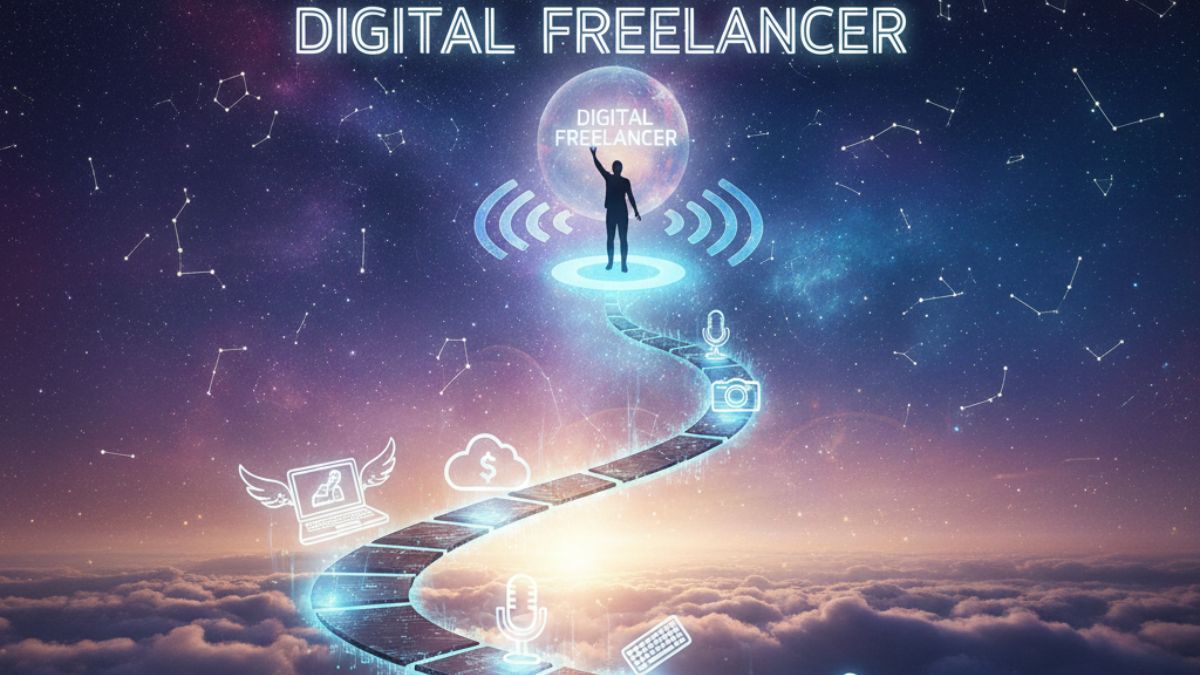
For many Indians, learning how to become a digital freelancer is no longer a side experiment. It has turned into a career path that promises independence, global access, and income that isn’t tied to geography. The question is simple: what does it take to begin, who is this path meant for, and how does someone turn their skills into paid work online? The answer sits at the intersection of timing, technology, and personal ambition. Digital freelancing refers to offering services online to clients across the world. These services can be anything—writing, design, coding, video editing, marketing, virtual assistance, customer support, research, or something more niche. The demand for online freelancers has grown because companies want flexible teams. They want experts without hiring full-time staff. They want speed. Freelancers fill that gap.
Why does it matter now?
Why does it matter now? Remote work has become normal. Small businesses want skilled talent at affordable rates. Startups operate globally from day one. The digital services market is growing at double-digit rates every year. India, with its young workforce and digital adoption, is sitting at the center of this shift. Who chooses this path? Students who want early income. Working professionals seeking freedom. Homemakers rebuilding careers. Creators chasing independence. Anyone with a skill and a laptop can step in.
Where does this journey begin? On freelance platforms like Upwork, Fiverr, LinkedIn, and niche communities. Some choose direct outreach. Some start through content creation. A few begin with personal networks. The location doesn’t matter. The internet is the marketplace. When is the right time to start? Right now. The demand for remote freelancers is climbing, and early movers build stronger portfolios as new competition enters. How does someone actually begin? By identifying a skill, packaging it into a service, building a simple portfolio, and pitching consistently. The first project may take time. The second comes faster. Over months, the freelancer becomes a brand of their own.
And how much does it cost? Very little. A laptop, an internet connection, and time. That’s the real investment. Everything else grows with experience. This article breaks down the full roadmap, designed specifically for India’s emerging founders, creators, and digital professionals on foundlanes.com.
1. Startup Idea Overview
The core idea of becoming a digital freelancer is simple: you turn your skill into an online service that clients can pay for. It’s a business built around expertise. Instead of creating a product, you create value through your capabilities. This model solves a major problem in today’s market. Companies need flexible, specialized support without long-term hiring commitments. Freelancers bridge this gap by offering targeted services at competitive rates.
For aspiring freelancers, the opportunity lies in the shift toward remote-first work. Digital businesses don’t care where talent lives. A designer in Bengaluru can work for a founder in Berlin. A marketer in Jaipur can support a brand in New York. A writer in Pune can draft campaigns for Singaporean startups. The entire world becomes the marketplace. The solution that freelancing offers is two-sided. Clients get affordability and speed. Freelancers get independence, income, and the ability to grow on their own terms. This makes digital freelancing one of the most accessible startup ideas in India today.
2. Problem Statement & Solution
The traditional job market has cracks that are widening. Salaries don’t always match inflation. Workplaces demand long hours. Many people feel stuck in roles that don’t offer creative freedom or financial growth. Students graduate into a competitive landscape with limited placement support. Homemakers who want to return to work often struggle with rigid timings. Professionals with niche skills don’t always find companies willing to hire them full-time.
Businesses face challenges too. Hiring permanent staff is expensive. Recruitment takes time. Training takes even more. Startups need agility rather than bureaucracy, and they prefer specialists who can jump in quickly. Freelancing fixes these issues by creating a flexible and skill-focused ecosystem. Individuals choose projects based on their strengths. Companies hire experts for specific tasks without long contracts. Work becomes project-driven instead of time-driven. For many Indians, this isn’t just a career alternative—it’s a path toward reclaiming control.
Digital freelancing also solves the accessibility problem. You don’t need a degree from a big institute or a massive network. You only need skill, consistency, and a way to prove your value to clients. This shift has opened doors for thousands of Indians in tier 2 and tier 3 cities who once never imagined working for international clients.
3. Target Audience & Customer Persona
The ideal customer in a digital freelancing model is someone who needs results more than long-term employees. This could be a startup founder racing against time, a small business owner handling too many tasks, or a marketing manager looking for specialised project-based help. They want speed, expertise, and reliability. They want someone who understands digital tools and trends. Most importantly, they want someone who can deliver without hand-holding. On the freelancer side, the persona is diverse. Young students enter freelancing to gain early income and experience. Working professionals use it to escape burnout or earn side income. Creative individuals use it as a platform to showcase their craft globally. Homemakers treat freelancing as a flexible comeback route. Those hit by layoffs see freelancing as a safety net that can turn into a full-time career.
Why do they choose this path? Because freelancing offers something traditional jobs rarely do: autonomy. You decide your projects, your clients, your hours, and your income potential. And when done well, digital freelancing offers more than money—it gives a sense of personal ownership that is deeply human and emotionally fulfilling.
4. Market Opportunity & Timing
The market for digital freelancers is expanding faster than almost any traditional employment category. Global businesses are shifting budgets from full-time hires to contract-based digital work. They are doing this because the world has moved into a remote-first rhythm. The digital services market is growing every quarter. Startups rely heavily on independent talent for marketing, design, automation, development, and content. The rise of online freelance jobs has turned this into a mainstream workforce.
India’s position in this landscape is unique. We have a young population that is fluent in technology. We also have lower living costs compared to Western countries, which allows Indian freelancers to offer high-quality work at competitive prices. This combination has quietly made India one of the world’s largest hubs for remote freelancers. Millions of Indians already earn through platforms like Upwork, Fiverr, Freelancer, Toptal, and specialized communities on LinkedIn. Timing plays a major role here. Global economic uncertainty has made companies reconsider full-time hiring. They want to reduce risk. They want flexibility. want talent that can scale up or scale down depending on project needs. Freelancing is the perfect model for this new economy.
This shift is not temporary. It signals a long-term transformation in how work is completed across sectors. The digital age demands speed, specialized knowledge, and access to the best talent regardless of location. Freelancers are the ones who fit these needs. For an Indian professional willing to learn how to become a digital freelancer, the timing couldn’t be better.
5. USP & Value Proposition
Every digital freelancer must understand what makes them stand out. The freelance market is large, but clients don’t compare thousands of people at once. They compare a few profiles that show clarity, competence, and confidence. Your unique selling proposition becomes the personality of your freelancing business. It shows clients why they should choose you instead of someone else.
A strong USP comes from three places: skill strength, delivery style, and emotional connection. Some freelancers are known for speed. Some are known for attention to detail. Others are known for creativity or technical depth. The best ones combine skill with a human-first experience. They communicate clearly. They respond on time. make clients feel understood and cared for. In a world filled with automated messages and template pitches, genuine human interaction becomes valuable.
Your value proposition should answer a simple question: what promise can you deliver consistently? Maybe you write content that feels alive and warm. Maybe you design visuals that tell stories. you build websites that load fast and look beautiful. you manage social media accounts with personality. When clients sense this clarity, they trust you more. For a freelancer in India, one of the strongest advantages is adaptability. Indian freelancers often handle diverse industries across global markets. This cultural flexibility becomes a quiet strength. It helps you understand different client expectations and deliver work that feels personalized. That’s the real value that separates successful freelancers from the crowd.
6. Business Model & Pricing Strategy
A freelancing career may feel personal, but it is still a business. You need a revenue model, pricing strategy, and financial structure that makes the journey sustainable. Digital freelancers earn through service fees, project charges, hourly billing, retainers, or value-based pricing. The right model depends on the type of work you do. Hourly pricing works well for tasks that require unpredictable revisions or continuous involvement, such as consulting, development, editing, or management roles. Project-based pricing is ideal when the scope is clear—like building a website, designing a brand kit, or writing a set number of articles. Retainers work best when a client wants ongoing monthly support, such as social media management or content marketing.
Indian freelancers often start with very low rates. It feels safe because it helps secure early clients. But staying underpaid harms long-term growth. Clients who choose you only because you are cheap rarely value the relationship. Sustainable pricing must reflect the time, effort, and expertise you bring. As your portfolio grows, raise your fees with confidence. Profit margins for digital freelancers are generally high because operational costs are low. Your laptop, internet connection, and a few digital subscriptions form the base investment. This allows even first-time freelancers to stay profitable. The key is to treat pricing as a reflection of your professional worth. You aren’t just selling hours. You’re selling what those hours can create.
7. Execution Plan & Launch Strategy
Building a freelancing career is less about planning and more about taking action. The first step is identifying a service you can offer. Choose something you enjoy, because you’ll be doing it often. Once you define your service, your next step is building a simple portfolio. It doesn’t have to be perfect. Even three well-finished samples can build trust. After that, you need to create presence. This means setting up profiles on freelance platforms, building a LinkedIn profile that tells your story, and preparing a short pitch that you can personalize for each client. It also means choosing one or two niche areas. Clients prefer specialists. Position yourself around a problem you solve well.
When launching, consistency matters more than anything. Send pitches every day. Engage with posts on LinkedIn. Share your work publicly. Create small case studies. The early months feel uncertain, but they shape your identity as a digital freelancer. To get your first client, you may need to go beyond platforms. Reach out directly through email or LinkedIn, especially when you find startups that match your skills. Offer value in the first message. Suggest a small improvement. Share a quick insight. This shows initiative and differentiates you from automated pitches.
Your MVP in freelancing is your first delivery. A strong first project becomes your best marketing tool. Happy clients give testimonials, repeat work, and referrals. They help you grow without constant pitching. In India, word-of-mouth grows faster than ads. The more heart you put into your work, the more your name spreads within communities. That is how freelancers turn into brands.
8. Budget, Resources & Infrastructure
One of the biggest advantages of digital freelancing is how little money it takes to begin. Many businesses need an office, inventory, staff, and formal infrastructure. Freelancers need only a skill, a laptop, and a stable internet connection. That’s why so many young Indians step into freelancing while still in college or during their first job. The entry barrier is low, but the income potential is high.
Your initial budget depends on the type of service you offer. Writers and virtual assistants mostly need cloud tools like Google Workspace, Grammarly, and project management platforms. Designers might need Adobe Creative Cloud or Canva Pro. Developers need hosting services, code tools, or GitHub subscriptions. Video editors need editing software and some storage upgrades. Even with these tools, the monthly expenses stay manageable. Beyond tools, your real investment is time. You spend hours learning, practicing, creating samples, and understanding freelance platforms. invest emotional energy into building relationships with clients. pour your best effort into delivering work you’re proud of. This invisible cost often matters more than money, especially in the early stages.
8.1 Infrastructure for a digital freelancer isn’t physical
Infrastructure for a digital freelancer isn’t physical. It’s the ecosystem you build around yourself. This includes your online profiles, portfolio website, email template library, and communication habits. It includes how you store your work, how you track projects, and how you organize your schedule. The more disciplined your system becomes, the easier your work feels. Over time, you develop a workflow that blends your personal style with professional expectations.
The freedom here is powerful. You get to choose your tools, your space, and your workflow. Some freelancers work from cafés in Kochi. sit on their balcony in Bhopal. work at night after their job. Some work at 6 a.m. on quiet mornings. You build your infrastructure around your life, not the other way around. This flexibility is one of the biggest emotional rewards of digital freelancing.
9. Brand Strategy
When you first learn how to become a digital freelancer, it’s easy to underestimate the importance of branding. It might feel like branding is for startups or influencers. But freelancers who treat themselves as brands grow faster, attract better clients, and earn higher fees. Your brand becomes the promise behind your work. It reflects who you are, what you stand for, and how you make clients feel. Brand strategy begins with your name. Many freelancers use their personal name because it builds trust. It shows vulnerability and confidence. Others choose a simple business name if they plan to expand into an agency later. Either way, the name should be memorable and easy to pronounce for global clients.
Your logo can be minimal. Most freelancers use a clean wordmark. The goal isn’t decoration. It’s recognition. You want clients to remember you. You want them to see your name and think about the feeling your work gave them. That is what branding really means.
Your brand voice matters too. This isn’t about sounding fancy. It’s about authenticity. If you’re warm and friendly, let that reflect in your communication. you’re analytical and clear, let that define your style. If you’re creative and story-driven, express that openly. Clients don’t just buy skills—they buy how you make their journey easier. Positioning becomes your shield in a crowded market. Don’t say you do “everything.” Identify a niche. Position yourself around a problem. For example, “I help SaaS startups simplify content,” or “I help small businesses grow through clever social media storytelling.” When your brand has a clear focus, clients know when to choose you. Humanness is the strongest part of any freelancer’s brand. Freelancing isn’t transactional—it’s emotional. It’s about trust, reliability, and empathy. When clients feel safe with you, your brand becomes undeniable.
10. Vendor & Partner Strategy
A freelancer doesn’t operate alone, even if the work is personal. Collaboration boosts growth. You may need editors, designers, video editors, developers, or consultants to support bigger projects. When a client expects you to deliver beyond your capacity, having trusted partners allows you to scale without compromising quality. Choosing vendors or partners requires intuition and practical thinking. Look for people who match your values. They must respect deadlines. They must communicate clearly. must treat your clients with the same care you offer. Skill can be trained. Integrity cannot.
Partnerships play a crucial role when your workload increases. Many Indian freelancers evolve into micro-agencies by collaborating with other specialists. This is how single-person businesses start handling large retainers from international brands. You take the lead role, coordinate the team, and ensure quality. Your partners handle execution in areas outside your expertise.
Vendor relationships also help with learning. When you collaborate with experts, you absorb their methods, pace, and strategies. It’s like being in a silent classroom built on mutual respect. Freelancers who embrace collaboration grow faster than those who stay isolated. For technical freelancers, vendors may include hosting providers, software companies, and cloud service platforms. For creative freelancers, vendors could include stock image libraries, typography suppliers, or printing partners. Choosing stable, reliable vendors ensures smoother delivery. he emotional part of partnering is trust. When you share work with someone, you’re sharing your name. You’re sharing the client’s trust. The people you collaborate with must value that. When your network becomes your support system, freelancing becomes less lonely and more fulfilling.
11. Go-to-Market & Customer Acquisition Channels
A freelance career begins with skill, but it grows with visibility. Your go-to-market strategy defines how clients discover you. For Indian freelancers, the most effective channels are freelance platforms, LinkedIn, Instagram, personal websites, and referrals. Each channel works differently, and each adds a new layer to your growth. Freelance platforms offer instant access to a global market. Clients come ready with budgets and requirements. Your job is to stand out with strong profiles and thoughtful proposals. When you start, competition may feel overwhelming. But consistent pitching builds momentum. You win small projects. Small projects lead to bigger ones.
LinkedIn is powerful because it blends professional credibility with storytelling. When you share your journey, your struggles, your wins, or your learning experiences, people connect emotionally. Clients remember freelancers who feel human. They respond to honesty and vulnerability. Instagram works well for visual freelancers—designers, illustrators, photographers, video editors. Your feed becomes your portfolio. Your stories become your behind-the-scenes world. Clients enjoy seeing the person behind the work.
A personal website gives structure to your identity. It holds your portfolio, testimonials, services, and story. It shows clients that you are serious about your craft. Referrals are the heart of long-term growth. When you treat clients with care, they talk about you. They mention your name in meetings. They send you to their friends, colleagues, and investors. Every freelancer who stays consistent eventually reaches a point where clients come without asking.
Customer acquisition isn’t a formula. It’s a journey of showing up with sincerity. The world is crowded with automated outreach and generic messages. Your real advantage is your humanity. When clients feel your presence, they choose you.
12. Growth & Retention Strategy
Growth as a digital freelancer isn’t a straight line. It comes in waves, each bigger than the one before it. In the beginning, the focus is on learning how to become a digital freelancer and finding that first client who trusts you. But once you have a small base, the real journey begins. Growth comes from expanding your skill set, raising your prices, improving your workflow, and building a reputation that moves ahead of you. The strongest growth lever is specialization. When clients see you as the best person for a specific problem, they come to you willingly. A social media manager who focuses on early-stage startups grows faster than someone who offers everything. A writer who specializes in SaaS or finance becomes irreplaceable. A designer who creates clean, modern, minimal visuals becomes memorable. Specialization builds authority, and authority builds demand.
Retention is equally important. Many freelancers make the mistake of constantly searching for new clients. But long-term income comes from repeat relationships. When a client stays for months, the financial stability is comforting. You feel less anxious. You work with more love. understand their brand more deeply, which improves your delivery. Retention grows through trust. Clients want consistent communication, honesty, and reliability. They want someone who tells them the truth when something is impossible and finds solutions when something is challenging. They want a partner, not just a service provider. When you care about their success, they feel it. Human connection creates loyalty far stronger than discounts ever will.
Growth also comes through storytelling. Share your wins online. Explain your process. Celebrate your clients. Post thoughtful insights. When people see the heart behind your work, your brand grows naturally. Growth becomes the result of being seen, and being seen comes from showing up.
13. Team Structure & Responsibilities
Freelancing may start as a solo journey, but it rarely stays that way. As your workload increases, you begin to realize that your time is your most precious resource. To scale, you need support. This is when many freelancers evolve into micro-agencies or collaborative teams. The early team structure is simple. You, as the founder, take on the role of strategist, communicator, and quality controller. You handle client onboarding, project planning, creative direction, and final approvals. Execution work can be shared with collaborators. For example, a content writer may hire editors or researchers. A designer may hire motion artists or illustrators. A developer may hire testers or UI designers.
Outsourcing plays a vital role in this stage. Delegation helps you maintain your quality without overwhelming yourself. When the right people support you, you free up emotional and creative space. You get to focus on the parts of the work that you truly love. This shift is liberating. It reminds you why you started. As your client base grows, you may hire assistants for project management or communication. These small supports create a big difference in how smoothly you operate. Many Indian freelancers reach this stage within their first two to three years of consistent work.
A good team functions like an ecosystem. Each person brings strengths. Each person supports the other. The goal is not to build a big company. The goal is to build a sustainable system where everyone grows together. Freelancers who adopt a team mindset early find the transition to a larger business much easier later.
14. Risks, Challenges & Mitigation
Every freelancing journey carries challenges, some technical and some emotional. The biggest challenge is unpredictability. Income fluctuates. Some months feel abundant. Others feel quiet. That silence can create self-doubt. It can make you question your skills, your choices, and your future. This emotional instability is real and common. The solution is planning. Create a small financial buffer. Save a little from each project. Build multiple revenue streams, such as retainers, one-time projects, and long-term contracts. This variety stabilizes your income and reduces stress.
Another risk is burnout. Freelancers often push too hard. They take every project out of fear of missing out. They work long hours. forget to rest. Burnout steals your creativity and joy. You must set boundaries early. Define working hours. Take breaks. Say no when necessary. Freelancing is a marathon, not a sprint. Client risk is also real. Some clients delay payments. Some change requirements. disappear entirely. To protect yourself, use contracts. Keep communication clear. Ask for advance payments. Your emotional peace is worth more than one extra project.
Skill stagnation is another challenge. The digital world changes quickly. If you stop learning, you fall behind. Make learning a habit. Take small online courses. Follow industry leaders. Experiment with new tools. Curiosity keeps your career alive. Mitigation isn’t about eliminating risks. It’s about building the emotional and professional strength to handle them without losing yourself. Freelancers who stay grounded, patient, and adaptable thrive despite challenges.
15. Legal, Compliance & Fundamentals
In India, freelancing is legal and straightforward. You can start as an individual sole proprietor without any formal registration. You simply need invoices, a bank account, and a system to track your payments. But as income grows, compliance becomes important. If your annual earnings cross the GST threshold, you must register for GST. For international clients, GST on export services is usually zero-rated, but the paperwork must be handled properly. It’s wise to consult a CA for clarity.
You should also create simple contracts for each project. A basic agreement should include timelines, deliverables, payment terms, and revision limits. Contracts protect both you and the client. They bring clarity, which prevents conflicts. Freelancers may also consider registering as a sole proprietorship or LLP once income becomes stable. This gives more structure and credibility. But it’s optional in the early years. The legal process should not intimidate you. It’s simply part of treating freelancing as a business. The more organized your compliance, the more professional and confident you feel.
16. Long-Term Vision & Goals (Future Outlook)
The future of digital freelancing in India looks bright. The world is becoming more remote, more flexible, and more digital. Businesses want specialists, not generalists. They want skill, speed, and reliability. Digital freelancers offer all three. In the next three to five years, someone who starts today can evolve from a beginner to a respected expert. You can move from small one-time gigs to long-term retainers. can raise your prices. can build a recognizable personal brand. can turn your solo practice into a team. can even start an agency or launch a digital product.
The emotional transformation is even deeper. You gain confidence. You build independence. wake up with a sense of ownership. feel proud of what you create. feel connected to people across the world. Freelancing becomes more than work. It becomes a way of life. The journey of learning how to become a digital freelancer is not just about money. It’s about rediscovering your voice, your rhythm, and your place in the world. It’s about building a life where your talent becomes your identity and your future is in your hands.
About foundlanes.com
foundlanes.com is India’s leading startup idea platform, built for dreamers who want to create, innovate, and take bold steps toward independence. We share deeply researched startup ideas, practical playbooks, market insights, and human-centered guidance to help first-time founders, creators, and digital professionals build meaningful businesses. Our mission is simple: to help India turn more ideas into real, thriving ventures. If you’re someone who thinks differently and dreams fearlessly, FoundLanes is where your journey begins.