How to Start a Cloud Kitchen in India: A Complete Guide for Aspiring Food Entrepreneurs
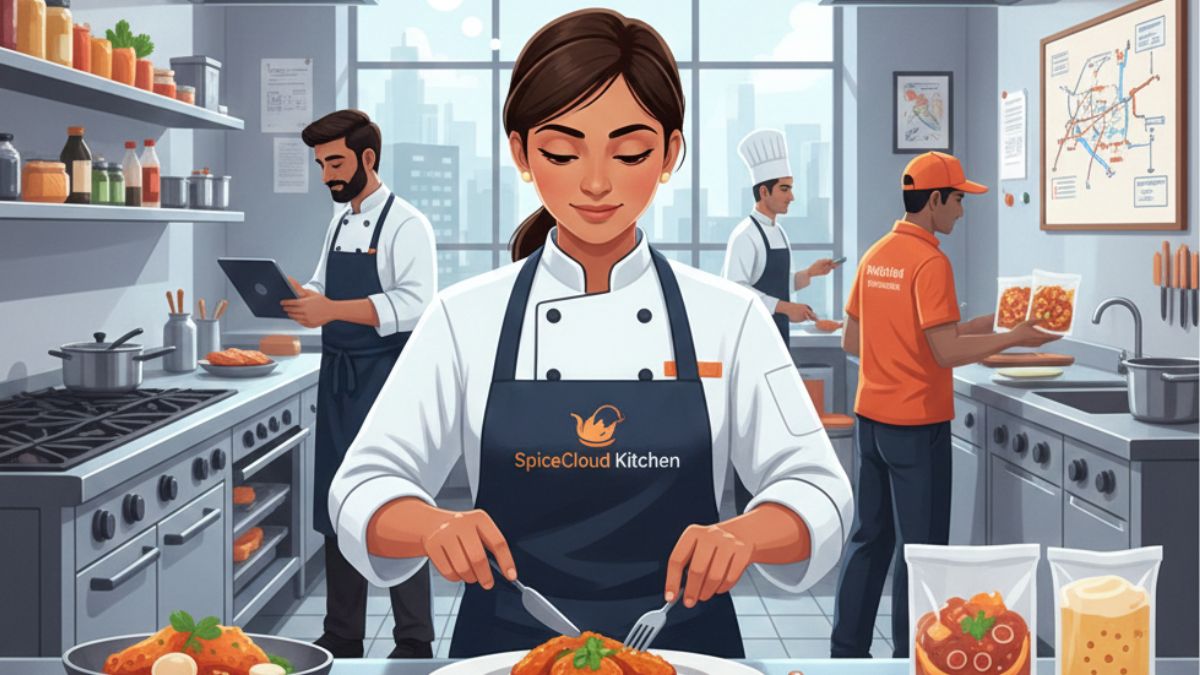
Imagine a small, steamy kitchen in a bustling neighborhood of Mumbai. A young entrepreneur stirs a pot of biryani, checking the aroma, adjusting the spices, and hoping that when the delivery partner knocks on the customer’s door, they’ll see not just food—but care, effort, and a piece of their story. This is the magic of a cloud kitchen. It’s not about tables, décor, or fancy interiors—it’s about connecting with someone through what you cook.
In India, starting a traditional restaurant often feels impossible. Skyrocketing rents, complex staffing, and infrastructure costs crush dreams before they begin. But the cloud kitchen model changes everything. It offers a doorway for anyone with passion and grit—first-time entrepreneurs, home cooks, and chefs—to enter the food business with lower risk, smaller investment, and a focus on what truly matters: the food itself.
The opportunity has never been better. India’s cities and Tier-2 towns are experiencing a delivery-first revolution. Busy professionals, students, families, and office teams increasingly rely on online food delivery to save time and enjoy variety. With initial investments ranging from ₹2 lakh for a home-based kitchen to ₹9 lakh for a commercial setup, founders can start small, experiment, and scale rapidly. Your revenue comes from satisfied customers choosing your food, your growth depends on consistency, care, and trust, and your success is measured in meals served, not just numbers on a spreadsheet.
This guide is for anyone who has ever dreamed of sharing their food with the world. It walks you through every step of starting a cloud kitchen in India—legally, operationally, and emotionally—because starting a food business isn’t just about profits. It’s about passion, perseverance, and the joy of feeding people.
1. Startup Idea Overview
A cloud kitchen is more than a business model—it’s freedom for dreamers who want to feed thousands without the burden of a traditional restaurant. There’s no expensive décor, no sprawling dining area, no waitstaff to manage. Instead, it’s a focused, high-efficiency kitchen where strategy meets craft. In India, where real estate is costly and competition for footfall is intense, cloud kitchens provide a platform to experiment, refine, and scale without being crushed by overheads.
For customers, it’s convenience delivered straight to their doorstep. For founders, it’s control. Every menu item reflects your creativity, every recipe tells a story, and every delivery carries your personal touch. You can run multiple brands from one kitchen, respond to feedback instantly, and pivot quickly to match demand.
Every meal that leaves your kitchen is more than food—it is proof of care, dedication, and persistence. It represents countless hours of experimentation, meticulous attention to quality, and the relentless pursuit of delighting someone you may never meet. In this model, passion is measurable, and every satisfied customer becomes a testament to the human story behind the business.
2. Problem Statement & Solution
Traditional restaurants are a gamble, even for the most talented chefs. High capital requirements, long-term leases, and large teams consume energy, focus, and money long before the first customer arrives. Many brilliant concepts fail not because the food isn’t good, but because the infrastructure overwhelms the vision.
Cloud kitchens address this challenge head-on. By removing the overhead of dine-in operations, founders can focus on what truly matters: food quality, hygiene, and dependable delivery. You are no longer just preparing meals—you are solving real problems. Hunger, time constraints, and the demand for convenience become your challenges to address.
This model allows you to innovate faster, experiment with menus, and pivot according to customer feedback. It is scalable, lean, and far more adaptable than traditional dining. Each successful delivery is a tangible connection to your customer, a proof point that your business is not just surviving but thriving. In a cloud kitchen, passion meets practicality, and care becomes a measurable part of every meal you serve.
3. Target Audience & Customer Persona
Your audience is real people with lives full of demands, routines, and cravings. They are the office worker skipping lunch because deadlines won’t wait, the college student looking for a comforting midnight snack, or the parent juggling work and family, seeking a hassle-free dinner solution. What they value most is reliability, speed, and consistent taste—a promise that every order will meet expectations.
In Tier-2 and smaller cities, the profile expands: office teams ordering group meals, young families exploring convenient dining options, and students experimenting with new cuisines. Across demographics, one principle holds true: consistency builds trust. Each timely, well-prepared meal strengthens the emotional bond between your brand and your customers.
Repeat orders are far more than revenue—they are validation. They show that your food does more than fill a plate; it fits into daily lives, routines, and habits. For a cloud kitchen, cultivating this trust is as crucial as the recipes themselves. Every satisfied customer becomes part of the story you are building, one meal at a time.
4. Market Opportunity & Timing
India’s food delivery ecosystem is growing faster than ever. Rising urbanization, increasing disposable incomes, and near-universal smartphone access are turning online food ordering from a convenience into a habit. Consumers expect variety, speed, and quality, creating a fertile environment for cloud kitchens to thrive. The timing could not be better. Cloud kitchens let founders enter this booming market with lower financial risk and greater operational flexibility than traditional restaurants. They can test new concepts, introduce authentic flavors, and scale quickly without the heavy burden of dine-in infrastructure.
Across cities and towns, consumers are hungry—literally and figuratively—for innovative food experiences and dependable service. Those who move now can earn loyalty early, establishing a foothold before competition intensifies. In a market growing this fast, speed and care define who will win and who will be forgotten.
5. USP & Value Proposition
The power of a cloud kitchen lies in focus. Freed from the distractions of décor, dining space, or front-of-house staff, you can dedicate every resource to what truly matters: exceptional food, timely delivery, and a seamless customer experience. Some kitchens specialize in health-conscious meals, others in regional flavors or bold fusion experiments. The niche you choose reflects your vision and expertise, but how you execute defines your reputation.
Your value proposition is deeply emotional. Each dish carries your care, each packaging decision shows thoughtfulness, and every on-time delivery reinforces trust. Customers aren’t just ordering a meal—they are trusting you to deliver consistency, quality, and attention to detail. When executed well, your USP becomes more than a statement; it becomes a lived experience that transforms first-time buyers into loyal patrons.
6. Business Model & Pricing Strategy
Revenue in a cloud kitchen comes directly from online orders, with aggregator platforms often taking a commission. This makes pricing one of the most critical decisions you make. You must carefully balance ingredient costs, labor, packaging, and delivery fees while keeping meals appealing and accessible to your target audience.
Margins are typically tight, but they can be improved with smart menu planning, precise portion control, and operational efficiency. Streamlining processes—like prep workflows, inventory management, and delivery coordination—directly impacts profitability without compromising quality.
Pricing also communicates your brand’s promise. Are you offering affordable comfort that feels reliable every day, or a premium culinary experience that justifies every rupee? Done right, each order does more than generate revenue; it tells a story of consistency, care, and trust. Customers feel the value, and in turn, your kitchen earns loyalty that scales beyond the numbers.
7. Execution Plan & Launch Strategy
Starting a cloud kitchen is as much a personal journey as it is a business venture. It begins with understanding your market—studying local tastes, analyzing competitors, and designing a menu that is distinctive but operationally manageable. The goal is to create offerings that excite customers while allowing you to maintain quality and consistency.
Next comes the kitchen itself. Whether shared, leased, or home-based, the space must be functional and well-equipped. Every tool, appliance, and workflow should support efficiency without compromising hygiene or taste. Partnering with delivery platforms ensures reach, but your listings, photos, and descriptions must reflect the care and attention you put into every meal.
Launch small. Treat your first orders as promises, not transactions. Collect feedback attentively and iterate quickly. Each dish leaving your kitchen carries your energy, your effort, and your commitment. In these early days, every satisfied customer is proof that your vision is not just an idea—it is becoming a living, human-centered experience.
8. Budget, Resources & Infrastructure
Launching a cloud kitchen requires both capital and courage. Initial investments cover rent, kitchen equipment, licenses, packaging, and staff wages. A small home-based kitchen can start with around ₹1.5–2 lakh, while a fully equipped commercial setup may require ₹5–9 lakh. These numbers provide the foundation, but they are only part of the story—your dedication and attention are equally critical.
Operational costs continue beyond launch. Utilities, ingredients, delivery commissions, and marketing all demand careful management. Maintaining a cash buffer is essential—it allows you to focus on quality, consistency, and customer satisfaction rather than constantly worrying about survival. Smart allocation of resources ensures that your kitchen can grow sustainably, adapt to challenges, and deliver an experience that keeps customers coming back. Investing wisely is about more than money; it’s about creating a system where your effort, energy, and care translate directly into operational efficiency and memorable meals.
9. Brand Strategy
Your brand is more than a logo or a catchy name—it is your kitchen’s personality. Every touchpoint, from your website and social media presence to packaging and customer communication, tells your story before the first bite reaches a customer. Consistency across these channels builds credibility and signals that you care about the experience as much as the food itself.
Whether your brand is playful and fun, focused on health-conscious meals, or rooted in authenticity and tradition, it must carry emotion. Customers are not just buying food; they are buying your story, your reliability, and the care you invest in every meal. A well-crafted brand turns a single order into a lasting impression and lays the foundation for loyalty that scales alongside your kitchen.
10. Vendor & Partner Strategy
Suppliers and partners are more than vendors—they are essential collaborators in your journey. High-quality ingredients, dependable packaging, and trustworthy delivery partners directly affect the experience your customers receive. Reliability and consistency here are non-negotiable, because every misstep reflects back on your brand.
Strong relationships reduce stress and give you confidence that quality will be maintained, even during peak demand or unforeseen challenges. Diversifying delivery channels helps manage risk, while nurturing supplier loyalty ensures that you can continue to meet your promises without compromise. In a cloud kitchen, these partnerships are not just operational—they are an extension of the care and attention you put into every order.
11. Go-to-Market & Customer Acquisition Channels
Finding your first customers is about more than visibility—it’s about connection. Food delivery apps give you reach, but social media shows your personality and builds familiarity. Word-of-mouth and referral programs amplify credibility, turning early diners into advocates. Pop-ups, introductory offers, and collaborations with micro-influencers generate excitement, giving people a reason to try your food.
Every order counts. Beyond revenue, each delivery leaves an emotional imprint—your care in preparation, packaging, and timely service shapes how customers remember you. In these early stages, building trust and delighting first-time customers is more valuable than any single marketing metric. The relationships you form now become the foundation for long-term loyalty.
12. Growth & Retention Strategy
Growth in a cloud kitchen starts with loyalty. Every repeat customer is tangible proof that your food, service, and care resonate. They signal that your kitchen isn’t just meeting expectations—it’s building trust. Loyalty programs, seasonal menu updates, and personalized touches strengthen these connections, turning casual diners into long-term advocates.
Scaling is not just about opening new kitchens or expanding into cities; it’s about expanding relationships while maintaining the consistency and quality that earned trust in the first place. Every decision—whether launching a new brand, introducing a menu innovation, or entering a new market—must serve the human need for reliable, satisfying food. Growth that preserves care and attention ensures your kitchen remains beloved, even as it becomes bigger and more visible.
13. Team Structure & Responsibilities
In the early days, founders wear every hat: chef, operations manager, marketer, and quality controller all at once. It’s exhausting, but it’s also where the foundation of the business is built. Early hires—chefs, kitchen assistants, and delivery coordinators—help distribute responsibilities, allowing you to focus on vision, quality, and growth.
Outsourcing non-core functions, like accounting or digital marketing, keeps overhead low while maintaining efficiency. Clear role definitions and aligned responsibilities ensure the kitchen runs smoothly, even as complexity increases. A team that shares your dedication and mission becomes an extension of your care, ensuring every order reflects the same attention and quality that you put into your brand.
14. Risks, Challenges & Mitigation
Running a cloud kitchen comes with its share of challenges: intense competition, unpredictable order volumes, occasional supply disruptions, and reliance on aggregator platforms. Margins are often thin, and small missteps can feel magnified.
Mitigation requires preparation, flexibility, and resilience. Diversifying sales channels reduces dependency, strong supplier relationships ensure reliability, and swift responses to customer feedback turn potential setbacks into opportunities for improvement. Each challenge becomes a lesson—an invitation to refine operations, strengthen processes, and enhance the customer experience. In a cloud kitchen, resilience is not just about surviving difficulties; it’s about using them to grow smarter, faster, and more connected to the people you serve.
15. Legal, Compliance & Fundamentals
Compliance is non-negotiable for a cloud kitchen. FSSAI registration, GST filings, municipal trade licenses, fire safety certificates, and adherence to local regulations are all essential. These aren’t just bureaucratic hurdles—they are commitments to professionalism, safety, and accountability.
Following regulations protects your business, your customers, and your partners. It signals reliability to delivery platforms, vendors, and diners alike. Customers trust kitchens that operate transparently and safely, and that trust translates directly into loyalty. Compliance is the quiet foundation that allows your kitchen to grow sustainably, delivering quality food without risk, and building a reputation that stands the test of time.
16. Long-Term Vision & Goals
In three to five years, a successful cloud kitchen evolves beyond a single location. Your vision may include multiple kitchens, proprietary delivery channels, and a deeply loyal customer base. Metrics of success go beyond revenue—they include repeat orders, customer satisfaction, and strong brand recognition.
Some founders expand into packaged foods, catering, or even franchises, but the core remains unchanged: delivering meals with care, consistency, and passion. Growth is measured not only in numbers, but in the trust and emotional connection your kitchen has cultivated with customers. Every expansion, every new market, and every operational improvement should reflect the same dedication that made your first orders memorable. At its heart, long-term success is about scaling the human experience, not just the business.
Future Outlook
Cloud kitchens are not just a business model—they are a mirror of modern Indian life. People are busy, digital-first, and craving convenience. But at its core, this business is human. Each order represents someone’s trust, hunger, and anticipation. Those who embrace the human side of this business—care, quality, empathy, and consistency—don’t just create revenue—they create connection, loyalty, and lasting impact.
The FoundLanes View
At foundlanes, Culture Circle’s journey stands out not just for its headline-grabbing numbers but for what it reveals about building modern Indian startups—where trust, verification, and transparency can drive rapid adoption, even as losses widen. The Culture Circle 10x revenue growth reflects a clear market insight executed at speed, alongside the inevitable pressure of scaling through heavy spending on technology, hiring, and marketing. Stories like this matter because they show entrepreneurship as it truly unfolds: fast, demanding, and full of trade-offs, where short-term financial strain is often the price paid for long-term relevance and scale.