How Lenskart Built and Scaled in India — Fixing a Problem Indians Had Learned to Accept
How Lenskart built and scaled in India begins with a question most Indians never thought to ask: Why are spectacles so expensive, inconsistent, and inconvenient in a country where millions need them?
For decades, eyewear in India existed in a strange blind spot. Vision problems were common, but the process of fixing them was fragmented, outdated, and opaque. Prices varied wildly. Quality was uncertain. Customer experience depended entirely on which local optician you walked into.
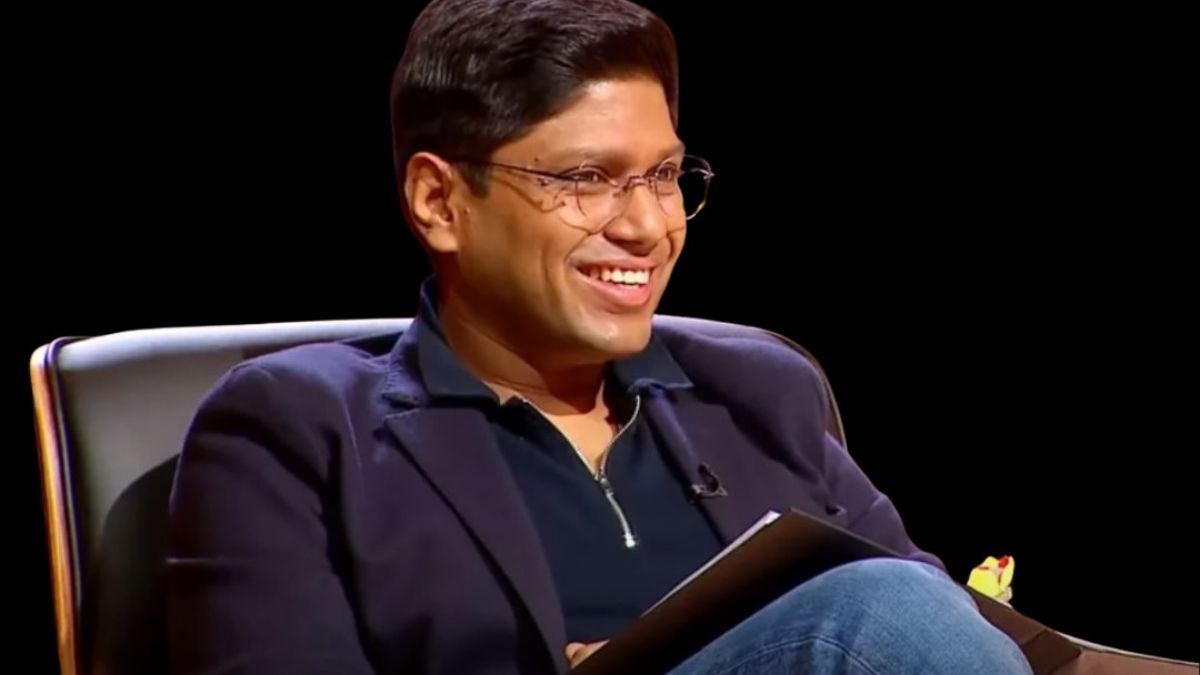
This dysfunction was normalized. In 2010, Lenskart was founded to challenge that normalization. Founded by Peyush Bansal along with co-founders, Lenskart set out to build a vertically integrated eyewear company that could combine technology, affordability, and scale. The company is headquartered in Gurugram, Haryana, and was launched at a time when ecommerce in India was still struggling with trust, logistics, and unit economics.
Lenskart operates as an omnichannel eyewear platform, selling prescription glasses, sunglasses, and contact lenses through both online channels and a rapidly expanding offline retail network. Its model integrates eye testing, frame design, lens manufacturing, distribution, and retail — an approach rarely attempted at scale in India before.
Over the years, Lenskart has raised capital from global investors, expanded internationally, and disclosed parts of its financial performance through funding announcements and media reports. Its growth has been closely tracked as one of India’s most ambitious D2C and retail startups. How Lenskart built and scaled in India is not just a story of ecommerce. It is a story of attacking inefficiency at every layer of a legacy industry — and surviving the complexity that followed.
1. India’s Eyewear Market Before Lenskart
Before Lenskart, buying spectacles in India was rarely a pleasant experience. Most consumers depended on neighborhood opticians. Pricing was opaque. Two stores on the same street could quote drastically different prices for similar lenses. Frames were often unbranded. Warranties were unclear. Eye testing quality varied significantly. Technology adoption was minimal. Follow-up service was inconsistent. Yet consumers tolerated it — because there were few alternatives. This acceptance of inefficiency created an opening. But it was not obvious. Eyewear sat at the intersection of healthcare, retail, and fashion — a complicated place for a startup to enter.
1.1 Peyush Bansal’s Unusual Founder Path
Peyush Bansal did not come from retail. He studied at McGill University and worked at Microsoft in the United States. He returned to India not with a fully formed eyewear idea, but with an entrepreneurial instinct shaped by exposure to global consumer tech. Before Lenskart, Bansal experimented with multiple online ventures. Some failed quietly. Some worked briefly. These early attempts mattered. They taught him distribution realities, customer acquisition costs, and the patience required to build in India. When he turned his attention to eyewear, it was not because it looked glamorous. It was because it looked broken.
1.2 Identifying a Problem Hiding in Plain Sight
India has one of the largest populations with vision impairment. Yet eyewear penetration remained low. Regular eye testing was uncommon. Affordability was a barrier. Trust was missing. Lenskart identified three core problems: lack of price transparency, inconsistent quality, and poor accessibility. Solving just one would not be enough. How Lenskart built and scaled in India required rebuilding the entire value chain — not just selling glasses online.
2. The Early Product: Convenience Without Confidence
Lenskart started as an online eyewear retailer.
Customers could browse frames, upload prescriptions, and place orders. The proposition was convenience and lower prices. But reality intervened. Eyewear is not like books or electronics. Fit matters. Comfort matters. Vision accuracy matters. Returns were high. Customer hesitation was real. The early traction was encouraging, but not convincing. Lenskart learned quickly that ecommerce alone could not solve a deeply physical product.
2.1 First Customers and Early Validation
Early customers were price-sensitive and digitally curious. They appreciated lower prices, but questioned accuracy. Many still preferred offline confirmation. These signals were not failures. They were feedback. Instead of pushing harder online, Lenskart paused to rethink distribution. That pause would become its biggest advantage.
3. The Strategic Shift: From Ecommerce to Omnichannel
Most startups double down when growth slows. Lenskart did something riskier. It went offline. Opening physical stores was expensive. It slowed expansion. It complicated operations. But it solved the trust gap. Customers could test frames, get eye exams, and still enjoy standardized pricing. This hybrid model reshaped how Lenskart expanded across India.
3.1 Offline Stores as Experience Centers
Lenskart stores were not traditional optical shops. They were standardized, branded, and technology-enabled. Eye tests were digitized. Frame catalogs were expanded beyond shelf limits. Stores became experience centers, not inventory warehouses. Online and offline fed into each other. This omnichannel retail approach would define Lenskart’s India scaling journey.
4. Business Model Evolution: Control Over the Stack
As store count increased, Lenskart realized another limitation. Dependence on third-party lens suppliers restricted margins and quality control. The company began investing in backward integration — manufacturing lenses, designing frames, controlling supply chains. This was capital intensive. Execution risk increased. But it unlocked consistency. How Lenskart scaled its business in India became less dependent on negotiation and more dependent on execution.
4.1 Early Revenue Discipline
Unlike many consumer startups, Lenskart focused on unit economics early. Discounts were used, but not as identity. Repeat purchases and referrals mattered. Eyewear replacement cycles were predictable. Customer lifetime value was measurable. This allowed Lenskart to scale without collapsing under burn.
5. Brand Positioning: Affordable, Not Cheap
Lenskart avoided positioning itself as the cheapest option. Instead, it emphasized value — modern designs, standardized quality, transparent pricing. Eyewear was reframed from medical necessity to everyday accessory. This repositioning expanded the market itself. More people began buying multiple frames. Style entered the conversation.
5.1 Marketing That Normalized Eye Care
Advertising focused on awareness, not urgency. Eye tests were encouraged. Screen usage was discussed. Children’s vision became a theme. Lenskart was not just selling products. It was selling behavior change. That change compounded over time.
6. Competitive Landscape Begins to Shift
As Lenskart grew, competitors emerged. Some copied pricing. Others copied stores. Few matched integration. Eyewear proved difficult to disrupt without scale, capital, and patience. Lenskart’s early investments became barriers for late entrants.
7. Part One Closing: A Company Mid-Transformation
By the time Lenskart crossed hundreds of stores, it was no longer an ecommerce experiment. It was becoming a retail-manufacturing hybrid with national ambition. But scale brought new challenges — supply chain complexity, capital demands, leadership strain. How Lenskart built and scaled in India was about to enter its most demanding phase.
8. When Retail Met Manufacturing: The Decision That Changed the Company
As Lenskart’s store network expanded, a hard truth surfaced. Selling eyewear at scale in India was not just a retail problem. It was a manufacturing problem. Dependence on third-party lens suppliers created bottlenecks in pricing, delivery timelines, and quality consistency. Each inefficiency multiplied as volumes grew. The company faced a choice that many startups avoid. Either remain a retailer constrained by suppliers, or become a vertically integrated eyewear company. Lenskart chose the harder path. How Lenskart built and scaled in India entered a new phase when it began investing in lens manufacturing, frame design, and supply chain control.
8.1 Backward Integration as a Survival Strategy
Backward integration was not driven by margin ambition alone. It was driven by predictability. By manufacturing lenses in-house and designing frames internally, Lenskart could standardize quality across cities, reduce turnaround time, and control pricing with greater confidence. This reduced customer complaints and improved repeat purchase behavior. For an eyewear startup, this level of integration was rare. For India, it was almost unheard of at scale.
9. Manufacturing at Scale Without Losing Speed
Manufacturing brought its own complexity. Factories required capital, skilled labor, and quality assurance systems. Errors at this layer were costly and reputationally damaging. A single faulty batch could undermine years of trust. Lenskart invested heavily in process discipline. Automation, quality checks, and inventory forecasting became core operational priorities. This was not glamorous work. It did not make headlines. But it stabilized the business. How Lenskart scaled its business in India depended increasingly on operational reliability rather than marketing ingenuity.
9.1 Technology as the Invisible Glue
Technology quietly connected Lenskart’s expanding ecosystem. Customer prescriptions flowed from stores to factories. Inventory data synchronized across locations. Demand forecasts informed production cycles. For consumers, the experience felt simple. For the company, it was a complex orchestration of data, logistics, and human execution. This invisible infrastructure allowed Lenskart to scale without collapsing under its own weight.
10. Funding, Capital, and the Cost of Ambition
As integration deepened, capital requirements increased. Lenskart raised funds from global investors over multiple rounds, with valuations reflecting its ambition to become a category-defining eyewear company. Funding announcements often emphasized store expansion, technology investment, and manufacturing capacity. Unlike asset-light startups, Lenskart’s capital was tied to physical assets. Stores, factories, equipment, and inventory absorbed cash quickly. This made financial discipline non-negotiable.
10.1 Managing Growth Under Investor Expectations
Investor backing brought both confidence and pressure. Growth targets became explicit. Expansion plans accelerated. International markets entered strategic discussions. Leadership had to balance long-term infrastructure building with short-term performance metrics. How Lenskart expanded across India during this phase required careful sequencing — opening stores without overstretching operations, scaling factories without compromising quality.
11. International Expansion: Testing the Model Beyond India
With a strong domestic foundation, Lenskart began exploring international markets. These expansions were not blind replications. Each market posed different regulatory, cultural, and consumer behavior challenges. Some experiments progressed steadily. Others required recalibration. International expansion reinforced a core lesson: the Indian model worked because it was built for Indian complexity. Exporting it required humility.
12. Operational Strain and the Cost of Scale
As store counts crossed significant milestones, internal strain became visible. Hiring at scale challenged culture. Training consistency varied. Operational lapses occurred. Customer experience, once tightly controlled, risked fragmentation. Leadership responded by reinforcing standard operating procedures, investing in training, and tightening feedback loops. Scaling was no longer about adding locations. It was about preserving standards.
12.1 Learning to Say No to Speed
At multiple points, Lenskart slowed down deliberately. Store openings were paused. Processes were refined. Systems were stress-tested. In a startup ecosystem obsessed with velocity, this restraint stood out. How Lenskart built and scaled in India was increasingly defined by knowing when not to grow.
13. Competitive Landscape: Why Eyewear Remained Difficult to Disrupt
As Lenskart scaled, competitors attempted to enter eyewear with various models. Some focused on online-only strategies. Others mimicked store designs. A few emphasized price. Few matched integration. Eyewear is unforgiving. Errors are visible. Customer dissatisfaction is immediate. Returns are costly. Lenskart’s moat was not brand alone. It was execution density built over years. This made the category less attractive for shallow disruption.
14. Leadership, Culture, and Founder Influence
Peyush Bansal remained deeply involved as the company scaled. Leadership emphasized experimentation, but also accountability. Teams were encouraged to question assumptions, but not ignore data. The culture valued problem-solving over presentation. As the company matured, professional management layers strengthened governance without erasing founder vision. This balance helped Lenskart transition from startup to institution.
15. Regulatory and Industry-Specific Challenges
Eyewear operates at the edge of healthcare. Eye testing standards, product quality regulations, and consumer protection laws added complexity. Compliance varied by state and region. Lenskart invested in standardized testing protocols and compliance frameworks to mitigate risk. These regulatory considerations rarely appear in growth narratives, but they shape sustainability.
16. Growth Metrics and Public Milestones
Through media reports and funding disclosures, Lenskart’s scale became visible. Store count expansion, customer base growth, and revenue milestones positioned it among India’s most significant retail startups. While detailed financials remained private, the trajectory was clear. Lenskart had moved beyond proof of concept. It was operating at national scale.
17. The Present-Day Lenskart
Today, Lenskart operates thousands of touchpoints across India, combining digital ordering with offline experience. It controls significant parts of its value chain, from eye testing to delivery. It serves diverse demographics, from urban professionals to families in emerging cities. The company is no longer teaching India to buy eyewear online. It is shaping how India thinks about eye care.
18. Future Outlook: How Lenskart Built and Scaled in India Continues
How Lenskart built and scaled in India offers a rare lesson in ambition tempered by execution. The future will demand sharper operational efficiency, deeper personalization, and sustained trust. Competition will intensify. Consumer expectations will rise. Lenskart’s long-term vision appears centered on becoming a global eyewear company rooted in Indian execution strength. Its greatest asset remains the same as its earliest insight — recognizing inefficiency not as inconvenience, but as opportunity. Lenskart did not disrupt eyewear with technology alone. It rebuilt it, piece by piece.
About foundlanes.com
foundlanes.com is an editorial platform that documents and analyzes India’s startup ecosystem through deeply researched case studies, founder journeys, and business insights. It focuses on how startups are built, scaled, corrected, and sustained, offering long-form, context-driven understanding for founders, operators, and decision-makers.