Meet Aadit Palicha & Kaivalya Vohra, Zepto Founder: How Two Teenagers Built India’s Fastest Grocery Startup
Meet Aadit Palicha & Kaivalya Vohra, Zepto Founder, is not just a story of building a startup. It is a story of impatience colliding with precision, youth meeting operational rigor, and ambition being forced to grow up faster than expected.
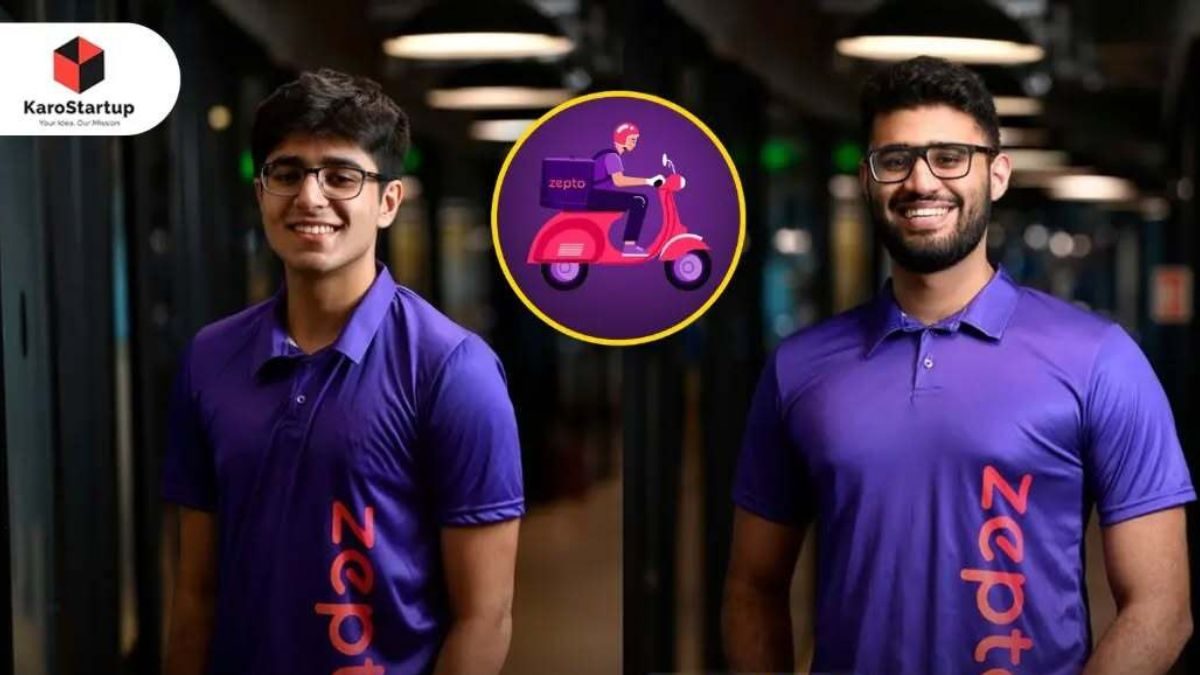
Aadit Palicha and Kaivalya Vohra are the teenage founders who built Zepto, India’s 10-minute grocery delivery startup that redefined the country’s quick commerce landscape. Founded in 2021, Zepto emerged at a time when India’s digital infrastructure, consumer behavior, and logistics maturity finally aligned. What began as a college-age experiment quickly scaled into one of India’s fastest-growing unicorns, valued at nearly $7 billion.
The company was born from a simple but uncomfortable observation: grocery delivery in India was slow, unreliable, and operationally inefficient. While food delivery had trained users to expect speed, grocery platforms were still operating on outdated fulfillment models. Aadit and Kaivalya believed groceries could be delivered faster — not in hours, but in minutes — if the problem was approached as a logistics challenge rather than a marketplace one.
Zepto operates through a dense network of dark stores, strategically placed within city neighborhoods, enabling ultra-fast last-mile delivery. The founders chose execution over storytelling in the early days, obsessing over warehouse density, picking speed, rider efficiency, and unit economics — areas most early-stage founders avoid.
Launched initially in Mumbai and later expanded to major Indian metros, Zepto’s rise was fueled by venture capital, but sustained by operational discipline. The journey, however, was not smooth. Burnout, skepticism, cash burn, scaling chaos, and the pressure of being labeled “India’s youngest founders” tested their resolve daily.
This is the story of how Aadit Palicha and Kaivalya Vohra built Zepto — not through hype, but through relentless execution, painful learning, and an uncompromising focus on speed, systems, and survival.
2. Background and Early Life
Aadit Palicha and Kaivalya Vohra did not grow up in business families with logistics empires or startup legacies. Their upbringing was urban, academically oriented, and deeply influenced by exposure to technology, global thinking, and problem-solving culture.
Aadit Palicha showed early interest in mathematics, systems thinking, and entrepreneurship. He was drawn to how technology could compress time and reduce friction. Kaivalya Vohra shared similar inclinations, excelling academically while developing a curiosity for how large systems function under pressure.
Both founders attended elite educational institutions and were eventually admitted to Stanford University. But unlike many students who see Stanford as a destination, Aadit and Kaivalya treated it as a launchpad. Their education exposed them to Silicon Valley’s obsession with speed, scale, and execution. It also sharpened their discomfort with inefficiency.
During the COVID-19 pandemic, as supply chains broke and grocery access became a daily struggle, they began questioning why essentials could not move as fast as information. That question would eventually pull them out of formal education and into entrepreneurship — a decision that would define their lives.
3. Founder and Company Overview
Meet Aadit Palicha & Kaivalya Vohra, Zepto Founder, represents one of the youngest founding teams to build a large-scale Indian unicorn.
Zepto is a quick commerce startup focused on delivering groceries and daily essentials in under 10 minutes. The company serves dense urban populations through a hyper-localized dark store model, ensuring speed, predictability, and inventory control.
Founded in 2021, Zepto targets time-constrained urban consumers who value reliability over choice overload. Unlike traditional e-commerce marketplaces, Zepto limits SKU count, optimizes fulfillment, and designs its operations around speed rather than variety.
The company operates across major Indian cities including Mumbai, Bengaluru, Delhi NCR, Chennai, Hyderabad, and Pune. From early traction to unicorn status, Zepto’s growth has been aggressive, capital-intensive, and operationally demanding.
4. The Problem, Insight, and Trigger
The insight behind Zepto was not glamorous. It was inconvenient.
Aadit Palicha and Kaivalya Vohra experienced repeated failures with grocery delivery — delayed orders, substitutions, unavailable items, and unpredictable delivery windows. While food delivery apps promised 30 minutes, groceries often took hours or days.
They realized the problem was structural. Grocery platforms were designed as marketplaces, not logistics companies. Inventory sat far away. Picking was slow. Delivery routes were inefficient.
The trigger moment came when they tested a simple hypothesis: if inventory was placed close enough to consumers and operations were tightly controlled, groceries could move faster than anyone expected.
This was not a consumer branding insight. It was an infrastructure insight. And it would demand enormous discipline to execute.
5. Early Days and Initial Struggles
The early days of Zepto were defined by chaos disguised as momentum. Operating dark stores meant negotiating leases, managing inventory, hiring pickers, coordinating riders, and building software simultaneously. Nothing worked perfectly. Everything broke daily. The founders underestimated the physicality of grocery logistics. Warehouses were hot. Items spilled. Riders quit. Margins vanished under operational leaks. Every minute saved in delivery cost hours in planning. Being young founders amplified scrutiny. Vendors doubted them. Employees questioned authority. Investors tested maturity. But Aadit and Kaivalya leaned into execution. They spent nights inside dark stores, measuring pick times, redesigning shelf layouts, and rewriting SOPs repeatedly.
6. Failures, Setbacks, and Self Doubt
There were moments when the Zepto model seemed unsustainable.
Burn rates were high. Competition intensified. Global quick commerce peers shut down markets. Critics labeled 10-minute delivery as reckless and unviable.
Internally, mistakes piled up. Over-expansion led to inefficiencies. Under-trained teams caused customer dissatisfaction. Tech systems lagged operational complexity.
Self doubt surfaced quietly. Were they scaling too fast? Was speed masking fragility? Could discipline catch up with ambition?
What kept them moving was data. Aadit Palicha relied heavily on metrics to counter emotion. Kaivalya Vohra focused on process improvement. Together, they learned to pause expansion, fix foundations, and restart growth more intelligently.
7. Validation and Early Traction
Real validation arrived when customers reordered. Repeat usage signaled trust. Delivery times stabilized. Dark store density improved. Unit economics began trending positively in mature clusters. Investors took notice. Zepto raised capital from top-tier global and Indian funds. Valuation climbed rapidly, eventually approaching $7 billion. This phase marked a psychological shift. Zepto was no longer an experiment. It was a system — fragile, expensive, but real.
8. Funding, Money, and Growth Constraints
Zepto’s journey has been deeply venture-funded. Capital was necessary to build infrastructure before profitability. But funding also imposed discipline. Investors demanded operational clarity, not just growth charts. Cash flow constraints forced prioritization. Not every city launched at once. Not every feature shipped. Expansion became deliberate. The founders learned that money accelerates decisions — good and bad. Survival depended on learning faster than cash burned.
9. Team Building and Leadership Evolution
Early hiring mistakes were costly. Young founders often over-hire or misjudge experience. Zepto learned this the hard way. Senior hires struggled with startup chaos. Junior hires lacked process maturity. Over time, leadership evolved. Aadit Palicha became more structured in communication. Kaivalya Vohra focused on operational accountability. Delegation improved. Culture hardened. Speed became systematic rather than chaotic.
10. Growth, Scaling, and Operational Challenges
Scaling quick commerce is unforgiving. Every operational flaw shows up within minutes — literally. Late delivery means failure. Wrong item breaks trust. Rider shortages cascade instantly. Zepto invested heavily in dark store optimization, route algorithms, inventory forecasting, and workforce planning. The dark store business model matured from experimentation to precision. Density, not expansion, became the growth lever.
11. Personal Sacrifices and Burnout
The personal cost was high. Long hours erased boundaries. Stress followed them home. Public scrutiny magnified mistakes. Youth did not protect against burnout. There were periods of emotional exhaustion. Pressure to perform never paused. Identity merged with the company. Recovery came through structure, delegation, and learning to step back — without disengaging.
12. Lessons, Beliefs, and Values
Several beliefs hardened over time. Speed without discipline is dangerous. Culture compounds faster than code. Execution beats narrative. Systems outlast motivation. Non-negotiable values emerged: operational honesty, metric-driven decisions, respect for frontline workers, and relentless improvement.
13. Present Challenges and Future Vision
Meet Aadit Palicha & Kaivalya Vohra, Zepto Founder, today face a different challenge — sustainability at scale. The focus has shifted from proving possibility to building endurance. Profitability paths, regulatory compliance, workforce stability, and category expansion dominate thinking. The long-term vision is clear: build the most reliable urban convenience infrastructure in India, not just the fastest app. The problem they remain obsessed with is time — saving it, respecting it, and designing systems that honor it.
Future Outlook
Zepto’s future will be decided not by speed promises but by operational resilience. In an industry where many competitors have folded, endurance will separate winners from experiments. Aadit Palicha and Kaivalya Vohra are no longer just India’s youngest startup founders. They are operators learning how to lead at scale. And that transformation may be their most important achievement yet.
The FoundLanes View
At foundlanes, Culture Circle’s journey stands out not just for its headline-grabbing numbers but for what it reveals about building modern Indian startups—where trust, verification, and transparency can drive rapid adoption, even as losses widen. The Culture Circle 10x revenue growth reflects a clear market insight executed at speed, alongside the inevitable pressure of scaling through heavy spending on technology, hiring, and marketing. Stories like this matter because they show entrepreneurship as it truly unfolds: fast, demanding, and full of trade-offs, where short-term financial strain is often the price paid for long-term relevance and scale.