A Teacher Who Refused to Price Dreams Out of Reach
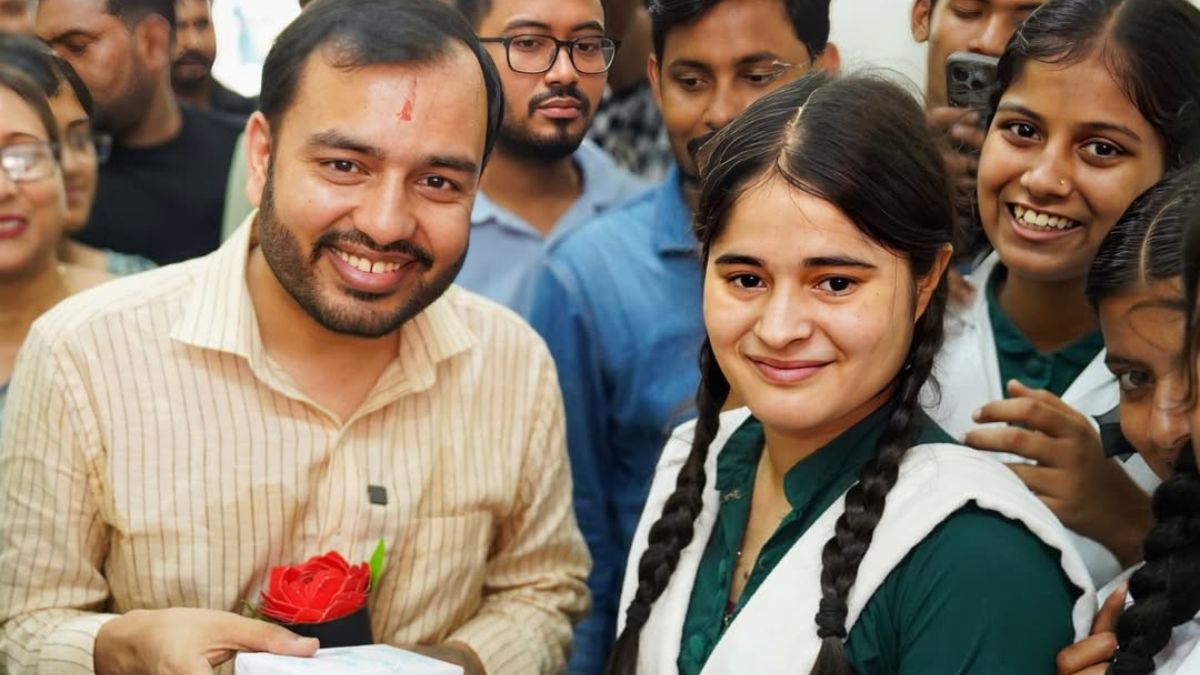
Meet Alakh Pandey, PhysicsWallah Founder — a name that rose not from startup accelerators or elite business schools, but from cramped classrooms, borrowed markers, and the quiet anxiety of students who feared they could never afford good coaching. In an Indian startup ecosystem dominated by funding announcements and valuation milestones, Alakh Pandey’s journey feels almost out of place. It began not with a business plan, but with a blackboard.
Born in Prayagraj (Allahabad), Uttar Pradesh, Pandey never imagined building one of India’s largest education companies. He wanted to teach physics in a way that made sense. When he began uploading free videos on YouTube in 2016, there was no strategy to disrupt edtech, no intention to build a unicorn. What followed was organic, almost accidental.
By 2020, as classrooms shut down during the pandemic, PhysicsWallah transformed from a YouTube channel into a structured edtech platform. Millions of students, especially from Tier II and Tier III towns, found something they had been denied for years — high-quality education at a price their families could afford. In 2022, PhysicsWallah became India’s first bootstrapped edtech unicorn, challenging the idea that scale must come at the cost of accessibility.
This is the story of who Alakh Pandey is, why PhysicsWallah exists, and how trust became its most powerful growth engine. It is not just an Indian startup success story. It is a reminder that sometimes, the most radical businesses are built by people who never set out to build one.
1. Background and Early Life
1.1 Early Life and Family Background
Alakh Pandey was born into a lower-middle-class family in Prayagraj, a city steeped in academic culture but limited economic opportunity. His upbringing was defined by financial constraint and emotional resilience. Money was never abundant, and every decision carried weight.
His father worked in the private sector, and the family lived with constant awareness of expenses. Coaching classes, often considered essential for science students, were a luxury. This reality exposed Pandey early to the unequal access embedded in India’s education system.
As a student, Pandey was not extraordinary in terms of marks. He struggled with self-doubt, pressure, and comparison. But he possessed a rare instinct — the ability to break down complex ideas and explain them patiently. Teaching, even then, came naturally to him.
1.2 Education and Early Influences
Pandey enrolled in an engineering program, following a path expected of academically inclined students. But the experience was disillusioning. Financial pressure mounted, and the disconnect between rote learning and real understanding became unbearable.
Eventually, he dropped out. In India, dropping out is rarely seen as a brave decision. It is often labeled failure. For Pandey, it was survival. He began teaching school students to support himself, discovering that the classroom gave him purpose that formal education had not.
His early influences were not startup founders or tech icons. They were teachers who stayed back after class, explained concepts slowly, and treated struggling students with dignity.
2. Founder and Company Overview
2.1 Introduction to the Founder
Meet Alakh Pandey, PhysicsWallah Founder — educator, entrepreneur, and one of the most influential figures in online exam preparation in India. To millions of students, he is simply “Alakh sir,” not a CEO.
Unlike many top edtech founders in India, Pandey did not emerge from elite institutes or corporate roles. His credibility was built over years of teaching, repetition, and emotional connection with learners who felt invisible in traditional coaching systems.
His authority came not from titles, but from trust.
2.2 Company Overview and Offerings
PhysicsWallah started as a YouTube channel offering free physics lectures. Over time, it evolved into a full-fledged edtech startup providing structured courses for JEE, NEET, board exams, and other competitive tests.
The platform combines online classes, recorded lectures, test series, doubt-solving, and eventually offline coaching centers. Its defining characteristic, however, remains unchanged — affordability without compromise.
In a sector notorious for aggressive pricing, PhysicsWallah positioned itself as one of the most affordable education platforms in India.
2.3 Target Audience and Market Served
PhysicsWallah primarily serves students from middle-income and lower-income families, especially in small towns and semi-urban regions. These students are often first-generation aspirants with limited access to quality teachers.
This focus placed PhysicsWallah at the heart of a movement led by YouTube education creators in India, who democratized learning long before institutions did.
2.4 Year of Founding and Business Stage
The company was formally incorporated in 2020. Within two years, it achieved unicorn status, becoming an Indian edtech unicorn without early-stage venture capital dependence — a rarity in the sector.
3. The Problem, Insight, and Trigger
3.1 Core Problem Identified
India’s exam preparation industry had become exclusionary. Quality coaching was expensive, geographically concentrated, and emotionally intimidating. Students from non-metro cities were often told, implicitly or explicitly, that success required relocation and significant financial sacrifice.
3.2 Personal Insight Behind the Idea
Pandey understood this problem intimately. He had lived it. He knew that most students did not lack intelligence or discipline — they lacked access. His insight was simple and disruptive: if concepts are explained clearly and priced fairly, students will show up.
3.3 Trigger Moment to Start
The real trigger was feedback. When students began writing comments saying they finally understood physics, Pandey realized teaching at scale could change lives.
YouTube was not just a platform. It was a classroom without walls.
4. Early Days and Initial Struggles
4.1 Early Assumptions and Naivety
Pandey assumed that sincerity would solve everything. It didn’t. Free content attracted millions, but sustaining operations without stable revenue was exhausting. Monetization felt uncomfortable, almost unethical, at first.
4.2 Entrepreneurial Initial Struggles
Pandey handled everything himself — teaching, filming, editing, responding to student messages. There was no team, no process, and no safety net. Burnout arrived early.
4.3 What Turned Out to Be Harder Than Expected
The hardest challenge was protecting quality while demand exploded. Growth threatened to dilute the very thing that made PhysicsWallah trusted.
5. Failures, Setbacks, and Self Doubt
5.1 Toughest Phase of the Journey
The transition from individual educator to organization tested Pandey deeply. As PhysicsWallah grew, expectations multiplied. Students expected perfection. Critics questioned credibility. Startup observers dismissed sustainability.
5.2 Early Failures and Major Setbacks
Some early hires failed to connect with students. Internal systems broke under scale. Complaints increased faster than solutions. These failures were invisible externally but painful internally.
5.3 Moments of Self Doubt and Emotional Lows
Pandey has openly spoken about emotional exhaustion and moments of self-doubt — wondering whether growth was compromising his original promise to students
6. Validation and Early Traction
6.1 The First Proof That PhysicsWallah Was More Than a Channel
The first real validation for PhysicsWallah did not come from investors or media recognition. It came from results. Students from small towns, who had never stepped into premium coaching centers, began clearing JEE and NEET using PhysicsWallah content alone.
These were not isolated successes. Over time, stories accumulated—screenshots of ranks, messages of gratitude, and parents expressing disbelief that such outcomes were possible without expensive coaching. This steady stream of proof built credibility in places marketing could never reach.
6.2 Early Revenue Signals and Student Willingness to Pay
When PhysicsWallah launched its first paid batches, the response surprised even its founder. Students who had consumed free content for years willingly paid for structured courses, not because they were forced to, but because they trusted the intent. This moment shattered a long-standing assumption in Indian edtech—that affordability limits revenue. PhysicsWallah demonstrated that fair pricing scales trust, and trust scales business.
6.3 Why This Phase Changed Alakh Pandey’s Belief System
For Alakh Pandey, this phase was transformational. It confirmed that students did not want shortcuts or gimmicks. They wanted clarity, consistency, and respect. From that point on, PhysicsWallah stopped being an experiment. It became a responsibility.
7. Funding, Money, and Growth Constraints
7.1 A Bootstrapped Journey in a Capital-Hungry Sector
For years, PhysicsWallah grew without institutional funding. In an edtech ecosystem where aggressive fundraising had become the norm, this made Alakh Pandey an outlier among top edtech founders in India. The company focused on operational discipline, internal cash flows, and sustainable expansion. This restraint was not driven by ideology alone, but by fear—fear of losing control over pricing and pedagogy.
7.2 The Unicorn Moment and Its Weight
In 2022, PhysicsWallah raised external funding and became India’s first bootstrapped edtech unicorn. Headlines celebrated the PhysicsWallah unicorn valuation, but internally, the moment came with anxiety. Pandey was acutely aware that valuation brings expectations. Growth was no longer optional; it was scrutinized.
7.3 Constraints That Money Could Not Solve
Even with capital, PhysicsWallah faced limits. Scaling teachers, maintaining quality, and preserving student trust could not be rushed. Pandey resisted the edtech industry’s addiction to aggressive discounting, believing that it erodes both value and respect.
8. Team Building and Leadership Evolution
8.1 Early Hiring Errors and Cultural Misfits
As PhysicsWallah expanded, hiring quickly became a challenge. Some early recruits were academically strong but lacked empathy. Others understood startups but not students.
These mismatches created friction. Students noticed. Pandey listened.
8.2 Learning to Let Go Without Losing Control
Delegation was emotionally difficult for a founder whose identity was inseparable from teaching. Every lecture, every explanation felt personal. Over time, Pandey learned that leadership was not about being everywhere, but about building systems that reflect values even in his absence.
8.3 From Teacher-Leader to Institution Builder
Pandey’s role evolved from frontline educator to institutional guardian. He began focusing on culture, teacher training, and long-term direction. The transition was uncomfortable, but necessary.
9. Growth, Scaling, and Operational Challenges
9.1 Brand Positioning Without Flash
While competitors relied on celebrity endorsements and aggressive advertising, PhysicsWallah remained understated. Its strongest marketing asset was word of mouth. This approach aligned with its identity as a trust-first, affordable education platform rather than a tech spectacle.
9.2 Offline Expansion and Its Complexities
PhysicsWallah’s move into offline centers introduced new challenges—real estate, local operations, and regulatory compliance. Scaling offline education demanded discipline and patience, not speed.
9.3 Operational Breakdowns and Course Correction
As enrollments surged, customer support and infrastructure struggled. Complaints rose. Response times slowed. Instead of dismissing criticism, Pandey publicly acknowledged gaps and prioritized fixes over optics. Transparency became a strategic choice.
10. Personal Sacrifices and Burnout
10.1 The Emotional Cost of Being “Always Available”
Alakh Pandey was not just a founder. He was a symbol. Students expected him to be present, accessible, and emotionally invested. This constant visibility came at a personal cost.
10.2 Burnout That Could Not Be Ignored
There were periods when exhaustion became overwhelming. Teaching, leading, defending, and scaling simultaneously stretched emotional limits. Pandey has spoken candidly about feeling drained, even questioning whether he could sustain the pace.
10.3 The Impact on Personal Life
Privacy diminished as popularity grew. Every public appearance became content. Every decision was dissected. Like many founders, Pandey learned that entrepreneurship does not pause when work ends.
11. Lessons, Beliefs, and Values
11.1 Core Lessons From the PhysicsWallah Journey
Pandey learned that education is not a product. It is a relationship built on trust, repetition, and patience.
He also learned that scale amplifies values. If the foundation is weak, growth exposes it quickly.
11.2 Beliefs That Evolved Over Time
Early on, Pandey believed sincerity alone was enough. Over time, he realized that systems are required to protect sincerity at scale. Intent must be operationalized.
11.3 Non-Negotiable Values
Affordability is not a marketing strategy. It is a moral choice. Respect for students is non-negotiable. And teaching quality can never be compromised for growth. These values define PhysicsWallah’s culture.
12. Present Challenges and Future Vision
Meet Alakh Pandey, PhysicsWallah Founder, continues to face a complex present. Competition is intensifying. Regulations are evolving. Expectations are higher than ever. Yet the core obsession remains unchanged: making high-quality education accessible without turning it into a luxury product.
PhysicsWallah’s long-term vision is not global dominance or flashy exits. It is institutional trust. Pandey wants PhysicsWallah to outlive him as a founder and remain relevant to students who cannot afford failure. In an era where many Indian startup success stories are built on hype, PhysicsWallah stands as proof that conviction, discipline, and empathy can still build enduring companies. And perhaps that is Alakh Pandey’s greatest lesson—not just as an entrepreneur, but as a teacher who never stopped seeing students first.
The FoundLanes View
At foundlanes, Culture Circle’s journey stands out not just for its headline-grabbing numbers but for what it reveals about building modern Indian startups—where trust, verification, and transparency can drive rapid adoption, even as losses widen. The Culture Circle 10x revenue growth reflects a clear market insight executed at speed, alongside the inevitable pressure of scaling through heavy spending on technology, hiring, and marketing. Stories like this matter because they show entrepreneurship as it truly unfolds: fast, demanding, and full of trade-offs, where short-term financial strain is often the price paid for long-term relevance and scale.