Summary
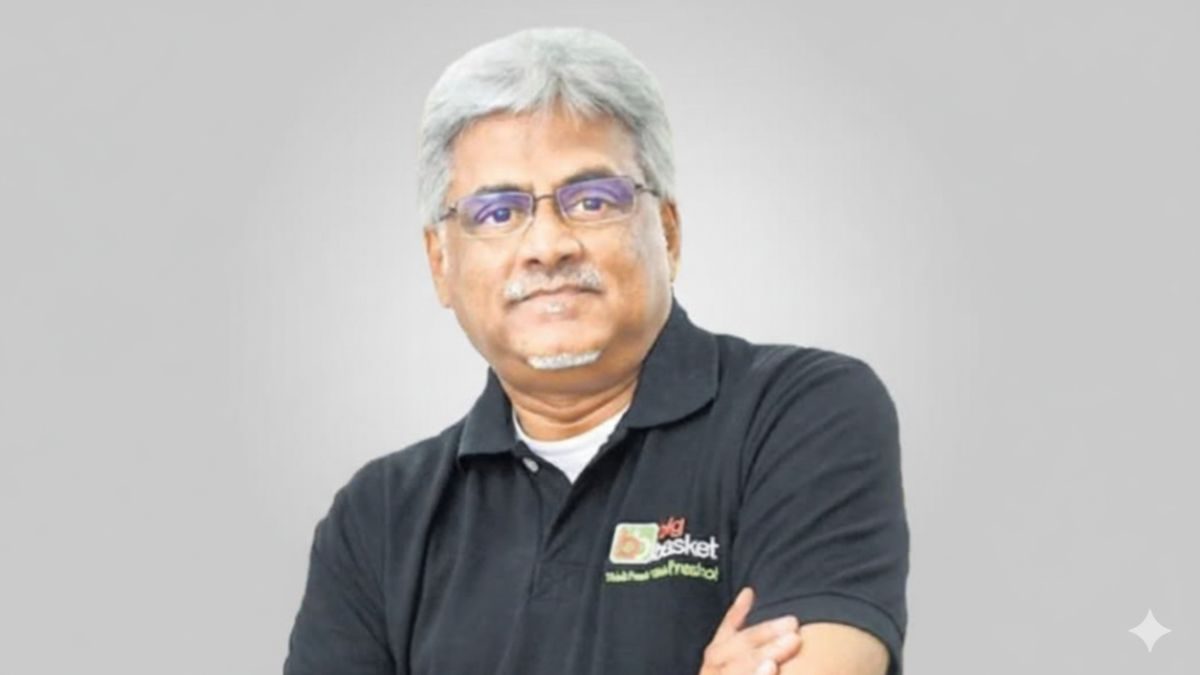
In December 2011, in a cramped office in Indiranagar, Bengaluru, a group of seasoned professionals took a leap into the unknown. Among them was Hari Menon, a 56‑year‑old with decades of experience in technology, operations, and supply chains. Alongside his co‑founders ‑ V. S. Sudhakar, Vipul Parekh, V. S. Ramesh and Abhinay Choudhari ‑ Hari co‑founded BigBasket, what would become India’s largest online grocery marketplace. The idea was simple yet audacious: build an e‑commerce platform that could deliver fresh produce, dairy, meats and household essentials to customers’ doorsteps across India. But behind that simplicity was an intricate web of personal struggle, market timing, technology challenges, and sheer persistence.
BigBasket was born at a time when online grocery shopping was barely a concept in the Indian market. Smartphones were just starting to proliferate, broadband penetration was improving, and online payment infrastructure was slowly stabilizing. Yet many investors still saw groceries as too complex, too perishable, and too entrenched in traditional habits. Hari and his team leaned on decades of experience from earlier ventures, including their first attempt at online retail with Fabmart and a successful run with an offline grocery chain called Fabmall. These earlier chapters shaped their resilience and taught them lessons they would carry into BigBasket.
What set Hari apart was not just his technical and operational acumen
What set Hari apart was not just his technical and operational acumen but his grounded sense of purpose. He saw grocery not as a commodity business but as a deeply human one. Groceries sit at the heart of daily life. They tie into family rhythms, cultural celebrations, routines, health, and sustenance. Hari understood that solving grocery‑delivery was not a market play alone; it was a social challenge as well. It required trust, reliability, and a granular understanding of Indian households and their needs.
This article traces Hari’s journey and BigBasket’s evolution through twelve chapters. It explores the personal motivations and market insights that fuelled the vision. It delves into early struggles and self‑doubt, failures that shook confidence, moments of breakthrough validation, funding challenges, leadership lessons and team building, operational scaling headaches, the emotional pressures of entrepreneurship, hard‑won lessons, and the persistent drive toward a long‑term vision that still shapes BigBasket’s strategy today.
1. Background and Early Life
1.1 Early Life and Family Background
Hari Menon was born and raised in Mumbai, India, in a family where education was treated as both a privilege and a responsibility. From an early age, he showed a natural curiosity about how things worked, a curiosity that would later become the engine of his entrepreneurial mindset. His parents encouraged him to pursue rigorous academics and to engage meaningfully with the world beyond the classroom.
Growing up in the crowded lanes and frenetic markets of Mumbai, Hari observed firsthand the rhythms of Indian household life. Grocery shopping was never just about food. It was about relationships, negotiation, trust and the tangible feel of quality in one’s hand. As a child, he watched his family and neighbours haggle over vegetables, compare rice grains, and value freshness above all else. These early experiences imprinted on him a deep appreciation for quality, customer preference, and the emotional weight of everyday essentials. Though he would not fully understand it at the time, this early exposure to the world of retail and trade would shape his entrepreneurial compass.
1.2 Education and Early Influences
Hari’s academic journey took him to one of India’s premier technical institutes, BITS Pilani, where he graduated in 1983 with a degree in science and technology. During this period, he was not only academically driven but socially engaged. He participated in cultural activities and even played guitar in a rock band called The Thunk, performing at festivals and clubs on campus. These pursuits offered him a lesson in creativity, collaboration, and the joy of collective effort, lessons that would later prove invaluable in leading teams.
After BITS, Hari entered the corporate world, working with several respected Indian and multinational firms. He began at ORG Systems and later moved through roles at TVS Electronics, Wipro Infotech, Planetasia.com and Integrated Data Systems. Each experience broadened his technical, operational, and leadership capabilities, preparing him to tackle increasingly complex business challenges. But it was not just the roles themselves that shaped him. It was the relentless pace of learning. In those years, Hari confronted new technologies, global business perspectives, and the early ripples of digital transformation. He understood that technology had the potential not just to streamline existing businesses but to create entirely new ones.
2. Founder and Company Overview
2.1 Introduction to the Founder
By the time he co‑founded BigBasket, Hari had already walked the path of entrepreneurship, tasted the highs and lows of business experiments, and developed a nuanced understanding of customer needs and operational complexity. He was not the stereotypical young startup founder; he was older, measured, and shaped by experience. Yet in his eyes burned the same fire that drives great innovators: the belief that existing systems can be made better.
To his co‑founders, Hari brought a rare blend of humility and stubbornness. Humble enough to listen to criticism, stubborn enough to stand by his core beliefs when logic and instinct aligned. He had seen what it meant to launch too early, to misread the market, and to push technologies before the world was ready. These lessons, from Fabmart to Fabmall, informed BigBasket’s deliberate pace and strategic decisions.
2.2 Company Overview and Offerings
BigBasket was established under the legal name Supermarket Grocery Supplies Pvt. Ltd. and began its journey as an online grocery store. The platform sought to offer a complete range of daily essentials: fresh fruits and vegetables, dairy and meat products, pantry staples, personal care items, household cleaning goods, and more. Over time, BigBasket expanded its catalogue to tens of thousands of SKUs, serving customers across cities and towns in India.
What set BigBasket apart was its emphasis on quality and freshness. In an industry where perishable items made logistics difficult, the company invested early in refrigerated warehouses, temperature‑controlled delivery vehicles, and structured supply‑chain systems that could deliver fresh produce right to a customer’s doorstep. This was not common in the Indian context at the time, and it required constant, hands‑on management.
2.3 Target Audience and Market Served
BigBasket’s early customer base was largely urban and upwardly mobile. These were busy professionals and young families who prized convenience but did not want to compromise on quality or freshness. For many, the idea of avoiding weekend traffic and crowded supermarkets was a powerful motivator. BigBasket spoke to a growing demographic of digitally savvy consumers who were willing to pay a small premium for time saved and the ease of delivery.
However, the company’s vision always extended beyond a niche audience. Hari and his co‑founders believed that online grocery shopping could become an integral part of daily life for millions of Indians if the service could consistently deliver quality and reliability. This belief informed every operational decision, from vendor selection to delivery protocols.
2.4 Year of Founding and Business Stage
BigBasket officially launched its services in December 2011, entering a market that had seen few serious efforts in online grocery. Their early days were not marked by explosive growth but by painstaking groundwork. The team built backend infrastructure first, focused on sourcing, storage, and delivery optimization. They avoided aggressive marketing at the outset, choosing instead to perfect the user experience before scaling.
The early stage was one of discovery and constant iteration. Hari and his co‑founders knew that grocery shopping was different from selling books or electronics. Groceries had to be right the first time. There was no second chance if produce arrived bruised or late. This realization shaped their early operational discipline and customer service ethos.
3. The Problem, Insight, and Trigger
3.1 Core Problem Identified
Hari Menon’s journey to BigBasket didn’t begin with a business plan or investor pitch. It began with a problem he observed repeatedly during his previous ventures and daily life: the inefficiency and inconsistency of grocery shopping in India. From crowded local markets to small kirana shops, customers struggled with quality, price transparency, and availability. Fresh fruits and vegetables were often inconsistent, and delivery options were almost nonexistent.
He understood that while Indian households had grown accustomed to shopping physically, there was a growing demographic—urban, time‑pressed, and tech‑savvy—who were ready for a more reliable alternative. But solving this problem wasn’t simple. The challenges were many: perishable goods, fragmented supply chains, last‑mile logistics, and customer trust.
Hari’s insight was not just operational; it was deeply human. He realized that groceries are not just products—they are a reflection of care and trust in a household. A customer entrusting their daily food needs to an online service expected reliability, quality, and respect for their time and preferences. Missing this human dimension would doom any online grocery venture.
3.2 Personal Insight Behind the Idea
The spark for BigBasket came from Hari’s own experiences juggling work, family, and household responsibilities. Like many urban professionals, he found himself repeatedly frustrated by the time and effort grocery shopping demanded. He also noticed the rising internet adoption in cities and the potential of e‑commerce to transform traditional retail.
Hari reflected on his previous experience with Fabmart, India’s early online retail experiment, and the lessons it provided. While Fabmart had succeeded in selling books and electronics online, Hari realized that groceries were fundamentally different. They were time-sensitive, perishable, and embedded in daily routines. Solving this challenge would require not just an online interface but a robust end-to-end supply chain, something few Indian startups had attempted at that scale.
This combination of personal frustration and market observation crystallized the opportunity: an online grocery platform that could deliver fresh, high-quality products reliably and conveniently. The insight was simple yet profound: the Indian grocery market was ready for digital disruption, but only for a solution that respected its complexity and cultural nuances.
3.3 Trigger Moment to Start
The decisive trigger came in 2010 during a conversation with his co‑founders about recurring operational inefficiencies in offline retail. Hari vividly recalls walking through crowded markets and watching the challenges faced by both customers and shopkeepers. It became clear that an online grocery service could not only save time for consumers but also streamline operations for vendors, creating a scalable model for India’s fragmented retail ecosystem.
That moment, though seemingly small, marked the transition from idea to action. Hari, along with his co‑founders, began mapping out the operational blueprint, identifying supply chain partners, and designing a technology platform that could manage inventory, orders, and deliveries efficiently. They were entering uncharted territory, but the clarity of purpose was unmistakable: to build India’s first truly reliable online grocery marketplace.
4. Early Days and Initial Struggles
4.1 Early Assumptions and Naivety
Like many startups, BigBasket’s early days were filled with assumptions that didn’t always hold up against reality. Hari and his co‑founders initially believed that urban consumers would immediately flock to the platform if the service was functional. They underestimated the cultural attachment to traditional markets and the skepticism around online grocery shopping.
Operationally, they assumed that suppliers would quickly adapt to online demand schedules. In reality, vendors were accustomed to bulk, cash-based sales and had little experience with systematic, digital-first ordering. Hari quickly realized that technology alone couldn’t solve the problem; it required constant education, persuasion, and relationship-building with suppliers.
4.2 Entrepreneurial Initial Struggles
The first months were grueling. The team worked out of a small office, personally handling deliveries and managing inventory. Hari often recalls delivering orders himself in the early days, packing vegetables and fruits, navigating traffic, and ensuring timely delivery. The learning curve was steep: software bugs, logistics failures, and occasional customer complaints tested the team’s patience and resolve.
They also faced challenges in recruiting staff with experience in supply chain management and logistics. Many talented professionals were hesitant to join a nascent startup in a market that seemed risky. Hari’s leadership was tested constantly, as he needed to motivate the team while staying personally involved in day-to-day operations.
4.3 What Turned Out to Be Harder Than Expected
The biggest early challenge was last-mile delivery. India’s infrastructure in 2011–2012 was not optimized for e-commerce logistics, especially for perishable goods. Roads were congested, addresses were inconsistent, and consumer expectations were high. Every missed delivery or damaged product felt like a setback, testing both the business model and the team’s morale.
Hari also underestimated the complexity of consumer behavior. Some customers preferred to inspect fruits and vegetables before purchasing, while others demanded precise delivery windows. Each expectation required process innovation, training, and constant monitoring. These operational headaches highlighted a harsh reality: building India’s first reliable online grocery service was not just about technology—it was about designing a system that could mimic the human care of a traditional store, but at scale.
4.4 Early Lessons in Resilience
Despite setbacks, Hari’s approach remained grounded in learning by doing. Every logistical failure, late delivery, or dissatisfied customer was treated as a lesson, not a defeat. The team developed standard operating procedures, created checklists, and iteratively improved the backend and delivery processes. Hari’s experience had taught him that persistence often mattered more than initial skill or funding. By personally overseeing operations, engaging with suppliers, and tracking customer feedback, he instilled a culture of meticulousness and accountability that became the backbone of BigBasket’s operational DNA.
5. Failures, Setbacks, and Self-Doubt
5.1 The Toughest Phase of the Journey
No startup journey is linear, and BigBasket’s early months were a stark reminder of that truth. For Hari Menon, the initial excitement of launching India’s first online grocery service soon gave way to the harsh realities of building a business from scratch. Supply chain disruptions, delivery delays, and unexpected operational costs tested both his patience and resolve.
One recurring challenge was maintaining freshness. Despite careful packaging and cold storage, some orders arrived slightly damaged or bruised. Even minor imperfections drew sharp criticism from early customers. Hari recalls the emotional weight of those moments—feeling personally responsible for every misstep. In a business tied to daily life and sustenance, mistakes felt magnified.
5.2 Early Failures and Major Setbacks
Several operational miscalculations compounded the pressure. The team overestimated demand in some neighborhoods while underestimating it in others, leading to inventory imbalances and wastage. Technology glitches disrupted order management, and the team frequently had to manually correct issues—a painstaking, error-prone process. Hari also faced setbacks in the talent acquisition arena. Hiring the right logistics managers and delivery personnel proved harder than expected. Many early hires left within months, frustrated by the demanding pace and high expectations. These personnel gaps slowed operations and placed additional stress on the founding team. Financially, BigBasket was burning cash faster than anticipated. Initial revenues were modest, and the company faced cash flow challenges even as it tried to expand service coverage. Hari had to navigate investor skepticism and demonstrate that the business model, though unproven in India, could eventually scale.
5.3 Moments of Self-Doubt
In these early years, Hari confronted significant self-doubt. At times, he questioned whether India was ready for an online grocery model. Would consumers ever trust a website to deliver their daily essentials reliably? Were the operational headaches insurmountable?
These doubts were compounded by the visible success of e-commerce ventures in other segments like electronics and books, which seemed far easier to manage. The contrast was stark, and it would have been easy to abandon the venture. Yet Hari leaned on his co-founders and personal conviction. He often reminded himself that failure was part of the learning process and that the solution needed persistence, iteration, and patience.
6. Validation and Early Traction
6.1 First Real Validation or Customer
The turning point came when BigBasket received its first batch of repeat customers. These were urban households that had been hesitant at first but gradually became loyal because the company consistently delivered fresh and reliable products. Hari recalls personally receiving feedback from one customer who praised the freshness of fruits delivered on a sweltering summer afternoon. That single acknowledgment became a symbol of what the company could achieve. This moment was a breakthrough because it confirmed that the value proposition—convenience, freshness, and reliability—resonated with consumers. Hari realized that despite operational hiccups, the core model was viable.
6.2 Early Revenue Growth or Feedback
By mid-2012, BigBasket’s revenue trajectory began to show steady, incremental growth. While still modest, the numbers were encouraging. The company also implemented feedback loops, allowing customers to rate deliveries and provide suggestions. These insights were invaluable in refining the supply chain, improving inventory forecasting, and optimizing delivery routes. Hari recognized that validation was not about rapid growth alone but about building systems that could scale while maintaining quality. Each satisfied customer became an ambassador for the brand, and word-of-mouth referrals started to increase demand organically.
6.3 Why This Moment Changed Belief
For Hari, these early wins were both emotional and strategic. They reinforced his conviction that BigBasket could transform the grocery shopping experience in India. The validation helped mitigate the fear and doubt that had clouded the early months. It also motivated the team to double down on operational discipline, customer experience, and strategic growth planning. This period cemented a key lesson for Hari: in a complex market like groceries, trust and reliability were more valuable than speed or aggressive expansion. The company’s mission had shifted from merely surviving to delivering excellence at every step.
7. Funding, Money, and Growth Constraints
7.1 Bootstrapped or Funded Journey
Initially, BigBasket was self-funded by the founders, supplemented by small angel investments. This limited financial runway forced Hari and the team to prioritize operational efficiency over marketing extravagance. Every rupee spent had to directly enhance the customer experience or improve logistics. The bootstrap phase taught Hari the discipline of frugality and the importance of investing in infrastructure before scaling. Unlike other startups that chased rapid expansion, BigBasket chose to stabilize its backend operations first, building a foundation capable of handling large-scale deliveries.
7.2 Capital Challenges and Cash Flow Issues
Despite careful planning, cash flow was a recurring challenge. Suppliers required upfront payments, delivery personnel demanded timely wages, and technology investments were unavoidable. Hari recalls late nights poring over spreadsheets, ensuring the company could meet obligations without compromising service quality. Investor discussions were equally challenging. Many venture capitalists were hesitant to fund a grocery startup because of the high operational complexity and low margins. Hari had to convince them that BigBasket was not just an online store but a logistics and supply-chain innovation platform capable of long-term scale.
7.3 Early Growth Limitations
Growth, in those years, was deliberately incremental. Hari resisted expanding too quickly into new cities until the Bengaluru operations were proven reliable. This cautious approach helped prevent reputational damage but slowed revenue momentum. Each expansion required extensive logistical planning, supplier onboarding, and technology optimization. The challenge was to balance ambition with operational capability, a tension that would continue to define BigBasket’s growth strategy in subsequent years.
8. Team Building and Leadership Evolution
8.1 Early Hiring Mistakes
In the early days, Hari Menon and his co-founders learned quickly that building the right team was as critical as building the platform. Their first hires were often generalists who were enthusiastic but lacked experience in supply chain logistics or e-commerce operations. This mismatch caused friction and slowed operational efficiency.
Hari recalls one early incident where an inexperienced logistics manager mismanaged a batch of deliveries, resulting in widespread customer complaints. While the mistake was costly, it became a lesson in hiring for skills, attitude, and cultural fit simultaneously. Hari understood that in a high-stakes, perishable-focused business like groceries, the team’s capability directly affected customer trust.
8.2 Delegation Challenges
As BigBasket grew, Hari faced the challenge of letting go of control. He had been deeply involved in every operational detail—packaging, delivery, supplier management, and customer complaints. Delegating responsibilities to new managers required patience and trust, and mistakes were inevitable.
Hari often describes this as a transition from operator to leader. He had to shift from solving problems personally to enabling his team to make decisions, take ownership, and be accountable. This learning curve was emotional; letting go while maintaining standards tested his patience and leadership skills.
8.3 Leadership Learnings Over Time
Through trial and error, Hari developed a pragmatic leadership philosophy: lead by example, maintain open communication, and hold teams accountable with empathy. He emphasized ground-level immersion—frequently visiting warehouses, delivery routes, and customer touchpoints to understand challenges firsthand.
These practices cultivated trust within the team. Employees saw that leadership understood their struggles and was willing to invest time in solving systemic problems rather than just giving directives. Hari’s approach created a culture of accountability, care, and iterative learning that became a competitive advantage for BigBasket.
9. Growth, Scaling, and Operational Challenges
9.1 Brand Positioning and Go-to-Market Learnings
Scaling BigBasket involved more than just expanding delivery areas. Hari and his co-founders learned that brand positioning mattered. Customers needed assurance that ordering groceries online would not compromise quality or freshness. Marketing campaigns highlighted reliability, hygiene, and customer-centric service, which helped build credibility.
Hari also realized that building a loyal customer base required more than marketing; it required operational consistency. Promises made in campaigns had to match reality. Every missed delivery or damaged product could undo months of brand-building efforts.
9.2 Scaling Challenges
Scaling operations to multiple cities presented enormous logistical challenges. Warehouses had to be set up with cold storage, inventory management systems needed upgrades, and delivery networks required optimization. Hari often personally oversaw these expansions, troubleshooting bottlenecks and refining processes.
One particularly difficult expansion involved a surge in demand during festive seasons. The team had to manage thousands of deliveries simultaneously while maintaining freshness and punctuality. Hari describes these moments as stressful but invaluable for building resilience—each challenge honed the company’s systems for long-term growth.
9.3 Operational Breakdowns and Fixes
Operational failures were inevitable in a business as complex as online grocery. Late deliveries, supplier delays, and software glitches occasionally disrupted service. Hari approached these challenges methodically, implementing root-cause analysis and creating systems that could anticipate failures.
He also encouraged continuous feedback loops—from customers, delivery personnel, and warehouse staff—to identify weak points. This iterative process allowed BigBasket to refine delivery routes, supplier partnerships, and inventory management, ensuring higher reliability as scale increased.
10. Personal Sacrifices and Burnout
10.1 Personal Costs of Entrepreneurship
Hari’s commitment to BigBasket came at a personal cost. Long hours, constant travel, and the emotional weight of operational crises took a toll on his family life. He often missed family events, holidays, and personal milestones while troubleshooting delivery or warehouse issues.
Despite these sacrifices, Hari remained committed to the mission. He framed these hardships as part of the larger purpose of building a transformative service for India, keeping the long-term vision in focus even during challenging times.
10.2 Burnout Phases and Emotional Pressure
Burnout was inevitable in a startup operating in uncharted territory. Hari describes periods of fatigue where he questioned decisions, worried about cash flow, and felt the weight of customer expectations. Emotional pressure was heightened by the knowledge that every operational slip could affect thousands of customers and erode trust.
He navigated these periods through structured problem-solving, team support, and small personal routines—early morning reflections, brief breaks at home, and mentoring sessions with co-founders. These practices helped him regain perspective and maintain clarity under pressure.
10.3 Impact on Personal Life
Hari acknowledges that the startup journey reshaped his personal life. While he experienced professional fulfillment and eventual recognition, there were moments of isolation and emotional strain. Balancing the intensity of entrepreneurship with personal relationships required deliberate effort. Over time, Hari learned that self-care and mental resilience were integral to leadership, not optional luxuries.
11. Lessons, Beliefs, and Values
11.1 Core Lessons Learned
Hari Menon’s journey with BigBasket was a masterclass in learning through doing. One of his earliest lessons was that operational excellence drives trust. In a perishable goods business, every failed delivery, bruised fruit, or delayed order could erode customer confidence. He realized that scaling without strengthening operations was a recipe for disaster.
Another critical lesson was resilience in the face of setbacks. Early failures, personnel turnover, and technological glitches could have crushed morale. Instead, Hari internalized the value of perseverance. Each challenge was reframed as a learning opportunity, and the team’s ability to iterate quickly became a defining feature of BigBasket’s culture.
Hari also emphasized the human dimension of technology. While automation and software improved efficiency, the company’s success hinged on understanding people—both employees and customers. Building systems that respected human behavior and cultural nuances became a cornerstone of his leadership philosophy.
11.2 Beliefs That Changed Over Time
Initially, Hari believed that rapid growth was the ultimate marker of success. However, experience taught him that sustainable growth and reliability mattered more than speed. Expanding too quickly could compromise quality, strain operations, and erode trust. He also evolved in his understanding of leadership. Early in the journey, he believed in hands-on control. Over time, he realized that empowering teams, delegating responsibility, and cultivating ownership was more effective than micromanagement. This shift allowed BigBasket to scale while maintaining operational integrity.
11.3 Non-Negotiable Values
Hari Menon maintained several non-negotiable values throughout the journey: quality, trust, customer-centricity, and operational discipline. These principles informed every decision—from supplier selection to delivery scheduling, customer service policies, and technology investments. They also shaped BigBasket’s culture, attracting employees who shared a commitment to excellence and empathy for customers.
12. Present Challenges and Future Vision
12.1 Ongoing Struggles Today
Even years into its growth, BigBasket faces the realities of a complex, competitive Indian e-commerce market. Logistics in tier-2 and tier-3 cities remain challenging, supply chains require constant monitoring, and customer expectations continue to evolve. Hari acknowledges that no business can ever fully “arrive” in a fast-moving sector; continuous innovation is mandatory.
The company also contends with intense competition from established players like Amazon and Flipkart, which have entered the grocery segment aggressively. Maintaining differentiation through service quality, brand trust, and operational efficiency remains a constant focus.
12.2 Current Leadership Philosophy
Hari’s leadership philosophy today blends experience with humility. He continues to emphasize operational rigor, employee empowerment, and a customer-first mindset. also encourages risk-taking in controlled ways, recognizing that innovation requires experimentation, failure, and rapid learning.
He has become a mentor figure for the younger team, sharing lessons from the early days of hardship, self-doubt, and relentless iteration. His approach balances discipline with empathy, ensuring the company culture remains resilient as the business scales further.
12.3 Long-Term Vision
Hari’s long-term vision for BigBasket goes beyond market share or revenue growth. He remains focused on making grocery shopping convenient, reliable, and enjoyable for millions of Indian households, while building a supply chain infrastructure capable of serving both urban and semi-urban populations.
He envisions BigBasket as more than a marketplace; he sees it as a logistics and technology platform that can redefine how India sources and consumes essentials. From implementing AI-driven inventory forecasts to optimizing delivery routes, every innovation is guided by the goal of efficiency, sustainability, and superior customer experience. Hari Menon’s journey illustrates that entrepreneurship is not merely about launching a product; it’s about building systems, nurturing people, and solving deeply human problems at scale. Through resilience, operational excellence, and an unwavering focus on customer trust, BigBasket has grown into a platform that reflects his vision, values, and relentless pursuit of better solutions for India’s grocery ecosystem.
About foundlanes.com
foundlanes.com is India’s leading startup idea and deep-dive platform built for founders, operators, and serious entrepreneurs. We go beyond surface-level advice to deliver grounded, research-backed, and experience-driven startup content.
Every guide on foundlanes.com is designed to help readers think clearly, act strategically, and build sustainably. This cloud kitchen startup guide is part of our mission to document real business pathways in India’s evolving startup ecosystem.