Trust Is Not a Feature, It Is the Product
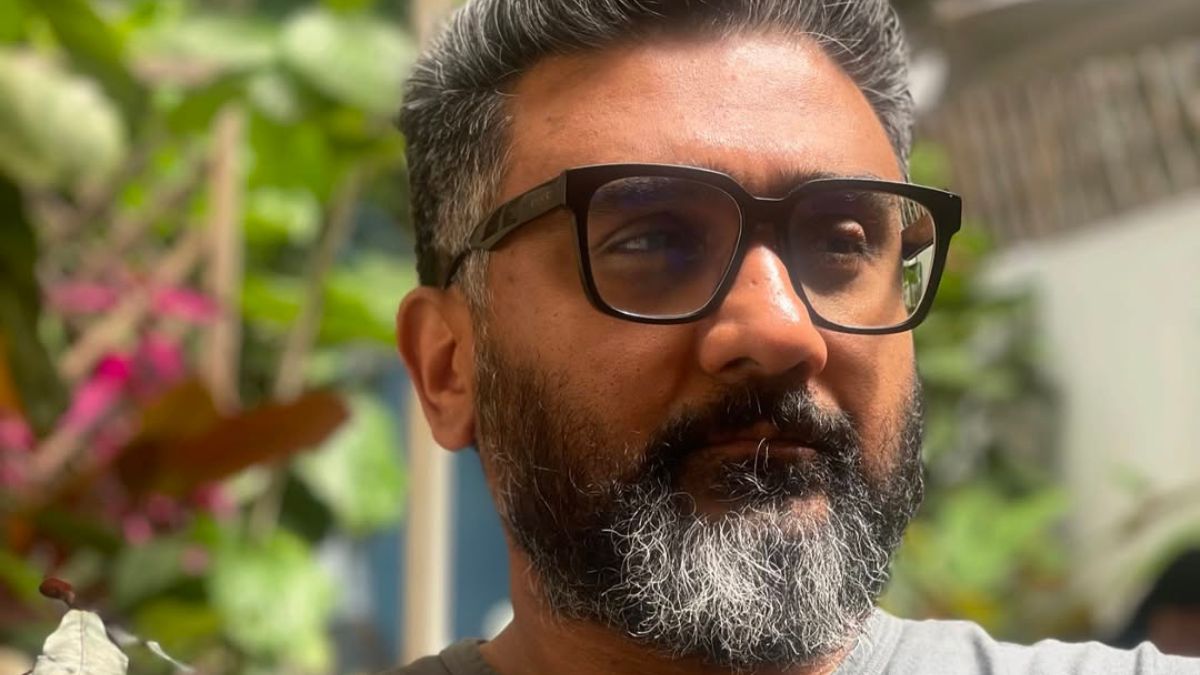
Meet Kunal Shah, CRED Founder — a thinker disguised as a startup builder, and a founder who chose to fight human behavior before fighting markets. In India’s hyper-competitive fintech ecosystem, where success is often measured in daily active users and cashback percentages, Kunal Shah built a company around something far less tangible: trust.
Born in India and shaped by middle-class discipline, Shah did not arrive at entrepreneurship chasing glamour or quick exits. His journey spans decades, not funding rounds. Long before CRED existed, he was asking inconvenient questions about incentives, credibility, and why financial systems reward irresponsibility more than discipline.
CRED was founded in 2018, in Bengaluru, at a time when India’s fintech narrative was dominated by scale-at-all-costs thinking. Instead of building for the masses, Shah deliberately built for a minority — people who paid their credit card bills on time. This group, often invisible in India’s reward economy, became the foundation of a platform that would later become one of the most debated fintech unicorns in India.
CRED is not just a credit card rewards app in India. It is an experiment in behavior design. It asks a simple but uncomfortable question: What if good financial behavior was celebrated instead of ignored? Shah’s answer to that question challenged conventional wisdom, attracted global capital, and invited relentless scrutiny.
This is the Kunal Shah entrepreneur story not as mythology, but as lived reality — full of doubt, conviction, misjudgment, resilience, and an obsession with building systems that outlast cycles.
1. Background and Early Life
1.1 Early Life and Family Background
Kunal Shah was born into a middle-class Indian household where security mattered and risk was something to be managed, not celebrated. There was no legacy business waiting to be inherited, no cushion of generational wealth. Like many Indian families of his generation, education was viewed as the safest path forward.
This upbringing quietly shaped Shah’s worldview. He learned early that resources are finite, credibility is earned slowly, and shortcuts come with long-term costs. These ideas would later reappear — almost philosophically — in the way he designed businesses.
Even as a child, Shah displayed a tendency to question systems rather than accept them. He was less interested in outcomes and more curious about why people behaved the way they did within rules, incentives, and structures.
1.2 Education and Early Influences
Shah pursued engineering, a conventional choice that aligned with expectations of stability. Yet engineering was never the destination. It was a tool.
What truly influenced Shah was his growing interest in behavioral economics, psychology, and philosophy. While many future founders were learning how to build software, Shah was learning how humans make decisions — often irrationally.
This intellectual curiosity became his competitive advantage. It allowed him to see patterns others missed, especially in markets where trust, fear, and incentives shape outcomes more than technology.
2. Founder and Company Overview
2.1 Introduction to the Founder
Meet Kunal Shah, CRED Founder — one of India’s most distinctive startup thinkers. He is not known for loud optimism or growth-at-any-cost rhetoric. Instead, he is respected and sometimes criticized for asking uncomfortable questions.
Before CRED, Shah founded FreeCharge, one of India’s earliest digital payments platforms. FreeCharge grew rapidly and became a category-defining product in the pre-UPI era. It eventually exited to Snapdeal, an outcome that taught Shah as much about failure as success.
That chapter left a permanent mark. It made him deeply skeptical of shallow metrics and deeply respectful of long-term value creation.
2.2 Company Overview and Offerings
CRED is a members-only fintech platform that rewards users for paying credit card bills on time. On the surface, the product looks simple. Underneath, it is complex by design.
The platform combines bill payments, rewards, curated financial products, and experiential benefits. But its real product is not rewards. It is identity — being recognized as financially credible in a system that rarely acknowledges discipline.
This positioning placed CRED firmly within the emerging category of trust-based fintech platforms, a space that remains difficult to explain but powerful when executed well.
2.3 Target Audience and Market Served
CRED does not serve everyone. It never intended to.
Its target audience consists of India’s most creditworthy individuals — urban professionals, entrepreneurs, senior executives, and high-income earners who consistently pay their dues on time. This group represents a small fraction of India’s population but accounts for a disproportionately large share of credit card spending. By choosing this audience, Shah accepted slower growth in exchange for deeper trust.
2.4 Year of Founding and Business Stage
Founded in 2018, CRED scaled rapidly in valuation if not in user count. It achieved unicorn status within a few years, becoming one of the most discussed names among Indian fintech unicorn founders and investors alike.
3. The Problem, Insight, and Trigger
3.1 Core Problem Identified
India’s financial ecosystem, Shah believed, had a moral flaw. It penalized discipline and subsidized indiscipline. Late payments generated fees. Defaults earned attention. Meanwhile, people who paid on time received nothing — no recognition, no reward, no identity. This imbalance wasn’t accidental. It was structural.
3.2 Personal Insight Behind the Idea
Drawing from his experience as FreeCharge founder Kunal Shah, he understood how incentives shape behavior at scale. Cashback-driven models created short-term engagement but weak loyalty. Shah believed trust could be a stronger moat than discounts — if someone was willing to build patiently.
3.3 Trigger Moment to Start
The trigger wasn’t a single incident but a slow realization: India needed a financial platform that treated credibility as an asset. That realization became CRED.
4. Early Days and Initial Struggles
4.1 Early Assumptions and Naivety
Shah assumed that people would instantly understand the value of being rewarded for good behavior. They didn’t. Many questioned why disciplined users needed rewards at all. Others dismissed CRED as elitist.
4.2 Entrepreneurial Initial Struggles
Explaining CRED was harder than building it. Media narratives focused on what it wasn’t rather than what it was trying to become.
Adoption was thoughtful, not viral.
4.3 What Turned Out to Be Harder Than Expected
The hardest challenge was cultural. India’s fintech users were conditioned to chase offers, not identity.
Changing that mindset took time.
5. Failures, Setbacks, and Self Doubt
5.1 Toughest Phase of the Journey
As funding announcements made headlines, skepticism followed. Questions around CRED valuation, monetization, and burn rate intensified.
Shah found himself defending philosophy in a market obsessed with spreadsheets.
5.2 Early Failures and Major Setbacks
Not every experiment worked. Several product ideas were quietly shelved. Partnerships failed to scale. These failures rarely made headlines, but they shaped the company internally.
5.3 Moments of Self Doubt and Emotional Lows
Shah has publicly acknowledged moments of doubt — wondering whether India was ready for a platform built on delayed gratification and trust.
6. Validation and Early Traction
6.1 The First Signals That Something Was Working
CRED’s earliest validation did not come from revenue dashboards or press headlines. It came from behavior. Users did not uninstall the app after redeeming rewards. They checked it frequently, even when there was nothing tangible to gain. Engagement metrics told a story that traditional fintech benchmarks could not explain. People were not using CRED because it saved them money. They were using it because it made them feel seen.
6.2 Early Feedback and Psychological Loyalty
What surprised Shah most was the emotional language users used to describe the product. They spoke about CRED as if it were a badge, not a utility.
In a market flooded with functional apps, CRED created psychological loyalty. That loyalty validated Shah’s belief that identity-driven products outlast incentive-driven ones.
6.3 Why This Moment Changed Everything
This was the moment Shah stopped worrying about being misunderstood. He realized that the people CRED was built for already understood it. That was enough.
7. Funding, Money, and Growth Constraints
7.1 A Heavily Funded, Deeply Scrutinized Journey
CRED attracted capital from some of the world’s most respected investors. The funding rounds were large, and so were the headlines.
With capital came pressure. Every round intensified questions around CRED valuation, sustainability, and eventual profitability.
7.2 Capital Is Oxygen, Not Direction
Shah has repeatedly stated that money solves operational problems, not philosophical ones. Funding gave CRED time to experiment, but it did not provide answers.
Burn rate discussions became unavoidable. Critics questioned whether trust could ever convert into revenue at scale.
7.3 Growth Limitations by Design
CRED’s biggest constraint was intentional. By restricting access to creditworthy users, the company capped its own user growth.
This decision placed CRED in sharp contrast with mass-market fintech innovation in India, where scale is often the primary objective.
8. Team Building and Leadership Evolution
8.1 Early Hiring Mistakes
In the early days, Shah hired for speed rather than philosophical alignment. Some team members were uncomfortable building something that could not be easily explained in a pitch deck.
These mismatches created internal friction.
8.2 Delegation and Letting Go
Shah is a deep thinker, which made delegation difficult. He cared about context as much as execution.
Over time, he learned that leadership is not about controlling decisions but about shaping how decisions are made.
8.3 From Operator to Architect
As CRED grew, Shah’s role shifted. He moved away from daily operations and toward system design — culture, incentives, and long-term direction.
This evolution marked a turning point in his leadership journey.
9. Growth, Scaling, and Operational Challenges
9.1 Brand Positioning That Polarized
CRED’s advertising was unlike anything India had seen. Abstract, humorous, and often confusing, it divided opinion.
But it achieved what Shah wanted most: memorability. CRED became a brand people talked about, even when they didn’t fully understand it.
9.2 Scaling Trust Is Slow Work
Scaling transactions is easy. Scaling trust is not.
Every new feature, partnership, or revenue stream had to pass a single test: Does this reward good behavior or dilute it?
That constraint slowed expansion but protected the core.
9.3 Operational Breakdowns and Corrections
Not everything scaled smoothly. Internal restructures, product resets, and strategic pivots were necessary.
Each breakdown reinforced a central lesson — speed without clarity creates fragility.
10. Personal Sacrifices and Burnout
10.1 The Hidden Cost of Conviction
Building a misunderstood company extracts a unique emotional toll. Shah faced constant public judgment, often from people who had never used the product.
Defending long-term thinking in a short-term market is exhausting.
10.2 Burnout and Mental Fatigue
Shah has spoken openly about periods of burnout. The pressure was not just to perform, but to justify existence repeatedly. There were moments when disengagement felt tempting.
10.3 Impact on Personal Life
Like many founders, balance remained aspirational. The emotional weight of leadership often followed him home. Entrepreneurship, he learned, is never fully off-duty.
11. Lessons, Beliefs, and Values
11.1 Core Lessons From the Journey
The most important lesson Shah learned is that metrics lie when divorced from behavior. Growth without trust is noise. He also learned that not all good ideas are immediately legible.
11.2 Beliefs That Changed Over Time
Earlier in his career, Shah believed clarity created conviction. Today, he believes conviction often precedes clarity. Markets don’t always reward correctness quickly.
11.3 Non-Negotiable Values
Trust is sacred. Incentives must align with long-term outcomes. And credibility compounds, just like capital. These values guide every decision at CRED.
12. Present Challenges and Future Vision
Meet Kunal Shah, CRED Founder, is still solving the same problem — just at a deeper level.
Today, CRED faces mature questions: monetization, profitability, regulatory complexity, and scale beyond rewards. The scrutiny is sharper, and patience thinner.
Yet Shah’s leadership philosophy remains unchanged. He is not building a feature. He is building infrastructure for trust.
The long-term vision is ambitious. CRED aims to become a foundational layer in India’s financial ecosystem — a platform where credibility unlocks better access, better pricing, and better experiences.
For Shah, success is not defined by valuation alone, even as discussions around Kunal Shah net worth and CRED valuation continue. Success is defined by whether financial systems can finally learn to reward good behavior.
That obsession hasn’t faded. It has only become quieter, sharper, and more deliberate.
The FoundLanes View
At foundlanes, Culture Circle’s journey stands out not just for its headline-grabbing numbers but for what it reveals about building modern Indian startups—where trust, verification, and transparency can drive rapid adoption, even as losses widen. The Culture Circle 10x revenue growth reflects a clear market insight executed at speed, alongside the inevitable pressure of scaling through heavy spending on technology, hiring, and marketing. Stories like this matter because they show entrepreneurship as it truly unfolds: fast, demanding, and full of trade-offs, where short-term financial strain is often the price paid for long-term relevance and scale.