Summary
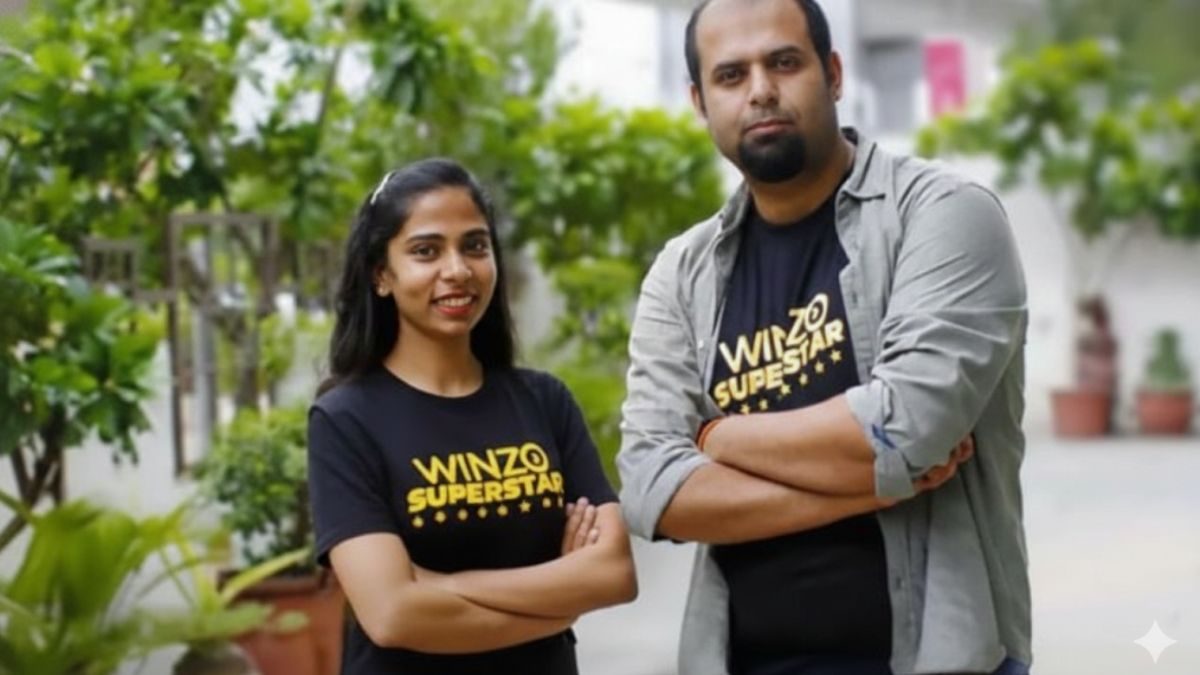
Paavan Nanda is an Indian entrepreneur best known as the co-founder and CEO of WinZO, one of India’s largest mobile gaming platforms. Launched in 2018 in New Delhi, WinZO was built to bring engaging, vernacular-friendly gaming to the masses, particularly in Tier 2-4 cities where smartphone adoption was rapidly rising. The platform grew to host more than 100 games, support millions of users and facilitate billions of microtransactions each month, becoming a notable name in the Indian gaming industry through scale and cultural relevance.
Before WinZO, Paavan had co-founded two startups in the travel and hospitality space Zostel and ZO Rooms both of which shaped his entrepreneurial instincts. With a Bachelor of Engineering from the Netaji Subhas Institute of Technology and an MBA from the Indian Institute of Management, Calcutta, he blended technical acumen with strategic thinking early in his career. His vision for WinZO was informed by how digital entertainment was taking shape in India post-smartphone democratization, with millions of users seeking localized, affordable, interactive experiences.
Under his leadership, WinZO experienced significant growth, reporting over ₹1,055 crore in revenue and ₹315 crore in net profit for FY24, even amid changing regulatory and market dynamics. However, the company and its founders faced intense scrutiny in 2025, including legal challenges related to real-money gaming regulations, reflecting the heightened pressure on founders building in emerging sectors. This article tracks Paavan Nanda’s journey from early influences to WinZO’s rise, the setbacks he faced, his leadership evolution, and the lessons that define his entrepreneurial story offering insights for FoundLanes.com readers curious about startup leadership, resilience and strategic scaling.
2. Background and Early Life
Paavan Nanda grew up with an early curiosity about technology and systems. Though specific details about his early childhood and family remain private, his educational choices reveal early interests in both technical and strategic thinking. He earned a Bachelor of Engineering degree from the Netaji Subhas Institute of Technology (NSIT) in New Delhi, a strong foundation in problem-solving and analytical reasoning.
After graduating, he opted to refine his business perspective, pursuing an MBA from Indian Institute of Management, Calcutta (IIM-C). There, he specialized in finance and strategy, equipping himself with tools to navigate complex business decisions and build scalable models skills that later helped shape his future ventures. Paavan’s formative years in education were marked by a blend of engineering rigor and strategic business training. This combination is common among technology founders but also critical for someone who would eventually straddle product development, scaling strategy, and market decisions in a fast-moving industry like Indian gaming.
3. Founder and Company Overview
Paavan Nanda is best known as the co-founder and CEO of WinZO, an Indian mobile gaming and interactive entertainment platform focused on vernacular, accessible gaming experiences in local languages. Founded in 2018 with co-founder Saumya Singh Rathore, WinZO was created at a time when affordable smartphones and widespread internet adoption were reshaping digital consumption patterns in India. WinZO’s offerings include over 100 skill-based games such as carrom, Ludo, chess, puzzle games and esports formats, distributed through its mobile app in more than a dozen regional languages. The platform also supports multiplayer formats and integrates microtransactions that allow everyday users to engage with games in culturally relevant contexts.
Targeting Tier II to Tier V city users and non-metro audiences, WinZO aimed not just to entertain but to create a deeper engagement with gaming that resonated beyond urban tech hubs turning a leisure activity into a vibrant community with millions of monthly users across India and beyond. Paavan’s leadership emphasized inclusivity and accessibility, pushing WinZO to provide gaming experiences not just to seasoned players but to first-time participants who had never before engaged with digital entertainment. This positioning underpinned the company’s rapid growth into one of India’s most visible gaming startups.
4. The Problem, Insight, and Trigger
In the mid-2010s, India’s digital landscape was being transformed by widespread smartphone penetration and affordable data plans. Despite the rising appetite for digital entertainment, the Indian gaming industry lacked platforms designed specifically for the mass market particularly those comfortable with regional languages, casual play and small-value microtransactions that suited varied socio-economic segments.
Paavan and his co-founder identified a gap: existing gaming platforms either targeted hardcore gamers or operated with heavy reliance on expensive in-app purchase models that alienated casual users. The founders saw an opportunity to build a vernacular-first gaming environment with low barriers to participation, emphasizing community-driven engagement rather than just transactional gameplay. This insight that millions of Indians in smaller towns and non-English contexts were underserved became the trigger for WinZO’s creation. Paavan believed that by marrying simple interfaces, affordable microtransactions, multi-language support and casual games tailored to local preferences, WinZO could democratize access to online gaming and create a truly mass-market platform.
5. Early Days and Initial Struggles
The earliest phase of building WinZO was rooted in experimentation. Paavan and his team had to test assumptions about how Indian gamers engaged with digital entertainment. Initial versions of the platform focused on validating user interest in localized gaming formats and figuring out monetization strategies that balanced affordability with sustainable revenue.
One of the hardest early lessons had to do with market education. Gaming in India encompassed broad segments, including casual players, competitive gamers and those seeking real-money rewards. Building trust among users, keeping them engaged and ensuring smooth transactions in a young digital payments environment required iterations that went beyond product tech.
Distribution was another struggle. While the idea of a mass-market gaming platform was compelling, connecting with users beyond metro areas demanded deep localization and language coverage. This meant investing resources in regional content, interfaces and community engagement a far more complex task than simply building an app and launching it on app stores.
6. Failures, Setbacks, and Self Doubt
Like many founders in emerging tech categories, Paavan faced moments when the path forward was unclear. Initial user acquisition was slow compared with expectations. Some early product versions had lower retention than needed. Monetization models based on microtransactions were untested at scale, and there were instances when revenue growth lagged behind user growth.
Internal setbacks from engineering bugs to disputes about gameplay fairness tested team morale. Paavan recalls in interviews that leadership requires the humility to acknowledge when something isn’t working and the resilience to iterate relentlessly. Founders often wrestle with choices that feel like compromises between vision and practical constraints, and Paavan was no exception. The need to navigate product complexity while keeping the platform scalable deepened his understanding of leadership under uncertainty.
Publicly available data doesn’t document every emotional low. But experienced founders in India’s tech ecosystem widely talk about the persistent tension between expectation and reality in early scaling. For Paavan, refusing to abandon. The core idea despite setbacks became a defining part of his journey to build WinZO into a credible gaming startup among India’s fast-growing tech companies.
7. Validation and Early Traction
Once the platform began gaining traction, validation came in both numbers and engagement patterns. WinZO reported a surge in registered users across India. With regional language content and local competitions attracting audiences not previously tapped by mainstream gaming apps. Revenue growth followed user engagement, demonstrating that the microtransaction model could work in India’s diverse market.
By FY24, WinZO reported revenue of ₹1,055 crore and a net profit of ₹315 crore, underscoring significant commercial validation even as policy and regulatory environments evolved. A milestone that marked belief in the venture was the rollout of a developer console. Encouraging third-party game studios to publish games on WinZO with revenue-sharing models. This expanded the game catalog beyond in-house curated titles and demonstrated that independent developers were willing to build on WinZO’s platform due to its growing user base. Paavan and his team repeatedly cited that seeing users spend meaningful time daily on WinZO. Often for social interaction as much as gameplay confirmed that the product had resonated deeply with its intended audience.
8. Funding, Money, and Growth Constraints
WinZO’s funding journey mirrored its growth. The company raised multiple rounds, including a $5 million Series A led by Kalaari Capital in 2019, an $18 million Series B in 2020, and a $65 million Series C in 2021, bringing total disclosed funding to around $90 million.
These investments helped accelerate product development, expand language coverage, onboard global games, and strengthen distribution efforts. However, like many startups in growth phases, WinZO also had to balance cash burn with sustainable monetization. As user growth accelerated, so did infrastructure and customer support costs. Managing cash flow while investing in growth remained a constant constraint.
In 2023, regulatory shifts such as the GST increase on online gaming introduced new financial pressures that affected unit economics across the industry. Paavan publicly acknowledged that taxation changes slowed growth and increased operational costs. Underscoring how regulatory and fiscal policy can impact startup viability even when fundamentals are strong.
9. Team Building and Leadership Evolution
From the beginning, Paavan emphasized hiring team members who were aligned with WinZO’s mission of inclusivity and innovation. Early team composition mixed technical engineers, product managers and local language experts.Rreflecting the need to build a platform that could serve diverse regional audiences effectively. Leadership evolved as WinZO scaled. Founders had to delegate responsibilities and empower functional leaders in engineering, design, community engagement and monetization strategy. This shift from founder-driven decision making to a distributed leadership model was crucial to scaling operations while preserving agility.
Paavan often speaks about culture fit hiring people who can navigate ambiguity and take ownership rather than waiting for direction. This belief helped the company retain talent during rapid iteration cycles and build internal structures capable of sustaining long-term strategic focus.
10. Growth, Scaling, and Operational Challenges
Scaling WinZO involved addressing operational complexity at multiple levels. Support for over 100 games required robust backend systems, latency optimization, and real-time transaction processing. Microtransaction systems also needed secure, reliable integrations with payment gateways a challenge in India’s evolving fintech landscape. Regional language support presented another operational layer, requiring localized content management and testing. Paavan’s team prioritized breadth of language and cultural relevance, enabling rapid adoption in non-metro markets but also increasing product management complexity.
On marketing and brand positioning, WinZO differentiated itself by emphasizing accessibility enabling users to start playing with small amounts and in familiar languages. This strategy helped build a community that engaged regularly rather than sporadically. Gamification elements, rewards and social features deepened engagement, turning players into repeat users. However, scaling also meant confronting platform moderation, dispute resolution and customer trust issues. Maintaining fairness in gameplay, handling payment disputes, and ensuring secure monetization experiences became critical as user numbers soared. These operational pressures shaped how Paavan thought about reliability and transparency in technology products aimed at mass audiences.
11. Personal Sacrifices and Burnout
Founders often pay personal costs for startup success, and Paavan was no exception. Building WinZO demanded long hours, constant strategic adjustments and a willingness to make tough calls under pressure. From navigating regulatory shifts to confronting competitive threats, the emotional toll of leadership in a highly scrutinized category was significant.
Balancing personal life with the relentless demands of scaling a tech business is a challenge reported across founder communities. Entrepreneurship involves trade-offs time away from family, postponed personal milestones, and the stress of unpredictability. In interviews and public appearances, Paavan has highlighted the importance of resilience, discipline and emotional grounding when leading teams through uncertainty.
12. Lessons, Beliefs, and Values
Paavan Nanda’s journey offers lessons relevant to founders in any sector. One foundational belief is solving real problems for real users. WinZO’s focus on vernacular, accessible gaming demonstrated that deep understanding of local user needs can unlock enormous markets that others overlook.
Another lesson is persistence in iteration. Early setbacks, market skepticism and operational bottlenecks did not deter the team from refining the product and scaling gradually. Leadership matters not only in vision but in walk-the-walk execution when markets are volatile. Paavan also emphasizes culture as a growth multiplier. A team aligned with the mission and comfortable with ambiguity can outmaneuver resource constraints and pivot smartly when circumstances change.
13. Present Challenges and Future Vision
Today, WinZO and its founders face intense industry scrutiny, particularly after regulatory action in 2025 that involved arrests of founders on alleged money-laundering charges linked to non-return of funds post real-money gaming regulations. The regulatory landscape for online gaming in India shifted sharply with bans and policy reinterpretations around real-money gaming, pushing platforms like WinZO to rethink their models, compliance frameworks and global expansion strategies. These developments highlight ongoing challenges for founders building large-scale consumer tech platforms in regulated sectors.
Despite these headwinds, Paavan’s long-term vision remains rooted in bringing Indian gaming innovation to global audiences and building an ecosystem that supports creators, developers and players alike. WinZO’s expansion initiatives — including short-form content features and international launches — reflect a belief that Indian tech companies can scale globally, provided they adapt to regulations and evolving market dynamics.
About foundlanes.com
foundlanes.com is India’s leading startup idea and deep-dive platform built for founders, operators, and serious entrepreneurs. We go beyond surface-level advice to deliver grounded, research-backed, and experience-driven startup content.