Summary:
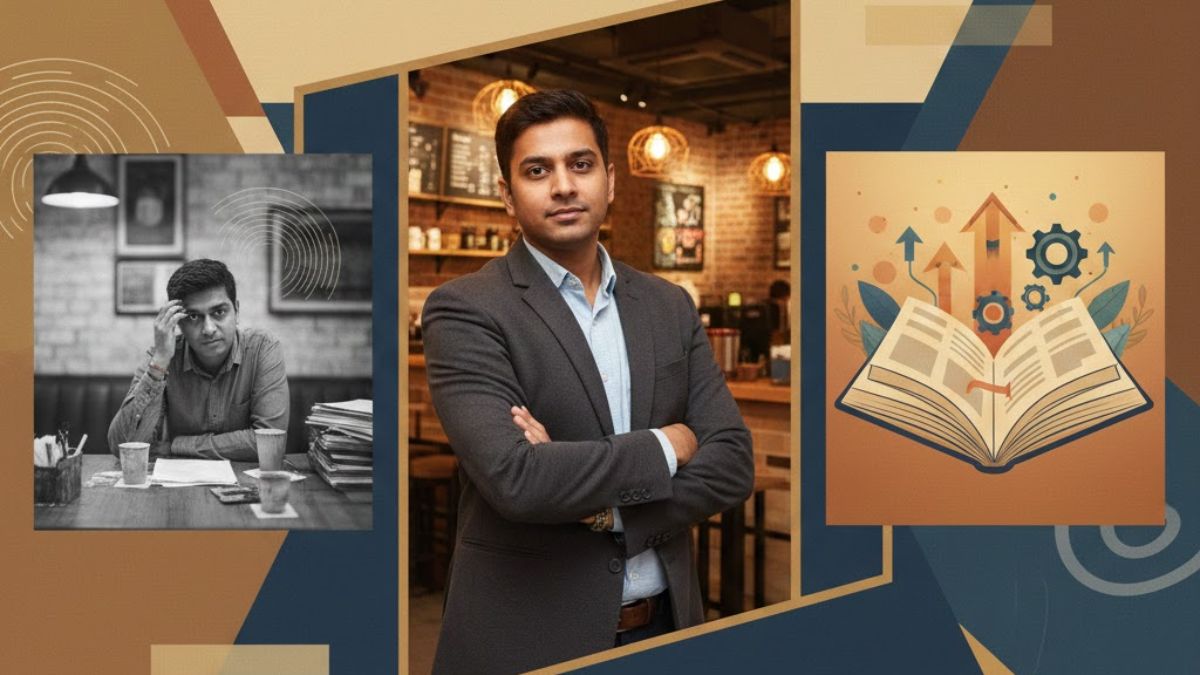
When people talk about modern Indian food and beverage startups, the name that inevitably surfaces is Raghav Verma, the entrepreneur who helped turn a simple cultural habit into a scalable business. His venture, Chaayos, didn’t begin as an industry-disrupting idea. It began as a question. Why did India have thousands of cafés for coffee but hardly any credible, organized space dedicated to chai, the drink consumed by more than a billion people every single day?
The story of the Chaayos founder is not a classic tale of sudden inspiration. It is a mix of observation, timing, conviction, and relentless execution. Raghav’s journey traces years of trying to understand why everyday Indian rituals rarely translate into large-scale businesses. His eventual breakthrough came from recognizing the gap between how deeply chai is woven into the country’s cultural fabric and how poorly that experience was served in urban markets. Before Chaayos became a household name, Raghav spent years experimenting with ideas, failing at a few, and reforming his understanding of what Indian consumers truly wanted. His career was shaped by early decisions that often didn’t make sense to people around him. Yet they helped him see consumer behavior not from the surface, but from inside the Indian routine itself.
Today, Chaayos is one of India’s biggest homegrown café chains, built on personalization, consistency, and technology-driven operations. But the journey behind it is far more layered than the brand’s green-and-white storefronts suggest. It’s a story of long nights, financial pressure, and an obsession with getting the taste of chai perfectly right every single time. This article explores the journey of Raghav Verma in depth: his early life, struggles, grit, failures, breakthroughs, and the values that built Chaayos into a defining name in India’s food startup ecosystem.
1. Background and Early Life
Every entrepreneurial journey begins long before the first pitch deck or prototype, and Raghav Verma’s story is no different. He grew up in a middle-class Indian family where discipline and academics were taken seriously, but curiosity was never discouraged. His early years were marked by a balance between structure and exploration. He had a genuine interest in understanding how things worked, especially systems, behaviors, and everyday routines.
Raghav’s education played a significant role in shaping the way he thought about the world. He pursued engineering at the Indian Institute of Technology Delhi, an environment that often serves as a breeding ground for new-age entrepreneurs. IIT Delhi exposed him to peers who questioned norms, built projects for fun, and believed that innovation could emerge from ordinary problems. His early influences weren’t rooted in glamour or high-profile business icons. Instead, they came from observing small business owners around him the local chai vendor who remembered customer preferences, the shopkeeper who ran a tight inventory without formal training, the everyday operators of India’s unorganized economy. These real-world lessons stayed with him far longer than any textbook formula.
During his college years, Raghav also explored activities beyond academics. He took an interest in debating, student leadership, and analytical problem-solving. This combination of logic and communication would later define his approach to building a consumer brand. He wasn’t the kind of student who wanted to chase a typical corporate path. He wanted to build something. just didn’t yet know what. Those early years created a foundation of observational thinking and consumer empathy. Without realizing it, Raghav was already developing the mindset that would later help him decode one of India’s most entrenched cultural rituals: chai.
2. Founder and Company Overview
Raghav Verma did not begin his career intending to run a nationwide tea café chain. After graduating from IIT Delhi, he explored roles that sharpened his analytical instincts. But he knew he wanted to build something consumer-facing, something rooted in everyday Indian behavior. His entrepreneurial direction began taking shape when he met Nitin Saluja, an engineer-turned-business-mind who shared the same curiosity about what defines Indian consumption patterns. Together, they would eventually build Chaayos, a brand that turned chai into a modern retail format. The company was founded in 2012 and was based in Gurugram, a location that gave them proximity to both urban consumers and a growing millennial workforce.
Chaayos positioned itself as a personalized chai experience. Instead of offering one standard cup, the brand allowed customers to customize their chai through countless combinations of ingredients, sweetness levels, and brewing styles. This personalization became the company’s signature. The brand also expanded into snacks, quick bites, and ready-to-drink offerings, capturing both dine-in and takeaway customers. The company quickly connected with young professionals, college-goers, and urban families who wanted a clean, consistent, comfortable space to drink chai without compromising on taste. This target audience was large, culturally tied to chai, and severely underserved by organized retail. Chaayos recognized this gap before it became part of mainstream food startup conversations.
By the mid-2010s, the brand had grown from a single café to a multi-city presence. It stood out as a digital-first food startup that used technology not only for convenience but also for operations. Online ordering, loyalty programs, and machine-led brewing became defining elements of its business. What began as an experiment became a scalable food and beverage company, laying the foundation for an entirely new segment in India’s café landscape.
3. The Problem, Insight, and Trigger
The idea behind Chaayos didn’t emerge from a boardroom. It came from something both founders observed for years: India loved chai, but the chai experience was inconsistent, unorganized, and rarely elevated into a professional format. For all the talk of café culture sweeping urban India, most of it revolved around coffee chains supported by global branding and lifestyle positioning. Chai, despite being consumed far more widely, was stuck in roadside stalls, office canteens, or homemade routines.
Raghav and Nitin noticed this contradiction early. Whenever they traveled, they found that getting a great, hygienic, reliable cup of chai was surprisingly difficult. The demand was everywhere, but no brand was solving it at scale. The problem was not consumption. It was quality, consistency, and experience. The insight was simple: chai was not just a beverage. It was a ritual. It was social bonding, office breaks, monsoon memories, and morning routines. And yet, the product wasn’t treated with the attention it deserved. This gap between cultural importance and market availability was too large to ignore.
3.1 The trigger moment
The trigger moment came when Nitin, while working in the United States, realized how small cultural elements back home could be translated into structured businesses. Back in India, he and Raghav spent months studying how people ordered chai, how they described their preferences, and why no café offered personalization at scale. They mapped how often consumers rejected chai at cafés because it didn’t taste “like home” or “just right.”
This became their thesis: if you can recreate the personalization of homemade chai in a consistent retail format, you can build a large, defensible consumer brand. For Raghav, this was the clarity he had been searching for. It wasn’t just an idea. It was a cultural habit ready to become a business. The gap was obvious, the consumers were ready, and the founders felt they understood the problem deeply enough to solve it.
2. Founder and Company Overview
Raghav Verma did not begin his career intending to run a nationwide tea café chain. After graduating from IIT Delhi, he explored roles that sharpened his analytical instincts. But he knew he wanted to build something consumer-facing, something rooted in everyday Indian behavior. His entrepreneurial direction began taking shape when he met Nitin Saluja, an engineer-turned-business-mind who shared the same curiosity about what defines Indian consumption patterns.
Together, they would eventually build Chaayos, a brand that turned chai into a modern retail format. The company was founded in 2012 and was based in Gurugram, a location that gave them proximity to both urban consumers and a growing millennial workforce. Chaayos positioned itself as a personalized chai experience. Instead of offering one standard cup, the brand allowed customers to customize their chai through countless combinations of ingredients, sweetness levels, and brewing styles. This personalization became the company’s signature. The brand also expanded into snacks, quick bites, and ready-to-drink offerings, capturing both dine-in and takeaway customers.
The company quickly connected with young professionals, college-goers, and urban families who wanted a clean, consistent, comfortable space to drink chai without compromising on taste. This target audience was large, culturally tied to chai, and severely underserved by organized retail. Chaayos recognized this gap before it became part of mainstream food startup conversations.
By the mid-2010s, the brand had grown from a single café to a multi-city presence. It stood out as a digital-first food startup that used technology not only for convenience but also for operations. Online ordering, loyalty programs, and machine-led brewing became defining elements of its business. What began as an experiment became a scalable food and beverage company, laying the foundation for an entirely new segment in India’s café landscape.
3. The Problem, Insight, and Trigger
The idea behind Chaayos didn’t emerge from a boardroom. It came from something both founders observed for years: India loved chai, but the chai experience was inconsistent, unorganized, and rarely elevated into a professional format. For all the talk of café culture sweeping urban India, most of it revolved around coffee chains supported by global branding and lifestyle positioning. Chai, despite being consumed far more widely, was stuck in roadside stalls, office canteens, or homemade routines.
Raghav and Nitin noticed this contradiction early. Whenever they traveled, they found that getting a great, hygienic, reliable cup of chai was surprisingly difficult. The demand was everywhere, but no brand was solving it at scale. The problem was not consumption. It was quality, consistency, and experience.
The insight was simple: chai was not just a beverage. It was a ritual. It was social bonding, office breaks, monsoon memories, and morning routines. And yet, the product wasn’t treated with the attention it deserved. This gap between cultural importance and market availability was too large to ignore.
The trigger moment came when Nitin, while working in the United States, realized how small cultural elements back home could be translated into structured businesses. Back in India, he and Raghav spent months studying how people ordered chai, how they described their preferences, and why no café offered personalization at scale. They mapped how often consumers rejected chai at cafés because it didn’t taste “like home” or “just right.”
This became their thesis: if you can recreate the personalization of homemade chai in a consistent retail format, you can build a large, defensible consumer brand. For Raghav, this was the clarity he had been searching for. It wasn’t just an idea. It was a cultural habit ready to become a business. The gap was obvious, the consumers were ready, and the founders felt they understood the problem deeply enough to solve it.
4. Funding, Money, and Growth Constraints
In the early phase, Chaayos operated like most young food startups: scrappy, frugal, and often one bad month away from trouble. Raghav Verma and Nitin Saluja began by bootstrapping the first outlet. It wasn’t glamorous, but it gave them control. Every rupee mattered. Every hiring decision, every ingredient supplier, every equipment purchase required justification.
As the brand gathered traction, the founders knew they would eventually need outside capital. The food and beverage business is intensely capital-heavy. Scaling requires upfront investment in real estate, interiors, staff training, and supply chain. Even with healthy unit economics, expansion cannot rely solely on organic cash flow.
Their early fundraise came after investors saw consistent demand forming across multiple outlets. The conviction was simple: India drinks millions of cups of chai a day. But no brand had organized the segment the way coffee chains like Café Coffee Day had done for coffee. Chaayos was building something culturally embedded, and investors saw that the concept had the potential to scale beyond a few neighborhoods. Over time, Chaayos secured investments from notable firms like Tiger Global and Elevation Capital. These funds allowed the brand to open more stores, strengthen its technology backbone, and improve its supply chain.
But money did not erase the challenges. Growth constraints continued to emerge. Prime real estate was expensive. Hiring and retaining trained staff was difficult. Margins, though healthy for chai, were still thinner than many food categories. Cash flow cycles were tight, and a couple of underperforming stores could strain overall performance. Raghav learned the hard way that rapid expansion inside the F&B category must be carefully paced. The ambition to scale had to be balanced with operational discipline. Funding helped Chaayos grow, but it also raised the expectations and pressure on the founders. Every new outlet became a test of viability.
5. Team Building and Leadership Evolution
Running a tea café chain at scale required more than intuition. It demanded people who could manage daily operations with military-like precision. In the early years, Raghav and Nitin did nearly everything themselves. They hired quickly, often based on instinct, because expansion outpaced their ability to recruit strategically. Some of those early hiring decisions didn’t work out. Staff turnover was high. Store managers lacked experience in standardized café operations. Training took longer than expected, and cultural alignment was inconsistent. Raghav learned firsthand that hiring is not about filling roles but about building a system that sustains itself.
As Chaayos grew, the founders began investing heavily in processes. They established training programs, performance systems, centralized supply chain units, and stronger middle management. Leadership became less about doing and more about enabling. Delegation was one of the toughest adjustments for Raghav. As a founder who had once brewed chai himself, it felt unnatural to step back and let others run critical functions. But stepping back was necessary for scale. Chaayos introduced technology at multiple levels to reduce human error and support staff. Automated tea-brewing systems, digital POS integrations, and AI-based monitoring helped maintain consistency across stores. These tools allowed the team to focus more on customer experience than on repetitive tasks.
Raghav’s leadership style evolved through trial and error. He learned to trust people, even when mistakes were part of the learning curve. He realized that culture couldn’t be forced; it had to be nurtured. Today, Chaayos relies on a large team spanning operations, supply chain, technology, and product development. Many of the early employees have grown into leadership roles, reflecting a culture that values internal mobility.
6. Growth, Scaling, and Operational Challenges
Scaling a food brand in India is notoriously difficult. Costs rise faster than revenue. Real estate competition is intense. Customer expectations shift constantly. For Chaayos, the journey from a handful of outlets to a national chain involved multiple turning points. One of the biggest breakthroughs was recognizing that Chaayos wasn’t just a café brand; it was a digital-first tea company. While dine-in customers were important, the brand found unusual strength in delivery orders. This dual-channel approach helped stabilize revenue streams.
Brand positioning played a central role in scaling. Chaayos wasn’t trying to be a hangout spot like Starbucks. It wasn’t a budget tapri. It was a modern chai place that offered familiarity with a touch of comfort. The brand leaned heavily into its identity: chai made exactly your way, with options for kadak, adrak, tulsi, or 25+ customizations. But operational hurdles followed every milestone. Some outlets struggled with footfall patterns. Others faced high rental overhead. In a few cases, machinery breakdowns disrupted business. Supply chain management became a complex operation, with ingredients traveling across states and outlets depending on precision timing.
Another major challenge was maintaining consistency at scale. Chai is sensitive. A small variation in tea leaves, milk density, or brewing temperature can alter taste. Chaayos turned to automation, including its signature “Chai Monk” machine, which standardized brewing to a level that human hands couldn’t reliably match.
These operational improvements helped the brand sustain growth across cities like Delhi, Gurugram, Mumbai, Bengaluru, and others. As footprints expanded, the company moved from reactive problem-solving to proactive systems thinking. Still, every city had its unique challenges. Some demanded more delivery-friendly locations, while others preferred larger dine-in spaces. Understanding hyperlocal preferences became an essential part of scaling.
7. Personal Sacrifices and Burnout
Entrepreneurship often hides its emotional cost behind fundraising announcements and growth updates. For Raghav, the journey took a toll that few outside the startup world fully understand. Long workdays became routine. Weekends disappeared. Social life blurred into conference calls, store visits, supplier negotiations, and late-night operations reviews.
Burnout was inevitable. Running a consumer-facing brand meant being mentally alert every hour. A single negative customer review could spiral into anxiety. A poorly performing outlet felt like a personal failure. When you are building a brand that serves thousands daily, the responsibility becomes overwhelming. The emotional strain spilled into personal life. Birthdays, family gatherings, vacations—everything took a backseat. Founders rarely talk about this openly, but the early years of Chaayos demanded sacrifices that shaped Raghav’s worldview. His resilience grew out of these experiences, but so did a deep respect for mental balance. Over time, he learned to pace himself. He began delegating more, setting clearer boundaries, and trusting his leadership team. But the early scars of burnout remained a reminder of the price founders often pay during the formative years of building a brand.
8. Lessons, Beliefs, and Values
Every founder evolves with their venture, and Raghav’s journey at Chaayos shaped his philosophy profoundly. He learned that solving a daily-life problem like making good chai consistently—was more meaningful than chasing flashy ideas. He realized that execution matters far more than concept. A chai café sounds simple. Running hundreds of them is anything but. One of his core lessons was the power of personalization. Customers don’t just want a drink; they want their drink. This insight transformed Chaayos from a generic café into a brand built on emotional familiarity.
Another belief that changed over time was the value of patience. Early-stage founders often expect results quickly, but consumer habits shift slowly. Growth takes time. Mistakes are part of evolution. The brand’s journey taught Raghav to lean into long-term thinking rather than short-term spikes. He also developed a strong appreciation for technology. While Chaayos began as a traditional F&B business, it eventually became a tech-enabled retail company with automated brewing, integrated logistics, and AI-driven systems. Raghav believes that technology is not just a convenience but a necessity for scaling consistency. Above all, he values humility. The food business keeps founders grounded. Customers can praise you one day and criticize you the next. Staying open to feedback and learning continuously became a non-negotiable value.
9. Present Challenges and Future Vision
Even today, Chaayos faces challenges. Scaling physical stores in India is a never-ending battle with rising costs, talent shortages, and unpredictable market shifts. Supply chain complexities increase with every new outlet. Customer preferences evolve, and digital expectations rise constantly. Raghav Verma continues to navigate these challenges while pushing the brand toward a more ambitious vision. He wants Chaayos to become the default chai brand for urban India—whether through walk-ins, delivery, vending systems, or office partnerships. His long-term vision is not limited to chai alone but to building an ecosystem around India’s tea culture.
The brand is exploring deeper automation, menu innovations, and experiential store formats. At the same time, it is focusing on sustainability, long-term profitability, and operational excellence across regions. What remains unchanged is his obsession with the central problem: ensuring that every customer gets a consistent, personalized, delightful cup of chai across every Chaayos outlet. This problem keeps him grounded, hungry, and deeply connected to the mission he started with.
Future Outlook
Looking ahead, the future of Chaayos depends on balancing technology with tradition. As India’s café culture matures, tea will continue to be a powerful anchor for community and daily routine. With its strong brand identity, tech-enabled operations, loyal customer base, and expansion-ready model, Chaayos is positioned to lead India’s premium chai segment.
For Raghav Verma, the journey is far from over. The mission to elevate chai into a national, standardized, emotionally resonant café experience remains his guiding force. The brand’s future will be shaped by its ability to innovate consistently, retain quality, and deepen its connection with consumers. As the urban food landscape evolves, Chaayos continues to stand out as a modern Indian brand built on a centuries-old beverage and a founder whose resilience turned a simple cup of tea into a nationwide movement.
About foundlanes.com
foundlanes.com is India’s leading startup idea and deep-dive platform built for founders, operators, and serious entrepreneurs. We go beyond surface-level advice to deliver grounded, research-backed, and experience-driven startup content. Every guide on foundlanes.com is designed to help readers think clearly, act strategically, and build sustainably.