Summary
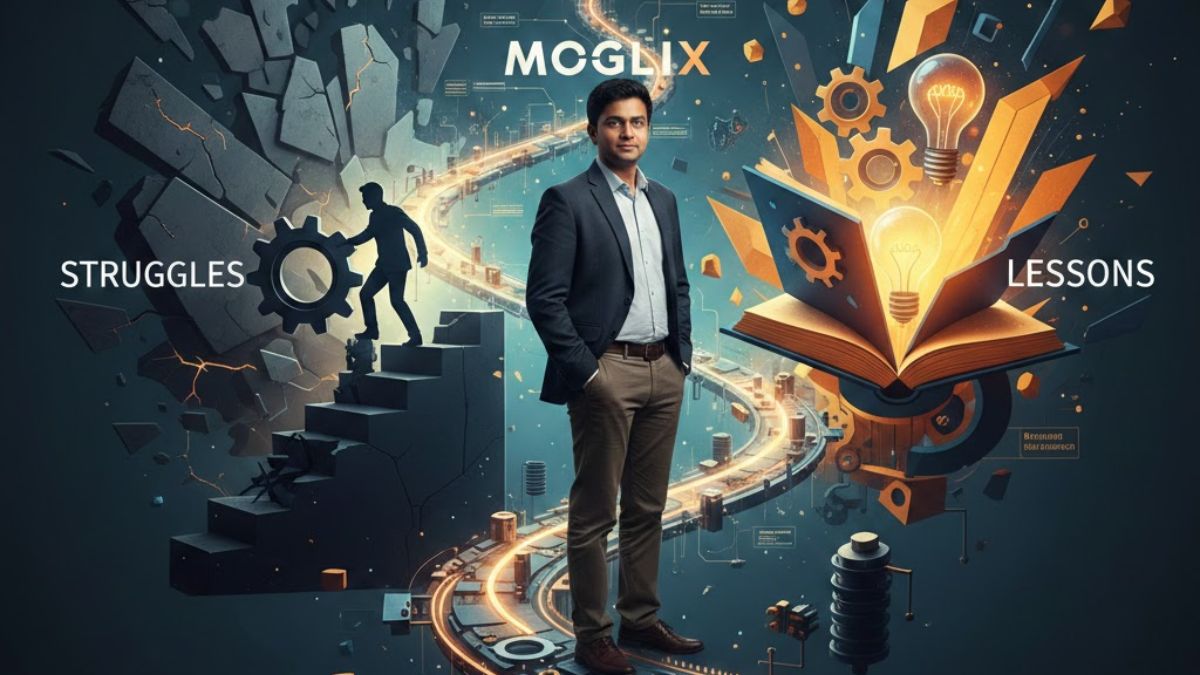
Rahul Garg, the Moglix Founder, entered the Indian B2B commerce ecosystem at a time when manufacturing supply chains were still largely offline, fragmented, and underserved by technology. His journey began in the early 2010s, but the real spark for Moglix came in 2015, when he decided to return to India after years spent building products and leading teams abroad. He saw a sector brimming with potential yet deeply constrained by outdated procurement systems, unreliable vendor networks, and slow digitization. For him, the question was simple: How could India build world-class manufacturing output without first modernizing the plumbing that powered its factories?
What Rahul pursued was not a typical startup play. The manufacturing sector was complex. Buying cycles were long. Customer expectations were different from consumer internet users. But the need was massive. India’s factories were struggling with inconsistent supply, unpredictable pricing, and paperwork that hadn’t fundamentally changed in decades. He saw what many ignored: an opportunity to transform the spine of industrial India.
The journey started in Singapore but quickly brought him back home. Moglix, headquartered in India, would eventually evolve into one of the country’s most influential B2B commerce and supply chain companies. The mission was ambitious. The hurdles were endless. Early customers were skeptical. Investors questioned the viability of a B2B marketplace in India. Team-building was slow. Cash burn was a constant worry. And yet, through these challenges, Rahul kept returning to the same question: How do you make manufacturing quicker, more predictable, and more efficient in a country trying to scale at breakneck speed?
This is the inside story of Rahul Garg’s entrepreneurial journey, the struggles that shaped Moglix, the breakthroughs that changed its trajectory, and the lessons that continue to guide him as he builds one of India’s most impactful supply chain companies.
1. Background and Early Life
Rahul Garg’s early life shaped much of his entrepreneurial lens. He grew up in a middle-class Indian family that valued education and discipline. His formative years were influenced by a culture where stability, engineering, and academic rigor were seen as pathways to success. Although his family wasn’t entrepreneurial in the traditional sense, it was supportive of his curiosity and open to letting him explore new ways of thinking. That environment gave him the confidence to question systems, understand how things worked, and think critically about inefficiencies.
He was exceptionally strong in STEM subjects and eventually pursued engineering. Those early years exposed him to the structural complexity of India’s industrial environment. Whether it was through internships, academic exposure, or observing family and community, he recognized that India’s manufacturing backbone had immense potential but lacked modern tools.
As he grew older, Rahul’s influences shifted from purely academic to more global. Exposure to the world outside India expanded his thinking. Working across international markets taught him how efficient supply chains could be when supported by technology. It also showed him how far behind India still lagged in this domain. By the time he entered professional life, he had already built a mental map of what a scalable, tech-enabled supply chain could look like for a developing market transitioning into a global manufacturing hub. Those early seeds would one day become the foundation of Moglix.
2. Founder and Company Overview
2.1 Introduction to the Founder
Rahul Garg, the Moglix Founder, built his career across product roles and leadership assignments before turning to entrepreneurship. His global exposure helped him develop a strong understanding of technology, customer experience, and operational rigor. These skills became critical when he decided to enter the B2B commerce space, where complexities are significantly higher than consumer internet products.
2.2 Company Overview and Offerings
Moglix began as a B2B marketplace focused on industrial supplies. Over time, it expanded into supply chain financing, SaaS procurement, contract manufacturing, and digital transformation solutions for factories. The company connects manufacturers, enterprises, and SMEs through an integrated digital ecosystem that simplifies procurement and ensures timely delivery of quality products.
The platform’s offerings extend from MRO supplies to packaging, chemicals, modules for plant operations, and large-scale supply chain management. Its business model caters to enterprises that need predictability and efficiency in procurement. Unlike consumer platforms, Moglix deals with heavy volumes, long-term relationships, and industry-grade compliance.
2.3 Target Audience and Market Served
Moglix primarily serves manufacturing and industrial customers across automotive, pharmaceuticals, FMCG, infrastructure, and logistics sectors. These customers depend on streamlined procurement to maintain production timelines. Rahul recognized that small inefficiencies in supply often lead to massive operational delays. That understanding shaped the company’s focus on reliability.
2.4 Year of Founding and Business Stage
Moglix was founded in 2015. The company has matured beyond early marketplace operations and now functions as a full-scale B2B commerce and supply chain organization. It has grown across India and expanded into international markets. Today, it is seen as one of the leading companies driving India’s manufacturing technology growth.
3. The Problem, Insight, and Trigger
Rahul’s insight came from observing a gap. While consumer internet in India was booming, B2B commerce remained archaic. Manufacturing procurement was still heavily offline and relied on manual paperwork. Pricing lacked transparency, suppliers struggled with reliability, and large enterprises had no unified view of their supply chain. These inefficiencies were costing India both time and global competitiveness.
The trigger moment came when Rahul realized that India’s manufacturing ambitions couldn’t scale unless someone built modern infrastructure around procurement and supply chain systems. He noticed that even global companies operating in India had to adapt to legacy processes simply because solutions didn’t exist. That gap, unresolved for years, presented a once-in-a-generation opportunity. He also saw how manufacturing ecosystems in advanced economies were increasingly adopting digital tools. India, if it wanted to become a global factory, needed to make that leap. This urgency is what pushed him to leave a stable corporate life and start building a company that could transform how factories procured and managed supplies.
4. Early Days and Initial Struggles
The early days of Moglix were filled with uncertainty. Rahul entered a market where procurement heads and factory managers had followed the same processes for decades. Convincing them to adopt technology was far harder than he expected. The problem wasn’t awareness. It was inertia. Many companies thought, “Why change something that works?” Rahul assumed that showcasing efficiency gains would convince customers quickly. However, procurement cycles moved slowly, and building trust took time. Many enterprises were skeptical about partnering with a young startup in a critical operational area. Moglix was asking them to move from long-trusted suppliers to a digital system they had never tried.
Building supplier networks was equally challenging. Suppliers were comfortable with cash transactions, offline orders, and negotiable contracts. Standardization didn’t fit well into this ecosystem. Moglix had to invest enormous effort into establishing credibility on both sides. Operationally, everything was harder than expected. Cataloging industrial products, managing logistics, building tech flow, and ensuring reliability required constant improvisation. The marketplace blueprint that worked for consumer products couldn’t simply be copy-pasted into B2B. These early challenges tested the company’s resilience.
5. Failures, Setbacks, and Self Doubt
Rahul often describes the toughest phase of the Moglix story as the period when deals would almost close and then fall through at the last moment. Large companies showed interest but backed out after internal pushback. The sales cycle was long and unpredictable. Cash burn mounted. The team frequently questioned whether the market was ready for what they were building. There were moments when the company struggled to retain early employees because the uncertainty felt overwhelming. Every month came with a new operational fire. Wrong inventory decisions, supply delays, and manual errors hurt credibility. Building a B2B brand in a space that valued reliability over speed made failures even more visible.
Rahul has admitted that there were nights when he wondered if he had made a mistake leaving the comfort of a corporate career. Self-doubt crept in, especially when the company didn’t have enough momentum to reassure him that the market was shifting. But every setback also clarified where the real gaps were. These insights helped Moglix refine its processes and gradually earn trust.
6. Validation and Early Traction
The first real validation came when a well-known enterprise not only onboarded Moglix but also expanded its engagement. This was the first time the team saw measurable proof that mainstream businesses were ready for procurement transformation. The early feedback highlighted improvements in transparency, delivery timelines, and consistency in product quality. It wasn’t explosive growth, but it was steady and meaningful. Each customer became a case study. Each success created a ripple effect in the same industry. Factories are tightly interconnected networks; one credible win often leads to interest from others.
This traction changed everything. Investors took note. Suppliers trusted the platform more. The team became confident that the market direction was shifting in their favor. For Rahul, this early momentum reaffirmed the belief that India was ready for modern B2B commerce, and Moglix was in the right position to lead it.
7. Funding, Money, and Growth Constraints
Moglix started lean, and capital efficiency was a necessity. B2B businesses require working capital, supplier financing, and logistics support. Managing cash flow was one of the company’s hardest early challenges. Even when sales grew, collections took time, and the company had to maintain inventory buffers to meet enterprise expectations. Transitioning from bootstrapping to funded growth came gradually. Investors were initially cautious because India hadn’t seen many successful B2B marketplace stories. The unit economics were not comparable to B2C platforms, and the operational complexity was intimidating.
Once Moglix secured its first major funding rounds, it gained the ability to invest in technology, logistics, and supply chain capabilities. But growth came with new problems. Scaling required deeper capital allocation. Each expansion demanded new distribution nodes, warehousing capacity, and talent. India’s fragmented logistics landscape added another layer of difficulty. These constraints forced the company to optimize aggressively. Rahul emphasizes that discipline around capital allocation is what helped Moglix survive its early volatile years.
8. Team Building and Leadership Evolution
Team building was one of Rahul’s most transformative learning curves. In the beginning, hiring was slow. Talented professionals hesitated to join a company working in a traditional sector with unglamorous problems. But the ones who joined believed in the vision and played multiple roles simultaneously.
Rahul admits that he made several early hiring mistakes. Sometimes he hired too quickly. At other times, he waited too long. Delegation didn’t come naturally either. Coming from an execution-focused corporate background, he initially tried to shoulder too many responsibilities himself. Over time, he learned that scaling a B2B enterprise required leaders who could operate independently. His leadership style evolved from hands-on execution to building systems, empowering managers, and creating a culture that valued trust and clarity. Today, Moglix is known for its strong leadership bandwidth, which is a reflection of Rahul’s growth as a founder.
9. Growth, Scaling, and Operational Challenges
Scaling a B2B platform was far more complex than adding users to a digital product. Every new customer came with unique requirements. Integrations were intricate. Logistics required precision. Compliance and safety standards varied across industries. Brand positioning was another challenge. The market didn’t have many companies doing what Moglix set out to do. The team had to educate enterprises about digital procurement and help them visualize long-term value. This required thoughtful go-to-market strategies and patient sales cycles.
Operational breakdowns were frequent in the early years. Incorrect deliveries, supplier inconsistencies, and warehousing inefficiencies created friction. Moglix responded by building strong in-house systems instead of relying on generic third-party solutions. This decision became a turning point, giving the company more control over service levels. As the company grew, it expanded into supply chain financing, procurement SaaS, and global supply capabilities. Each expansion added layers of complexity but also strengthened Moglix’s position in the B2B marketplace evolution.
10. Personal Sacrifices and Burnout
Rahul’s journey involved intense personal sacrifices. The decision to return to India meant uprooting a comfortable life and accepting uncertainty. Building a B2B startup demanded long work hours, constant travel, and emotional endurance. There were years when the demands of the business overshadowed personal time and relationships.
Burnout came in phases. Sometimes it was triggered by operational crises. Other times it stemmed from investor pressure or team churn. Like many founders, he went through phases where the emotional strain was heavier than the operational workload. But despite these challenges, Rahul remained driven by the long-term impact of building infrastructure that could uplift India’s industrial economy. That mission became his anchor during difficult times.
11. Lessons, Beliefs, and Values
Over the years, Rahul has shaped a clear philosophy around entrepreneurship. One of his biggest lessons is that B2B transformation requires patience and long-term thinking. You can’t rush trust or change in an industry that operates on decades of relationships. He also learned the importance of building resilience. Failures are not signs to stop but signals to refine processes. He believes that founders must obsess over customer outcomes and be willing to rebuild parts of the business repeatedly until they work.
A value he consistently emphasizes is integrity. In B2B, reputation is everything. A single broken promise can affect dozens of potential relationships. This is why Moglix prioritizes reliability and predictability in all its operations. Another belief that shaped him is that technology alone is not enough. Transformation happens when technology integrates seamlessly with on-ground execution, human relationships, and deep industry understanding.
12. Present Challenges and Future Vision
Moglix continues to evolve, and the challenges of today look different from the hurdles of its early years. Expanding globally, managing cross-border supply chains, and navigating fluctuating commodity markets are part of the modern complexity. Scaling teams across geographies adds another layer of responsibility. Rahul’s leadership philosophy today is rooted in clarity, transparency, and long-term focus. He continues to push the company to innovate while staying disciplined. The vision ahead is ambitious: to build a global supply chain powerhouse that can support not just India but emerging manufacturing economies worldwide.
Rahul remains obsessed with solving supply chain inefficiencies. He believes that the next decade of India’s growth will be defined by the country’s ability to build resilient manufacturing capabilities. Moglix’s future strategy aligns closely with this mission.
About foundlanes.com
foundlanes.com is India’s leading startup idea discovery platform. It helps entrepreneurs find actionable startup opportunities, market insights, and industry-specific guidance to turn ideas into real businesses. With deep research and practical resources, foundlanes supports founders at every stage, from idea validation to launch and growth.