Summary (Lede)
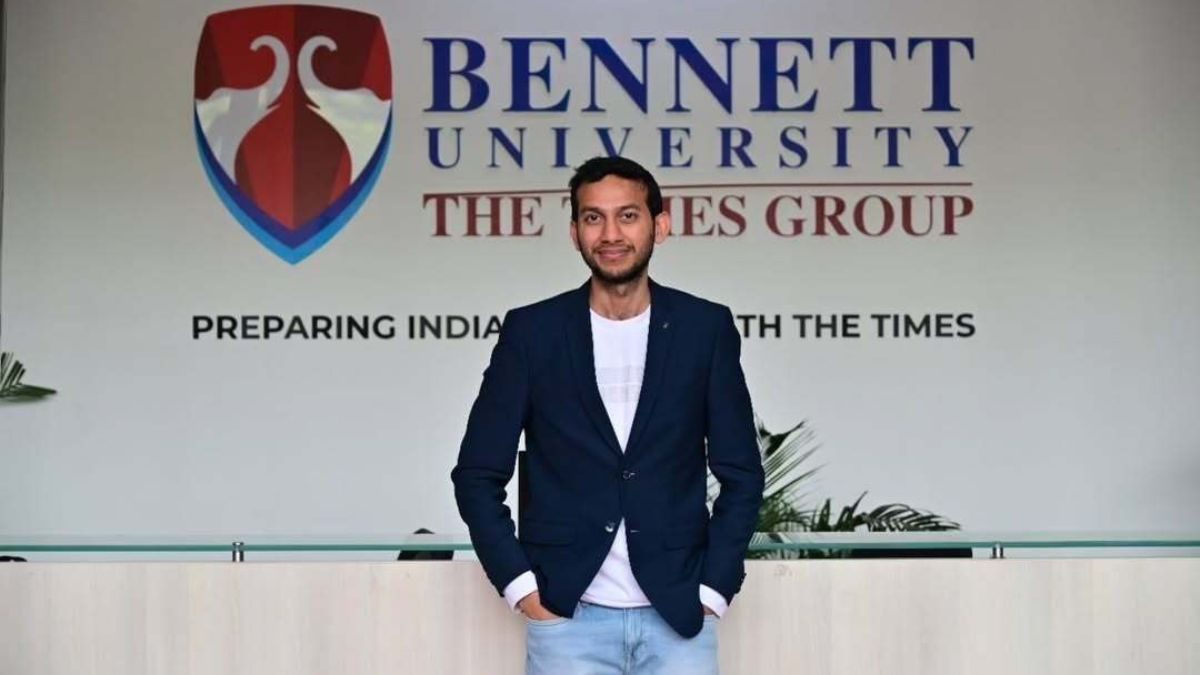
Meet Ritesh Agarwal, OYO Founder—a name that has become synonymous with India’s startup audacity, extreme ambition, and the risks of scaling too fast. Ritesh Agarwal is the founder and Group CEO of OYO, one of the world’s largest hospitality chains, built with a bold vision to standardise budget accommodation across India and later the world. What began as a teenage experiment in affordable travel evolved into a global startup that reshaped how millions of Indians book hotels.
Who is Ritesh Agarwal? A college dropout from a small town in Odisha who moved to Delhi at the age of 17 with little money, big ideas, and an uncommon ability to see broken systems. What did he build? OYO—originally “On Your Own”—a platform that partnered with small hotels to improve quality, consistency, and affordability. When did his journey begin? In 2012, when India’s unorganised budget hotel market was chaotic, unreliable, and deeply fragmented. Where did it all happen? From cheap guesthouses and bus journeys across India to boardrooms in SoftBank’s Tokyo headquarters.
Why did OYO scale faster than most Indian startups? Because Ritesh Agarwal understood scale before polish. He focused on speed, data, and operational control rather than storytelling. How did he do it? By raising unprecedented capital, building an asset-light hospitality model, and betting aggressively on international expansion—sometimes at the cost of stability.
This is not a fairy tale startup story. It is a deeply human account of ambition colliding with reality, of rapid growth followed by painful correction. Crafted for FoundLanes.com readers, this story goes beyond valuation headlines and IPO speculation. Meet Ritesh Agarwal, OYO Founder is ultimately a story about youthful conviction, costly lessons, and a founder still learning how to build something that lasts.
1. Background and Early Life
Ritesh Agarwal was born in 1993 in Bissam Cuttack, a small town in Odisha where life followed predictable rhythms. It was not a place where ambition announced itself loudly. There were no startup success stories, no global companies, and no visible examples of people building businesses at scale. What existed instead was quiet persistence.
His family came from a modest business background. Money was never abundant, but it was never absent either. Expenses were measured, decisions were cautious, and stability mattered more than experimentation. In such households, risk is not celebrated—it is questioned.
Growing up in this environment shaped Ritesh in subtle ways. He learned early that survival in business was less about brilliance and more about consistency. Shopkeepers around him didn’t chase innovation; they chased sustainability. They adjusted prices based on seasons, negotiated with suppliers, extended credit carefully, and relied on repeat customers rather than advertising.
What distinguished Ritesh from others his age was not rebellion, but observation.
While classmates memorised textbooks, he watched people. He noticed how shop owners handled losses, how they dealt with difficult customers, and how they survived slow days. These were not formal lessons, but they created an intuitive understanding of commerce that no classroom could offer.
His childhood was not defined by privilege. It was defined by awareness.
1.1 Education and Early Influences
Like most middle-class Indian students, Ritesh’s early life followed a familiar script. Education was seen as the safest route to stability. Engineering was not necessarily a dream—it was an expectation.
As a teenager, he moved to Delhi to prepare for engineering entrance examinations. The city was overwhelming. Competition was intense, and the pressure to perform was constant. Coaching centres promised certainty through discipline, structure, and repetition.
But Ritesh felt increasingly disconnected.
He briefly enrolled at the Indian School of Business and Finance, hoping that formal education would bring clarity. Instead, it deepened his discomfort. The classroom moved at a pace that felt disconnected from reality. The problems discussed were hypothetical, while the problems he wanted to solve were visible everywhere outside.
Rather than attending lectures, Ritesh began reading obsessively. He spent nights exploring startup blogs, early founder interviews, and case studies of companies that had been built from nothing. He was particularly fascinated by Airbnb’s early journey—not the success, but the uncertainty.
At the same time, he began travelling across India. He stayed in budget hotels, hostels, and lodges—often uncomfortable, often unreliable. These experiences planted the seeds of a question that would later define his career.
Dropping out of college was not an emotional decision. It was a strategic one. Ritesh believed that learning by doing would teach him faster than any syllabus could.
2. Founder and Company Overview
Meet Ritesh Agarwal, OYO Founder—a teenager who entered one of India’s most unorganised industries without experience, capital, or institutional backing.
In 2013, Ritesh officially founded OYO, which evolved from his initial experiment called Oravel Stays. Oravel was simple in concept: a listing platform for budget accommodations. It helped travellers find affordable places to stay.
But very quickly, Ritesh realised that discovery was not the core problem.
People could find hotels.
What they couldn’t trust was what they would get after booking.
This realisation changed everything.
2.1. Company Overview and Offerings
OYO pivoted from being a marketplace to becoming a full-stack hospitality company. Instead of merely listing hotels, OYO began working directly with hotel owners to improve their operations.
The company offered:
- Branding under the OYO name
- Technology for bookings and pricing
- Standardised operating procedures
- Quality audits and training
- Centralised customer acquisition
In exchange, OYO earned a share of the revenue.
This was an ambitious model. It required not just technology, but behavioural change.
2.2. Target Audience and Market Served
OYO’s early focus was clear: middle-class Indian travellers.
These were students, families, sales professionals, and first-time digital bookers—people who wanted affordability but hated uncertainty. They were not chasing luxury; they were chasing reliability.
Over time, OYO expanded into premium hotels, vacation homes, and long-term stays. International markets followed, taking the brand across Asia, Europe, and the United States.
2.3. Year of Founding and Business Stage
By the late 2010s, OYO had become one of India’s most aggressively scaled startups. It symbolised ambition, speed, and the belief that Indian companies could build global platforms.
It also became a case study in the cost of scaling too fast.
3. The Problem, Insight, and Trigger
India’s budget hotel market was enormous—and deeply broken.
Two rooms at the same price could offer radically different experiences. Cleanliness, safety, service quality, and even basic hygiene varied unpredictably. Photos rarely matched reality. Prices changed without explanation.
For travellers, booking a budget hotel felt like gambling.
3.1. Personal Insight Behind the Idea
Ritesh understood this problem personally. His travels exposed him repeatedly to disappointment—misleading listings, uncomfortable stays, and lack of accountability.
But what stood out to him was something important:
Most hotel owners were not malicious.
They were disorganised.
They lacked systems, training, and visibility. Many had inherited properties without formal business education. They wanted higher occupancy but didn’t know how to market or price effectively.
The problem wasn’t intent.
It was structure.
3.2. Trigger Moment to Start
The defining insight came from a simple analogy:
If fast-food chains can standardise taste across countries, why can’t hotels standardise experience within cities?
This question reframed the problem entirely. OYO wouldn’t just help people find hotels—it would create predictability.
That belief became the foundation of the company.
4. Early Days and Initial Struggles
The early days of OYO were chaotic, uncertain, and emotionally draining.
Convincing hotel owners to trust a teenage founder with no hospitality background was extremely difficult. Many dismissed him outright. Others agreed verbally but failed to follow through.
4.1. Early Assumptions and Naivety
Ritesh initially believed that once hotel owners saw increased bookings, they would naturally follow standards. He underestimated how deeply habits were ingrained.
Standards required enforcement, not encouragement.
4.2. What Turned Out to Be Harder Than Expected
Operations proved brutal.
Quality audits were manual. Customer complaints were frequent. Hotel owners reverted to old practices once branding benefits became visible.
OYO wasn’t just managing inventory—it was managing human behaviour at scale.
5. Failures, Setbacks, and Self-Doubt
As OYO expanded, its failures became more visible.
Rapid growth led to operational breakdowns, partner dissatisfaction, and regulatory scrutiny. Media narratives shifted. Admiration turned into scepticism.
5.1. Toughest Phase of the Journey
The pressure intensified as expectations rose. Growth targets multiplied. Mistakes were amplified.
5.2. Moments of Self-Doubt and Emotional Lows
For Ritesh, leading a global company in his early twenties was emotionally overwhelming. Layoffs, losses, and criticism arrived before emotional resilience had time to develop.
Confidence became harder to maintain. Growth no longer felt like progress—it felt like survival.
6. Validation and Early Traction
Despite the chaos, validation arrived through customers.
Travellers began recognising the OYO brand. Repeat bookings increased. Revenue grew rapidly in the early years.
7. Funding, Money, and Growth Constraints
Until OYO began raising large rounds of capital, the company’s growth had been shaped by constraint. Every decision carried weight because resources were limited. Expansion required trade-offs. Mistakes were felt immediately.
That changed when institutional capital entered the picture.
OYO attracted global attention, most notably from SoftBank, whose investment fundamentally altered the company’s trajectory. The infusion of capital didn’t just increase OYO’s runway—it changed its psychology.
Growth was no longer something to test carefully. It became something to deliver aggressively.
New cities were launched in rapid succession. International markets were greenlit before local learnings had fully settled. Teams expanded faster than culture could stabilise. The belief was simple: speed would solve everything.
For a young founder, this environment was intoxicating. Capital made risks feel reversible. Losses looked temporary. Every idea seemed executable.
But capital also removed friction—and friction, it turned out, had been OYO’s silent guardrail
7.1. Capital Challenges and Cash Flow Realities
As OYO expanded, cash burn increased sharply. Subsidies were used to acquire customers. Incentives were offered to hotel partners to onboard quickly. Marketing spend grew rapidly.
Profitability was consciously deprioritised in favour of dominance.
This approach worked—until it didn’t.
When funding environments tightened and global sentiment shifted, the absence of strong unit economics became impossible to ignore. Markets that looked promising on paper revealed structural weaknesses.
Ritesh Agarwal learned a lesson that reshaped his thinking:
Money does not create discipline.
It only delays the consequences of indiscipline.
8. Team Building and Leadership Evolution
In the early years, OYO hired for speed and hunger. Young teams moved fast, took risks, and executed aggressively. This energy fuelled early expansion.
But as the organisation grew across geographies, the limitations of this approach became clear.
Leadership layers were thin. Decision-making remained centralised. Many teams waited for direction rather than owning outcomes. Accountability was inconsistent.
Ritesh, still deeply involved in execution, carried an unsustainable cognitive load.
8.1. Delegation Challenges
Letting go did not come naturally.
OYO was deeply personal to Ritesh. Every hotel, every market, every crisis felt like a reflection of his own competence. Delegation felt risky—almost irresponsible.
But holding on created bottlenecks. Decisions slowed. Teams lost confidence. Execution quality suffered.
The company had outgrown a founder-centric model—but emotionally, that transition was difficult to accept.
8.2. Leadership Learnings Over Time
Over time, Ritesh’s leadership evolved—not through theory, but through pressure.
Senior leaders were hired and empowered. Authority was redistributed. Processes were formalised. Metrics shifted from vanity growth to operational health.
Ritesh’s role gradually changed from chief problem-solver to system builder.
Leadership became less about speed and more about clarity, accountability, and trust.
9. Growth, Scaling, and Operational Challenges
Scaling hospitality revealed a hard truth: this is not a software-only business.
Hotels operate in physical spaces, governed by local regulations, labour laws, and cultural expectations. What worked in India did not automatically translate to Europe or the United States.
OYO’s international expansion exposed blind spots.
In some markets, regulatory pushback was stronger than expected. In others, consumer expectations differed sharply. Local hotel partners behaved differently from Indian counterparts.
Standardisation—once OYO’s strength—revealed its limits.
9.1. Brand Positioning and Go-to-Market Learnings
OYO initially believed that a single global playbook could work everywhere. That assumption proved flawed.
Hospitality is deeply local. Trust is built differently in different cultures. Price sensitivity varies. Compliance expectations shift.
The brand had to learn humility.
9.2. Operational Breakdowns and Fixes
As issues accumulated, OYO entered a correction phase.
Loss-making markets were exited. Inventory was reduced. Contracts were renegotiated. Processes were redesigned from the ground up.
This phase lacked glamour. There were no headlines celebrating consolidation. There were only difficult internal conversations about sustainability.
But this phase was essential.
It marked OYO’s transition from a fast-moving startup to a company forced to confront reality.
10. Personal Sacrifices and Burnout
Entrepreneurship consumed Ritesh Agarwal’s early adulthood.
While peers explored careers, relationships, and identity, Ritesh navigated crises, boardrooms, and public scrutiny.
Burnout did not arrive dramatically. It arrived quietly.
Through exhaustion that sleep couldn’t fix.
emotional numbness.
Through the inability to fully celebrate wins or process losses.
10.1. Emotional Pressure and Isolation
Leadership can be isolating, especially at scale.
Ritesh faced criticism publicly, but responsibility privately. Decisions affected thousands of employees and partners. Mistakes carried human consequences.
Few people could truly relate to that weight.
10.2. Impact on Personal Life
Privacy disappeared early. Every move was analysed. Balance became an abstract idea rather than a daily reality.
Entrepreneurship accelerated maturity—but at a cost.
11. Lessons, Beliefs, and Values
OYO’s journey forced Ritesh to unlearn several myths.
That speed is always good.
That capital guarantees safety.
That scale equals strength.
The deeper lessons were quieter and harder.
11.1. Core Lessons Learned
- Growth without systems collapses
- Capital amplifies flaws as much as strengths
- Culture cannot be rushed
- Failure is survivable—denial is not
Mistakes became data. Criticism became feedback.
11.2. Non-Negotiable Values
Over time, certain values hardened into principle:
- Customer trust over short-term metrics
- Operational honesty over cosmetic growth
- Sustainability over storytelling
Growth, Ritesh learned, must eventually justify itself—not emotionally, but economically.
12. Present Challenges and Future Vision
Meet Ritesh Agarwal today—more measured, more reflective, less seduced by velocity.
The current chapter is not about domination. It is about endurance.
12.1. Current Leadership Philosophy
The focus has shifted to:
- Profitability and unit economics
- Partner trust and long-term relationships
- Internal accountability
- Building resilience against future cycles
Ambition remains—but it is tempered by experience.
12.2. Long-Term Vision
The long-term vision is no longer about being the fastest-growing hospitality company.
It is about building a resilient hospitality platform—one that can survive scrutiny, cycles, and correction.
12.3. The Problem He Remains Obsessed With
The question Ritesh continues to wrestle with is balance.
Between:
- Speed and stability
- Vision and execution
- Confidence and humility
OYO’s story is not finished. Neither is Ritesh Agarwal’s evolution as a founder.
What remains constant is the curiosity that began in a small town in Odisha—the belief that systems can be improved, and that failure, when faced honestly, can become foundation.
12.4. Why This Moment Changed Belief
Customer adoption validated the core insight. It proved that the problem was real and widespread.
This belief pushed Ritesh to scale faster—setting the stage for the next, far more challenging chapter.
The lessons here align with how several fast-growing Indian startups scaled without relying on traditional playbooks.. Know more…
Hi Founder! We’re excited to feature your story on foundlanes.com. This form will help us understand your journey. Click here…