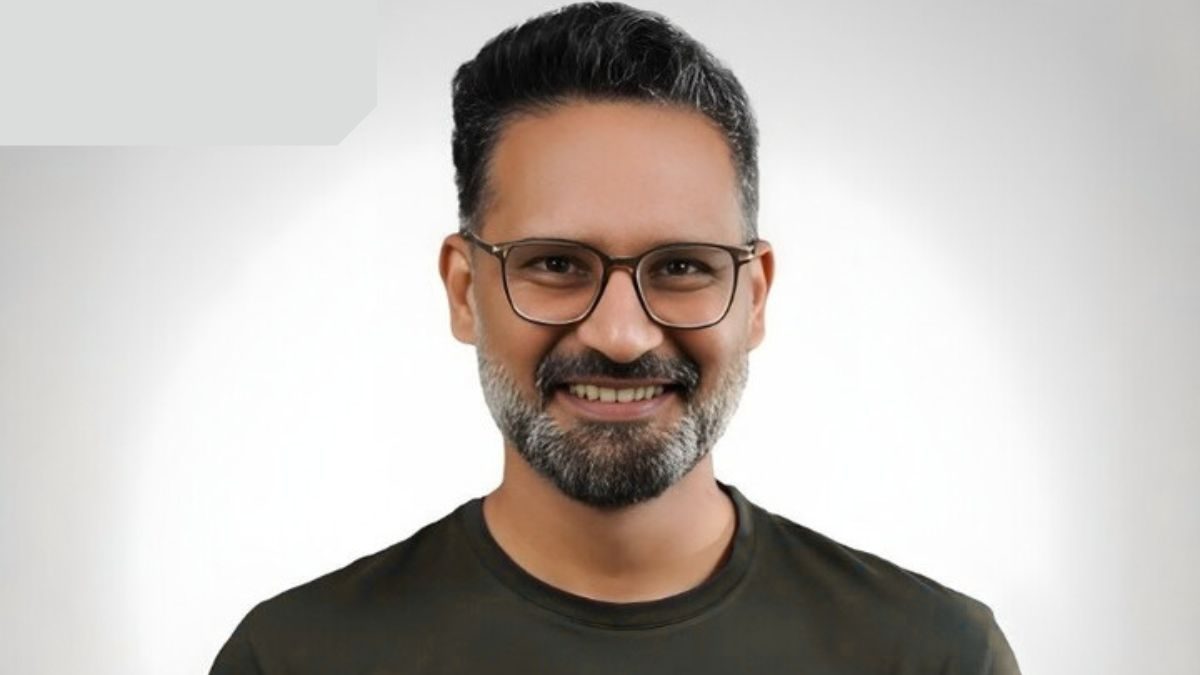
Sameer Maheshwari is the founder and chief executive officer of HealthKart, one of India’s most influential nutrition and fitness platforms. Best known for building the consumer nutrition brand MuscleBlaze and expanding HealthKart into a leading omnichannel player in the Indian nutrition market, Maheshwari’s journey spans continents, industries, and transformations. His story intersects elite education, early professional experience abroad, and a persistent pursuit to address the gaps in how Indians approach fitness, supplements, and preventive health.
Maheshwari launched HealthKart in 2011 with co-founder Prashant Tandon, initially aiming to create a comprehensive online health-care marketplace. Through strategic pivots and an early focus on authenticity in supplements, the company shifted toward nutrition and fitness products, ultimately building a portfolio of brands such as MuscleBlaze, HKVitals, TrueBasics, Gritzo, and others. Under his leadership, HealthKart has raised significant capital from global and domestic investors, expanded into hundreds of offline stores, and claims a strong share in India’s fast-growing nutraceutical sector.
Beyond business milestones, Maheshwari’s personal story reflects his middle-class roots, years of global corporate experience, and a belief that foundational values shape resilience and leadership. His journey from an engineering graduate to building a platform that touches millions of Indian lives offers insights into entrepreneurship, market creation, and the evolving health and fitness landscape in India. This profile traces the 5W+H of his path and the defining moments that shaped the HealthKart success story.
1. Background and Early Life
Sameer Maheshwari’s early life was shaped by an upbringing in a middle-class family in India. While comprehensive public details about his childhood environment are limited, Maheshwari himself has reflected on how deep-rooted values, work ethic, and resilience defined his formative years. He has publicly credited his middle-class background for instilling in him a sense of discipline and the belief that nothing worthwhile comes without effort.
Academic excellence came early for Maheshwari. He pursued a Bachelor of Technology in Civil Engineering at the Indian Institute of Technology (IIT) Delhi, one of India’s most selective and prestigious engineering schools. This period not only provided technical education but also exposed him to diverse perspectives and networks that would later shape his entrepreneurial vision. After graduating from IIT in the late 1990s, he moved to the United States for work and further professional development.
Maheshwari’s early professional years in the US laid a foundation in consulting, sales, and financial services. He held positions with Deloitte Consulting, UBS Investment Bank, MicroStrategy, and other firms, gaining hands-on experience in strategy, technology, and client engagement. This exposure to corporate systems and global markets broadened his understanding of how large organisations function and the importance of scalability, data-driven decision making, and customer focus.
Seeking to deepen his business understanding, Maheshwari later enrolled at Harvard Business School for a Master of Business Administration (MBA). Harvard’s focus on leadership, entrepreneurship, and case-based problem solving would prove instrumental when he later co-founded HealthKart. The combination of technical, business, and international exposure positioned him to return to India with a mindset attuned to building something impactful.
2. Founder and Company Overview
2.1 The Founder
Sameer Maheshwari is the driving force behind HealthKart. By training, he is an engineer and management professional; by calling, an entrepreneur and market builder. His professional trajectory took him from senior sales and consulting roles abroad to launching one of India’s most discussed consumer health platforms.
In 2011, Maheshwari co-founded HealthKart with Prashant Tandon. The vision was simple yet ambitious: create a transparent, trustworthy platform for health, wellness, and fitness products in India. Both founders brought complementary strengths. While Tandon focused on technical and product development, Maheshwari steered business strategy, operations, and investor relationships. Today, HealthKart stands as India’s largest omnichannel nutrition platform. Its portfolio encompasses digital brands like MuscleBlaze, HKVitals, TrueBasics, and Gritzo, catering to diverse consumer needs ranging from sports nutrition to everyday vitamins and personalized kids’ nutrition. The platform operates online and through hundreds of physical stores across dozens of Indian cities.
2.2 HealthKart Overview and Offerings
HealthKart evolved from a pure e-commerce portal into an omnichannel marketplace and producer of private-label nutrition brands. The company offers a wide range of products including protein supplements, dietary vitamins, herbal products, fitness foods, and wellness accessories. With brands such as MuscleBlaze commanding strong market share in sports nutrition, HealthKart serves fitness enthusiasts, athletes, busy professionals, and everyday consumers seeking preventive health solutions.
Beyond products, HealthKart expands its value through expert consultation, diet planning support, and content-driven customer education. These services help customers make informed choices rather than buy products in isolation. The strategy underscores Maheshwari’s belief that education and trust are as crucial as product quality in the nutrition market.
2.3 Target Audience and Market Served
HealthKart’s target audience is wide and growing. It includes fitness-minded individuals seeking protein and performance supplements, health-conscious consumers interested in vitamins and general wellness, and families looking for personalized nutrition solutions like those offered through Gritzo. The platform reaches consumers both online and offline, making it accessible across demographics and regions.
The broader market HealthKart serves is the Indian nutrition and wellness space, which has seen rapid growth as fitness and preventive health become mainstream. With increasing awareness around lifestyle diseases, immunity, and performance nutrition, HealthKart positions itself as a pivotal connector between evolving consumer needs and quality products.
2.4 Year of Founding and Business Stage
HealthKart was founded in 2011 by Maheshwari and Prashant Tandon. The company’s early years focused on building a marketplace for health products before pivoting toward nutrition and fitness. Over more than a decade, HealthKart matured from a bootstrapped startup to a well-funded organisation backed by investors like Temasek, A91 Partners, ChrysCapital, and Motilal Oswal Alternates. It now operates an extensive network of offline stores and reports significant revenue growth and profitability milestones.
3. The Problem, Insight, and Trigger
HealthKart’s origin story begins not with supplements but with a market insight. Early in his entrepreneurial thinking, Maheshwari observed a glaring gap in how Indians accessed health and preventive care products. Many consumers struggled with product authenticity, education, and trust in a market rife with unverified supplements and opaque pricing.
Equally important was the personal insight Maheshwari carried forward from his own life. He understood the value of disciplined fitness and nutrition from his experiences, and he saw a broader need for accessible guidance for others. The absence of reliable channels for health-focused products became a source of both frustration and inspiration. The trigger moment came with the recognition that India was on the cusp of a nutrition revolution. Smartphone penetration was rising, consumers were becoming more health conscious, and e-commerce was opening new paths for distribution. Maheshwari and Tandon realised that India lacked a platform combining credible products, expert guidance, and community trust—so they set out to build exactly that.
4. Early Days and Initial Struggles
HealthKart’s early days were defined by experimentation and humility. What began as a broad health-care marketplace quickly revealed limitations in customer traction for certain categories. The founders had initially assumed that a full-stack health platform, including pharmacies and fitness products, would drive rapid adoption. Reality proved more complex.
4.1 Early Assumptions and Naivety
In the first years after launch, HealthKart explored multiple business models within healthcare and retail. Like many early Indian startups, the team underestimated the challenges in building brand trust and educating consumers. Many customers were skeptical of online purchases for something as personal as health products.
4.2 Entrepreneurial Initial Struggles
Convincing suppliers to partner with a nascent platform, building a logistics network across India, and managing customer expectations were significant hurdles. Supply chain complexities, quality control, and inventory misalignments tested the fledgling team’s operational agility.
4.3 What Turned Out to Be Harder Than Expected
One of the toughest early realities was the need for deep consumer education. Unlike commodity e-commerce, selling health supplements demanded that customers understand product differences, benefits, and safe usage. HealthKart invested in content, expert consultation, and personalised support—a deviation from the lean-growth playbooks many startups relied on.
5. Failures, Setbacks, and Self Doubt
No startup journey is without setbacks, and HealthKart was no exception. In the earlier years, pivoting away from aspects of the original business model, such as pharmacy products, forced internal reassessment. By 2015, the company chose to separate its generic drug search engine business into a separate entity, now known as 1mg, so that HealthKart could focus exclusively on nutrition and preventive health. This strategic choice came with emotional and operational costs as founders recalibrated priorities and resources. Moments of self-doubt were common as the team navigated flat growth periods, inventory challenges, and market skepticism. There were times when muscle and immunity supplements were seen as niche rather than mainstream categories in India. Convincing stakeholders, customers, and investors that this was a real, scalable opportunity tested the team’s confidence.
6. Validation and Early Traction
The first real validation for HealthKart came through a combination of customer adoption and brand traction. As fitness awareness grew in India, especially among younger urban consumers, products like MuscleBlaze resonated strongly. MuscleBlaze quickly became one of the top-selling sports nutrition brands on the platform, validating the choice to focus on this segment.
Consumers responded positively not just to products but to HealthKart’s emphasis on authenticity and expert guidance. Word-of-mouth referrals, repeat purchases, and growing sales charts confirmed that the core idea had found market fit. Over time, the platform expanded its catalog to include vitamins, herbal supplements, healthy foods, ayurvedic products, and personalized nutrition options.
7. Funding, Money, and Growth Constraints
7.1 Bootstrapped or Funded Journey
HealthKart’s growth was supported by substantial funding at multiple stages. Over the years, the company raised from prominent investors including Sequoia Capital India, Kae Capital, Omidyar Network, and later major rounds led by Temasek, A91 Partners, ChrysCapital, and Motilal Oswal Alternates. In 2022, HealthKart raised $135 million, and in 2024 another $153 million was announced, marking significant investor confidence in the business model.
7.2 Capital Challenges and Cash Flow Issues
Despite strong funding rounds, maintaining healthy cash flow and balancing inventory investments with unit economics proved challenging. The nutrition market, while growing, requires careful pricing and trust building. Maheshwari emphasised fundamentals such as profitability and operational discipline even as the company pursued rapid expansion.
7.3 Early Growth Limitations
Early limitations included physical distribution, establishing offline presence, and securing shelf space in retail environments beyond e-commerce. Building omnichannel capability demanded investments in stores and trained staff—often slower and more capital intensive than digital channels alone.
8. Team Building and Leadership Evolution
Hiring the right people was a learning curve for Maheshwari and the executive team. Early hires were often generalists rather than specialists, a reflection of urgency rather than strategic placement. As the organisation scaled, Maheshwari recognised the importance of domain expertise in supply chain, nutrition science, marketing, and retail operations.
Delegation posed an early challenge. The founder had to shift from hands-on execution to empowering leaders across functions. This required building trust, setting clear expectations, and embracing accountability at every level. Over time, these leadership shifts helped modularise operations and create clearer career paths within HealthKart.
9. Growth, Scaling, and Operational Challenges
Scaling HealthKart beyond an online storefront to a true omnichannel business involved a series of operational restructurings. Retail expansions into over a hundred locations demanded new competencies in logistics, store management, and localized marketing. Each city had unique consumer preferences, adding complexity to inventory and sales forecasting.
Brand positioning evolved as Maheshwari shifted focus from being just a supplements store to a holistic nutrition platform. This included expanding into plant-based products, healthy foods, and segmenting brands for specific audiences. Educating consumers about these categories often involved content marketing, expert webinars, and in-store consultations—efforts that consumed both time and capital.
10. Personal Sacrifices and Burnout
Entrepreneurship at this scale is taxing. Maheshwari’s commitment to HealthKart demanded long hours, relentless travel between markets, and sustained focus on operational detail. The early years especially blurred personal and professional boundaries as the company fought to establish itself against larger competitors and shifting consumer behaviours.
Burnout is a common theme for founders in high-growth environments. Though Maheshwari has not publicly detailed specific burnout episodes, industry peers note that leading rapid scaling while balancing investor expectations and team morale tests even seasoned leaders. The emotional pressure of responsibility—over employees, investors, and customers—was an implicit cost of building HealthKart’s current stature.
11. Lessons, Beliefs, and Values
11.1 Core Lessons Learned
Sameer Maheshwari’s journey with HealthKart is a masterclass in balancing vision with grounded execution. One of the clearest lessons is the power of authenticity. In a market often dominated by flashy marketing and aggressive sales tactics, Maheshwari chose to prioritize clear, evidence-backed information for consumers. This approach built credibility that translated directly into loyalty and long-term growth.
He also learned the importance of investing in consumer education. For a category like health and nutrition, where products are deeply personal and results vary, educating customers became a differentiator. Maheshwari emphasized explaining the why behind products, not just the how, creating a sense of empowerment among consumers.
Finally, his experience highlights the need to balance ambition with operational fundamentals. Even with strong funding and rapid expansion, careful attention to unit economics, inventory management, and sustainable scaling proved crucial. It is this disciplined approach that enabled HealthKart to navigate challenges, withstand competition, and retain its position as a trusted brand in India’s wellness landscape.
11.2 Beliefs That Changed Over Time
Initially, Maheshwari assumed that e-commerce alone would drive growth in India’s health and nutrition sector. While online sales grew steadily, he quickly recognized that Indian consumers often value human touchpoints alongside digital convenience. This realization led to the integration of offline stores, in-person nutrition counselors, and experiential in-store offerings.
This evolution reflects a deeper understanding of consumer behavior. Many customers wanted guidance, reassurance, and a sense of connection before investing in wellness products. By combining digital efficiency with human engagement, HealthKart created a model that respected both technology and tradition, ultimately increasing adoption, trust, and retention.
11.3 Non-Negotiable Values
At the core of HealthKart’s mission lies trust, quality, and transparency. Maheshwari consistently emphasizes that in health and nutrition, the stakes are personal—every product and recommendation affects real lives. Consumers must feel confident that the brand prioritizes their well-being over profit.
These values manifest in rigorous quality control, transparent ingredient disclosure, and clear guidance from trained professionals. Beyond business metrics, they foster an emotional connection: customers know they are supported, understood, and safe. In a competitive market, this human-centric philosophy differentiates HealthKart and reinforces the idea that values are as critical to success as strategy or funding.
12. Present Challenges and Future Vision
Today, HealthKart continues to navigate a competitive and rapidly changing industry. The nutrition market in India is expanding, but consumer expectations are evolving too, requiring continuous innovation in product lines, personalised solutions, and educational support.
Maheshwari now leads with a focus on international expansion. HealthKart has expressed intentions to enter markets such as the United States and Southeast Asia and is positioning itself for potential IPO discussions once scale and timing align.
In tandem, the company is deepening investment in research and development, expanding into healthy foods, Ayurveda segments, and children’s nutrition through brands like Gritzo. These strategic directions reflect a broader vision: make preventive health and nutrition mainstream not just in India but globally.
About foundlanes.com
foundlanes.com is India’s leading startup idea and deep-dive platform built for founders, operators, and serious entrepreneurs. We go beyond surface-level advice to deliver grounded, research-backed, and experience-driven startup content.
Every guide on foundlanes.com is designed to help readers think clearly, act strategically, and build sustainably. This cloud kitchen startup guide is part of our mission to document real business pathways in India’s evolving startup ecosystem.